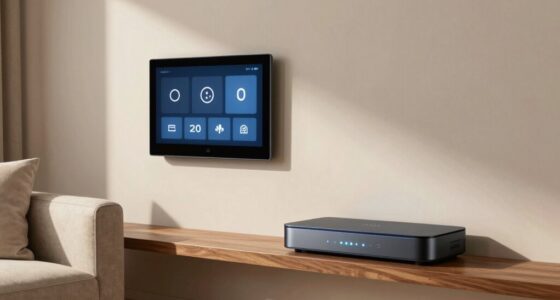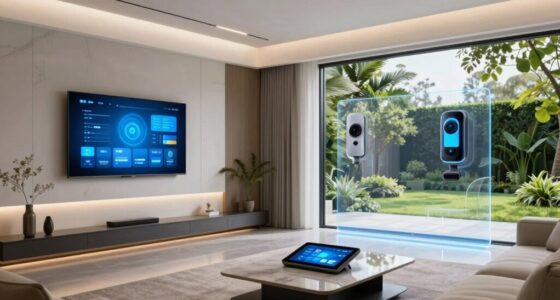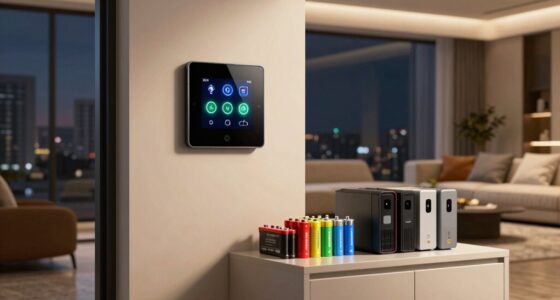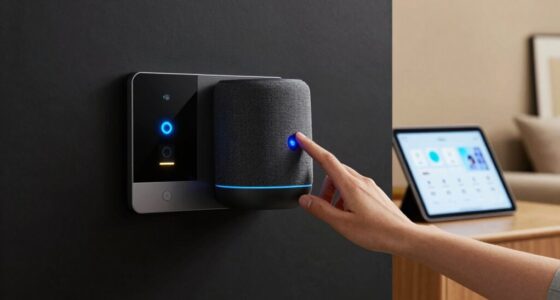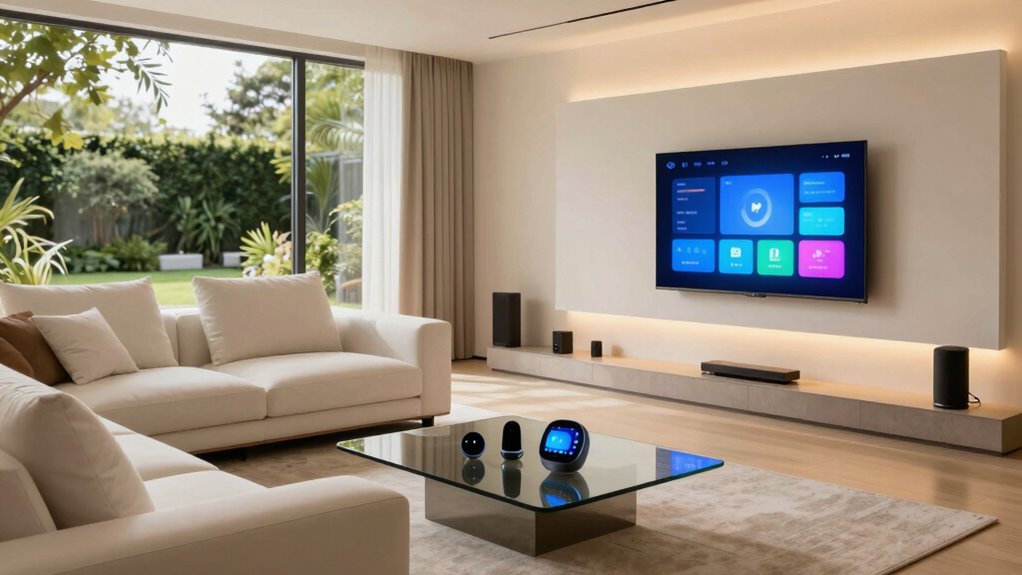

A truly smart home seamlessly connects devices, allowing them to communicate and work together through standards like Zigbee or Z-Wave. It automates lighting, climate, and security based on your habits and preferences, creating personalized comfort and safety. Energy-efficient systems and renewable sources help lower costs and environmental impact. User-friendly controls, voice commands, and real-time monitoring make managing it simple and intuitive. To explore how these features come together, keep exploring the key elements that make a home smart.
Key Takeaways
- Seamless integration and interoperability of devices enable automated, cohesive smart home systems.
- Adaptive environments personalize lighting, climate, and ambiance based on user behavior and preferences.
- Advanced security features like biometrics and real-time surveillance ensure safety and emergency responsiveness.
- Energy management through smart thermostats, renewable sources, and insulation optimizes efficiency and sustainability.
- User-friendly interfaces with voice control and intuitive controls make managing smart home technology effortless.
Integration of Connected Devices and Systems
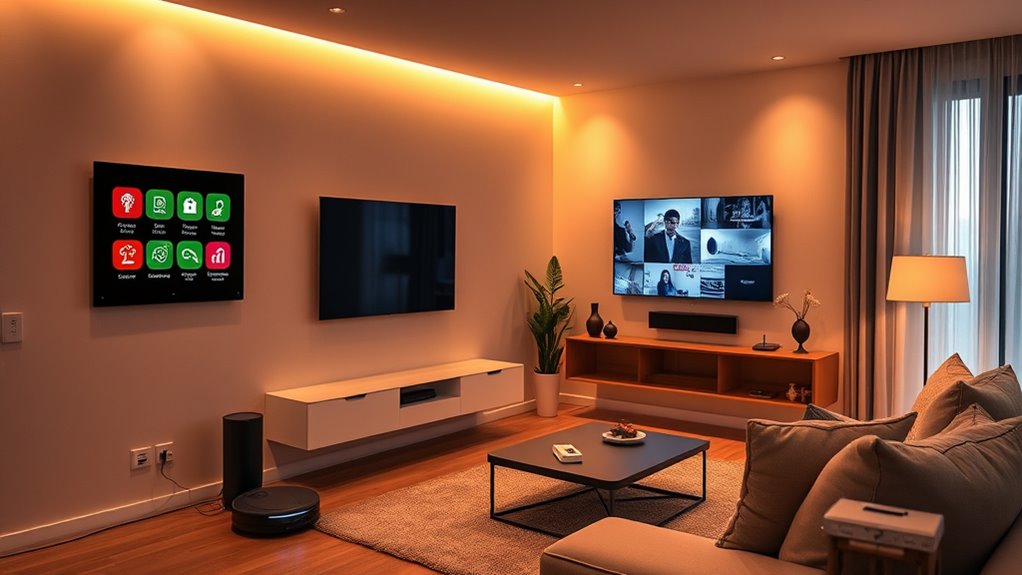
To create a truly smart home, seamless integration of connected devices and systems is essential. You can achieve this through smart appliance pairing, where your devices communicate effortlessly to optimize functionality. Wireless sensor networks play a vital role, enabling sensors around your home to monitor conditions like temperature, humidity, or motion, and relay this data instantly. When these sensors connect smoothly with your smart appliances, you get a cohesive system that responds automatically to your needs. For example, your thermostat can adjust based on sensor readings, or lights can turn off when sensors detect no activity. This interconnected setup not only simplifies control but also enhances efficiency, making your home more responsive and intelligently coordinated. Incorporating local automation further streamlines your system by enabling devices to coordinate directly without relying on the cloud, improving speed and privacy. Additionally, device interoperability ensures that different brands and technologies work together seamlessly, expanding your system’s capabilities. Moreover, establishing a central control hub allows you to manage all connected devices from a single interface, increasing convenience and oversight. In addition, load management can be integrated to optimize energy use and reduce costs across your smart home setup. Furthermore, leveraging innovative cloud solutions can enhance the reliability and security of your smart home infrastructure.
Automated and Adaptive Living Environments

Automated and adaptive living environments transform your home into a responsive space that adjusts seamlessly to your habits and preferences. Smart lighting automatically dims or brightens based on your activity, creating the perfect ambiance without manual effort. Automated climate systems learn your schedule, maintaining ideal temperatures while conserving energy. To enhance your experience, consider these features:
Transform your home with smart, adaptive systems that enhance comfort and efficiency effortlessly.
- Smart lighting that adapts to your daily routine
- Automated climate control for comfort and efficiency
- Sensors that detect occupancy and adjust settings accordingly
- Integration with voice commands for instant adjustments
These systems work together to make your home more comfortable, energy-efficient, and personalized. Incorporating smart home technology can further optimize your environment by seamlessly connecting all these systems for even greater control and efficiency, creating a truly adaptive living environment. Additionally, leveraging home automation enhances the overall connectivity and responsiveness of your home systems. Implementing precision controls can fine-tune your appliances and devices for optimal performance and energy savings. Utilizing power tools and heavy-duty equipment for installation and setup can ensure your systems are configured safely and effectively.
Advanced Security and Surveillance Features
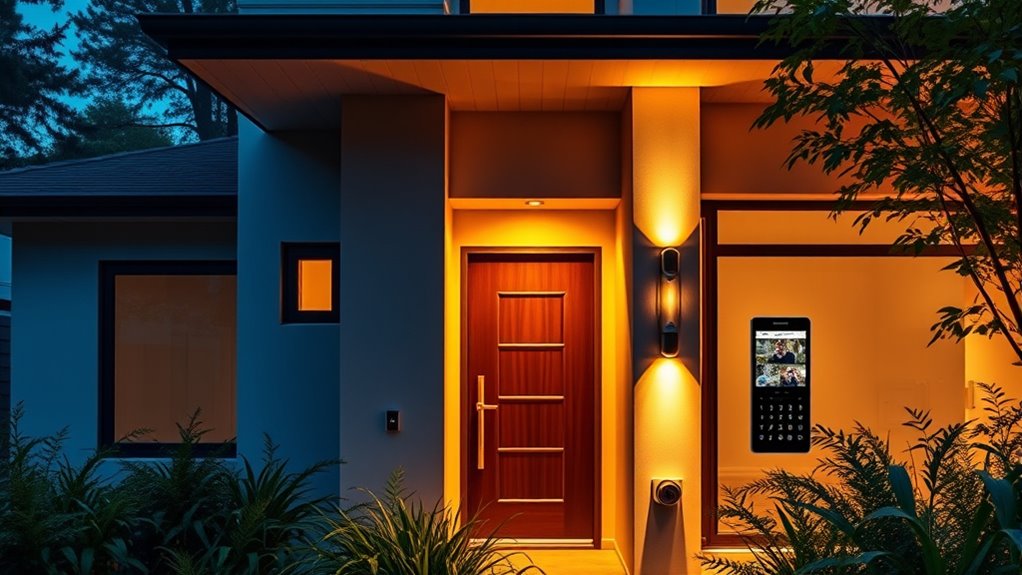
Have you ever wondered how your home can stay protected around the clock? Advanced security and surveillance features make that possible. Biometric access, like fingerprint or facial recognition, guarantees only authorized people enter your home, reducing the risk of break-ins. Smart cameras monitor your property in real time, alerting you to any suspicious activity. These cameras often integrate with your smartphone, so you can view footage from anywhere. In case of emergencies, your security system can automatically notify emergency responders, providing them with essential details like live video feeds or access codes. This seamless coordination enhances safety and provides peace of mind. Additionally, home automation systems can be programmed to respond to security breaches by activating alarms or locking doors automatically, further strengthening your home’s defenses. Incorporating security zone info can help optimize the placement of sensors and cameras, ensuring comprehensive coverage of your property. Moreover, security protocols are crucial for establishing effective response strategies that keep your home safer, and understanding network infrastructure can improve the reliability of your security devices. Implementing interconnected security devices creates a more cohesive and resilient security network, making your smart home a robust fortress that actively works to protect you and your loved ones at all times.
Energy Management and Efficiency Solutions
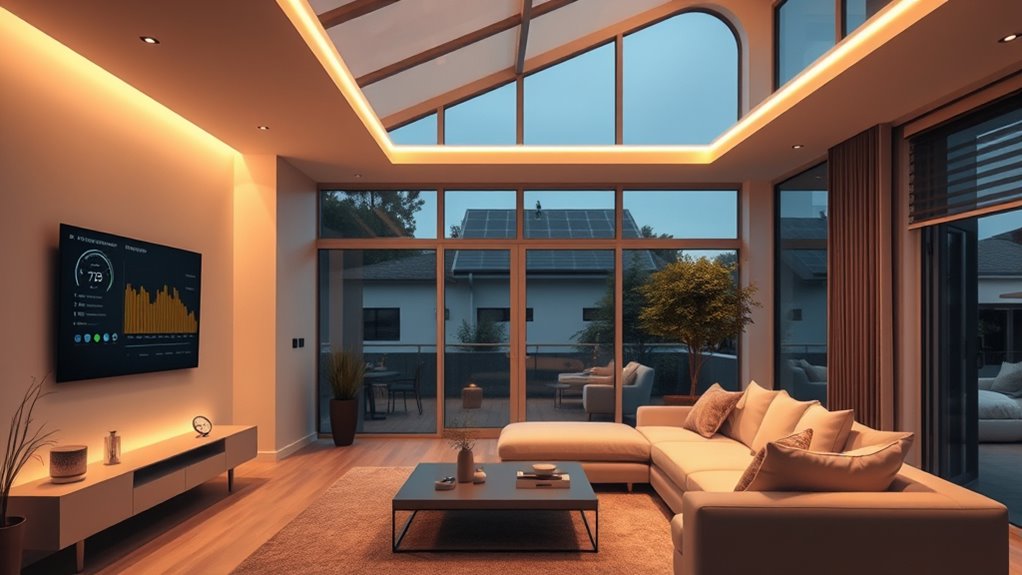
Ever wonder how your home can reduce energy waste while saving you money? Smart energy management offers solutions like Thermal Optimization and harnessing Renewable Sources to boost efficiency. Here are four ways to achieve this:
- Install smart thermostats that learn your schedule and optimize heating and cooling.
- Use energy-efficient appliances connected to your home network for real-time monitoring.
- Incorporate solar panels or wind turbines to generate renewable energy on-site, allowing you to produce your own power and reduce reliance on the grid.
- Optimize insulation and windows to reduce thermal loss, increasing overall efficiency. These strategies help minimize energy waste, lower bills, and make your home more sustainable. By integrating these solutions, your smart home actively manages energy use, creating a more eco-friendly and cost-effective living environment. Additionally, energy management systems can adapt to your household’s habits, further enhancing efficiency and comfort. Employing energy-efficient technologies can significantly improve your home’s performance and reduce environmental impact.
Implementing reliable backup power solutions ensures your home stays powered during outages, complementing your energy efficiency efforts.
By leveraging advanced energy solutions, homeowners can achieve smarter, more sustainable living spaces that adapt to their needs.
User-Friendly Control Interfaces
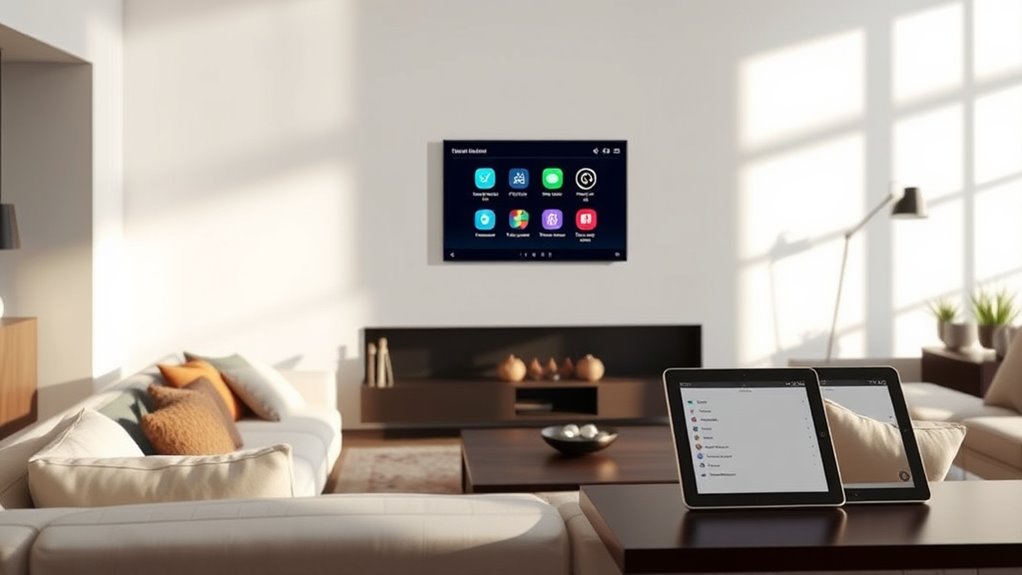
Your smart home should be easy to control, so look for intuitive touch screens that simplify navigation. Seamless voice commands let you manage devices effortlessly without needing to touch anything. When interfaces are user-friendly, you’ll enjoy a more comfortable and efficient smart home experience. Incorporating user-friendly control interfaces ensures that users can easily adapt and enjoy all the benefits of a smart system. Additionally, clear and consistent interface design can reduce frustration and improve overall usability. Furthermore, designing intuitive controls that align with natural user behavior can enhance overall satisfaction and accessibility.
Intuitive Touch Screens
Why do some smart home control panels feel so intuitive while others frustrate users? It often comes down to how well the interface responds to your inputs. A great touch screen simplifies control through features like:
- Gesture controls – swiping or pinching should feel natural and smooth, making interactions effortless.
- Haptic feedback – subtle vibrations confirm your actions, reducing errors and increasing confidence.
- Clear, responsive visuals ensure you understand your commands instantly.
- Minimal clutter – an organized layout helps you find functions quickly without confusion.
When these elements work together, your control panel becomes more than just a screen; it becomes an extension of your home. An intuitive touch screen adapts seamlessly to your needs, keeping your smart home simple and enjoyable.
Seamless Voice Commands
Seamless voice commands elevate smart home control by allowing you to manage devices effortlessly with just your voice. With voice command customization, you can tailor commands to suit your habits, making interactions more natural and intuitive. Modern smart assistants are designed for high responsiveness, ensuring your commands are quickly recognized and acted upon. This responsiveness makes controlling lights, thermostats, or security systems feel seamless, almost like talking to a trusted friend. The ease of use encourages you to rely more on voice control, reducing the need for manual inputs. As a result, your home becomes more intuitive, allowing you to focus on your day rather than fiddling with switches or apps. Ultimately, seamless voice commands make your smart home more effortless and enjoyable to operate.
Interoperability and Compatibility Standards
To guarantee your smart home functions seamlessly, it’s important to take into account universal device integration. Standard communication protocols let different devices work together without issues. When devices speak the same language, your home becomes truly connected and easy to manage.
Universal Device Integration
Have you ever tried to connect different smart devices only to find they don’t work well together? Universal device integration makes this easier by ensuring compatibility across brands and platforms. To achieve seamless integration, focus on:
- Using open standards that support various devices, maintaining your smart home aesthetics.
- Choosing platforms that prioritize interoperability and simplify setup.
- Ensuring your devices support remote access, so you can control your home from anywhere.
- Opting for devices with compatibility certifications, reducing frustration and enhancing user experience.
Effective integration means fewer mismatched gadgets and more cohesive automation. It also allows you to customize your system to fit your lifestyle effortlessly. When devices work together smoothly, your smart home feels more intuitive and responsive.
Standard Communication Protocols
Standard communication protocols serve as the backbone of a truly smart home by ensuring devices can understand and exchange information reliably. Wireless protocols like Zigbee, Z-Wave, and Wi-Fi facilitate seamless device interoperability and compatibility. These protocols determine how data flows between your smart devices, making integration straightforward. Data encryption is also vital, protecting your information from unauthorized access during transmission. When selecting devices, check for supported wireless protocols and robust encryption standards to enhance security and compatibility. A well-established protocol ensures your smart home operates smoothly, with devices communicating effortlessly regardless of brand or model. By prioritizing these standards, you create a cohesive ecosystem that’s both secure and easy to expand. This foundational step guarantees your home tech functions harmoniously and safely.
Personalized and Context-Aware Functionality
Personalized and context-aware functionality transforms a smart home from a collection of devices into an intuitive living space that adapts to your habits and environment. It tailors experiences like:
Transform your smart home into an intuitive space that adapts seamlessly to your habits and environment.
- Adjusting personalized lighting based on the time of day or your mood, creating the perfect ambiance.
- Playing context-aware music that responds to your activity or the room’s atmosphere.
- Automating temperature settings when you arrive home or leave, ensuring comfort without effort.
- Notifying you of relevant events or reminders based on your schedule and location.
These features make your home smarter by anticipating your needs and preferences, creating a seamless, customized environment that feels naturally attuned to you.
Frequently Asked Questions
How Does a Smart Home Improve Daily Convenience?
A smart home enhances your daily convenience through voice control, allowing you to manage devices effortlessly. Personalized automation adapts to your routine, turning on lights, adjusting thermostats, or playing music when you need them. This technology simplifies tasks, saves time, and creates a seamless living experience. You’ll find your day smoother, stress reduced, and your environment perfectly tailored to your preferences, making your home genuinely smarter and more comfortable.
What Are the Privacy Concerns With Smart Home Devices?
You should be aware that smart home devices pose privacy concerns because of data privacy issues and the risk of unauthorized access. These devices collect personal information, which hackers could exploit if not properly secured. To protect yourself, use strong, unique passwords, enable two-factor authentication, and regularly update your device firmware. Being vigilant helps guarantee your smart home remains a safe and private space.
Can Smart Homes Accommodate Future Technology Upgrades?
Think of your smart home as a garden designed for future proofing. You plant versatile, upgrade-compatible devices now, ensuring your tech can grow with tomorrow’s innovations. By choosing systems with open standards and modular components, you make room for future upgrades without uprooting everything. This way, your home remains adaptable, embracing new technology seamlessly and keeping your smart living experience fresh and efficient for years to come.
How Cost-Effective Are Smart Home Systems Long-Term?
Smart home systems are generally cost-effective long-term because they help you save energy through automation, which reduces utility bills. Although the initial investment might be higher, these systems pay off over time by optimizing energy usage and increasing efficiency. You’ll notice savings on electricity, water, and heating costs, making the upfront expense worthwhile. Over the years, the energy savings can considerably outweigh the initial costs, making your smart home more economical.
What Skills Are Needed to Install and Maintain a Smart Home?
Think of yourself as a skilled conductor, orchestrating a symphony of technology. You need installation skills to set up devices precisely and maintenance expertise to keep everything harmonized. With a keen understanding of smart systems, you troubleshoot issues and update software seamlessly. Your hands-on knowledge guarantees your smart home runs smoothly, turning complex technology into a simple, integrated experience that adapts effortlessly to your lifestyle.
Conclusion
When your home seamlessly integrates connected devices, adapts to your routines, and offers advanced security, it feels almost alive. As you control everything effortlessly through user-friendly interfaces, you realize that smart technology isn’t just about convenience—it’s about creating a space that truly understands you. Sometimes, it’s the little coincidences—like your home adjusting to your mood—that make a house genuinely smart, turning everyday living into an effortless, personalized experience.