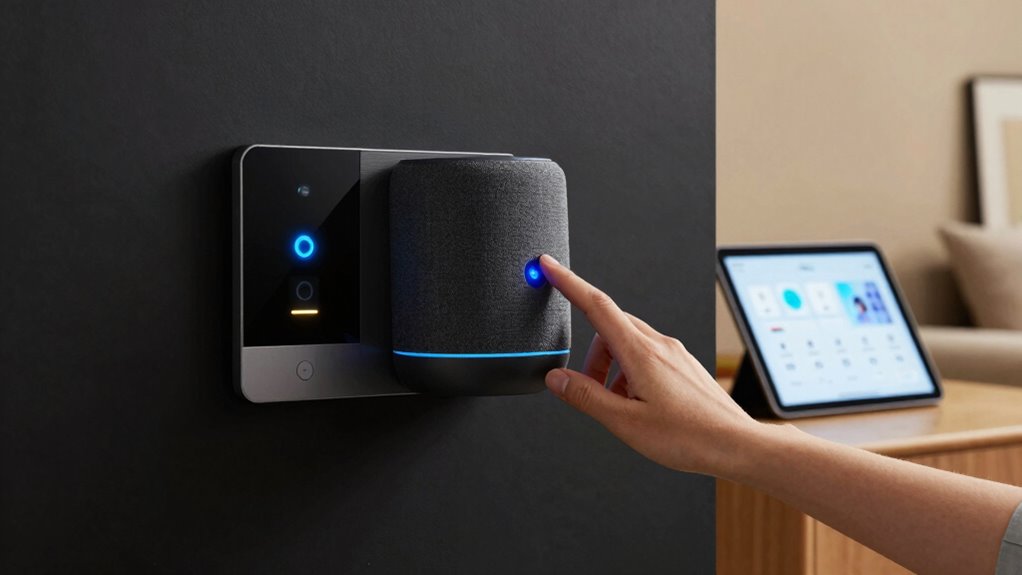

Voice control offers quick, hands-free operation that feels natural and is great for accessibility, but app control provides detailed customization, broader device compatibility, and often faster, more reliable responses. Voice commands excel within their ecosystems, while apps support complex routines and multi-brand setups. Privacy and security concerns vary, so choosing depends on your needs and existing devices. Keep exploring to learn how to maximize both methods for your smart home.
Key Takeaways
- Voice control offers hands-free, intuitive operation, while app control provides detailed customization and management options.
- Apps support broader device compatibility across multiple brands, whereas voice systems excel within their specific ecosystems.
- Voice commands enable quick, natural interactions but may experience delays; apps typically offer faster, more reliable responses.
- App-based control allows granular adjustments, routines, and automation, while voice commands focus on simple, broad actions.
- Combining both methods provides a versatile, accessible home control experience tailored to user preferences.
Ease of Use and Accessibility

When it comes to ease of use and accessibility, voice control often feels more intuitive because you can operate devices hands-free and naturally speak commands. You don’t need to navigate menus or tap buttons; instead, you simply say what you want, and the system responds instantly. This makes managing your smart home easier, especially when your hands are full or you’re physically unable to interact with a device. Voice control also benefits those with mobility challenges, providing a more inclusive experience. It’s quick and straightforward to activate, requiring minimal setup or technical knowledge. Overall, voice commands streamline your interactions, making your smart home more accessible and convenient, without needing to learn complicated interfaces. Additionally, Mad Tasting offers a variety of tips to enhance your home environment, making voice control even more effective and enjoyable. Incorporating local automation can further improve responsiveness and privacy, ensuring your smart home operates smoothly and securely. Moreover, user-friendly design is crucial for maximizing accessibility for all users. Utilizing features like color temperature adjustments can help create optimal viewing conditions, further simplifying device operation for users with varying needs. As technology advances, integrating adaptive interfaces can also help tailor controls to individual preferences and abilities, enhancing overall usability.
Customization and Control Capabilities

You want to customize your home control setup, so it’s important to contemplate how flexible voice commands are and how precise the app interface can be. Voice control offers broad command options, but the app often provides more detailed adjustments. Additionally, check if the system offers enough customization options to match your specific needs and preferences. Exploring European cloud solutions can ensure your system benefits from innovative, energy-efficient infrastructure that enhances security and reliability. Incorporating system adaptability can further optimize your setup to cater to evolving technology trends and personal preferences, while also considering security protocols to safeguard your connected environment. Evaluating cloud infrastructure options can help you select a platform that supports both flexibility and security for your home automation system.
Voice Command Flexibility
Voice command flexibility often stands out because it allows you to customize your control experience more easily than app-based systems. You can create specific voice commands that suit your routines, making it simple to manage devices with natural language. You can also adjust voice sensitivities to improve responsiveness, which enhances user satisfaction. This flexibility lets you control multiple devices simultaneously or set routines with a single command, saving time and effort. You don’t need to navigate menus or learn complex interfaces; instead, you speak naturally, and the system responds. Additionally, many voice assistants learn and adapt to your speech patterns over time, enhancing accuracy. This Technological adaptability ensures the system continues to improve and meet your evolving needs. Furthermore, voice recognition technology is advancing rapidly, providing more reliable and context-aware responses. As a result, the integration of smart home technology continues to expand, making voice control an increasingly powerful tool. Overall, voice command flexibility offers a level of spontaneity and ease that appeals to many users, especially as machine learning enhances system understanding and personalization.
App Interface Precision
While voice commands offer flexibility through natural language, app interfaces excel in providing precise control and extensive customization options. With an app, you can fine-tune settings exactly how you want them, such as adjusting brightness levels, setting schedules, or creating complex routines. The visual layout allows you to see all available devices and their statuses at a glance, giving you immediate feedback. You can also customize device names, organize controls into categories, and access advanced features that aren’t always possible with voice commands. This level of control ensures you can tailor your smart home experience to your preferences. Unlike voice, which relies on spoken instructions, app interfaces give you the confidence of exact adjustments and detailed management at your fingertips. Additionally, safety and security considerations are often better managed through apps, providing more detailed oversight of your devices. Furthermore, the ability to monitor device activity history through an app enhances overall home security management. Incorporating user preferences and detailed controls, apps can adapt to your evolving needs more effectively than voice commands alone. Moreover, apps often enable seamless integration with other smart home systems, facilitating more comprehensive automation.
Customization Options Availability
When it comes to customization options, app interfaces typically offer a broader range of control capabilities than voice commands. With apps, you can fine-tune settings, create detailed routines, and set specific preferences for each device. You have the ability to customize schedules, adjust individual device parameters, and access advanced features that voice commands often lack. Apps also allow you to organize devices into groups or rooms for easier management. Role of media in shaping public perception of cryptids emphasizes how technology influences our understanding of supernatural phenomena. Voice control, by contrast, usually offers limited customization, focusing on simple commands and basic routines. While voice assistants excel in quick adjustments and hands-free operation, they don’t provide the same depth of control that apps do, making apps the better choice if you want granular customization and detailed control over your smart home. Additionally, detailed routines can be programmed within apps to automate complex sequences, further enhancing their customization potential. Moreover, understanding interior design basics can help you create more intuitive smart home environments that complement your control preferences. Incorporating user interface design principles can also improve how effectively you interact with your smart devices, whether via app or voice.
Compatibility With Devices and Ecosystems
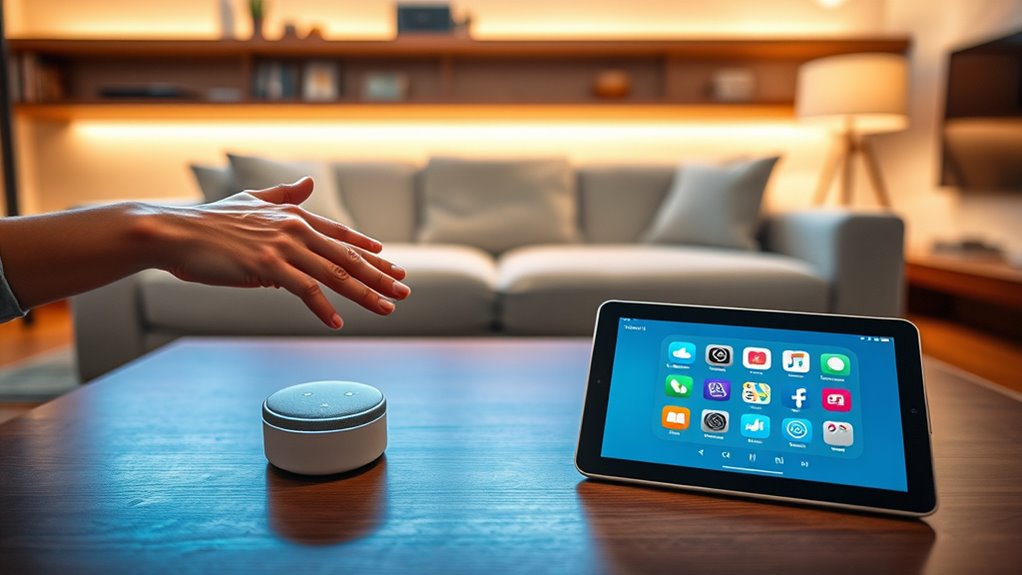
Compatibility with devices and ecosystems is essential when choosing between voice control and app-based home systems, as it determines how seamlessly your smart devices work together. If your devices aren’t compatible, you’ll face frustration and limited functionality. Voice assistants often work best within their own ecosystems, like Alexa with Amazon devices or Google Assistant with Google products. App-based systems may offer broader compatibility, integrating various brands and protocols. Here’s a quick comparison:
| Feature | Voice Control | App-Based Control |
|---|---|---|
| Device Compatibility | Limited to ecosystem’s devices | Broader, multi-brand support |
| Ecosystem Integration | Seamless within ecosystem’s devices | Potentially more flexible |
Choose based on your existing devices for a smoother experience.
Privacy and Security Considerations
Privacy and security are critical factors to contemplate when choosing between voice control and app-based home systems, as both methods can collect sensitive data and potentially expose your household to risks. Voice assistants constantly listen for commands, raising concerns about unintended recordings or data leaks. If your voice data isn’t properly secured, it could be accessed by malicious actors. App-based systems, on the other hand, store data on servers that might be vulnerable to hacking or breaches. You need to weigh encryption, strong passwords, and privacy policies. Regular updates and secure network practices minimize risks. Ultimately, understanding how each system handles your data and what security measures they employ helps you protect your household’s privacy and keep your information safe from unauthorized access.
Response Time and Reliability

Response time and reliability are crucial factors that can profoundly impact your experience with home control systems. When you issue a command, whether through voice or an app, quick response times ensure your environment adjusts promptly, keeping you comfortable and secure. If a system lags or fails to respond, frustration builds, and trust diminishes. Voice controls may sometimes experience delays due to network issues or server processing, affecting immediacy. Conversely, app-based systems generally provide more consistent and faster responses, especially if your Wi-Fi connection is stable. Reliability is equally important; a system that often drops out or misfires can disrupt daily routines. You want a setup that responds swiftly and works dependably, so your home remains seamlessly controlled without constant troubleshooting.
Features for Automation and Scheduling
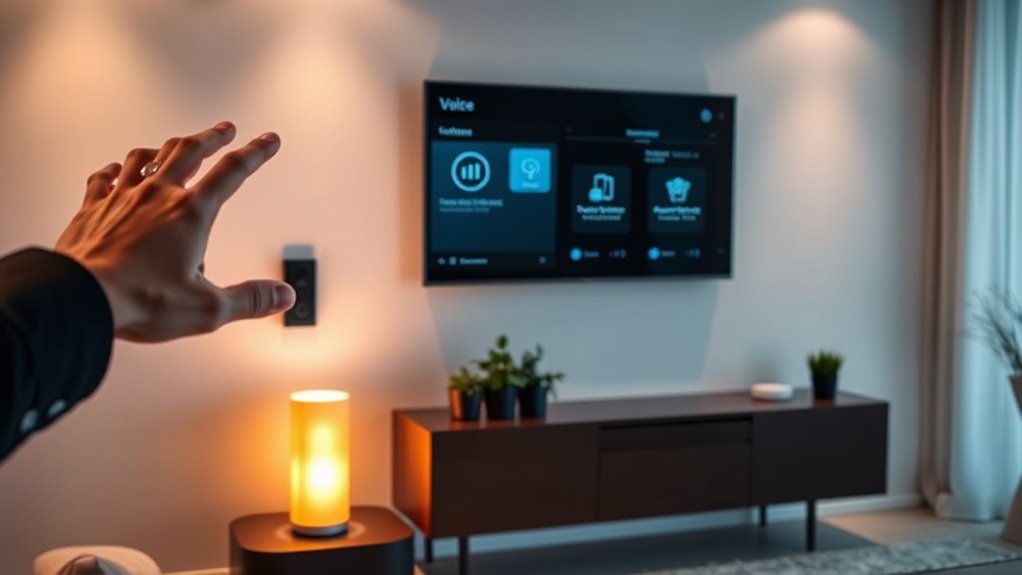
When it comes to automation and scheduling, both voice and app control systems offer powerful features, but their capabilities can differ markedly. With voice control, you can set up routines that trigger at specific times or in response to certain commands, often through simple voice prompts. It allows you to create dynamic, hands-free automation that adapts easily to your daily routine. Apps, on the other hand, typically provide more detailed scheduling options, letting you customize multiple devices and complex scenarios with precision. You can program schedules for lighting, climate, or security systems, often with greater flexibility and control. While voice offers quick, natural interactions, apps give you granular control over your automation setup, making it easier to fine-tune your smart home environment.
User Experience and Interface Design
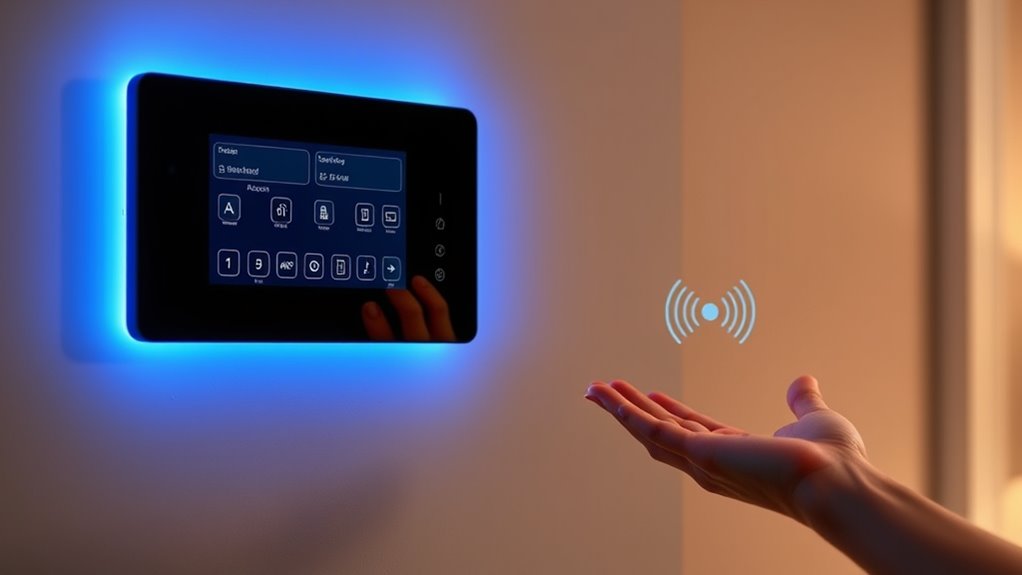
Your experience with home control systems depends heavily on how accessible and easy they are to use. Clear visuals and immediate feedback make interactions smoother, while quick, responsive controls keep everything feeling seamless. Considering these factors helps you choose a system that feels natural and efficient to operate.
Accessibility and Ease of Use
Voice control systems often excel in accessibility because they allow you to operate devices hands-free, which can be especially helpful for those with mobility or vision impairments. They simplify interactions in several ways:
- You can control multiple devices with simple voice commands, reducing physical effort.
- Voice technology adapts to different accents and speech patterns, making it more inclusive.
- It eliminates the need for complex navigation menus or app interfaces.
- Voice assistants provide immediate feedback, confirming your commands clearly.
This ease of use means you don’t need to learn complicated app layouts or remember button sequences. Instead, you speak naturally, streamlining your interaction and making your home more accessible regardless of your physical abilities.
Visual Clarity and Feedback
Clear visual cues and feedback are vital for a seamless user experience when controlling your smart home. They help you understand system status instantly and prevent confusion. Well-designed visuals, like icons and color codes, guide your actions effortlessly. Feedback, such as confirmation messages or status updates, reassures you your commands worked. Here’s a quick look at key elements:
| Element | Purpose | Example |
|---|---|---|
| Bright, clear icons | Identify devices and functions | Light bulb icon |
| Color indicators | Show device status or alerts | Green for on, red for off |
| Confirmation messages | Confirm actions or errors | “Light turned on” |
Effective visual cues keep your smart home intuitive, reducing mistakes and enhancing control.
Interaction Speed and Responsiveness
Fast response times and smooth interactions are essential for a satisfying smart home experience. When your devices react instantly, you feel in control and confident. To optimize this, consider these key factors:
- Latency: The delay between your command and device response should be minimal.
- Processing Power: Devices with stronger processors handle commands faster and more efficiently.
- Network Stability: A reliable Wi-Fi connection reduces lag and dropped commands.
- Interface Design: Clear, intuitive controls help you act quickly without confusion.
Cost Implications and Investment

When comparing the costs of voice-controlled systems and app-based home controls, it’s important to contemplate both upfront investments and ongoing expenses. Voice systems often require purchasing a smart speaker or hub, which can be a significant initial cost. Additionally, some voice services have subscription fees for premium features. On the other hand, app-based controls usually involve minimal upfront costs if you already own compatible devices. However, expanding your smart home might mean investing in multiple apps or devices, increasing overall expenses over time. Maintenance, software updates, and potential hardware replacements also add to long-term costs. Ultimately, your choice depends on your budget and how much you’re willing to invest initially versus over time. Both options can become cost-effective with proper planning.
Integration With Other Smart Technologies
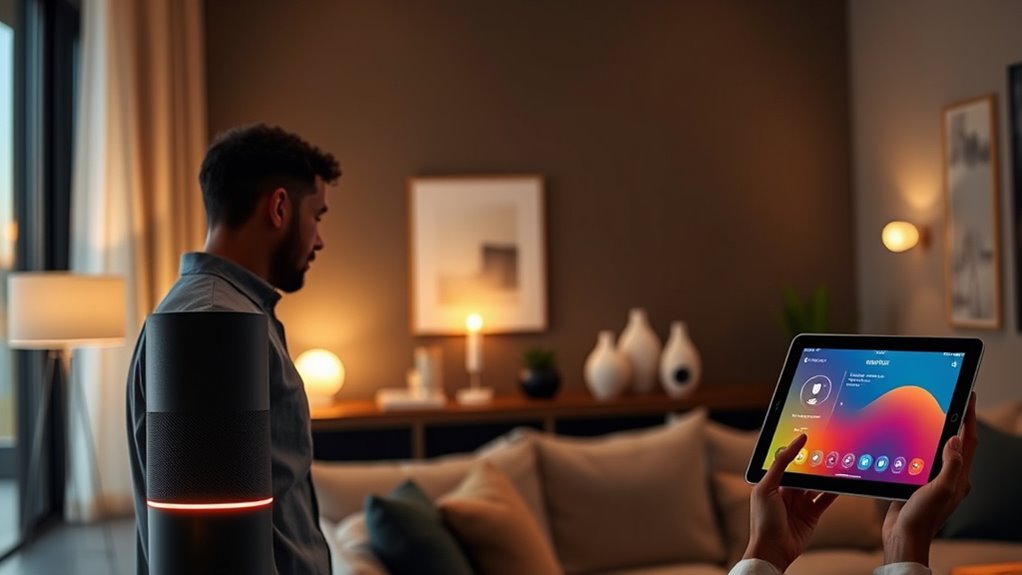
Integrating voice-controlled systems with other smart home technologies can enhance convenience and functionality, but it also depends on compatibility. To make the most of this integration, consider these key points:
Enhance smart home convenience by ensuring voice systems and devices are compatible and properly connected.
- Check if your devices support common standards like Zigbee, Z-Wave, or Wi-Fi.
- Use a central hub or platform that seamlessly connects multiple devices.
- Ensure voice assistants can communicate with your smart tech without hiccups.
- Keep firmware and apps updated to avoid compatibility issues.
Future Trends and Technological Developments
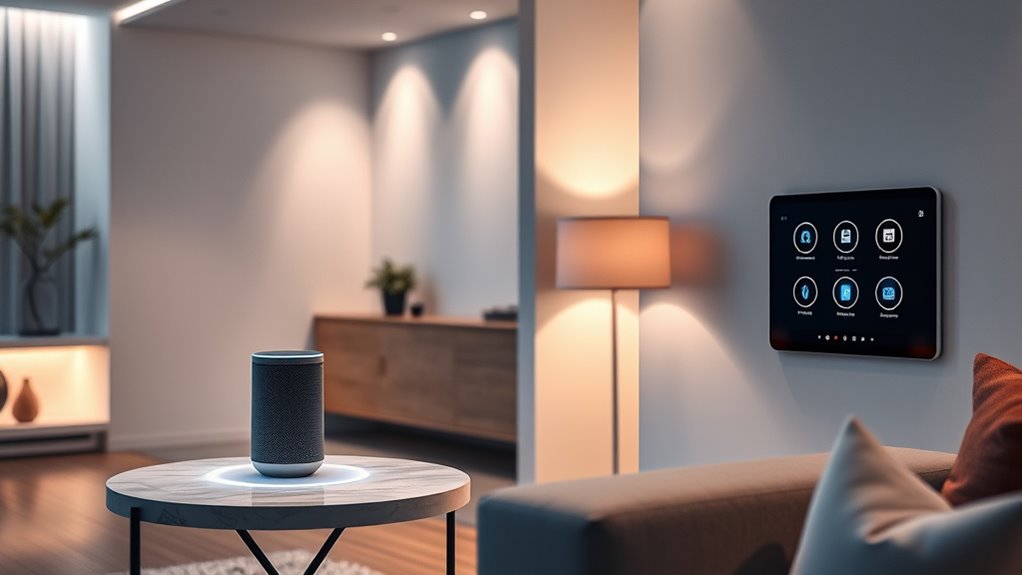
As technology continues to advance, voice-controlled and app-based home systems are expected to become more intelligent and intuitive. You’ll notice smarter AI that learns your habits, making automation seamless and personalized. Expect more integrations with wearable devices and IoT sensors, providing real-time data to optimize your home environment. Developments in edge computing will allow faster responses without relying on cloud processing, enhancing privacy and security. Voice assistants will become more natural, understanding context and complex commands better. Augmented reality (AR) may also play a role, giving you visual control overlays. Overall, future tech will make managing your home effortless, with systems that adapt to your lifestyle and preferences while prioritizing security and privacy.
Frequently Asked Questions
Which Method Offers Better Long-Term Value for Smart Home Management?
Using an app for home control offers better long-term value because it provides more precise management, customization, and integration with other smart devices. You can easily update settings and troubleshoot issues without relying on voice commands. While voice control is convenient, it may lack consistency or advanced features over time. Investing in app-based control ensures you have thorough, scalable management, making your smart home more efficient and adaptable in the long run.
How Do Voice and App Controls Handle Multi-User Households?
Using voice and app controls in a multi-user household is like juggling different balls—you need coordination. Voice controls let everyone speak commands, but they might get mixed up with similar voices. Apps allow personalized settings for each user, making management easier. You’ll find that combining both methods offers the best experience, ensuring each person can access and control devices comfortably without confusion or frustration.
Can Voice Commands Replace App Controls Entirely?
Voice commands can’t completely replace app controls yet, especially for complex or precise tasks. Voice is great for quick, hands-free actions, but apps offer detailed customization and settings adjustments that voice can’t easily handle. In a multi-user household, apps help manage individual preferences securely. So, while voice commands complement app controls, they don’t fully replace the need for dedicated app management for more intricate or personalized home control tasks.
What Are the Best Practices for Troubleshooting Issues in Each Method?
You should start troubleshooting by checking your device connections and making sure your network is stable. For voice commands, verify microphone permissions and clear any background noise. For app controls, update the app, restart your device, and ensure you’re logged in correctly. If issues persist, reset the device or reconfigure your settings. Always consult the device’s support resources for detailed guidance and keep software updated to prevent glitches.
How Do Voice and App Controls Impact Energy Efficiency in Homes?
You can improve your home’s energy efficiency with both voice and app controls by setting schedules and adjusting devices remotely. Voice commands offer quick, hands-free adjustments, ensuring you don’t forget to turn off unused appliances. Apps provide detailed control and monitoring, helping you identify energy patterns and optimize usage. Combining both methods allows you to manage your home more efficiently, reducing energy waste and lowering your bills.
Conclusion
Whether you choose voice or app home control, remember that simplicity and security should influence your smart space. Weigh the convenience of quick commands against the control of customized settings. As technology advances, staying savvy and selective ensures your smart home remains seamless, secure, and satisfying. Embrace evolving innovations with an eye for ease, efficiency, and security—because a smart home that’s safe and simple is truly superior, saving you stress and sparking satisfaction.