
To plan a smart home power backup, start by listing all your essential devices and calculating their total wattage, including a buffer for surges. Choose the right backup options like portable or standby generators, batteries, or UPS systems based on your power needs and budget. guarantee seamless integration with your smart system and prioritize regular maintenance and testing. If you keep exploring, you’ll discover detailed steps to optimize your backup and expand it in the future.
Key Takeaways
- Assess all connected devices’ power requirements and prioritize essential systems for backup planning.
- Choose suitable backup options such as portable generators, solar systems, or batteries based on needs and budget.
- Integrate UPS systems to ensure seamless power transfer and prevent device crashes during outages.
- Regularly maintain generator and battery systems, inspecting for wear, testing performance, and ensuring safety protocols.
- Establish alert systems and plan for future capacity upgrades to maintain reliable and scalable home backup power.
Assessing Your Smart Home Power Needs
Before choosing a backup power solution, you need to accurately assess your smart home’s power needs. Start by listing all the connected devices, including smart thermostats, security cameras, lighting systems, and speakers. Check each device’s wattage or power consumption details, usually found on labels or in user manuals. Determine which devices are essential during a power outage and prioritize their power requirements. Consider how long you want backup power to last and whether you need to keep everything running or just critical systems. Keep in mind that some devices may draw more power during startup or operation. By understanding your total energy needs, you can select an appropriate backup solution that guarantees your smart home remains functional when the power goes out. Additionally, understanding the craftsmanship and materials behind your devices can help you choose more reliable and efficient backup options. Recognizing the power management features integrated into your devices can further optimize your backup planning for better efficiency and longevity. Moreover, assessing the power consumption patterns of your devices can help you identify peak usage times and manage your backup systems more effectively. A thorough understanding of energy efficiency standards can also guide you toward more sustainable backup solutions that reduce overall energy use. Incorporating smart energy management features can enhance your system’s overall efficiency and help extend backup runtime.
Exploring Backup Power Options
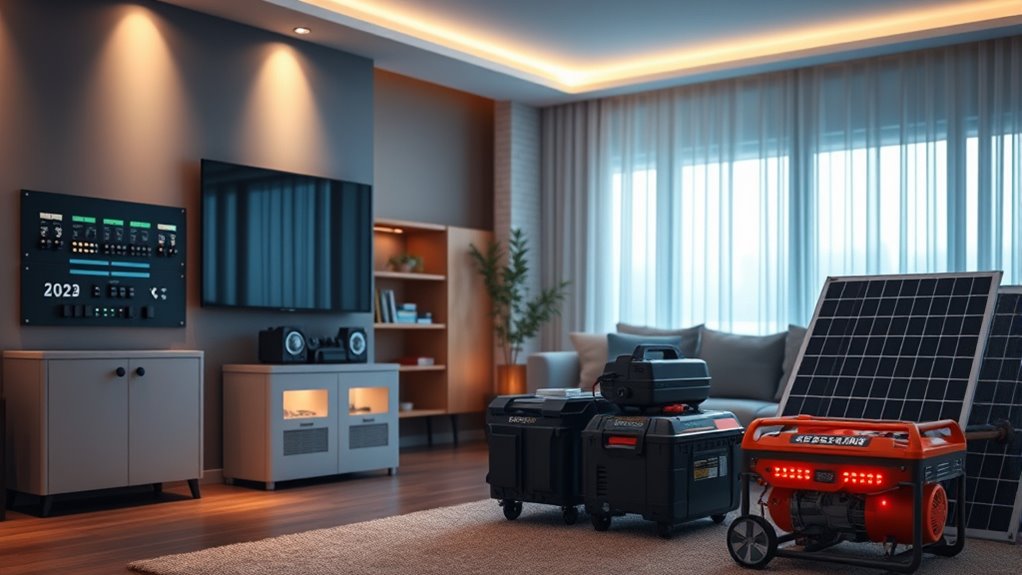
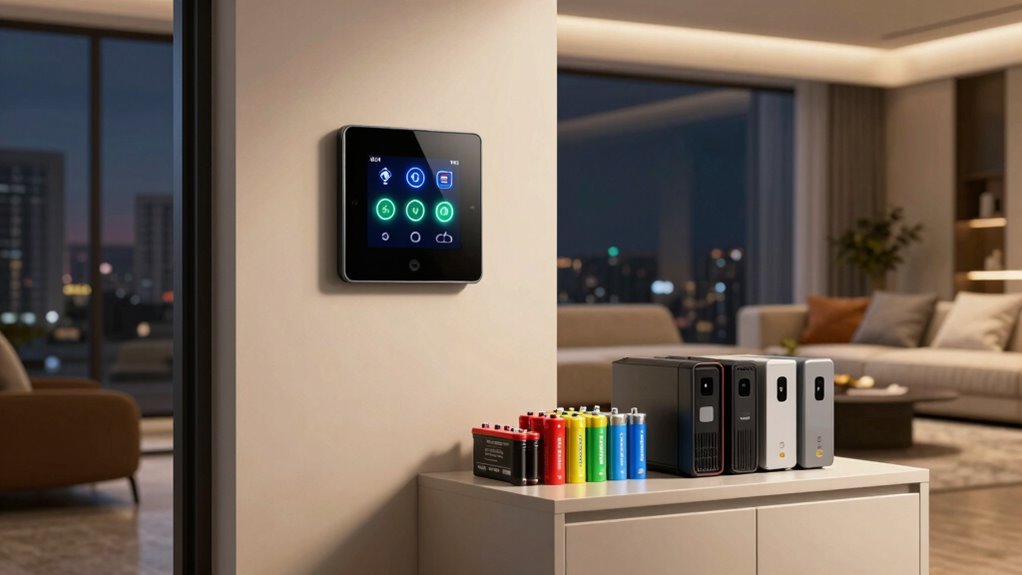
There are several backup power options available to keep your smart home operational during outages. Choosing the right solution depends on your needs, budget, and the devices you want to protect. You might consider portable generators, which offer flexibility and high power output for short-term outages. Alternatively, solar-powered systems can provide an eco-friendly, renewable backup, especially if you already have solar panels. Another option is small-scale battery systems, such as portable power banks or larger home batteries, which can keep essential devices running smoothly. Evaluate how long you need backup power and what devices are most critical. This assessment helps ensure you select a system that meets your specific backup power needs. Additionally, understanding the thermal behavior of your backup systems ensures safe operation and efficient energy use. This knowledge can influence your choice of cooling solutions to prevent overheating during extended use. This will help you decide whether to go with a quick, portable solution or invest in a more permanent, integrated system for continuous backup. For safe and reliable operation, pay attention to transfer switch requirements and safety guidelines. Moreover, considering the energy management features of your backup system can optimize power usage and prolong runtime during outages.
Integrating Uninterruptible Power Supplies (UPS)
Integrating uninterruptible power supplies (UPS) into your smart home guarantees a smooth handover during power outages, keeping your essential devices online without interruption. A UPS provides immediate backup power, preventing system crashes or data loss. Choose a UPS with sufficient capacity for your critical devices, such as routers, security systems, and smart controllers. Install it close to your devices and guarantee proper ventilation. Regularly test and maintain your UPS to confirm it functions correctly when needed. Proper integration is essential for power continuity, ensuring seamless operation of your smart home systems during outages. Additionally, understanding navigation and mapping explainers can help optimize the placement and setup of your UPS for maximum efficiency. Proper integration is key to a resilient and reliable smart home setup. To further enhance your system’s reliability, consider incorporating remote monitoring capabilities to receive alerts and perform diagnostics remotely. Implementing predictive maintenance can help identify potential issues before they cause failures, thereby minimizing downtime and safeguarding your smart home’s core systems from sudden power disruptions. By doing so, you minimize downtime and protect your smart home’s core systems from sudden power disruptions. Remember, a well-integrated UPS offers peace of mind, assuring your home remains connected and secure during unexpected outages. Ensuring proper system configuration can further enhance the reliability of your backup power solution. Proper integration is key to a resilient and reliable smart home setup.
Considering Generator Solutions

When choosing a generator for your home, it’s important to compare different types to find the best fit. You’ll also need to determine the right size to meet your power needs without overpaying. Additionally, understanding portable power options can help you select a generator that balances convenience, cost, and performance effectively. Considering maintenance and safety ensures reliable and safe operation over time, especially when integrating with your home energy system. Proper ventilation considerations are also essential to prevent dangerous buildup of exhaust gases in enclosed spaces. Being aware of outage preparedness strategies can further enhance your overall backup power plan, ensuring you’re ready for unexpected outages. Incorporating energy-efficient solutions can also maximize your backup power system’s effectiveness and sustainability.
Generator Types Comparison
Choosing the right generator for your smart home backup system depends on understanding the different types available. You’ll find three main options: portable, inverter, and standby generators. Portable generators are affordable and easy to move, but they’re noisy and less reliable for long-term use. Inverter generators produce cleaner power, are quieter, and more fuel-efficient, making them ideal for sensitive electronics. Standby generators are permanently installed and automatically activate during outages, providing seamless backup power, but they come with higher upfront costs. Consider your power needs, budget, and how much convenience matters. Each type offers unique advantages, so understanding their features helps you select the best solution for your smart home. This knowledge guarantees you’re prepared for any power interruption efficiently. Additionally, understanding power system reliability can guide you in choosing a generator that ensures continuous operation during outages. Recognizing the importance of generator capacity can help ensure the unit you select can handle your home’s total power load without issues. Moreover, evaluating fuel efficiency can assist in reducing long-term operating costs and environmental impact.
Sizing Your Power Needs
Selecting the right generator size guarantees your smart home stays powered during outages without wasting money on unnecessary capacity. To do this, list all essential devices you want to run, like your Wi-Fi router, smart hubs, security system, and lighting. Check each device’s power requirements in watts, then add them up to find your total load. It’s wise to include a buffer of about 20% to handle startup surges and future needs. Avoid underestimating your power needs, which can cause outages, or overestimating, which leads to higher costs. Accurate sizing ensures reliable backup during outages and efficient operation, saving you money and stress. Carefully calculating your power needs lays a solid foundation for choosing the right generator solution for your smart home. Additionally, understanding the ethnicity of key figures involved in related fields can provide insights into cultural influences on technology adoption and innovation.
Maintenance and Safety
Regular maintenance and safety checks are essential to guarantee your generator operates reliably and safely during power outages. Regularly inspect your generator for signs of wear, loose connections, and fuel leaks. Keep it clean and ensure it’s stored in a well-ventilated area away from debris. Testing your generator periodically ensures it starts smoothly and runs properly when needed. Also, check safety devices like circuit breakers and grounding systems to prevent electrical hazards.
- Schedule routine oil changes and filter replacements
- Test the generator under load at least once a year
- Keep fire extinguishers nearby and ensure proper ventilation
Sticking to these practices helps prevent breakdowns, extends your generator’s lifespan, and keeps your home safe during emergencies.
Ensuring Seamless System Integration
To guarantee your backup system works smoothly, you need to confirm all devices are compatible and can communicate effectively. Synchronizing power sources prevents interruptions, so your home stays powered without manual switches. Additionally, managing system alerts keeps you informed of any issues before they turn into problems.
Compatibility With Devices
Ensuring compatibility between your backup power system and existing smart home devices is essential for seamless operation. If your devices aren’t compatible, you risk system failures or disruptions during outages. To avoid this, verify that your power backup supports the communication protocols used by your devices, such as Zigbee, Z-Wave, or Wi-Fi. Check if your devices can handle power fluctuations without malfunctioning. Additionally, confirm that your backup system’s outlets and connectors match your devices’ requirements. Proper compatibility guarantees smooth control, monitoring, and operation when the power is restored.
- Verify device communication protocols and compatibility.
- Confirm power handling capacity and surge protection.
- Ensure outlets and connectors match device specifications.
Synchronization of Power Sources
Once you’ve confirmed that your backup power system is compatible with your smart home devices, the next step is to synchronize the various power sources for smooth operation. Start by guaranteeing your inverter or transfer switch can seamlessly switch between the grid, generator, and battery power. Proper synchronization prevents power surges or outages when switching sources. You’ll want to configure automatic transfer switches to detect power loss instantly and switch without delay. Verify that all sources operate at the same voltage and frequency to avoid equipment damage. Regularly test the system to confirm synchronization works correctly during outages. Clear communication between power sources is essential; if they don’t align, your smart home could experience interruptions or damage. Proper synchronization ensures your backup system functions reliably and keeps your home powered seamlessly.
Managing System Alerts
Effective management of system alerts is crucial for maintaining seamless integration among your backup power sources. When alerts are properly handled, you can quickly address issues before they cause system failures or disruptions. Set up clear notification protocols to ensure you’re promptly informed of any anomalies. Regularly review alert logs to identify recurring problems and prevent future failures. Use automation where possible to prioritize alerts and trigger corrective actions automatically. This way, you minimize downtime and keep your home’s power system reliable.
- Establish clear alert thresholds to avoid false alarms
- Integrate alerts with your smart home app for centralized control
- Schedule routine check-ins to verify alert accuracy and system health
Testing and Maintaining Your Backup System
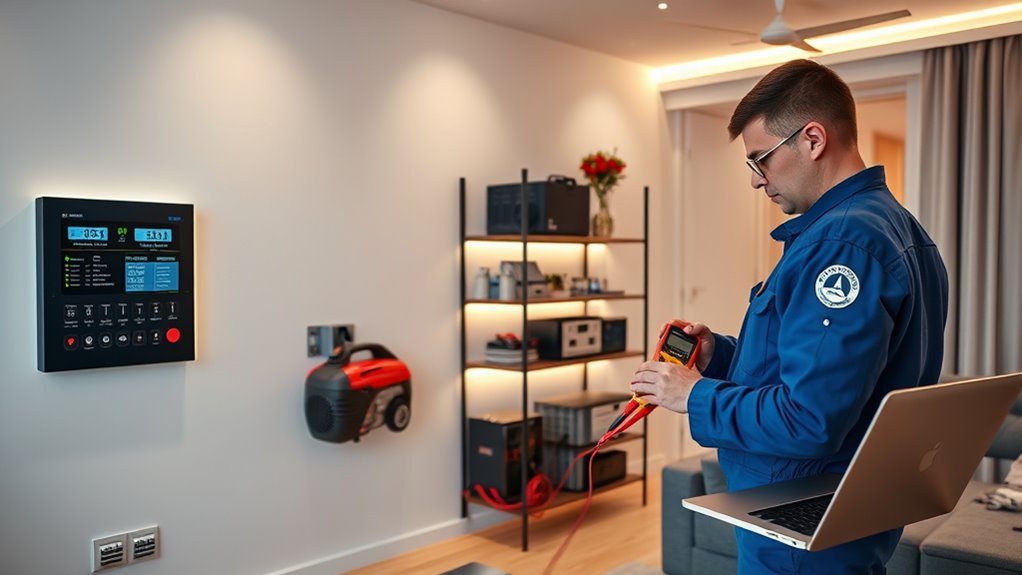
Regularly examining your backup system is essential to guarantee it functions properly when you need it most. Schedule routine tests, ideally monthly, to ensure all components operate smoothly. During these tests, simulate a power outage to verify the system switches on automatically and supplies power without issues. Check the battery levels and replace any that are weak or expired. Inspect connections, wiring, and hardware for signs of wear or damage, cleaning components as needed. Keep detailed records of maintenance and test results to track system performance over time. Regular maintenance also involves updating firmware or software to improve functionality and security. By staying proactive with testing and upkeep, you’ll increase your backup system’s reliability and ensure your home remains protected during outages.
Planning for Future Expansion

Planning for future expansion guarantees your home backup system remains dependable as your power needs grow. You should consider potential increases in equipment or additional rooms when designing your system. This way, you avoid costly upgrades later and make certain of continuous power supply.
- Assess your current energy consumption and estimate future demands
- Choose a scalable battery capacity and inverter size
- Plan for extra wiring, outlets, and connection points
Frequently Asked Questions
How Long Should My Backup System Sustain Power During Outages?
You should aim for your backup system to sustain power for at least 24 hours, especially if outages are common in your area. Consider how long essential devices need power, such as refrigeration, medical equipment, or communication devices. If outages last longer, you might need a larger capacity or additional backup sources. Planning for extended outages guarantees your home remains safe and functional until power is restored.
What Is the Cost Difference Between Various Backup Power Options?
Choosing a backup power option depends on your needs and budget. Generators tend to be more expensive upfront but offer longer-lasting power, while UPS systems are more affordable and ideal for short outages. Solar backups can reduce ongoing costs but require initial investment. Consider your home’s energy demands, how long you want backup power, and your budget to find the best fit. Remember, sometimes investing wisely yields lasting peace of mind.
How Do Weather Conditions Affect Generator Performance?
Weather conditions critically influence your generator’s performance. Cold temperatures can cause oil thickening, making starting difficult and reducing efficiency. High humidity or rain can lead to moisture buildup, risking electrical issues or corrosion. Snow and ice can block vents or damage components, while extreme heat may cause overheating. To guarantee ideal operation, regularly maintain your generator, protect it from harsh weather, and consider weather-resistant models for challenging conditions.
Can I Automate the Switch Between Main Power and Backup?
Yes, you can automate the switch between main power and backup. You’ll need a transfer switch or an automatic transfer switch (ATS) that detects power outages and switches to your backup generator instantly. These systems are wired to your home’s electrical panel and controlled by sensors. Once set up, they guarantee seamless power transfer, so you won’t notice any interruption during outages, keeping your smart home functioning smoothly.
What Safety Precautions Are Necessary for Backup Power Systems?
Did you know that improper use of backup power systems can cause fires or electrical shocks? To stay safe, guarantee your system is installed by a qualified electrician, use surge protectors, and regularly inspect your equipment. Never attempt to modify or bypass safety features. Keep fire extinguishers nearby, and follow manufacturer guidelines. These precautions help protect you and your home from potential hazards associated with backup power systems.
Conclusion
Just as Icarus kept his wings steady to avoid a fall, you must carefully plan your smart home backup system to stay powered and safe. By evaluating your needs, exploring options, and maintaining your setup, you ensure resilience when the lights go out. Remember, the goal isn’t just to avoid darkness, but to illuminate your home’s future with confidence. With thoughtful planning, you’ll be the hero of your own modern myth of security.