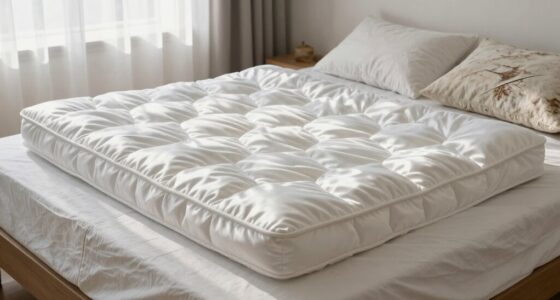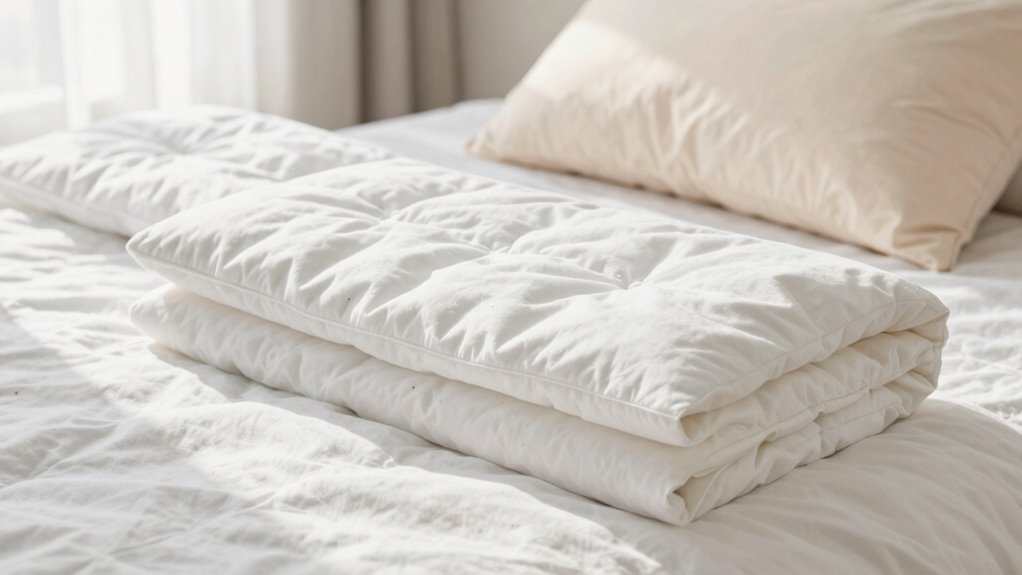
To keep your sleep environment healthy, wash your pillows every 3 to 6 months, or sooner if you have allergies or asthma. Comforters should be cleaned every 1 to 2 months, especially during seasonal changes or if you tend to sweat or spill. Proper washing and drying techniques are essential to prevent mold and bacteria buildup. For more tips on maintaining a clean, allergen-free bed, keep exploring helpful ways to care for your bedding.
Key Takeaways
- Wash pillows every 3 to 6 months, more frequently if you have allergies or asthma.
- Clean comforters every 1 to 2 months to remove dust mites, allergens, and odors.
- Use warm or hot water (at least 130°F) and thorough drying to eliminate bacteria and prevent mold.
- Protect bedding with allergen-proof covers and vacuum mattresses regularly for added hygiene.
- Adjust washing frequency based on personal sensitivities, seasonal changes, and usage habits.
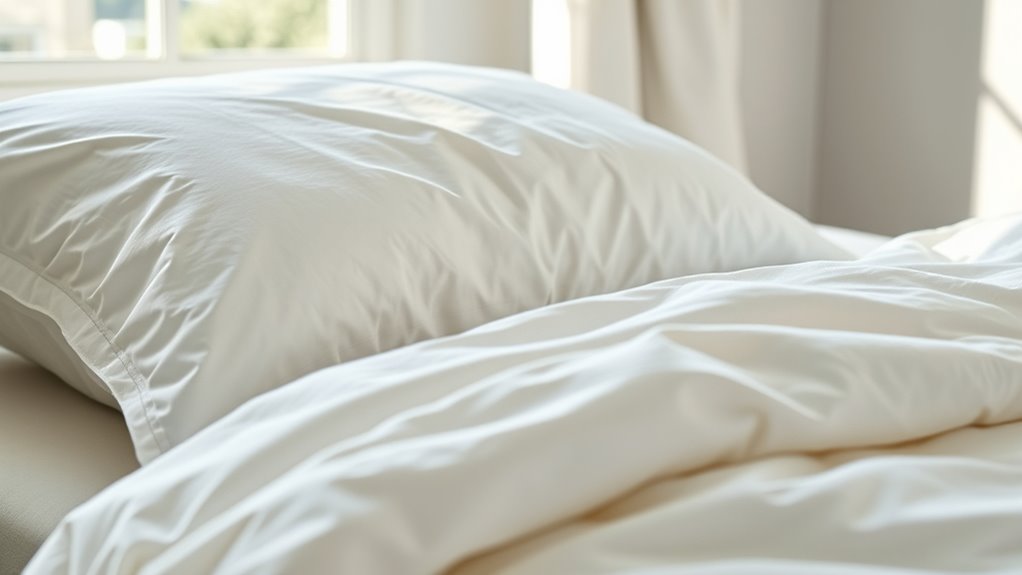
Keeping your pillows and comforters clean is vital for maintaining a healthy sleeping environment. Over time, these items can accumulate dust mites, dead skin cells, sweat, and other allergens that can impact your health and sleep quality. Dust mites, in particular, thrive in warm, humid environments and feed on skin flakes, making your bedding their favorite habitat. If you suffer from allergies or asthma, regularly washing your pillows and comforters can greatly improve allergy relief. Clean bedding reduces the presence of dust mites and other allergens, helping you breathe easier and minimizing allergy symptoms like sneezing, congestion, and itchy eyes.
Regularly washing pillows and comforters reduces dust mites and allergens, promoting healthier, more comfortable sleep.
You should aim to wash your pillows at least every three to six months, depending on how often you use them and your personal sensitivities. If you have allergies or asthma, washing pillows more frequently—every two to three months—can be beneficial. Comforters generally need a wash every one to two months, especially during seasonal changes or if you tend to sweat or spill on them. Regular cleaning prevents the buildup of dust mites and allergens, guaranteeing your sleeping environment stays healthier. Additionally, proper drying techniques are essential to prevent mold and bacteria growth after washing.
When washing pillows, check the care label first. Many pillows can be machine washed on a gentle cycle with warm water, which helps eliminate dust mites effectively. Using hot water (at least 130°F) is even better if your pillow’s fabric and filling can handle it, as higher temperatures kill dust mites and bacteria. Be sure to dry pillows thoroughly, either in the dryer on a low heat setting or in the sun, which also helps reduce allergens. Proper drying is vital because damp pillows can become moldy and harbor bacteria, negating the benefits of washing.
For comforters, most can be washed in a standard washing machine, but larger ones might require a commercial-sized machine or professional cleaning. Use a gentle detergent and select a warm or hot water cycle. Besides removing dust mites and allergens, washing comforters helps eliminate odors and skin oils accumulated over time. Drying is equally important; ensure they are completely dry to prevent mold growth. Tumble drying on low heat or line drying in the sun works well.
In addition to washing, consider using allergen-proof covers for your pillows and comforters. These covers act as barriers against dust mites and other allergens, providing ongoing allergy relief. Regularly vacuuming your mattress and keeping your bedroom humidity low also reduces dust mite populations. Staying consistent with these routines will keep your bedding cleaner, healthier, and more comfortable, ultimately improving your sleep quality and overall well-being.
Frequently Asked Questions
Can Washing Pillows Extend Their Lifespan?
Washing your pillows can indeed extend their lifespan by removing dirt, oils, and allergens that break down pillow materials over time. Regular cleaning boosts pillow durability, helping them stay fluffy and supportive longer. This also benefits your comforter longevity, since fresh pillows reduce the need for frequent replacements. Keep in mind, gentle washing and proper drying are key to maintaining their quality, ensuring they stay comfortable and supportive for years to come.
Are There Specific Detergents Best for Delicate Pillows?
For delicate pillows, choose a gentle detergent designed for delicate fabrics or hypoallergenic options to prevent damage. Avoid strong chemicals and opt for a mild, fragrance-free detergent to keep the fabric soft and fresh. It’s best to skip fabric softeners, as they can leave residues that compromise pillow integrity and breathability. Always check the care label for specific detergent recommendations to make certain your pillows stay in great shape.
How Do I Remove Stains From Comforters Effectively?
Imagine you spill red wine on your comforter. To remove the stain, start with stain removal by applying a fabric pretreatment directly on the affected area. Gently work it in and let it sit for 10-15 minutes. Then, wash your comforter as usual, using a gentle detergent. This method helps lift stains effectively, keeping your comforter fresh and clean without damaging delicate fabrics.
Is It Safe to Wash Memory Foam Pillows at Home?
Washing memory foam pillows at home isn’t generally safe because it can damage the foam’s structure. Memory foam is sensitive to moisture and heat, so if you choose to clean it, do so carefully. Use a gentle spot-cleaning method with mild detergent and avoid soaking. For thorough cleaning, it’s best to follow washing safety guidelines or consider professional cleaning to preserve your pillow’s shape and longevity.
What Are Signs My Pillows or Comforters Need Replacing?
Your pillows and comforters show signs of wear like a well-loved book. If your pillow stuffing types—such as memory foam, down, or polyester—become lumpy or flat, it’s time to replace them. Frayed comforter fabric care or persistent stains also signal deterioration. If they no longer support your sleep or look dingy despite cleaning, swapping them out ensures better comfort and hygiene, keeping your sleep environment fresh and inviting.
Conclusion
Now that you know the need for regular refreshment, make washing your pillows and comforters a weekly ritual. Consistent cleaning clears away dust, dirt, and allergens, creating a cozy, clean haven. Keep comforters crisp and pillows pillowy by prioritizing proper care. With this simple schedule, you’ll sleep soundly, surrounded by serenity. So, stay vigilant, wash wisely, and enjoy a fresh, fluffy, fabulous sleep sanctuary every single week.