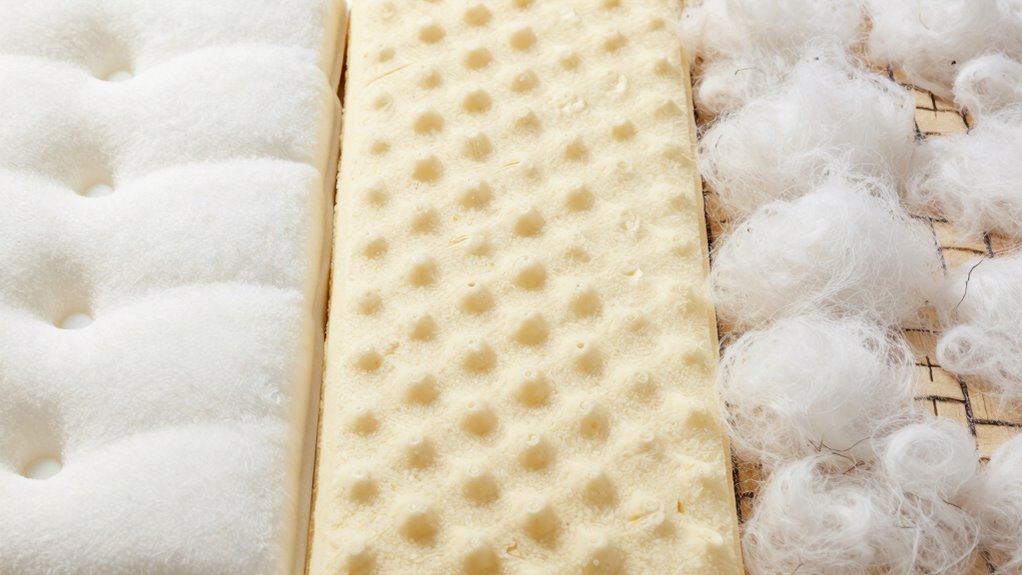

Memory foam offers a plush, contouring feel that relieves pressure and molds to your body, but it can trap heat. Latex is naturally resilient, responsive, and breathable, providing firm support that lasts longer and resists dust mites. Fiber toppers are lightweight, soft, and more breathable but tend to wear out faster. Each material suits different sleep positions and preferences—discover which works best for your comfort and support needs as you explore more.

Turn your quiet moments into listening time
- Thousands of audiobooks, podcasts and originals
- Listen on your phone, tablet or Echo — also offline
- Cancel anytime
Key Takeaways
- Memory foam offers superior pressure relief and body contouring but tends to trap heat, making it ideal for side sleepers seeking cushioning.
- Latex provides quick responsiveness, durability, and natural breathability, suitable for those needing support and temperature regulation.
- Fiber toppers are lightweight and airy, offering softness and airflow, but generally lack long-term support and durability.
- Latex and high-quality fiber materials are eco-friendly options with longer lifespans, reducing environmental impact and replacement frequency.
- Choice depends on sleep position and support needs; memory foam is best for pressure relief, latex for support and cooling, fiber for softness and breathability.
Products Worth Considering

Levoit Core 400S-P Smart Air Purifier for Large Rooms

Dyson V8 Cyclone Cordless Vacuum

Levoit Eleva 300X HEPA Air Purifier for Home and Bedroom
As an affiliate, we earn on qualifying purchases.
Differences in Material Composition and Feel
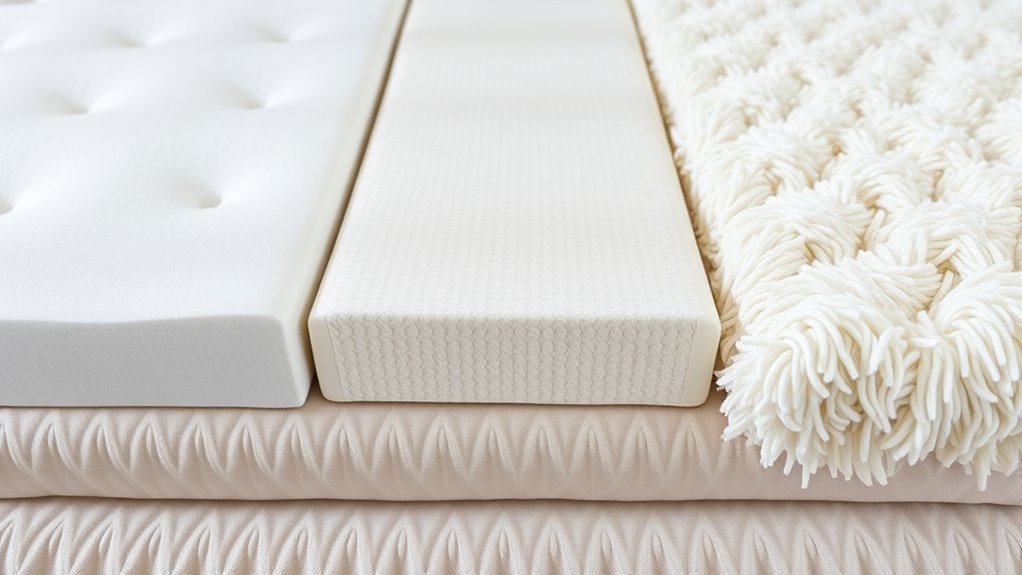
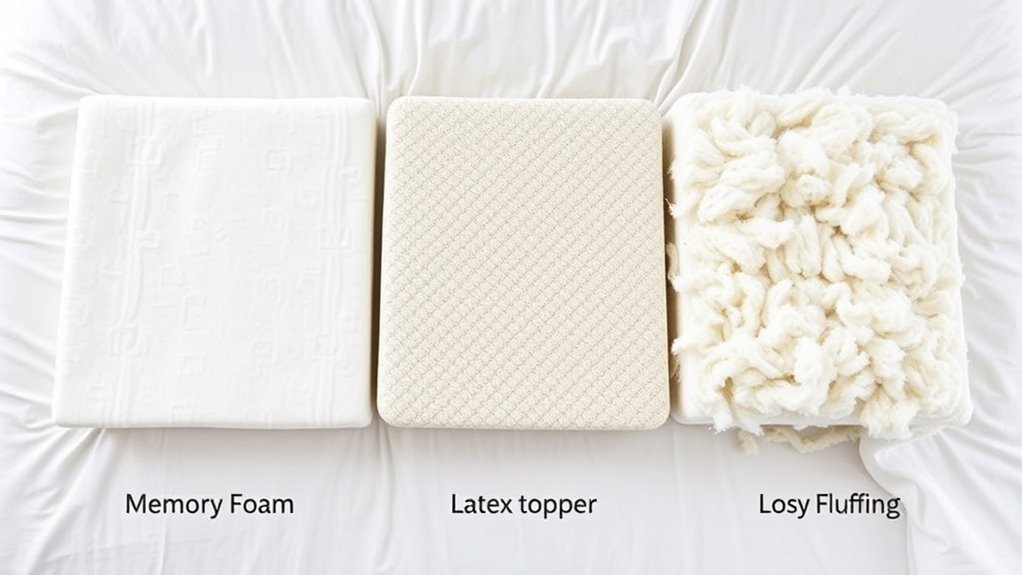
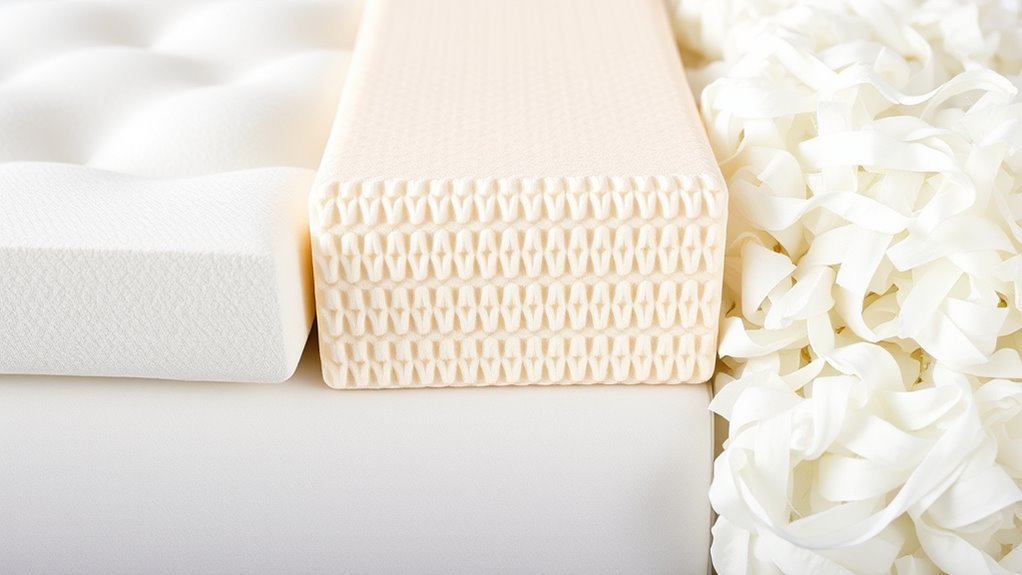
Different mattress topper materials vary substantially in both composition and feel, allowing you to customize your sleep experience. Memory foam is known for its dense, contouring nature, providing a plush, hugging sensation that molds to your body. Latex toppers are naturally elastic and resilient, offering a bouncy, buoyant feel that responds quickly to movement. They tend to be firmer and more breathable than memory foam, making them a popular choice for those seeking a natural option. Additionally, latex’s natural elasticity contributes to its quick response and durability, enhancing overall comfort. Moreover, latex’s hypoallergenic properties can benefit allergy sufferers by resisting dust mites and mold. Breathability is another key advantage of latex, helping to regulate temperature and keep sleepers cool throughout the night. Fiber-filled toppers, often made from cotton or polyester, deliver a soft, airy feel that adds cushioning without significant contouring. Each material’s unique characteristics influence your comfort, so understanding these differences helps you select the topper that best suits your preferred sleep experience. Innovative European Cloud Servers technologies exemplify how sustainable and secure solutions can be integrated into everyday products, reflecting a broader trend toward environmentally conscious design.
Support and Pressure Relief Capabilities

Support and pressure relief are key factors to contemplate when choosing a mattress topper, as they directly impact your comfort and spinal alignment. Different materials excel at providing these benefits in unique ways. With memory foam, you’ll feel a cradle around your body, evenly distributing weight. Latex offers responsive support that quickly adjusts to your movements, maintaining proper spinal alignment. Fiber toppers provide a soft surface that cushions pressure points but may lack the support of foam or latex. Imagine:
- Memory foam molding to every curve, easing shoulder and hip pressure.
- Latex bouncing back instantly, supporting your spine during movement.
- Fiber offering a plush surface, reducing pressure but possibly sacrificing support.
Choosing the right material depends on your need for targeted support versus pressure relief.
Breathability and Temperature Regulation
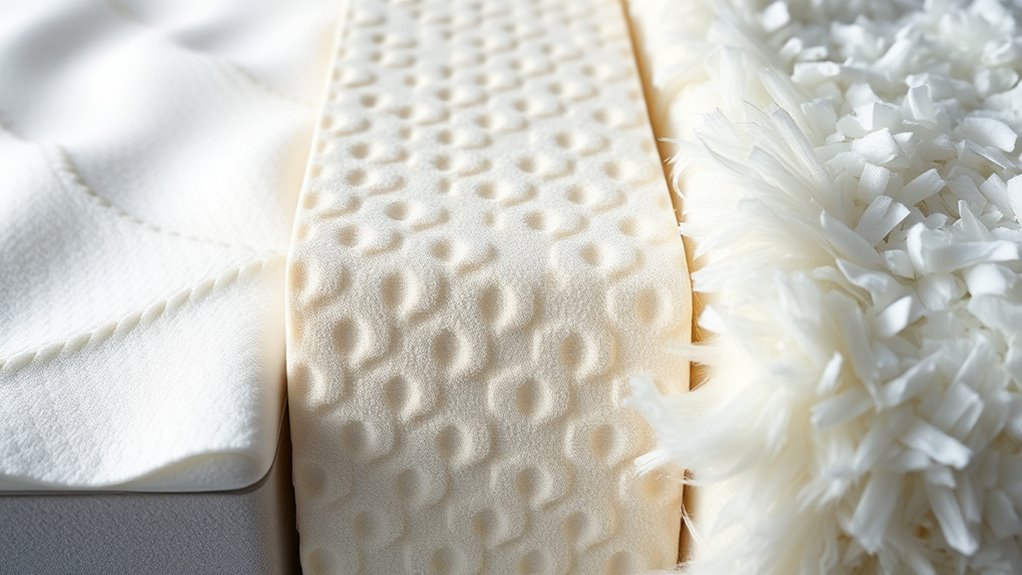
Your comfort depends on how well your mattress topper manages heat and airflow. Topper materials with low heat retention and good ventilation keep you cool throughout the night. Moisture-wicking properties also help prevent sweat buildup, ensuring a more comfortable sleep environment. Additionally, choosing materials with proper airflow properties can significantly enhance breathability and temperature regulation. Incorporating breathable fabrics into your topper can further optimize airflow and improve sleep quality. Selecting appropriate materials that promote air circulation can make a noticeable difference in maintaining a consistent, comfortable temperature all night long. Understanding material breathability can help you choose options that maximize comfort and airflow during sleep. Recognizing the cultural significance of certain materials can also guide you toward options that balance comfort and tradition.
Heat Retention Levels
Heat retention is a crucial factor to contemplate when choosing a mattress topper, as it directly affects your comfort throughout the night. Memory foam tends to trap heat, making you feel warm and sweaty, especially if you’re naturally hot. Latex offers better breathability, helping to disperse heat more effectively. Fiber toppers usually have the lowest heat retention, providing a cooler sleep experience. To visualize:
- Memory foam feels like a cozy, enveloping hug that can trap warmth.
- Latex acts like a breathable barrier, allowing heat to escape.
- Fiber toppers resemble a lightweight, airy layer that keeps you cool.
- Incorporating natural materials can further enhance breathability and temperature regulation.
Your choice depends on your sensitivity to heat and preferred sleep temperature, impacting your overall rest quality.
Airflow and Ventilation
When choosing a mattress topper, airflow and ventilation play a key role in maintaining a comfortable sleep environment. Good breathability helps prevent heat buildup, so you stay cooler throughout the night. Memory foam toppers often trap heat because of their dense structure, which can lead to discomfort if you tend to sleep hot. Latex toppers generally promote better airflow due to their open-cell design and natural porosity, helping dissipate heat more effectively. Fiberfill toppers, especially those with breathable fabrics, allow air to circulate freely, supporting a cooler sleeping experience. Ventilation features like gussets or perforations also enhance airflow. Incorporating breathable fabrics into the topper’s cover can further improve ventilation and comfort during sleep. Choosing materials with proper moisture management can also help keep the surface dry and comfortable. Additionally, selecting toppers with eco-friendly and breathable packaging solutions reflects a growing trend towards environmentally conscious sleep accessories, emphasizing the importance of well-ventilated materials in product design.
Material Moisture Management
How well a mattress topper manages moisture directly impacts your sleep comfort by controlling temperature and reducing sweat buildup. Effective moisture management helps keep you cool and dry throughout the night.
Memory foam traps heat, potentially causing overheating, but some have cooling gels or ventilated designs that improve airflow. Latex naturally breathes well, allowing air to flow freely and wick away moisture. Fiber toppers, especially those with breathable fillings like wool or cotton, excel at moisture evaporation.
- Memory foam with cooling technology disperses heat and reduces sweat.
- Latex’s open-cell structure promotes airflow and keeps moisture at bay.
- Fiber toppers with moisture-wicking fabrics draw sweat away from your skin.
Durability and Longevity of Each Material
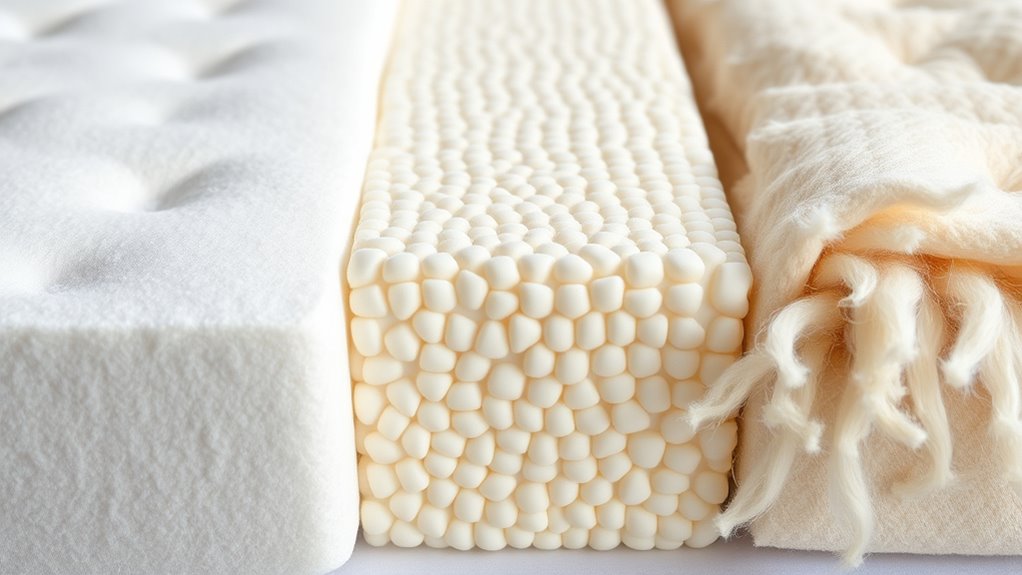
When considering mattress toppers, durability varies by material. Memory foam offers long-term resilience, while latex naturally withstands wear better over time. Fiber toppers tend to show signs of wear faster, affecting their longevity. Additionally, choosing a quality material can help maintain your topper’s functional lifespan and overall performance. Proper care and regular inspection can further extend the wear resistance of these materials, ensuring your investment remains comfortable and supportive for years to come. Regularly rotating your topper can also help distribute pressure evenly and prolong its material integrity. Understanding the manufacturing process of each material can also influence how well they endure daily use and stress.
Memory Foam: Long-Term Resilience
Memory foam mattresses are known for their ability to conform closely to your body, but their long-term resilience depends on the quality and construction of the foam. High-quality memory foam resists sagging and maintains shape over time, ensuring lasting comfort. Inferior foam, however, may develop impressions or lose support faster. To visualize its durability, consider:
- A dense, thick layer that holds its shape after years of use.
- Consistent responsiveness, returning quickly to its original form.
- Resistance to softening or sagging, even after repeated pressure.
- Proper care and foam quality, which are essential for maximizing its longevity and support.
Additionally, material composition plays a crucial role in durability, influencing how well the foam endures daily use. Regular maintenance and avoiding exposure to excessive heat can also help preserve its long-term resilience, especially when using protective covers to prevent damage from environmental factors. Furthermore, understanding durability factors can help consumers make informed choices to extend the lifespan of their memory foam mattresses.
Latex: Natural Durability Advantage
Latex toppers are renowned for their natural durability, often outlasting other materials with proper care. Latex’s resilient structure resists sagging and indentations, maintaining support over many years. Unlike foam, latex naturally rebounds, preserving its shape even after extended use. Its dense composition helps it withstand daily pressure without breaking down, making it a long-lasting choice. Natural latex also resists dust mites and mold, which can degrade other materials over time. When cared for properly—rotating regularly and protecting from excessive moisture—it can provide reliable comfort for a decade or more. Additionally, latex’s resistance to microbial growth enhances its durability and health benefits. This longevity makes latex toppers a smart investment, especially if you’re looking for a durable, supportive addition that won’t need frequent replacement.
Fiber Toppers: Wear and Tear
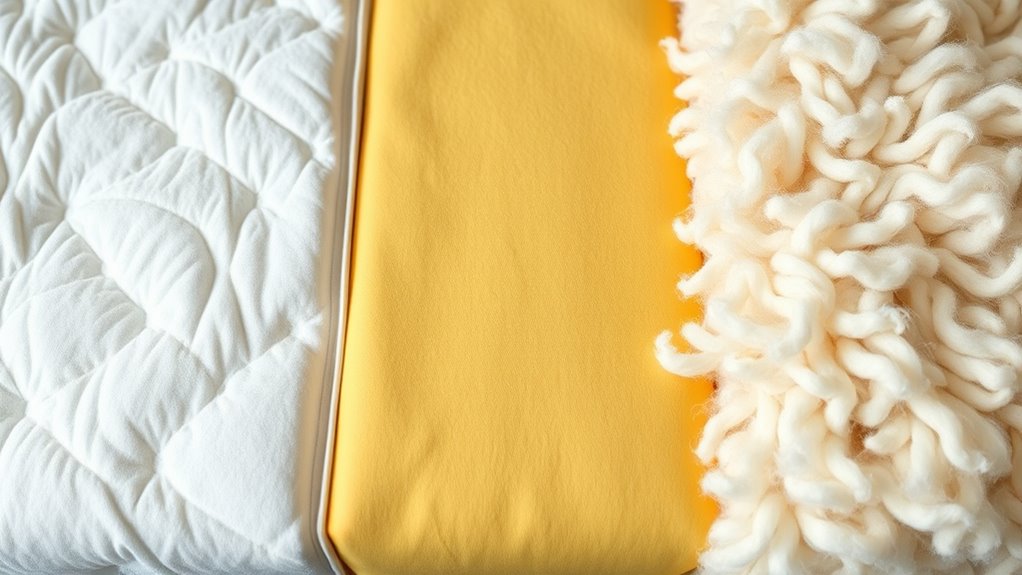
Fiber toppers vary in durability depending on the type of material used, but generally, they tend to wear out faster than latex or memory foam. Over time, you might notice the fibers becoming flattened or clumped. Here’s what you could see:
- The fibers break down, losing their fluffiness and support.
- The filler shifts or clumps, creating uneven surfaces.
- The fabric cover shows signs of thinning, tears, or fraying.
These issues happen because fiber materials are more sensitive to regular use and washing. As fibers weaken, the topper’s ability to provide comfort diminishes. To extend its life, you’ll want to handle it gently, wash it carefully, and replace it when it no longer offers adequate support.
Maintenance and Care Requirements
To keep your mattress topper in good condition and extend its lifespan, regular maintenance and proper care are essential. For memory foam toppers, rotate or flip them every few months to prevent uneven wear. Use a removable, washable cover to protect the surface from stains and dirt. Latex toppers benefit from spot cleaning with mild detergent and a damp cloth; avoid harsh chemicals. Fiber toppers should be shaken out regularly to remove dust and debris, and their covers washed as recommended by the manufacturer. Always follow the care instructions provided with your topper, and avoid exposing it to direct sunlight or moisture, which can degrade materials. Proper maintenance helps preserve comfort, hygiene, and overall durability. Proper cleaning techniques are crucial for maintaining the integrity of different materials and preventing damage.
Allergies and Sensitivities Considerations
Are allergies or sensitivities a concern when choosing a mattress topper? If so, consider these points. First, memory foam can trap dust mites and mold if not properly ventilated, potentially aggravating allergies. Second, latex toppers naturally resist dust mites and mold, making them a good choice for sensitive sleepers. Third, fiber-filled toppers may contain synthetic materials or dust-mite-friendly particles, which could trigger reactions. To minimize risks, look for hypoallergenic labels and choose materials that resist allergens. Regularly washing or airing out your topper can also reduce irritants. Ultimately, selecting a material that aligns with your sensitivities helps ensure a comfortable, healthy sleep environment. Always check product labels and consider consulting an allergy specialist if needed.
Cost and Value for Money
When evaluating mattress toppers, weighing cost against overall value helps you make a smart investment. Memory foam toppers tend to be more affordable upfront but may require replacement sooner due to sagging or wear. Latex toppers usually cost more but offer greater durability, providing long-term savings. Fiber-filled toppers are often the most budget-friendly initially but may not last as long or provide consistent support. Consider how long you plan to use the topper and your comfort needs. Investing in a slightly pricier latex topper could save you money over time, while a cheaper memory foam might require frequent replacements. Ultimately, balance your budget with durability and comfort to ensure you’re getting the best value for your money.
Environmental Impact and Sustainability

Choosing eco-friendly materials for your mattress topper minimizes environmental harm and promotes sustainability. Durability guarantees your topper lasts longer, minimizing waste and the need for frequent replacements. By considering these factors, you can make a more responsible and lasting choice for both the planet and your comfort.
Eco-Friendly Material Choices
Considering the growing concern for the environment, selecting eco-friendly mattress toppers has become more important than ever. You can make a positive impact by choosing materials that prioritize sustainability. Imagine:
- Organic latex harvested from responsibly managed farms, reducing chemical use and supporting eco-conscious practices.
- Recycled fibers repurposed from plastic bottles, lowering waste and conserving resources.
- Natural wool sourced ethically, biodegradable, and renewable, minimizing environmental harm.
These options not only reduce your carbon footprint but also promote healthier living environments. By opting for eco-friendly materials, you help decrease reliance on synthetic chemicals and nonrenewable resources, ensuring a greener planet. Your choice can influence the market toward more sustainable practices and inspire others to follow suit.
Durability and Lifecycle
Durability and lifecycle play a crucial role in the environmental sustainability of your mattress topper, as longer-lasting materials reduce waste and the need for frequent replacements. Memory foam tends to have a shorter lifespan, often degrading within a few years, which means more frequent disposal and replacement. Latex, especially natural latex, offers exceptional durability, often lasting over a decade, making it a sustainable choice. Fiber toppers, depending on their quality, usually wear out faster and may require more frequent updates. When selecting a topper, consider durability; a longer lifespan minimizes environmental impact by reducing waste and resource consumption. Investing in high-quality, resilient materials not only benefits your comfort but also supports eco-friendly practices by decreasing the frequency of replacements.
Ideal Sleep Positions and Preferences

Your ideal sleep position markedly influences the type of mattress topper that will provide the most comfort and support. If you sleep on your side, a softer topper like memory foam can cushion your shoulders and hips. For stomach sleepers, a firmer topper, such as latex, helps keep your spine aligned and prevents sagging. Back sleepers benefit from a medium-firm topper that offers balanced support. Visualize these options:
- Side sleeping, sinking into plush memory foam, cradling your curves.
- Stomach sleeping, lying firm on latex that keeps your hips from sinking.
- Back sleeping, resting on a supportive, medium-firm surface that promotes proper alignment.
Choosing the right topper depends on this position, ensuring you wake refreshed and pain-free.
Choosing the Right Topper for Your Needs

Choosing the right mattress topper begins with evaluating your specific sleep needs and preferences. Consider whether you want extra cushioning, pressure relief, or cooling features. If you tend to sleep hot, a latex or fiber topper might help regulate temperature better than memory foam. If you need added support for joint pain or back issues, look for a firmer option that offers stability. For softer, more plush comfort, memory foam can create a sinking feeling that relieves pressure points. Your preferred sleeping position also matters—side sleepers often benefit from softer toppers, while back or stomach sleepers may prefer firmer options. Finally, think about maintenance and durability—latex tends to last longer, while memory foam may require more frequent replacement. Choose wisely to enhance your sleep quality.
Frequently Asked Questions
Which Material Offers the Best Motion Isolation for Couples?
Memory foam offers the best motion isolation for couples because it absorbs movement, preventing disturbances across the mattress. When your partner moves, the foam minimizes the transfer, helping you stay undisturbed. Latex and fiber toppers don’t absorb movement as well, so they’re less effective for motion isolation. If you want a peaceful sleep with minimal partner disturbance, memory foam is your top choice for motion isolation.
Are There Hypoallergenic Options for Each Type of Topper?
Yes, there are hypoallergenic options for each topper material. Memory foam toppers labeled as hypoallergenic resist dust mites and mold, making them suitable if you’re sensitive. Latex toppers can be natural or synthetic; choose natural latex with hypoallergenic certifications. Fiber toppers often use hypoallergenic fillings like wool or silk, which resist allergens. Always check labels and product details to guarantee they meet hypoallergenic standards, helping you sleep allergy-free.
How Do Mattress Toppers Affect Overall Bed Height?
Imagine stacking soft clouds atop your bed; mattress toppers add to your bed’s height, influencing how you get in and out of bed. They can increase your bed’s overall height by 1 to 4 inches, depending on the material and thickness. Memory foam, latex, and fiber toppers all add a layer that boosts height, so consider your comfort and mobility needs when choosing.
Can Mattress Toppers Be Used With Adjustable Beds?
Yes, you can use mattress toppers with adjustable beds. They enhance comfort and protect your mattress, making adjustments easier and more comfortable. Just make certain the topper is flexible enough to move with the bed’s adjustments without bunching or shifting. Opt for thinner toppers if you’re concerned about height or compatibility. Overall, a topper can improve your sleeping experience on an adjustable bed, providing extra support and softness.
What Are the Signs Indicating It’s Time to Replace a Topper?
Did you know that over 60% of people replace their mattress topper within three years? You should consider replacing your topper if it’s visibly sagging, lumpy, or has permanent indentations. Additionally, if it no longer provides the same comfort or support, or if it smells musty despite cleaning, it’s time for a new one. These signs indicate your topper isn’t doing its job anymore and might be affecting your sleep quality.
Conclusion
Choosing the perfect mattress topper is like finding the right dance partner—you want someone who moves in sync with your comfort needs. Whether you prefer the plush embrace of memory foam, the natural bounce of latex, or the cozy hug of fiber, each material offers a unique rhythm. Trust your sleep style and let your choice be the melody that turns your bed into a sanctuary of restful harmony. Sweet dreams await once you pick your perfect partner.