
To cool your room without spending a dime, open windows on opposite sides to create a cross-breeze and let in cooler night air. Use frozen bottles or damp towels near your bed for quick relief, and switch to breathable sheets like cotton or linen. Block out sunlight with heavy curtains during the day and keep doors open for better airflow. Want more simple tricks? Keep exploring for even cooler solutions.
Key Takeaways
- Open windows on opposite sides for cross-ventilation and create a breeze during cooler parts of the day.
- Freeze bottles or towels overnight and place them near your bed for immediate cooling relief.
- Use breathable, lightweight bedding materials like cotton or linen to promote airflow and reduce heat retention.
- Block out sunlight with heavy curtains or blackout shades during the hottest hours to keep the room cooler.
- Keep doors open and rearrange furniture to enhance airflow and prevent stale, warm air from building up.
Optimize Airflow With Strategic Window Use

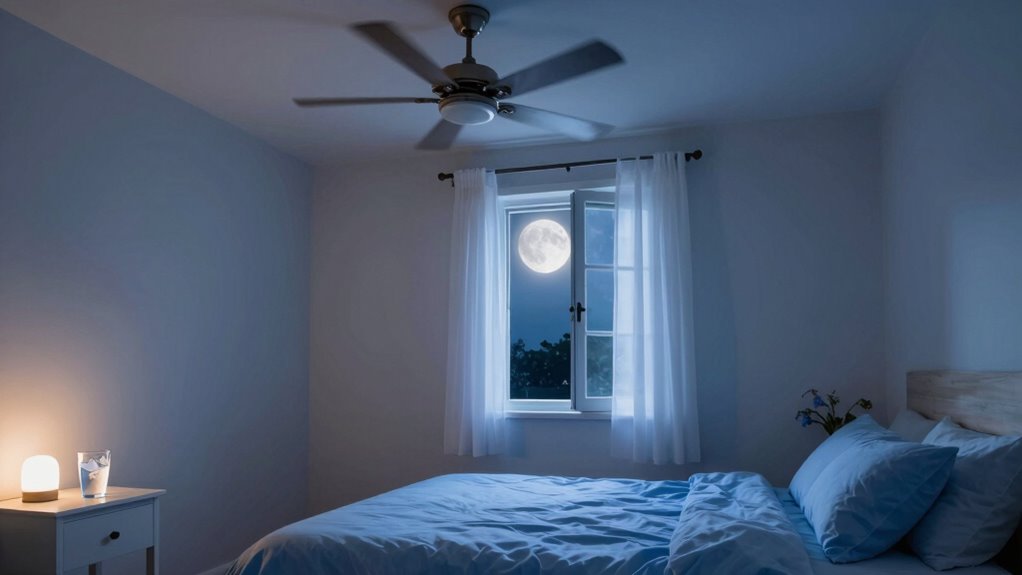
To keep your sleeping environment cooler, strategically opening and closing windows can make a significant difference. Start by opening windows on opposite sides of your home to create a cross-breeze, which helps pull cooler air in and pushes warm air out. In the evening, open windows early to let in cool night air, then close them in the morning to trap that coolness inside. Use window fans or box fans near open windows to enhance airflow, especially if outdoor temperatures drop overnight. Avoid keeping windows open during the hottest parts of the day, as this can bring in warm air. Adjust window openings based on the wind direction and outdoor temperature to maximize cooling and maintain a comfortable sleeping environment. Incorporating natural ventilation practices can further improve airflow and cooling efficiency, especially when combined with smart home automation systems that optimize window and fan operation based on real-time conditions. Additionally, understanding climate patterns can help you better time your window adjustments for optimal cooling. Monitoring outdoor temperature trends can help you decide the best times to open or close windows for maximum comfort, and being aware of airflow dynamics can assist in creating an effective cooling strategy.
Create a DIY Cross-Breeze System

Creating a DIY cross-breeze system is a simple way to boost airflow and keep your bedroom cooler. Start by opening windows on opposite sides of the room to encourage natural airflow. If possible, open windows at different heights—one higher, one lower—to create better circulation. Use fans to direct airflow from one side of the room to the other, enhancing the invigorating breeze. Place a box fan in one window facing inward and a smaller fan in the opposite window facing outward to push hot air out. Keep doors open to allow air to flow freely throughout the space. Adjust the positioning throughout the day to maximize the breeze, especially during cooler evening hours. Incorporating airflow optimization techniques can further improve cooling efficiency. Properly positioning windows and fans can help prevent stale air buildup and maintain a fresh environment. Being mindful of air circulation patterns helps ensure a consistent and comfortable cooling effect. Additionally, using ventilation strategies can help distribute cool air more evenly across the room. Paying attention to natural ventilation principles can significantly enhance the cooling process. With a little effort, you’ll create a revitalizing cross-breeze that naturally cools your room.
Use Frozen Items as Temporary Coolers
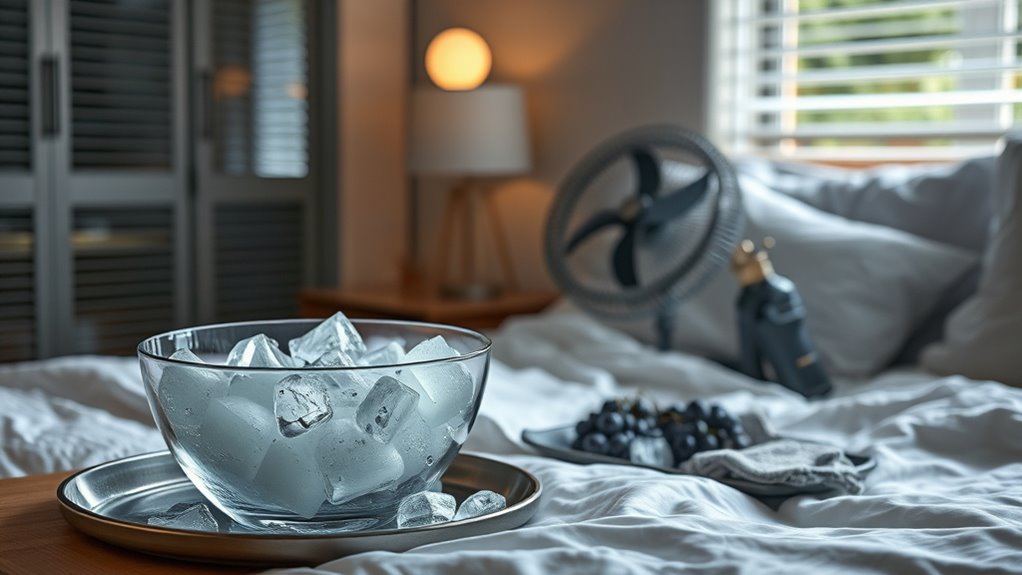
You can keep cool by freezing bottled water overnight and placing them nearby as temporary chillers. Using frozen towels on your forehead or neck can provide quick relief, especially if you apply them wisely. For added comfort, chill your pillowcases before bed to stay cooler throughout the night. Additionally, sustainable cooling methods can help reduce energy consumption while keeping your space comfortable. Incorporating water purification systems can ensure your drinking water remains clean even during extended heat waves, supporting your overall comfort and well-being. Implementing energy-efficient fans can also enhance airflow without raising your energy bills. Using evaporative cooling techniques can further boost your comfort without relying on electricity or costly equipment.
Freeze Bottled Water Overnight
One of the simplest ways to stay cool overnight is by freezing bottled water ahead of time. Fill a few bottles with water and place them in your freezer before bed. When you sleep, keep one or two bottles near your head or against the wall to help lower the room’s temperature. As the water slowly melts, it releases coolness into the air, creating a natural, invigorating breeze. This method is energy-efficient and cost-effective, requiring no extra equipment. Plus, you get the bonus of having cold water ready for the morning. Just be sure not to overfill the bottles, leaving some space for expansion as the water freezes. Incorporating energy-efficient solutions aligns with sustainable practices and can further enhance your cooling strategy. Additionally, using passive cooling techniques can help maintain a comfortable environment without increasing energy consumption. Utilizing phase change materials in your cooling approach can boost effectiveness by stabilizing indoor temperatures over time.
Use Frozen Towels Wisely
After freezing water bottles, you can extend their cooling effects by using frozen towels as temporary chillers. Simply fold a clean towel and place it in the freezer for a few hours. Once frozen, drape the towel over your pillow or body to help lower your skin temperature. The cold fabric absorbs heat and provides immediate relief without making you feel damp or uncomfortable. For added cooling, you can wrap the towel around your neck or wrists, where blood vessels are close to the surface. Just be sure not to leave the towel in the freezer too long, as it could freeze solid and become uncomfortable. Using body temperature regulation methods can help you stay cooler during the night without resorting to electricity or expensive gadgets. Additionally, rotating different towels can help maintain a consistent cooling effect throughout the night. Proper air circulation can also enhance the cooling experience by helping disperse the cool air more evenly. Incorporating humidity control strategies can further improve comfort and cooling efficiency. Use these frozen towels strategically to stay cooler during the night without resorting to electricity or expensive gadgets. Simple document management can help you organize your supplies and keep track of your cooling strategies efficiently.
Chill Pillowcases Before Bed
Chilling your pillowcases before bed can make a noticeable difference in staying cool throughout the night. To maximize this trick, follow these steps:
- Place your pillowcases in the freezer for 15-20 minutes.
- For added cooling, slip a cold pack or frozen gel pack inside the pillowcase.
- Avoid leaving them too long to prevent moisture buildup or fabric damage.
- When ready, use the chilled pillowcase immediately to rest your head.
- Remember that evaporative cooling can help enhance the effect by reducing overall room temperature naturally. Additionally, choosing brewing equipment that promotes good airflow can contribute to a cooler sleeping environment.
This quick hack provides a temporary cool surface that helps reduce heat and sweating. Keep in mind, the effect lasts only a few hours, so re-chilling may be necessary for a full night’s sleep. It’s an inexpensive, simple way to stay cooler without extra gadgets.
Switch to Breathable and Light Bedding Materials
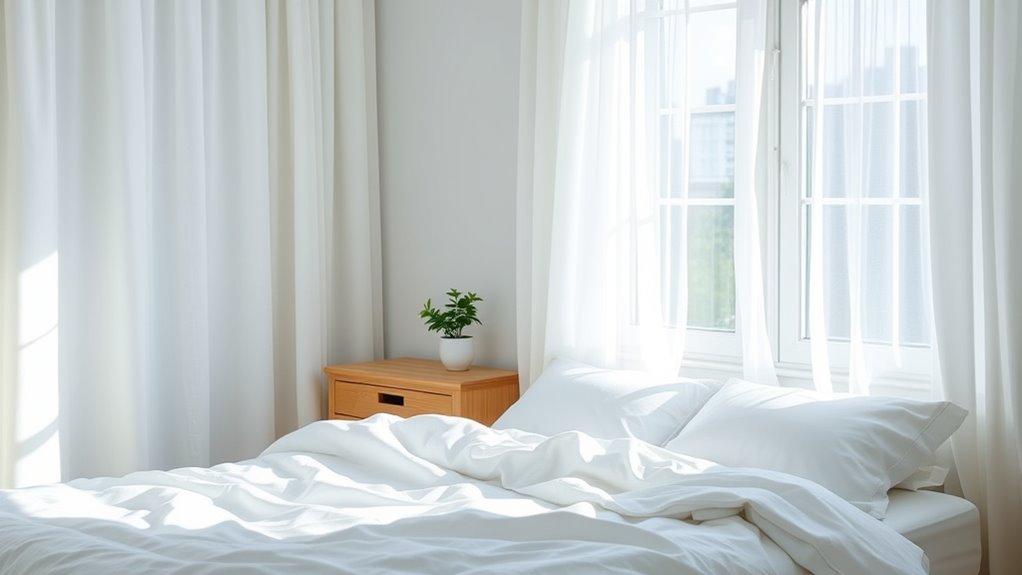
Switching to breathable and light bedding materials can substantially improve your sleep comfort. Materials like cotton, linen, or bamboo wick moisture away from your skin and promote airflow, helping you stay cooler throughout the night. Avoid heavy, synthetic fabrics such as polyester or fleece, which trap heat and increase sweating. Opt for sheets and pillowcases with a looser weave, as they allow better air circulation. Lightweight blankets or quilts can also prevent overheating without sacrificing comfort. By choosing these breathable fabrics, you reduce the buildup of heat and moisture that causes discomfort, making it easier to fall asleep and stay asleep. Updating your bedding with cooler, more breathable materials is an easy, effective way to beat the heat without spending extra money.
Adjust Your Sleep Position and Clothing
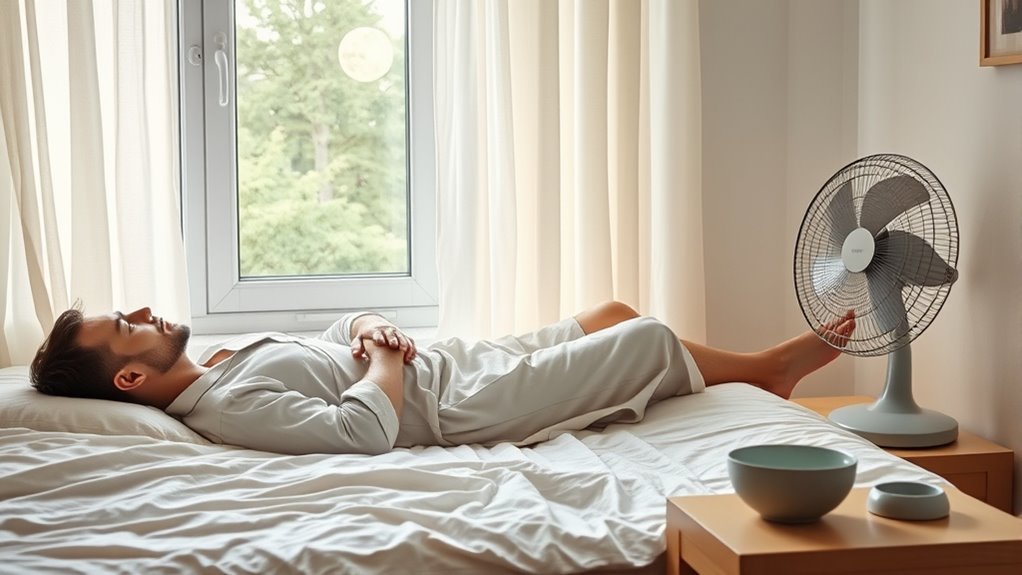
Adjusting your sleep position and clothing can considerably reduce heat buildup and improve your comfort. To stay cooler, consider these strategies:
- Sleep on your back or side rather than stomach, as stomach sleeping traps more heat.
- Keep your arms and legs uncovered to enhance airflow around your body.
- Wear loose, lightweight, and breathable fabrics like cotton or linen.
- Avoid heavy or tight-fitting pajamas that restrict air circulation and trap heat.
Block Out Sunlight During the Day
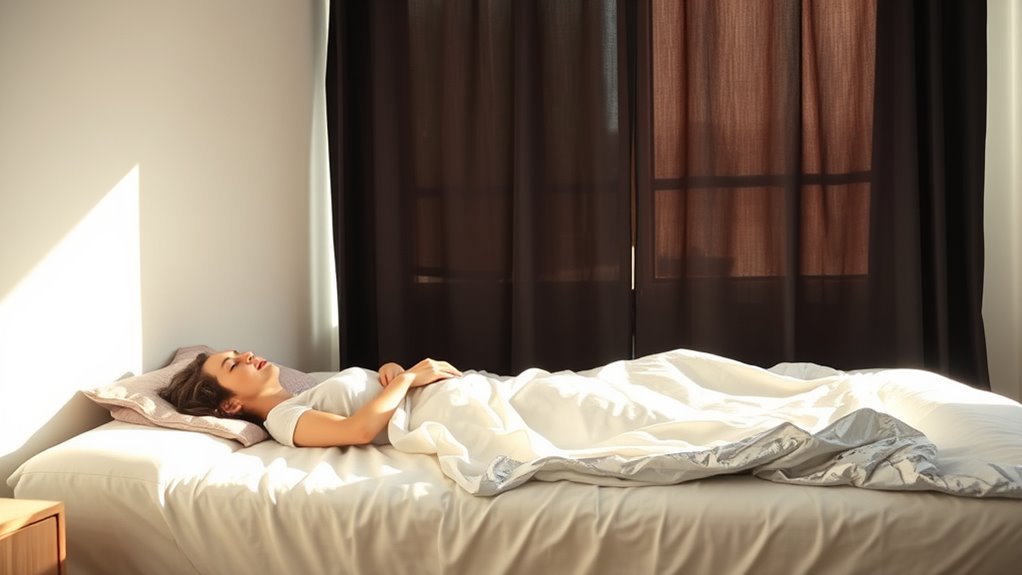
To keep your room dark during the day, consider using heavy curtains or blackout shades that block out sunlight completely. Installing window films can also reduce glare and heat, making it easier to rest. These simple solutions help create a cooler, darker environment perfect for daytime naps or extra sleep.
Use Heavy Curtains
Heavy curtains can make a significant difference in blocking out sunlight during the day, creating a darker environment that helps you sleep more soundly. They prevent heat from entering, keeping your room cooler, and improve sleep quality. To maximize their effectiveness:
- Choose thick, blackout fabric for full sun blockage.
- Hang curtains close to the ceiling for better coverage.
- Make certain they extend beyond the window frame to block light leaks.
- Keep curtains closed during the hottest part of the day to maintain a cooler room.
Install Window Films
Installing window films is an effective way to block out sunlight during the day, helping you keep your bedroom cooler and darker. These films are easy to apply directly to your windows and can reflect or absorb heat before it enters your room. Choose a reflective or tinted film to reduce glare and heat gain, especially if your windows face the sun for most of the day. Clean your windows thoroughly before applying the film to ensure a smooth, bubble-free finish. Once installed, the film acts as a barrier against UV rays and excess heat, making your space more comfortable without the need for curtains or blinds. Plus, window films can help protect your furniture from sun damage, extending its lifespan.
Hang Blackout Shades
Blackout shades are an effective way to block out sunlight and keep your room cool during the day. To maximize their benefit, follow these steps:
- Measure your window precisely to ensure a snug fit.
- Choose blackout shades that fully cover the window frame for maximum light blockage.
- Install the shades slightly wider and taller than the window opening to seal out all sunlight.
- Secure the edges with adhesive strips or double-sided tape for added insulation.
Use Damp Cloths or Towels to Cool the Skin

When the heat becomes overwhelming at night, using damp cloths or towels can provide quick relief. Dampen a clean cloth with cool water and place it on your forehead, neck, or wrists. These areas have blood vessels close to the skin, helping to lower your overall body temperature. You can also fold the damp towel and drape it over your chest or back for continuous cooling. Refresh the cloth with cool water as it warms up to maintain the soothing effect. This simple trick helps reduce your body heat naturally and can make falling asleep easier. Just be sure to use a clean, damp cloth to avoid skin irritation or infection. It’s an easy, effective way to stay cooler without any fancy gadgets.
Turn Off Unnecessary Electronics and Lights
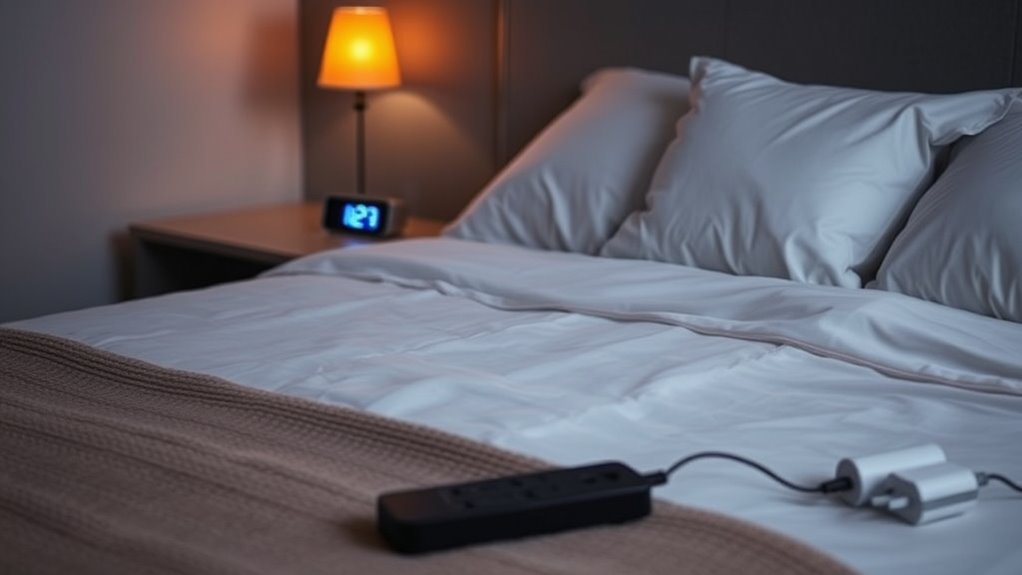
Turning off unnecessary electronics and lights can help you cool down and prepare for sleep. Limiting screen time before bed reduces exposure to blue light, which can keep you awake. Switch off non-essential devices to create a calmer, cooler environment that promotes better rest.
Limit Screen Time Before Bed
Reducing screen time before bed is essential for a better night’s sleep, as the blue light emitted by electronic devices can interfere with your body’s melatonin production. To minimize its impact, consider these strategies:
- Set a device curfew at least 30 minutes before bedtime to allow melatonin levels to rise naturally.
- Replace screen time with relaxing activities like reading a physical book or practicing gentle stretches.
- Turn off unnecessary electronics, including TVs and tablets, to reduce overall blue light exposure.
- Use dim, warm lighting in your bedroom to create a calming environment that signals your body it’s time to wind down.
Switch Off Non-Essential Devices
Switching off non-essential devices and lights creates a calming environment that signals your body it’s time to wind down. When you turn off electronics like TVs, smartphones, and tablets, you reduce exposure to blue light, which can interfere with melatonin production. This helps your body naturally prepare for sleep. Additionally, dimming or switching off unnecessary lights lowers room temperature slightly, making it more comfortable for hot sleepers. Unplugging devices also prevents background noise or vibrations that could disturb your rest. Make it a habit to power down electronics at least 30 minutes before bed. Not only does this create a peaceful atmosphere, but it also minimizes distractions, helping you fall asleep faster and enjoy a deeper, more restful night.
Rearrange Furniture to Maximize Ventilation
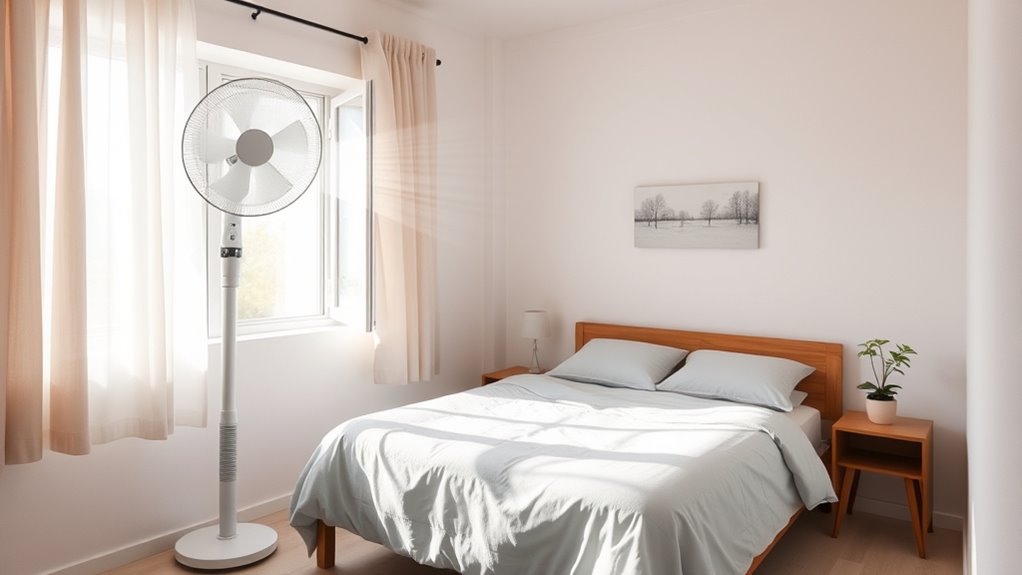
Rearranging your furniture can substantially boost airflow in your bedroom, making it easier to stay cool at night. By strategically positioning pieces, you can create better cross-ventilation and prevent stagnant air. To optimize airflow, consider these steps:
- Place your bed near a window or vent to take advantage of natural breezes.
- Keep pathways clear, avoiding clutter that blocks air movement.
- Position taller furniture away from windows to prevent obstructing airflow.
- Use open space between furniture pieces to facilitate even circulation throughout the room.
Implementing these simple adjustments allows cool air to flow freely, reducing heat buildup and creating a more comfortable sleeping environment. Small changes in furniture placement can make a significant difference in how cool your room feels overnight.
Keep Your Room Well-Insulated and Ventilated
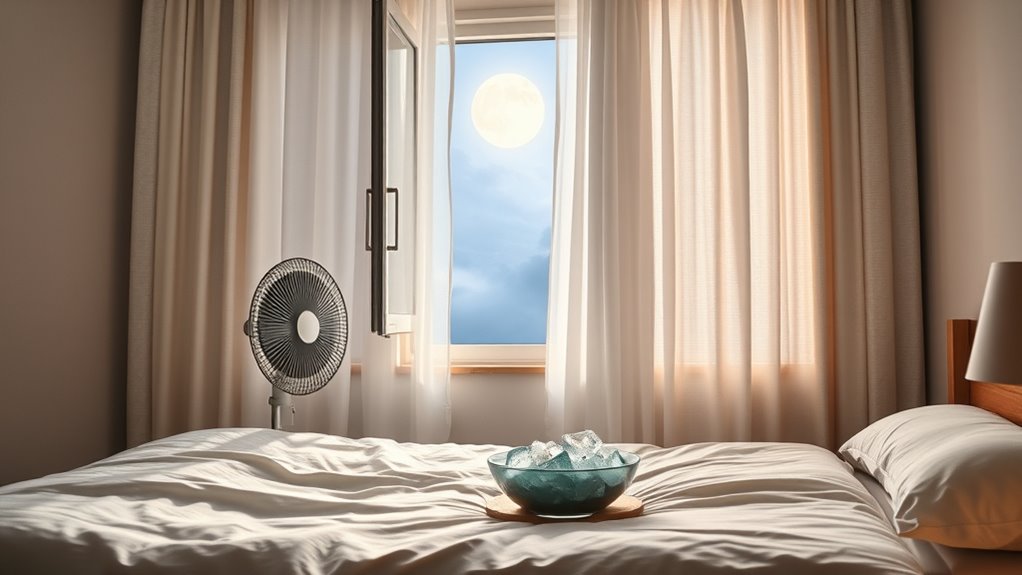
To keep your room comfortably cool overnight, maintaining proper insulation and ventilation is key. Good insulation prevents warm air from seeping in during the day and keeps cool air inside at night. Check for gaps around windows, doors, and outlets, and seal them with weatherstripping or draft stoppers. Ventilation helps circulate fresh air and reduce indoor heat. Open windows in the evening to let cooler air flow in, then close them during the hottest parts of the day. Use cross-ventilation by opening windows on opposite sides of the room. If you have ceiling fans or oscillating fans, position them to enhance airflow. Combining insulation with proper ventilation creates a cooler, more comfortable sleeping environment without spending extra money.
Frequently Asked Questions
How Can I Improve Airflow Without Opening Windows at Night?
You can improve airflow without opening windows by using ceiling or oscillating fans to circulate air effectively. Place a box or oscillating fan across from your bed to create a cross-breeze, pulling cooler air in and pushing warm air out. Keep doors open to allow better airflow between rooms. Additionally, use a damp cloth or a bowl of ice in front of the fan to enhance cooling, making the room feel fresher and cooler.
What’s the Best Way to Position Fans for Maximum Cooling?
Think of your fan as a gentle breeze whispering secrets to your room. Position your fan across from a window or doorway to create a cross-breeze, pulling cooler air in and pushing warm air out. Aim it at your body or bedding for direct relief. For best results, elevate the fan to increase airflow at your level. This setup acts like a cooling buddy, making your space feel instantly fresher.
Are There Natural Remedies to Reduce Room Temperature Effectively?
You can naturally cool your room by opening windows during cooler parts of the day, like early mornings and evenings. Use cross-ventilation to create a breeze, positioning fans opposite windows to pull in cooler air. Hang damp cloths or towels in front of fans to increase evaporation and lower the temperature. Keep blinds and curtains closed during peak sunlight hours to block heat. These simple tricks help reduce room temperature without spending extra money.
How Do I Prevent Heat From Entering My Room During the Day?
You can prevent heat from entering your room by closing blinds or curtains during the hottest parts of the day, blocking direct sunlight. Keep windows and doors closed to trap cooler air inside, and use reflective window covers if available. If you open windows at night, do so only when it’s cooler outside, then shut them early in the morning to keep the warm air out. These simple steps help maintain a cooler room naturally.
Can Certain Plants Help Cool My Sleeping Environment?
Yes, certain plants can help cool your sleeping environment. Plants like snake plants, aloe vera, and Boston ferns absorb heat and release moisture, which can lower room temperature and increase humidity. Place them near windows or in your bedroom to create a cooler, more comfortable atmosphere. Keep the plants healthy, and they’ll not only beautify your space but also contribute to a more pleasant sleeping environment.
Conclusion
Imagine drifting into a cool, breezy sanctuary you’ve created with just simple tricks—an open window here, a damp cloth there. No fancy gadgets needed, just your resourcefulness and some strategic changes. As the night air whispers through your home, you’ll feel the heat melt away, replaced by invigorating comfort. With these easy hacks, you can turn your room into a cool oasis, letting you sleep soundly without breaking the bank or sweating it out.