Your body’s internal clock, called the circadian rhythm, helps regulate when you sleep, wake up, and perform many biological functions over a 24-hour cycle. It relies on natural cues like light and routine to keep everything in sync, controlling hormones like melatonin and cortisol to help you feel sleepy or alert. Disrupting this rhythm can cause sleep issues and affect your health. If you want to understand how it all works, you’ll find more insights ahead.
Key Takeaways
- Your circadian rhythm is your internal 24-hour clock regulating sleep, wakefulness, hormones, and bodily functions.
- Light exposure, especially natural morning light, helps synchronize your internal clock with the environment.
- Hormones like melatonin and cortisol fluctuate daily to promote sleep at night and alertness during the day.
- Disruptions from irregular sleep or shift work can disturb your rhythm, leading to sleep issues and health problems.
- Maintaining consistent sleep routines and proper light exposure supports a healthy circadian rhythm and overall well-being.
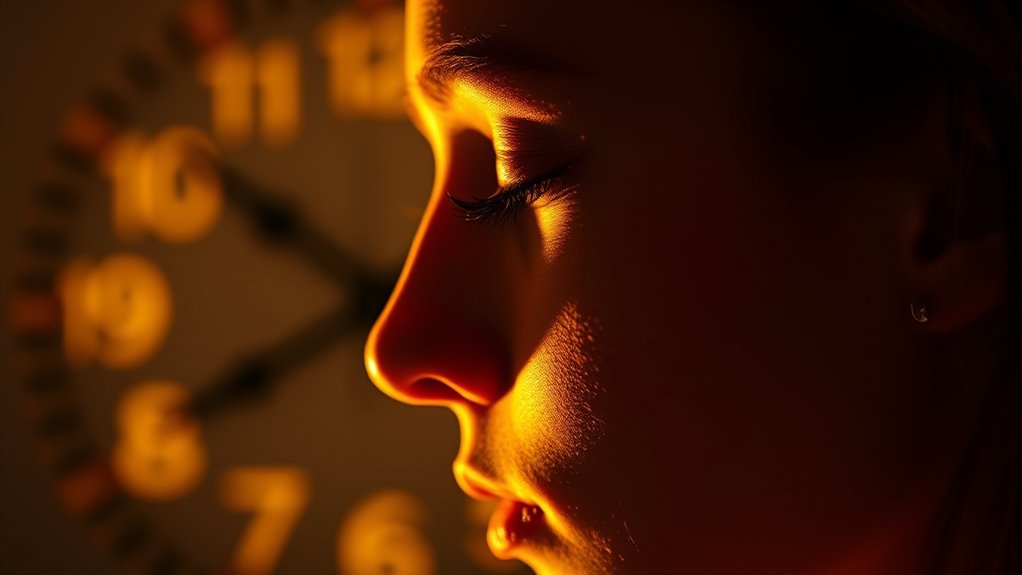
Your circadian rhythm is your body’s internal clock that regulates sleep, wakefulness, and other biological processes over a roughly 24-hour cycle. This internal timing system influences when you feel alert, sleepy, hungry, and even how your body functions at different times of day. At its core, your circadian rhythm controls your sleep cycle, ensuring you get restful sleep at night and wake up refreshed in the morning. It also orchestrates hormone regulation, releasing specific hormones at ideal times to support various bodily functions. Additionally, disruptions to your circadian rhythm can lead to health issues such as sleep disorders, metabolic syndrome, and mood disturbances.
Your body’s internal clock regulates sleep, alertness, hunger, and hormone cycles within a 24-hour rhythm.
When night falls, your circadian rhythm prompts the production of melatonin, often called the sleep hormone. As darkness sets in, your brain signals your pineal gland to release melatonin, making you feel sleepy. This hormone helps regulate your sleep cycle by signaling to your body that it’s time to wind down. Conversely, in the morning, exposure to light suppresses melatonin production, encouraging wakefulness and alertness. This daily ebb and flow of hormone regulation is what keeps your sleep cycle aligned with the day-night pattern, helping you fall asleep at night and wake up feeling refreshed.
Your circadian rhythm also influences other hormones that regulate hunger, metabolism, and stress. For example, cortisol, the stress hormone, peaks in the early morning to help you wake up and energize you for the day. Its levels gradually decline throughout the day, preparing your body for rest. Disrupting this rhythm—such as staying up late or working irregular shifts—can throw off hormone regulation, leading to sleep difficulties, fatigue, and even metabolic issues.
Understanding your circadian rhythm means recognizing the importance of consistent sleep schedules and light exposure. When you go to bed and wake up at the same times daily, you reinforce your internal clock, making it easier for your body to regulate hormones and maintain a healthy sleep cycle. Exposure to natural light during the day helps synchronize your circadian rhythm with the environment, while limiting artificial light at night supports melatonin production. Maintaining a consistent sleep routine is one of the most effective ways to keep your internal clock stable and functioning optimally.
In short, your circadian rhythm is a finely tuned system that keeps your biological processes in sync with the external world. It governs your sleep cycle through hormone regulation, ensuring your body functions at its best. Respecting and maintaining this internal clock can improve sleep quality, boost energy, and support overall health. By paying attention to your body’s natural rhythms, you set the stage for better well-being and a more balanced life.

Circadian Optics Lumos 2.0 Light Therapy Desk Lamp | As Seen On Shark Tank | 10,000 LUX UV-Free Full-Spectrum LEDs | Adjustable Portable Folding Sunlight Lamp for Seasonal Blues, Focus, Energy & Sleep
Seen In The Tank | 10,000 LUX Brightness: Experience the sun lamp that impressed the Sharks! The lamp…
As an affiliate, we earn on qualifying purchases.
As an affiliate, we earn on qualifying purchases.
Frequently Asked Questions
Can Circadian Rhythms Be Reset Quickly After Jet Lag?
Yes, you can reset your circadian rhythms quickly after jet lag. Light therapy helps by exposing you to bright light at strategic times, encouraging your internal clock to adjust. Melatonin supplements can also aid by signaling your body it’s time to sleep or wake. Combining these approaches and staying on a consistent schedule, even during travel, speeds up your recovery and reduces jet lag symptoms effectively.
How Do Shift Workers Adapt Their Circadian Clocks?
You can adapt your circadian clock by sticking to a consistent sleep schedule, even on days off, despite the hurdles of sleep deprivation. To ease hormonal adjustment, expose yourself to bright light during night shifts and keep your sleep environment dark during the day. It’s a balancing act—think of it as bending but not breaking—and over time, your body will learn to follow your new routine.
Does Age Affect the Strength of Circadian Rhythms?
Yes, age-related changes can weaken your circadian rhythms. As you get older, you might notice reduced circadian robustness, meaning your internal clock becomes less synchronized with the day-night cycle. This can lead to more sleep problems and fatigue. Younger individuals typically have stronger, more consistent rhythms, helping them stay alert and rested. So, aging naturally influences your circadian system, making it less resilient over time.
Can Artificial Light Disrupt Your Natural Circadian Cycle?
Imagine you’re scrolling late at night, exposed to bright screen light. Artificial light, especially from screens and light pollution, can disrupt your natural circadian cycle. It suppresses melatonin production, making it harder to fall asleep and wake up refreshed. You might experience jet lag-like symptoms. To protect your rhythm, limit screen exposure before bed and use dim, warm lighting in the evening.
Are There Health Risks From a Misaligned Circadian Rhythm?
Yes, misaligned circadian rhythms can cause health complications and sleep disturbances. When your internal clock gets out of sync, you might experience fatigue, difficulty concentrating, or mood changes. Over time, this disruption increases your risk of chronic issues like obesity, diabetes, and heart problems. To protect your health, prioritize consistent sleep schedules, limit artificial light exposure at night, and maintain a routine that supports your natural circadian cycle.

Carlyle Melatonin 40mg Complex | 150 Fast Dissolve Tablets | Extra Strength Support | with Ashwagandha and Chamomile | Vegetarian, Non-GMO, Gluten Free Supplement
MELATONIN COMPLEX: Features Melatonin, Beet Root, Chamomile Flower and Ashwagandha in one formula
As an affiliate, we earn on qualifying purchases.
As an affiliate, we earn on qualifying purchases.
Conclusion
Understanding your circadian rhythm helps you live better. Did you know that disrupting your internal clock can increase your risk of health issues like heart disease and diabetes? By syncing your sleep schedule with your body’s natural clock, you can boost your mood, energy, and overall well-being. So, pay attention to your body’s signals and give it the rest and routine it needs. Your health depends on it—after all, your internal clock is your best friend.

livho High Tech Blue Light Glasses – Advanced Blue Light Blocking Computer Glasses – Screen Fatigue & UV Protection
Elevate your screen time comfort with these stylish women's/men's eyewear frame blue light blocking glasses, designed to reduce…
As an affiliate, we earn on qualifying purchases.
As an affiliate, we earn on qualifying purchases.

Withings Sleep – Sleep Tracking Pad Under The Mattress With Sleep Cycle Analysis
EXPLORE THE DEPTHS OF YOUR SLEEP PATTERN – Sleep is the ultra-powerful sleep monitor that allows you to…
As an affiliate, we earn on qualifying purchases.
As an affiliate, we earn on qualifying purchases.