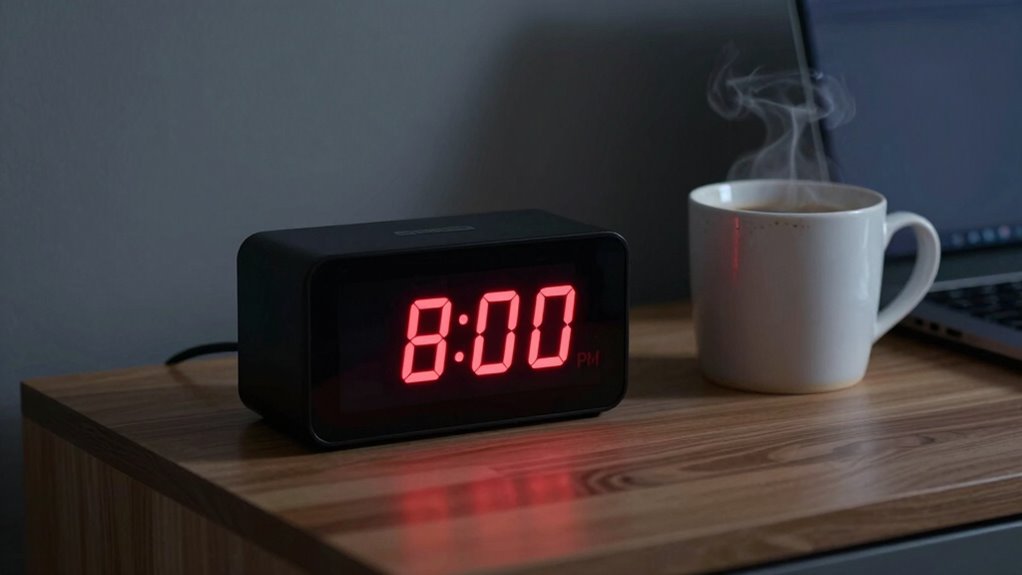

Caffeine typically stays in your system for 3 to 7 hours, with its half-life averaging 3 to 5 hours. Factors like age, genetics, and liver health influence how quickly it clears. To avoid sleep disruption, aim to cut off caffeine about 6 hours before bedtime, but individual differences matter. Understanding your metabolism can help you fine-tune your timing—keep exploring to get the full details.
Key Takeaways
- Caffeine’s half-life averages 3 to 5 hours, so consuming it at least 6 hours before bed minimizes sleep interference.
- Individual factors like age, genetics, and liver health influence caffeine metabolism and optimal cutoff times.
- To avoid sleep disruption, aim to finish caffeine intake 6 to 8 hours before your usual bedtime.
- Monitoring your sleep quality and alertness helps determine your personal caffeine cutoff time.
- Planning caffeine consumption based on scientific half-life data supports better sleep and energy management.
How Long Does Caffeine Stay in Your System?

Caffeine’s effects can vary depending on several factors, but generally, it stays in your system for about 3 to 7 hours. When you consume caffeine, it gets absorbed into your bloodstream quickly, reaching peak levels within 30 to 60 minutes. After that, your body starts processing it, but the rate differs from person to person. Factors like age, weight, liver health, and even genetics influence how long caffeine lingers. You might still feel alert a few hours after your coffee, but the amount remaining in your system gradually decreases. Even if you don’t notice its effects anymore, traces of caffeine could still be present, affecting your sleep or causing jitters later on. So, understanding how long caffeine stays in your body helps you plan your intake wisely. The metabolism rate of caffeine plays a crucial role in determining exactly how long it remains active in your system. Additionally, liver function significantly impacts how quickly your body can process and eliminate caffeine.
The Role of Half-Life in Caffeine Metabolism

Understanding the concept of half-life is key to grasping how caffeine is metabolized in your body. The half-life refers to the time it takes for your body to eliminate half of the caffeine you consumed. On average, this period ranges from 3 to 5 hours, but it varies depending on factors like age, genetics, and liver function. During this time, your body breaks down caffeine into smaller compounds, gradually reducing its stimulant effects. The rate of caffeine metabolism can be influenced by liver enzyme activity, which varies among individuals. Knowing the half-life helps you estimate how long caffeine remains active in your system and when it’s likely to stop affecting your sleep or alertness. This understanding allows you to better plan your caffeine intake, especially if you’re sensitive to its effects or aiming for a caffeine cutoff time later in the day. Understanding caffeine metabolism is essential for tailoring your consumption to your personal sensitivity and lifestyle.
Factors That Influence How Quickly Caffeine Leaves Your Body

Several factors can influence how quickly caffeine leaves your body, affecting how long its effects last. Your age, genetics, liver health, and even medication use play roles in caffeine metabolism. For instance, some people process caffeine faster due to genetic variations, while others may take longer if they have liver issues. Additionally, pregnancy and certain medications can slow caffeine clearance. Metabolism rate also significantly influences how quickly caffeine is processed. Moreover, the role of media in shaping perceptions can sometimes lead to misconceptions about caffeine’s effects and clearance. Understanding individual differences in caffeine metabolism can help tailor consumption habits to avoid sleep disturbances or jitters. The efficiency of your body’s body piercing healing process can also impact how substances like caffeine are metabolized, especially if you experience inflammation or discomfort.
Typical Caffeine Clearance Times for Most People

For most people, caffeine is cleared from the body within a specific timeframe, allowing you to estimate how long its effects may last. On average, your body takes about 3 to 7 hours to eliminate half of the caffeine consumed. This means that after 4 to 8 hours, a significant amount of caffeine remains in your system, still potentially affecting your sleep and alertness. Factors like age, liver health, and genetic makeup influence exact clearance times, but generally, caffeine’s stimulating effects diminish within this window. If you consume coffee in the morning, most of it will be cleared by early afternoon, though trace amounts may linger longer. Understanding this timeline helps you plan your intake and avoid disrupting your sleep cycle. Additionally, metabolism rate varies between individuals, which can further influence how quickly caffeine is processed. Genetics play a significant role in caffeine sensitivity, impacting how long it stays active in your body. Knowing your individual caffeine sensitivity can also help tailor your consumption habits for optimal rest.
Why Timing Matters: When to Cut Off Your Coffee Intake

Timing your last coffee of the day is crucial because drinking caffeine too late can interfere with your sleep quality and duration. When you consume caffeine too close to bedtime, it blocks adenosine, a chemical that signals your body to relax and prepare for sleep. This interference can lead to difficulty falling asleep, lighter sleep, and more nighttime awakenings. Even if you do fall asleep, poor sleep quality affects how rested you feel in the morning. To guarantee restful sleep, aim to finish your last cup at least 6 hours before bedtime. This window allows your body enough time to metabolize caffeine, reducing its stimulating effects and helping you fall asleep faster and enjoy deeper, more restorative sleep. Understanding caffeine metabolism can further help you optimize your caffeine cutoff time for better sleep. Additionally, individual differences in caffeine sensitivity mean that some people may need to stop even earlier for optimal rest, as metabolic rate varies among individuals. Recognizing your own caffeine tolerance can be key to establishing the most effective cutoff time for your sleep routine. Being aware of your personal caffeine response can help you fine-tune your timing for improved sleep quality.
The Impact of Genetics and Age on Caffeine Processing

Your genes and age play significant roles in how quickly your body processes caffeine. Genetics determine how efficiently your liver enzymes break down caffeine, influencing whether you feel energized or jittery. Age also impacts caffeine metabolism; younger people often process it faster, while older adults tend to do so more slowly. Additionally, metabolic rate varies among individuals, further affecting caffeine clearance. Here’s what influences your caffeine processing:
- Genetics: Variations in CYP1A2 gene affect enzyme activity, making some people metabolize caffeine rapidly or slowly.
- Age: Younger individuals typically clear caffeine faster than seniors.
- Lifestyle factors: Smoking, medications, and liver health can alter how your body handles caffeine.
Understanding these factors helps you tailor your caffeine intake to avoid sleep disruptions.
Practical Tips for Managing Caffeine Consumption and Sleep

Understanding how your genetics and age affect caffeine metabolism empowers you to make smarter choices about your intake. To manage caffeine and sleep effectively, set a daily caffeine cutoff time based on your usual bedtime. Avoid consuming caffeine at least six hours before sleep to reduce its impact on rest quality. Keep track of how different amounts and times affect your sleep patterns, and adjust accordingly. Limiting caffeine intake to earlier in the day, especially if you notice trouble falling asleep or lighter sleep, can significantly improve sleep quality. Hydrate well and avoid caffeine-rich drinks late in the afternoon. Establish a relaxing pre-sleep routine to signal your body it’s time to wind down. Being aware of passive voice detection techniques can help make your writing clearer and more direct. Recognizing personal caffeine sensitivity allows you to tailor your intake for optimal rest and energy. Monitoring caffeine metabolism can help you better understand how your body processes stimulants and improve your habits. Understanding individual differences in caffeine response further refines your approach to caffeine management. Additionally, understanding how wave and wind affect your environment can help you plan your caffeine intake around your daily activities for better rest and alertness. Consistency and awareness are key—listen to your body and refine your habits for better sleep and energy.
How to Determine Your Personal Caffeine Cutoff Time

Determining your personal caffeine cutoff time involves paying close attention to how caffeine affects your sleep and daily alertness. To find your ideal time, track these factors:
- Note the latest time you consume caffeine and how it impacts your ability to fall asleep.
- Record your sleep quality and wake-up freshness after different cutoff times.
- Observe your daytime energy levels and whether late caffeine causes jitters or crashes.
- Understanding your biological rhythms can help optimize your caffeine consumption for better sleep and alertness, as individual differences in metabolism play a significant role in caffeine sensitivity.
- Monitoring how caffeine’s half-life varies between individuals can assist in establishing a more accurate cutoff time tailored to your body’s processing speed.
Frequently Asked Questions
Can Decaffeinated Coffee Affect Sleep Similarly to Regular Coffee?
Decaffeinated coffee can still affect your sleep, but usually less than regular coffee. It contains small amounts of caffeine that might disrupt your rest if you’re sensitive. If you notice trouble sleeping after drinking decaf, try avoiding it later in the day. Everyone’s tolerance varies, so pay attention to how your body reacts. Switching to herbal tea or water could help you sleep more soundly at night.
Does Caffeine Affect Sleep Quality Even if Consumed Early in the Day?
Think of caffeine as a mischievous gremlin lurking in your system. Even if you sip it early, it can still sneak around your sleep, disrupting its harmony. Caffeine’s effects can linger, making your night’s rest choppier than a stormy sea. So, yes, even your morning coffee can cast shadows on your sleep quality, especially if you’re sensitive or consume it in large amounts.
How Do Different Types of Caffeine (Tea, Soda, Supplements) Differ in Metabolism?
Different types of caffeine, like tea, soda, and supplements, metabolize at different rates. Tea generally releases caffeine more slowly due to compounds like L-theanine, providing longer-lasting alertness. Soda usually contains caffeine that’s absorbed quickly, giving a rapid boost. Supplements often have concentrated caffeine, which can lead to faster absorption and stronger effects. Your body processes these sources differently based on their formulation and additional ingredients, affecting how long and how intensely you feel the stimulation.
Are There Long-Term Health Effects From Consuming Caffeine Close to Bedtime?
Yes, drinking caffeine near bedtime can lead to long-term health issues. It may disrupt your sleep patterns, increasing risks for heart problems, high blood pressure, and even mental health concerns like anxiety or depression. Over time, poor sleep quality can weaken your immune system and affect your overall well-being. To protect your health, try to avoid caffeine at least 6 hours before you plan to sleep.
How Does Caffeine Consumption Impact Sleep in Individuals With Sleep Disorders?
Caffeine can markedly worsen sleep issues in individuals with sleep disorders. It blocks adenosine, making it harder for you to fall asleep and stay asleep, leading to fragmented, poor-quality rest. For people with insomnia or similar conditions, even small amounts can increase wakefulness and reduce REM sleep, exacerbating symptoms. To improve your sleep quality, it’s best to limit caffeine intake, especially in the hours before bedtime.
Conclusion
Understanding how caffeine leaves your system is like tracking a busy train’s schedule—you need to know when it’s safe to hop off and get some rest. By paying attention to your half-life, genetics, and age, you can find your perfect cutoff time. So, be mindful of your caffeine intake, especially in the afternoon, and give your body the chance to unwind. After all, a good night’s sleep is worth the wait.