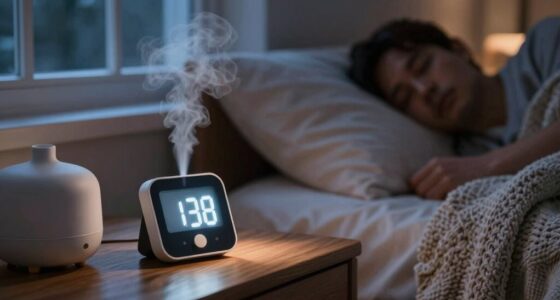
Keeping your bedroom cool helps you sleep better because it supports your body’s natural thermoregulation. Cooler air lowers your core temperature, signaling your brain to release sleep hormones like melatonin. When your room is too warm, your body struggles to shed heat, leading to restlessness and broken sleep. To learn how to optimize your sleeping environment and improve your rest, keep going for more helpful tips.
Key Takeaways
- Cooler air facilitates the body’s natural drop in core temperature, signaling sleep onset.
- Maintaining a room temperature between 60-67°F supports thermal comfort and sleep quality.
- Cooler environments enhance the release of sleep-inducing hormones like melatonin.
- Warm temperatures hinder heat dissipation, leading to restlessness and fragmented sleep.
- Small adjustments to bedroom temperature can significantly improve sleep duration and depth.

Have you ever wondered how the temperature of your bedroom impacts your sleep quality? The right environment plays a vital role in how well you rest, and temperature is a key factor that influences your sleep cycle and thermal comfort. When your room is too hot or too cold, it can disrupt your body’s natural rhythms, making it harder to fall asleep or stay asleep through the night. Conversely, maintaining a cooler, moderate temperature helps your body transition smoothly through the sleep cycle, especially during the rapid eye movement (REM) and deep sleep stages, which are essential for physical and mental restoration.
Thermal comfort is about more than just feeling cozy; it’s about creating an ideal environment that signals to your body that it’s time to rest. When your room is too warm, your body struggles to shed heat, which can lead to increased wakefulness and fragmented sleep. Elevated temperatures interfere with your body’s ability to lower its core temperature, a natural process that occurs when you’re falling asleep. This delay makes it harder for you to drift into those deep sleep stages, leaving you tired and unrested in the morning. On the other hand, a cooler room, typically around 60 to 67 degrees Fahrenheit (15.5 to 19.5 degrees Celsius), promotes efficient heat loss and helps regulate your internal temperature, making it easier to fall asleep and stay asleep longer.
Creating a cool, comfortable environment signals to your body that it’s time to rest and promotes better sleep.
Achieving the right thermal comfort isn’t just about setting your thermostat; it involves paying attention to how your body responds to your environment. Cooler air helps facilitate the natural drop in core temperature needed for sleep initiation. When your body temperature drops, your brain releases sleep-inducing hormones like melatonin, which further enhances your ability to relax and enter deeper sleep stages. If your room is too warm, your body’s temperature regulation becomes strained, and you might find yourself tossing and turning, waking up intermittently, or feeling less refreshed in the morning. Conversely, a room that’s too cold can cause discomfort, making it difficult to settle into sleep or causing you to wake up due to chills. Understanding the science behind sleep cycles and thermal comfort reveals why cooler air benefits most people. It’s not about freezing but about creating a balanced environment where your body can naturally and comfortably transition into sleep. When you optimize your bedroom temperature, you support your body’s natural processes, improve sleep quality, and wake up feeling more energized. Small adjustments, like using a fan or adjusting your thermostat, can make a significant difference in helping you achieve restful, restorative sleep every night.
Frequently Asked Questions
How Does Room Temperature Affect Sleep Quality?
You’ll sleep better when your room maintains ideal thermal comfort, typically cooler than daytime temperatures. Cooler air helps regulate your body temperature, making it easier to fall asleep and stay asleep. If the room is too warm, it can cause sleep disruption due to discomfort and increased sweating. Keeping your bedroom at a comfortable, cooler temperature minimizes sleep disruptions, ensuring you wake up refreshed and well-rested.
What Is the Ideal Bedroom Temperature for Optimal Sleep?
Think of your sleep environment as a cozy cave, where ideal temperature regulation unlocks restful nights. The ideal bedroom temperature hovers around 60-67°F, like a gentle breeze whispering lullabies. Cooler air helps your body cool down, signaling it’s time to sleep. Maintaining this balance guarantees you stay comfortable, fall asleep faster, and enjoy deeper, more restorative rest. Embrace the chill for nights that feel like dreams come true.
Can Cooler Air Improve REM Sleep Duration?
Yes, cooler air can improve your REM sleep duration. When the air is cooler, it supports better thermal regulation, helping your body maintain its natural sleep cycle. This prevents overheating, which can disrupt REM stages, and promotes deeper, more restful sleep. By keeping your bedroom at an ideal temperature, you enhance your body’s ability to regulate temperature naturally, leading to longer, more restorative REM sleep periods.
How Does Humidity Interact With Bedroom Temperature?
Imagine you’re trying to sleep on a hot, humid night; humidity effects can make it feel even more uncomfortable. Higher moisture levels trap heat and block sweat evaporation, making it harder to cool down. Conversely, lower humidity helps your body release heat more efficiently, especially in cooler room temperatures. Balancing humidity with temperature optimizes comfort, ensuring you stay dry and cool, which promotes better sleep quality overall.
Are There Health Risks Associated With Sleeping in a Cooler Room?
Sleeping in a cooler room generally isn’t risky, but if you have sleep apnea or respiratory issues, it could cause discomfort or worsen symptoms. Cooler air might dry out your nasal passages, leading to congestion or irritation. To stay safe, keep your room at a comfortable temperature, stay hydrated, and consider using a humidifier if you notice dryness. Always consult your doctor if you have ongoing breathing concerns.
Conclusion
Keeping your bedroom cooler can substantially improve your sleep quality, as many studies show ideal sleep occurs between 60-67°F. Did you know that sleeping in a room just 1°F cooler can reduce wakefulness by up to 30%? So, next time you’re tossing and turning, try turning down the thermostat. Cooler air helps regulate your body temperature, making it easier to fall asleep and stay asleep throughout the night, leaving you refreshed in the morning.