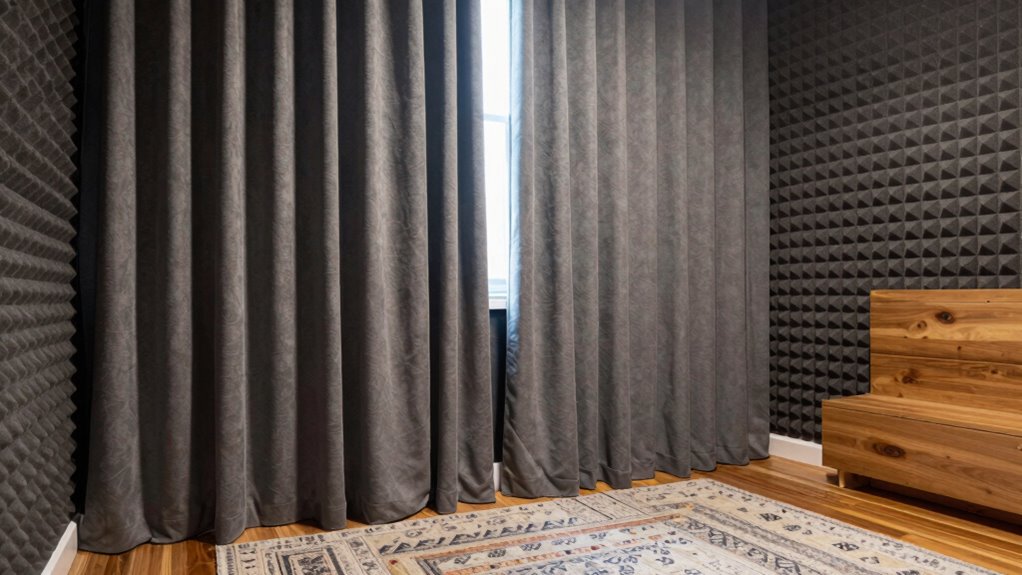
Many believe that double glazing or acoustic panels alone will block all bedroom noise, but that’s a misconception. While double glazing helps reduce sound through windows, gaps and structural issues still allow noise to enter. Acoustic panels absorb inside noise but do little against external sounds. A holistic approach, including sealing gaps, upgrading windows, and reinforcing walls, is key. Keep exploring to discover effective strategies that really quiet your space.
Key Takeaways
- Double glazing reduces window noise but isn’t sufficient alone; sealing gaps and reinforcing walls are also necessary.
- Acoustic panels absorb internal echoes but do not block external noise from street or neighbors.
- Relying solely on one method, like double glazing, often fails; a combined, holistic approach yields better results.
- Soundproofing is complex; addressing multiple pathways, including gaps and structural issues, is essential for effective noise reduction.
- Understanding common misconceptions prevents wasted effort on ineffective solutions and promotes targeted, proven strategies.
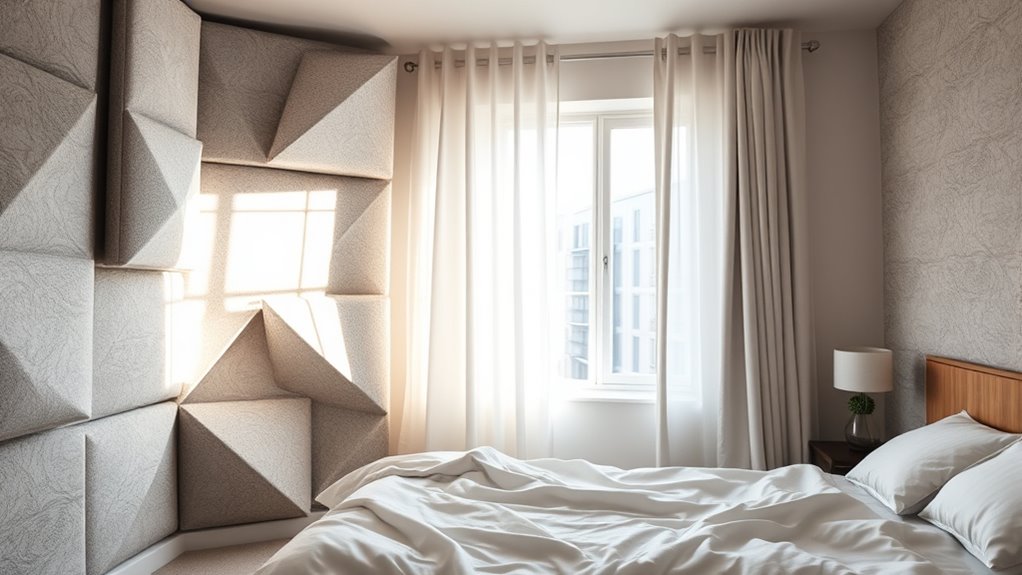
Many people believe that soundproofing is a simple, one-size-fits-all solution, but this isn’t true. Noise leaks through different pathways, and what works in one situation might not be effective in another. If you’re trying to block out bedroom noise, relying solely on basic methods can lead to frustration. For example, installing double glazing is often touted as a top solution, but it’s not a magic fix. Double glazing helps reduce noise transmission through windows by adding an extra layer of glass and an air gap, which dampens sound waves. However, if noise seeps in through gaps around the window frame or through walls, double glazing alone won’t solve the problem. It needs to be part of a broader approach that includes sealing gaps and other soundproofing measures.
Soundproofing requires multiple strategies; double glazing alone won’t eliminate all bedroom noise.
Acoustic panels are another popular suggestion, but they’re often misunderstood. These panels are designed to absorb sound within a room, reducing echo and noise reverberation. While they can improve indoor acoustics and make sounds less intrusive, they don’t block external noise from entering your bedroom. If your main concern is street noise or noisy neighbors, acoustic panels won’t provide a significant barrier. Instead, they complement other soundproofing techniques, helping create a more peaceful environment indoors. To truly minimize external noise, you’ll need to focus on structural solutions like upgrading windows or adding mass to walls, alongside interior treatments like acoustic panels.
Understanding the limitations of these solutions prevents you from wasting time and money on ineffective measures. For example, adding acoustic panels to an already thin wall won’t make a significant difference if the wall itself is a conduit for sound. Similarly, double glazing can be highly effective but only if installed correctly and combined with sealing any gaps around windows and doors. The key is to approach soundproofing holistically. Combine multiple strategies—such as upgrading windows, sealing cracks, adding acoustic panels, and reinforcing walls—to create a thorough barrier against noise. Additionally, soundproofing materials are constantly evolving, so staying informed about the latest innovations can help you choose the most effective options for your situation.
In the end, the biggest myth is thinking that a single fix will eliminate all bedroom noise. Instead, consider your specific noise sources and entry points. Use proven methods like double glazing where applicable, but don’t forget the importance of sealing gaps and adding interior sound-absorbing materials. Effective soundproofing involves understanding the pathways noise takes and applying multiple solutions tailored to your situation. Only then can you achieve the quiet, restful bedroom environment you deserve.

LEVOIT Air Purifier for Home Large Room Up to 1073Ft² with Air Quality Monitor, AHAM VERIFIDE, Smart WiFi, Washable Pre-Filter, HEPA Sleep Mode for Pets, Allergies, Dust, Pollen, Vital 100S-P, White
𝐖𝐇𝐘 𝐂𝐇𝐎𝐎𝐒𝐄 𝐀𝐇𝐀𝐌 𝐕𝐄𝐑𝐈𝐅𝐈𝐃𝐄 𝐀𝐈𝐑 𝐏𝐔𝐑𝐈𝐅𝐈𝐄𝐑𝐒: AHAM (Association of Home Appliance Manufacturers) is an ANSI-accredited organization that sets...
As an affiliate, we earn on qualifying purchases.
Frequently Asked Questions
Can Sealing Gaps Fully Eliminate Noise From Neighbors?
Sealing gaps can substantially reduce noise from neighbors, but it won’t fully eliminate it. You should focus on improving window insulation and increasing wall mass to block sound more effectively. Gaps allow sound to seep through, so sealing them helps, but for better results, add heavy curtains or acoustic panels. Combining sealing with these methods creates a more effective barrier, making your bedroom quieter overall.
Does Adding Rugs Significantly Reduce Bedroom Noise?
Think of your bedroom as a drum, and adding rugs as placing soft padding on its surface. Area rugs, especially when combined with thick carpet padding, can absorb sound waves and reduce noise. While they won’t silence the room entirely, they markedly muffle footsteps and airborne sounds. So, yes—layering rugs and padding creates a cozy shield that helps quiet your space, making it more peaceful and restful.
Are Soundproof Curtains Effective for Blocking Loud Sounds?
Soundproof curtains can help reduce some noise but aren’t fully effective against loud sounds. For better results, consider installing soundproof windows or acoustic panels, which absorb and block noise more efficiently. Curtains can complement these solutions by adding extra insulation and privacy, but relying solely on them won’t keep out loud noises completely. Combining soundproof windows, acoustic panels, and curtains offers the best chance to quiet your bedroom.
Can Furniture Placement Help Dampen Noise Transmission?
Yes, furniture placement can help dampen noise transmission by improving your room layout. You can strategically arrange large pieces like beds, sofas, and bookcases against shared walls to act as natural sound barriers. Positioning furniture to create more distance between noise sources and your sleeping area further reduces sound. This approach not only enhances your room’s acoustics but also makes your space feel cozier and more comfortable.
Do DIY Soundproofing Methods Work Better Than Professional Installation?
DIY installation can work well for basic soundproofing projects, especially if you’re on a budget or tackling small noise issues. However, professional soundproofing generally offers more effective and long-lasting results, especially for complex problems or larger spaces. If you have the skills and time, DIY methods can help, but for the best noise reduction, investing in professional soundproofing guarantees thorough, reliable results.

KNKA Air Purifier for Home Bedroom Large Room Up to 1,695 Ft² in 1 Hr, HEPA Air Cleaner with Washable Pre-Filter, AQI Display, ECO Mode, Sleep Mode, Pet Mode for Pets, Dust, Pollen, APH4000
𝐇𝐢𝐠𝐡 𝐂𝐀𝐃𝐑 𝐕𝐚𝐥𝐮𝐞: This air purifier provides reliable performance with a Smoke/Dust/PM2.5 CADR of 226 CFM (384 m³/h)...
As an affiliate, we earn on qualifying purchases.
Conclusion
Remember, not everything that glitters is gold when it comes to soundproofing. Some solutions may seem effective but fall flat, while others genuinely block out noise. Don’t be fooled by quick fixes—focus on proven methods and stay patient. As the saying goes, “A stitch in time saves nine.” With the right approach and a bit of perseverance, you’ll create a peaceful sanctuary in your bedroom, proving that persistence truly pays off.

LEVOIT Air Purifiers for Home Large Room Up to 1875 Ft² with Washable Pre-Filter, AHAM VERIFIDE, Air Quality Monitor, HEPA Sleep Mode for Allergies, Pet Hair in Bedroom, Vital 200S-P, White
𝐖𝐇𝐘 𝐂𝐇𝐎𝐎𝐒𝐄 𝐀𝐇𝐀𝐌 𝐕𝐄𝐑𝐈𝐅𝐈𝐃𝐄 𝐏𝐑𝐎𝐃𝐔𝐂𝐓𝐒: AHAM (Association of Home Appliance Manufacturers) is an ANSI-accredited organization that sets strict...
As an affiliate, we earn on qualifying purchases.

LEVOIT Air Purifier for Home Allergens Pet Hair in Bedroom, Covers Up to 1073 ft² by 56W High Torque Motor, AHAM VERIFIDE, 3-in-1 Filter with HEPA Sleep Mode, Remove Dust Smoke Odor, Core300-P, White
WHY CHOOSE AHAM VERIFIDE AIR PURIFIERS: AHAM (Association of Home Appliance Manufacturers) is an ANSI-accredited organization that sets...
As an affiliate, we earn on qualifying purchases.