
When airflow slows while you sleep, your room can feel stuffy and oppressive, because heat, moisture, and pollutants build up. Limited circulation traps humidity and stale air, making it harder to breathe and disrupting your sleep cycle. Poor ventilation can lead to increased allergens and mold, worsening breathing issues. Improving airflow with fans, open windows, and proper ventilation helps keep the air fresh, so you wake up more rested—stay tuned to learn how to optimize your sleep environment.
Key Takeaways
- Poor airflow traps heat and moisture, increasing humidity and making a room feel stuffy and uncomfortable during sleep.
- Limited ventilation causes buildup of allergens, dust, and pollutants, worsening breathing issues and sleep quality.
- Stagnant air prevents fresh oxygen exchange, leading to feelings of heaviness and difficulty breathing overnight.
- Blocked vents, closed windows, and furniture placement can restrict airflow, intensifying the stuffy sensation while sleeping.
- Improving circulation with fans, open windows, and proper ventilation reduces humidity and enhances sleep comfort.
The Impact of Poor Airflow on Sleep Comfort

Poor airflow can substantially disrupt your sleep by making your environment feel stuffy and uncomfortable. When air isn’t circulating well, it becomes harder to breathe freely, which can lead to frequent awakenings and restless nights. Stale air increases humidity levels, causing discomfort and making it more difficult to stay cool and refreshed. Without proper airflow, allergens, dust, and indoor pollutants tend to accumulate, aggravating allergies and respiratory issues. This buildup can make breathing even more strained, especially if you suffer from asthma or other respiratory conditions. Additionally, air quality directly influences your overall health and sleep quality, emphasizing the importance of proper ventilation. Maintaining good ventilation helps prevent the buildup of indoor pollutants and supports better breathing. Proper air circulation also helps regulate temperature and humidity levels, making your sleep environment more comfortable. As a result, your body struggles to relax fully, reducing the quality of your sleep. Ensuring good air circulation helps you breathe easier, stay comfortable, and enjoy a more restful night for optimal sleep comfort.
Why Stuffy Rooms Feel More Oppressive at Night

At night, your room often feels more oppressive because airflow slows down, making it harder to breathe comfortably. This reduced circulation traps heat and moisture, increasing humidity levels. As a result, stuffy rooms can leave you feeling more uncomfortable and restless. Implementing energy-efficient cooling solutions can help improve airflow and maintain a more comfortable sleeping environment. Additionally, proper air circulation can prevent the buildup of indoor pollutants, enhancing overall air quality during the night. Improving ventilation systems can further promote better airflow and reduce indoor air stagnation, especially in poorly ventilated spaces. To optimize airflow, integrating smart ventilation controls that adapt to environmental conditions can provide continuous airflow adjustments, further improving sleep comfort. Ensuring consistent airflow patterns can make a noticeable difference in sleep quality and comfort.
Reduced Airflow Comfort
As you settle into sleep, your body’s natural cooling process slows down, and your room’s airflow becomes even more crucial. When airflow diminishes, you might notice your breathing feels more restricted, and your comfort decreases. Stuffy rooms trap heat and carbon dioxide, making it harder for fresh air to reach you. Without adequate circulation, you may wake up feeling more restless or stuffy. Reduced airflow can cause your sleep environment to feel oppressive, intensifying discomfort and making it difficult to relax. As your body shifts into rest mode, proper air movement helps maintain a steady exchange of fresh air, preventing the buildup of stale air that worsens feelings of congestion. Ensuring good airflow is essential for a more comfortable, restful night. Additionally, understanding the importance of air circulation can help you identify ways to improve your sleeping environment for better health and comfort. Using smart ventilation solutions can further optimize airflow and maintain a healthier sleep space. Proper ventilation not only enhances comfort but also reduces potential health risks associated with poor air quality during sleep. Improving air quality through adequate circulation can make a noticeable difference in how refreshed you feel upon waking.
Increased Humidity Effects
When humidity levels rise at night, your sleep environment can quickly become more oppressive. High humidity makes it harder for your body to cool down, causing you to feel stuffier and uncomfortable. As moisture builds up, air feels thicker and more difficult to breathe, intensifying that stifling sensation. Here’s what happens:
- Your sweat doesn’t evaporate efficiently, leaving you clammy and sweaty.
- Mold and dust mites thrive, worsening allergies and congestion.
- Your body’s natural cooling process slows, making it harder to fall asleep and stay asleep.
- Managing humidity is crucial, much like how air circulation helps regulate moisture and temperature in a space to improve comfort. Proper ventilation allows moist air to escape, reducing humidity levels and enhancing sleep quality. Additionally, using essential oils with decongestant properties, such as eucalyptus or peppermint, can help ease breathing difficulties caused by stuffy rooms. Incorporating dehumidifiers can actively reduce moisture levels, creating a more comfortable sleeping environment. These effects combine to create a sleep space that feels increasingly oppressive, especially when air circulation isn’t helping to reduce moisture levels. Managing humidity is key to making your room feel fresher and more comfortable at night.
Signs Your Bedroom Isn’t Getting Enough Ventilation
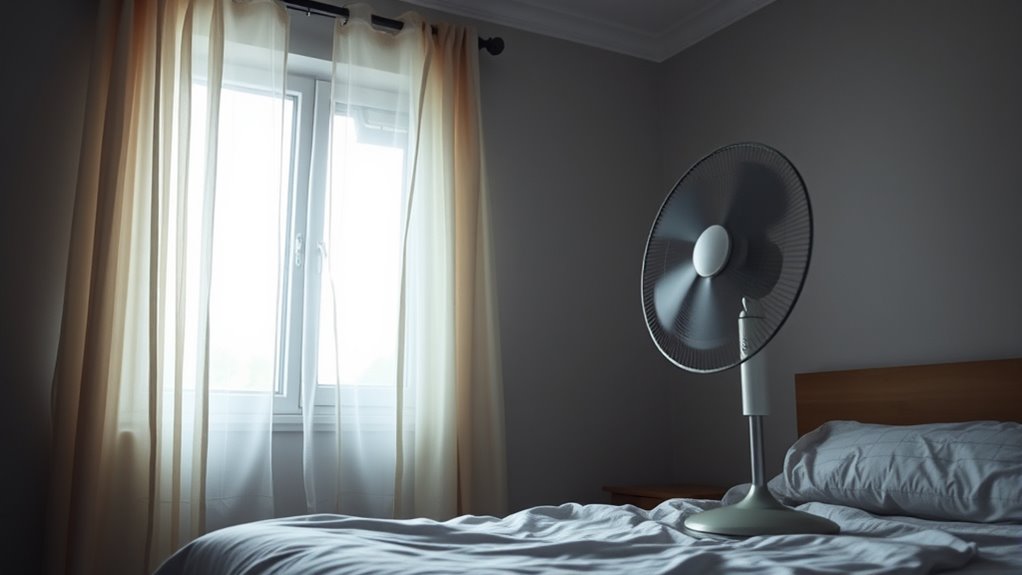
If your bedroom has a persistent musty smell or feels damp, it’s a sign that airflow isn’t enough. Lingering humidity can make the air feel heavy and uncomfortable overnight. Recognizing these signs helps you know when to improve your ventilation. Improving air circulation can help reduce moisture buildup and enhance overall comfort. Upgrading your ventilation system or adding portable fans can further boost airflow and air quality. Additionally, ensuring your windows are properly registered with local regulations can help maintain optimal ventilation standards. Proper ventilation also supports home safety by reducing mold growth and other indoor air quality issues, especially when using appropriate ventilation patterns to encourage consistent airflow throughout the space.
Persistent Musty Odor
A persistent musty odor in your bedroom often signals inadequate ventilation. When fresh air doesn’t circulate, moisture and trapped pollutants build up, creating that stale smell. You might notice it more in the mornings or after staying in bed for a while. To identify if poor airflow is the cause, check for these signs:
- Lingering smell even after cleaning or airing out
- Feelings of stuffiness during sleep
- Mold or mildew spots appearing on walls or furniture
If these signs are present, your room isn’t getting enough fresh air, and the smell will persist. Improving ventilation by opening windows, using fans, or adding air purifiers can help eliminate the odor and refresh your sleeping environment. Ensuring proper air circulation can also help prevent buildup of pollutants and odors over time. Additionally, regular maintenance of ventilation systems can keep the air quality optimal and reduce musty smells.
Lingering Bedroom Humidity
Persistent musty odors often point to poor airflow, but lingering humidity is another common sign your bedroom isn’t ventilating properly. If your space feels damp or sticky, it’s likely because moisture isn’t escaping as it should. You might notice condensation on windows or walls, especially in the mornings. This excess humidity can make your room feel heavier and more uncomfortable, disrupting your sleep. Over time, high humidity can lead to mold growth and dust mites, which worsen allergies and breathing issues. If you rarely open windows or your ventilation system isn’t functioning well, moisture builds up, trapping heat and making the room feel stuffy. Addressing humidity involves improving airflow, using dehumidifiers, or increasing ventilation to create a healthier sleeping environment.
How Air Quality Affects Breathing and Rest

Air quality directly impacts your ability to breathe comfortably and get restful sleep. Poor air quality can cause congestion, allergies, or respiratory issues, making it harder to relax and fall asleep. When the air is filled with dust, pet dander, or pollutants, your lungs work harder, disrupting your sleep cycle. To improve air quality for better breathing:
Poor air quality hampers breathing and disrupts restful sleep.
- Keep windows open when possible to allow fresh air in.
- Use air purifiers to filter out allergens and pollutants.
- Avoid smoking or burning candles in your bedroom.
These steps help clear the air, reduce irritation, and promote deeper, more restorative sleep. Better air quality means your body can breathe easier, helping you wake up refreshed and energized.
The Connection Between Air Circulation and Sleep Cycles

When air circulates properly in your bedroom, it helps regulate temperature and humidity levels, which are essential for maintaining healthy sleep cycles. Good airflow prevents hot or cold spots that can disturb your rest, allowing your body to follow its natural rhythm more easily. It also reduces the buildup of carbon dioxide and airborne irritants that can cause discomfort or wakefulness. When fresh air moves through the room, it promotes a steady environment, encouraging deeper, more restorative sleep phases. Without proper circulation, you might experience fragmented sleep or feel groggy in the morning. Maintaining consistent airflow supports your body’s internal clock, helping you fall asleep faster and stay asleep longer. In turn, this improves overall sleep quality and helps you wake up refreshed.
Common Causes of Limited Air Movement in Bedrooms

Limited air movement in bedrooms often results from blocked vents, closed windows, or heavy furniture that obstructs airflow. When vents are clogged or closed, fresh air can’t circulate properly, making the room feel stuffy. Closed windows prevent cross-ventilation, trapping stale air inside. Heavy furniture, like large wardrobes or beds, can block vents or windows, further restricting airflow.
Blocked vents, closed windows, and heavy furniture reduce airflow, making bedrooms feel stuffy and uncomfortable.
Here are common causes to watch for:
- Blocked or closed vents—preventing air from entering or leaving the room.
- Windows that stay shut—limiting fresh air exchange.
- Large furniture placement—covering vents or blocking airflow paths.
Addressing these issues can notably improve air circulation and create a more comfortable sleeping environment.
Simple Strategies to Improve Airflow While Sleeping
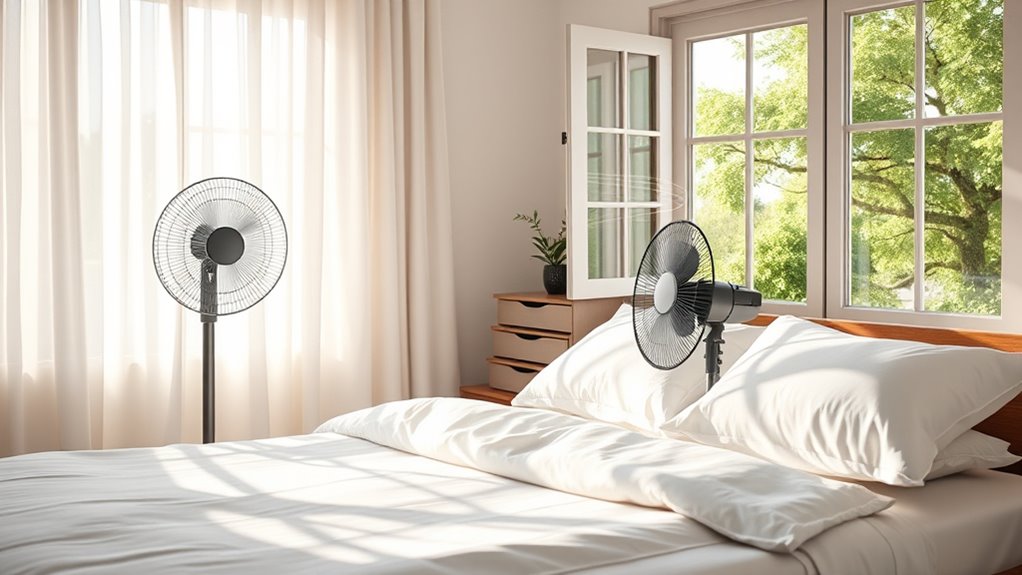
Simple strategies can substantially boost airflow in your bedroom without requiring major renovations. First, open windows during the day to let fresh air in and create a cross-breeze. Using fans strategically helps circulate air without noise disturbance. Adjust your furniture to avoid blocking vents or airflow paths. Here’s a quick guide:
| Strategy | How It Works | Benefits |
|---|---|---|
| Use ceiling fans | Circulates air overhead | Keeps air moving evenly |
| Keep windows open | Promotes cross-ventilation | Refreshes stale air |
| Position fans properly | Directs airflow where needed | Reduces stuffiness |
| Rearrange furniture | Avoids blocking airflow | Improves air circulation |
Implementing these simple steps makes your sleep environment fresher and more comfortable.
The Benefits of Fresh Air for Restorative Sleep

Fresh air plays a crucial role in achieving restorative sleep by increasing oxygen levels and reducing indoor pollutants. When you sleep in a well-ventilated room, your body benefits from fresher air, which helps you breathe more easily and stay more relaxed throughout the night. Better oxygen flow can improve your sleep quality and reduce nighttime awakenings. Plus, fresh air helps eliminate allergens and pollutants that can cause congestion and discomfort.
Here are three benefits you’ll notice:
- You fall asleep faster and stay asleep longer.
- Your breathing feels easier and less strained.
- You wake up feeling more refreshed and energized.
Enjoying fresh air creates a healthier, more comfortable sleep environment, supporting your overall well-being.
Tips for Maintaining a Well-Ventilated Sleep Environment
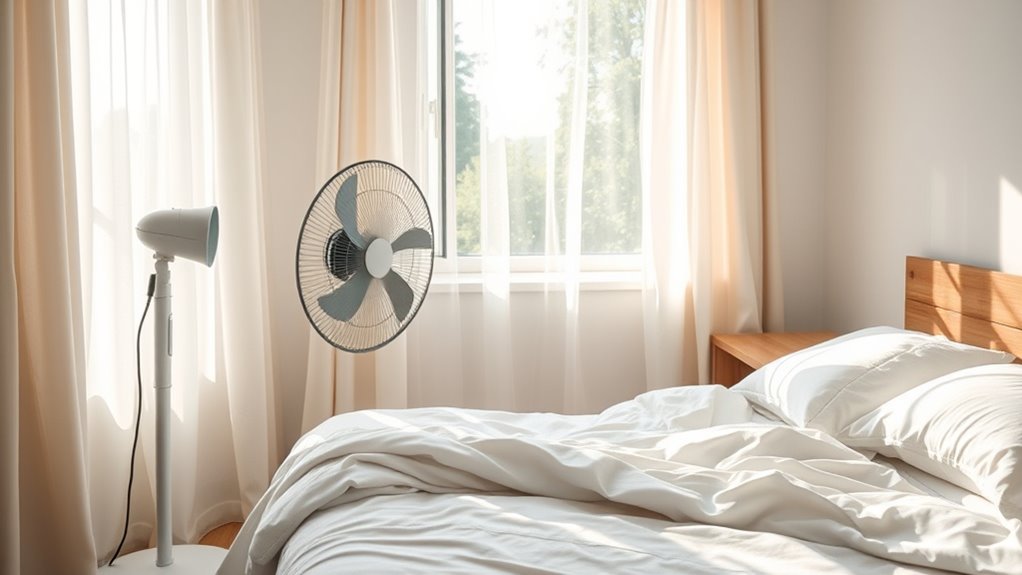
Maintaining a well-ventilated sleep environment requires intentional effort to guarantee continuous airflow and fresh air exchange. Start by opening windows regularly, especially when weather permits, to promote cross-ventilation. Use fans strategically—placing them near windows to draw in fresh air or pushing stale air out of the room. Keep doors open when possible to allow air to circulate freely throughout your space. Additionally, consider installing a ceiling fan or air purifier with a ventilation feature to improve air quality. Avoid blocking vents or air returns, which can hinder airflow. Regularly clean filters and vents to prevent dust buildup that could compromise air quality. These simple steps help ensure your sleeping environment stays fresh, reducing stuffiness and supporting better rest.
Frequently Asked Questions
How Does Airflow Influence REM Sleep Quality?
Good airflow improves your REM sleep quality by keeping your breathing steady and oxygen levels consistent. When air circulates well, it prevents stuffiness and reduces the buildup of carbon dioxide and allergens that can disturb your rest. You’ll fall asleep faster, stay asleep longer, and experience more restful REM cycles. So, ensuring proper ventilation in your room helps your body relax fully and enhances your sleep experience overall.
Can Indoor Plants Improve Bedroom Ventilation Naturally?
Indoor plants can help improve your bedroom ventilation naturally, but they shouldn’t be your only solution. While they add fresh oxygen and can absorb pollutants, they don’t replace proper airflow or mechanical ventilation. Think of plants as complements rather than primary air purifiers. You’ll enjoy a more vibrant, calming space, but for truly fresh air, make sure you open windows regularly or use an air purifier alongside your green friends.
What Are the Best Windows for Cross-Ventilation?
Opt for windows that are opposite or adjacent to each other to maximize cross-ventilation. Double-hung, casement, or sliding windows work best because they can be opened wide, allowing air to flow freely through the room. Guarantee the windows are positioned to catch prevailing breezes and avoid obstructions like large furniture or landscaping that block airflow. Proper placement and openness help refresh your space and keep it feeling cooler and less stuffy.
How Often Should I Change or Clean Air Filters in My Bedroom?
You should change or clean your bedroom air filters every 1 to 3 months, depending on usage and filter type. Regular maintenance ensures maximum airflow, reduces dust and allergens, and keeps your room feeling fresher. If you notice dust buildup or reduced airflow, consider changing the filter sooner. Check your manufacturer’s recommendations for specific guidance, and always use high-quality filters to improve air quality during sleep.
Are There Health Risks Associated With Poor Bedroom Airflow?
Yes, poor bedroom airflow can pose health risks. It can lead to increased exposure to allergens, mold, and airborne pollutants, which may cause respiratory issues, allergies, or worsen asthma. Stuffy rooms trap carbon dioxide and humidity, making you feel tired and uncomfortable. To protect your health, guarantee proper ventilation, open windows regularly, and use fans or air purifiers to improve airflow and reduce these risks.
Conclusion
Improving your bedroom’s airflow can make all the difference in how well you sleep. When air circulates properly, you’ll wake up feeling revitalized instead of stuffy and restless. Don’t wait for problems to blow up—take simple steps to boost ventilation tonight. Remember, a gust of fresh air is worth its weight in gold, so prioritize your sleep environment. Clear the air, and let your body breathe easy through the night.