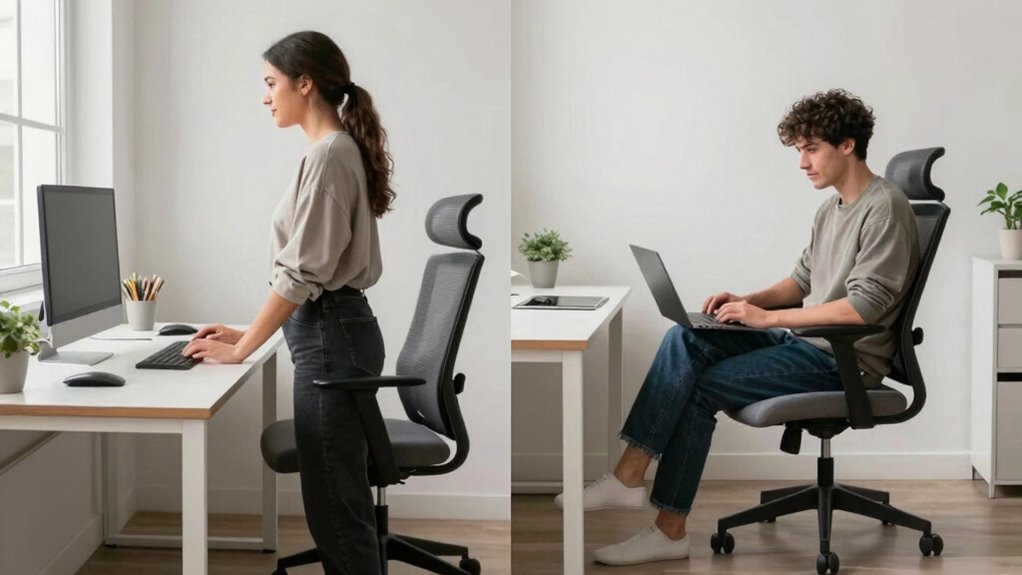

Standing work boosts energy, improves circulation, and enhances focus, while sitting work offers comfort and stability at your desk. Prolonged sitting increases health risks like heart problems, weight gain, and muscle strain, but standing can cause discomfort if not managed properly. To enjoy the benefits of both, you need ergonomic setups and regular movement. Want to learn how switching between sitting and standing can boost your health and productivity? Keep going for practical tips.
Key Takeaways
- Sitting work involves seated posture at desks, while standing work requires maintaining an upright stance during tasks.
- Prolonged sitting increases risks of cardiovascular issues, muscle strain, and metabolic disruptions.
- Standing work boosts energy, circulation, and focus but can cause discomfort if not managed properly.
- Ergonomic setup is crucial for both, including proper desk height, monitor placement, and supportive chairs or mats.
- Alternating between sitting and standing with breaks promotes better health, posture, and productivity.
Defining Sitting and Standing Work Styles
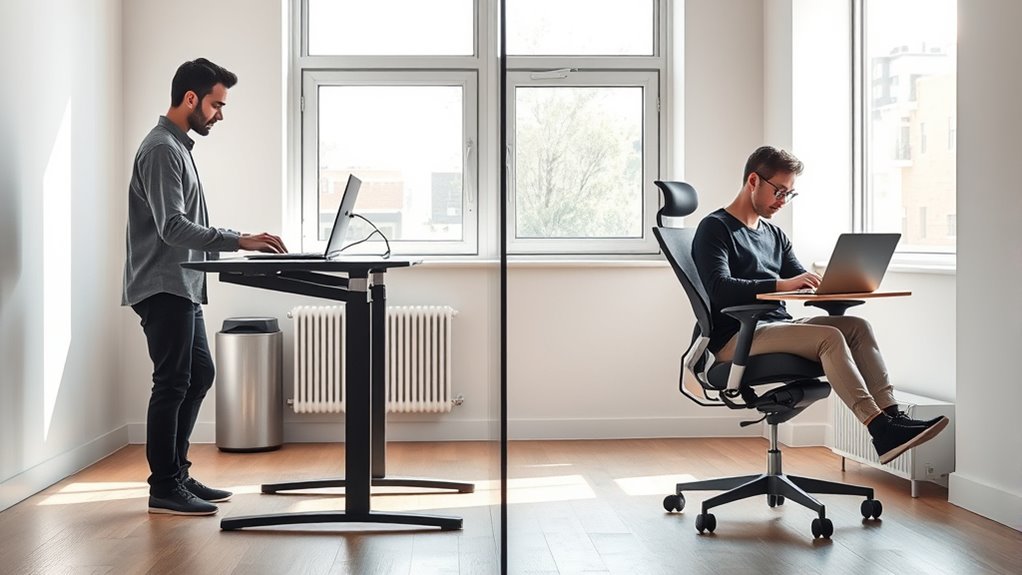
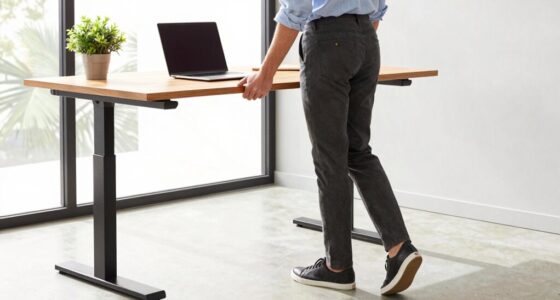
While many workplaces traditionally favor sitting, standing work styles are gaining popularity as alternatives for better health and productivity. Sitting work involves remaining seated at a desk or workstation, often using chairs and computer setups designed for comfort. It’s the most common approach, allowing for tasks like typing, writing, and meetings. Standing work, on the other hand, requires you to remain upright while performing your tasks. This can mean using adjustable desks or standing stations that keep you on your feet. The key difference is posture: sitting involves a seated position, often supported by furniture, while standing encourages an upright stance. Both styles influence your daily routine and work environment, shaping how you approach your tasks and interact with your workspace. Incorporating ergonomic considerations can further improve comfort and reduce strain in either work style. Additionally, understanding the impact on productivity of each style can help in designing more effective and health-conscious workspaces. As these work styles evolve, the role of AI technology in optimizing ergonomic setups and monitoring health metrics is becoming increasingly relevant. Furthermore, integrating smart appliances can assist in creating adaptable work environments that seamlessly switch between sitting and standing positions. Recognizing the importance of workplace safety and proper equipment can also support healthier work habits.
Health Implications of Sitting for Long Periods
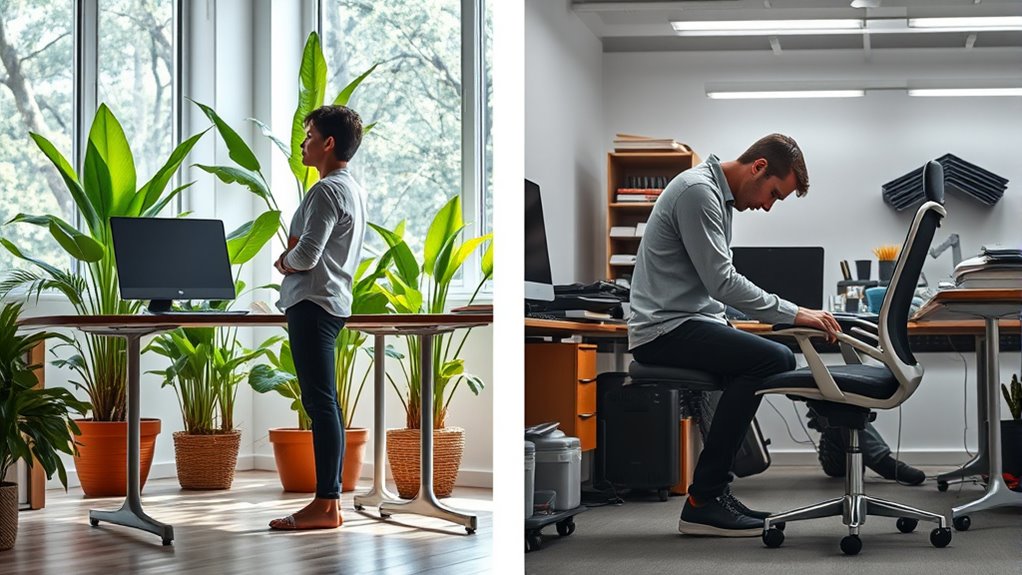
Sitting for long periods can raise your risk of heart problems and other cardiovascular issues. It also puts strain on your muscles and joints, which may lead to discomfort or injury. Additionally, extended sitting can disrupt your metabolism, affecting how your body processes energy and fats. Using air purifiers can help improve indoor air quality, creating a healthier environment that supports overall well-being during sedentary activities. Incorporating regular movement and precious metals IRAs into your financial planning can help diversify your investments and promote long-term financial health. For architectural professionals, project management support ensures that long-term health considerations are integrated into workspace design, fostering healthier environments. Moreover, understanding Floating on Water concepts can inspire ergonomic design solutions that reduce strain and enhance comfort during prolonged sitting or standing periods. Understanding home safety essentials, such as proper ventilation and ergonomic furniture, can further reduce health risks associated with prolonged sitting.
Increased Cardiovascular Risks
Prolonged periods of sitting can considerably increase your risk of developing cardiovascular problems. When you sit for long stretches, blood flow slows down, causing your arteries to stiffen and your heart to work harder. This can lead to elevated blood pressure and higher cholesterol levels over time. Sitting excessively also contributes to weight gain, which further strains your heart and increases the likelihood of heart disease. Additionally, inactivity reduces your overall cardiovascular fitness, making it harder for your body to efficiently supply oxygen and nutrients. The more you sit without breaks, the greater your risk becomes. To protect your heart, it’s essential to incorporate movement into your daily routine, such as standing, walking, or stretching regularly. Sedentary behavior significantly impacts overall heart health and should be minimized whenever possible. Incorporating regular physical activity can help counteract these risks and improve your cardiovascular well-being. Moreover, understanding the importance of standing vs sitting can guide you toward healthier habits that support your heart health, especially since lifestyle choices play a crucial role in cardiovascular health. Engaging in light exercise during breaks can further help mitigate these risks and promote better circulation.
Musculoskeletal Strain
Extended periods of sitting can put significant strain on your musculoskeletal system, leading to discomfort and long-term health issues. When you sit for too long, your lower back, neck, and shoulders bear increased pressure, which can cause pain and stiffness. Poor posture often worsens this strain, resulting in muscle imbalances and joint problems over time. This strain not only causes immediate discomfort but may also contribute to chronic conditions like herniated discs or joint degeneration. To minimize these risks, it’s essential to take regular breaks, stretch frequently, and maintain proper ergonomics. Doing so helps protect your musculoskeletal health and reduces the likelihood of developing long-term issues related to prolonged sitting. Additionally, understanding clean-home systems and proper ergonomic setups can further support your overall health and comfort during extended periods of sitting. Incorporating ergonomic furniture and posture correction techniques can significantly improve your sitting experience and reduce strain. Regularly adjusting your workstation and being mindful of your body position can also help prevent musculoskeletal strain and improve overall well-being. Practicing energetic alignment while working can enhance comfort and reduce physical tension, contributing to better health. Being aware of ergonomic principles can further optimize your sitting environment for better health.
Metabolic Disruptions
When you spend long hours seated, your body’s metabolic processes slow down considerably. This reduction decreases your ability to burn calories efficiently, increasing the risk of weight gain. Your insulin sensitivity declines, making it harder for your body to regulate blood sugar levels. Over time, this can lead to higher cholesterol and triglyceride levels, raising your risk of cardiovascular problems. Sitting for extended periods also hampers fat breakdown, disrupting your energy balance. These metabolic disruptions contribute to chronic health issues like obesity and type 2 diabetes. Moving less not only affects your physical activity but also interferes with your body’s natural metabolic functions, emphasizing the importance of incorporating standing or movement into your daily routine to support metabolic health. Additionally, integrating home charging solutions can encourage more frequent movement breaks throughout the day. Incorporating active habits into your routine can further mitigate these metabolic risks and promote overall well-being, especially since sedentary behavior is linked to numerous health concerns. Regularly changing your posture and taking short movement breaks can help counteract these effects and keep your metabolism more active throughout the day.
Benefits of Standing During Work Tasks
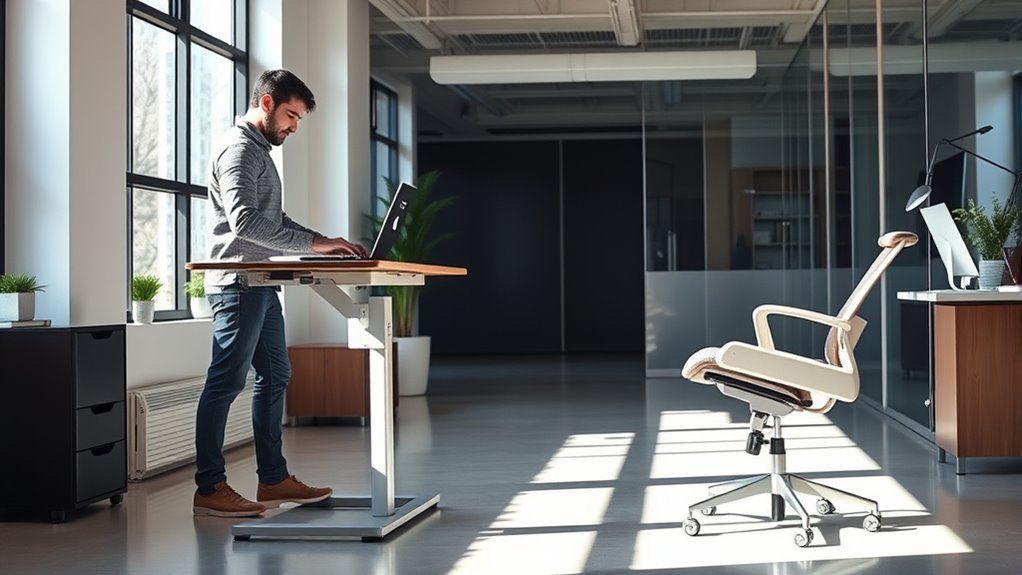
Standing during work tasks can boost your energy levels and keep you more alert throughout the day. When you stand, your blood circulation improves, delivering oxygen and nutrients more efficiently to your brain and muscles. This increased circulation helps reduce fatigue and can enhance your focus, making it easier to stay productive. Standing also encourages better posture, which minimizes strain on your neck, shoulders, and back. Additionally, standing allows you to move more freely, helping you stretch and shift positions naturally, preventing stiffness. It can also promote calorie burning compared to sitting, supporting weight management efforts. Overall, incorporating standing into your work routine can lead to increased energy, improved concentration, and a healthier, more active workday.
Common Challenges Associated With Standing
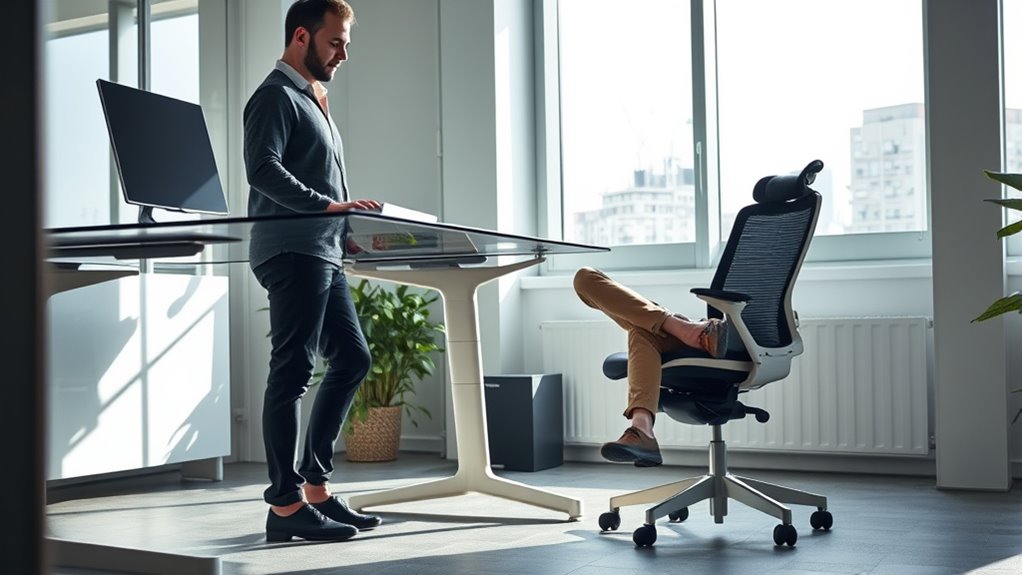
While standing offers notable benefits for energy and posture, it also comes with its own set of challenges. One common issue is fatigue; standing for long periods can lead to leg and lower back discomfort. You might notice swelling in your feet or ankles as blood circulation slows down. Additionally, maintaining a static standing position can cause muscle strain, especially if you don’t shift your weight or take breaks. Some people find it difficult to stay focused without shifting or sitting down periodically. Without proper support, standing can also increase pressure on your joints, leading to soreness over time. Managing these challenges requires awareness and regular movement, ensuring you don’t overstrain your body while enjoying the benefits of standing.
Ergonomics and Posture Considerations

To stay comfortable and avoid strain, you need to set up your workspace properly, paying attention to your desk height and monitor position. Maintaining good posture alignment throughout the day is key, so adjust your chair and screen to support your spine. Remember to take regular breaks and move around to prevent stiffness and promote circulation.
Proper Desk Setup
Setting up your workspace correctly can make a significant difference in comfort and productivity. Start by adjusting your chair so your feet rest flat on the floor and your knees are at a 90-degree angle. Your desk height should allow your forearms to be parallel to the ground when typing, preventing strain. Keep your monitor directly in front of you, about an arm’s length away, with the top of the screen at eye level. Position your keyboard and mouse close enough to avoid reaching, reducing shoulder tension. Use an ergonomic chair that supports your lower back and encourages good posture. Confirm there’s enough space on your desk for your essentials, keeping your workspace organized. Proper setup helps maintain comfort and minimizes the risk of strain during long work sessions.
Posture Alignment Tips
Maintaining proper posture is essential to prevent discomfort and long-term injury during work. To keep your body aligned, focus on these key tips:
- Keep your ears aligned with your shoulders, avoiding forward head posture.
- Maintain a slight bend in your elbows, close to a 90-degree angle, with wrists straight.
- Sit or stand with your hips level and your back supported, avoiding slouching or overarching.
Adjust your monitor to eye level so you don’t strain your neck. Keep your feet flat on the floor or on a footrest, and distribute your weight evenly. Regularly check your posture throughout the day, and make small adjustments to stay aligned. Proper posture helps reduce fatigue, soreness, and long-term musculoskeletal issues.
Breaks and Movement
Have you ever wondered how taking regular breaks can boost your comfort and productivity? Moving around periodically helps prevent stiffness, reduces fatigue, and improves circulation. Even a quick stretch or short walk can make a big difference in how you feel and perform. If you’re sitting or standing for long periods, your muscles and joints can become strained, increasing discomfort and the risk of injury. Incorporate brief breaks every 30 to 60 minutes to change positions, stretch, or walk around. This not only eases muscle tension but also refreshes your mind, helping you stay focused. Remember, consistent movement is key to maintaining good posture and overall ergonomic health, whether you’re sitting or standing during work.
Impact on Productivity and Focus
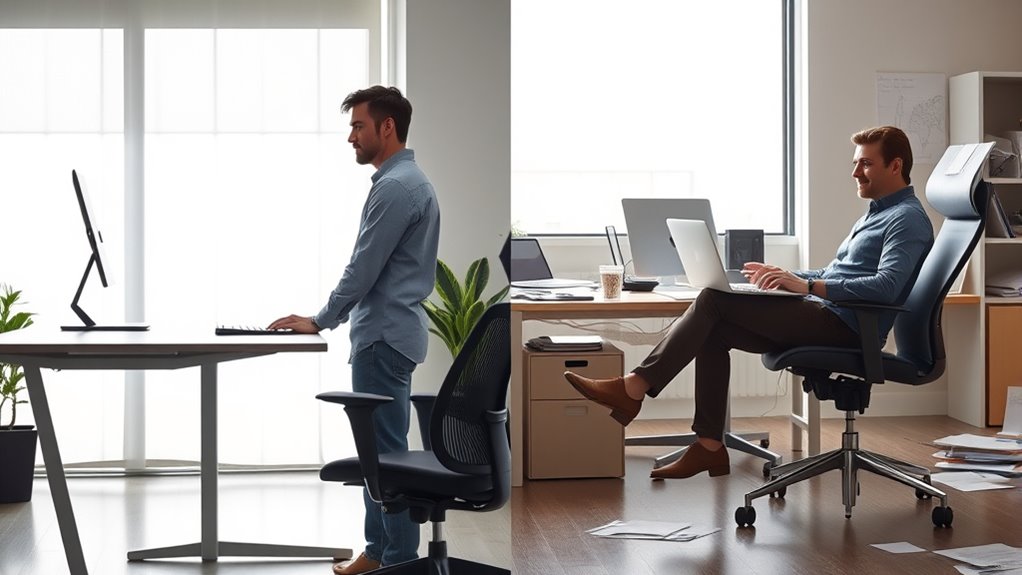
When it comes to productivity and focus, standing desks can provide a noticeable boost by increasing alertness and reducing fatigue. Standing encourages you to stay engaged and minimizes the sluggishness that can come from prolonged sitting. You may find yourself more attentive during tasks and less prone to distractions. Here are three ways standing desks enhance focus:
- They promote better blood flow, helping you stay alert.
- Standing reduces discomfort, allowing you to concentrate longer.
- The change in posture minimizes mental fatigue, keeping your mind sharper.
Effects on Energy Levels and Fatigue
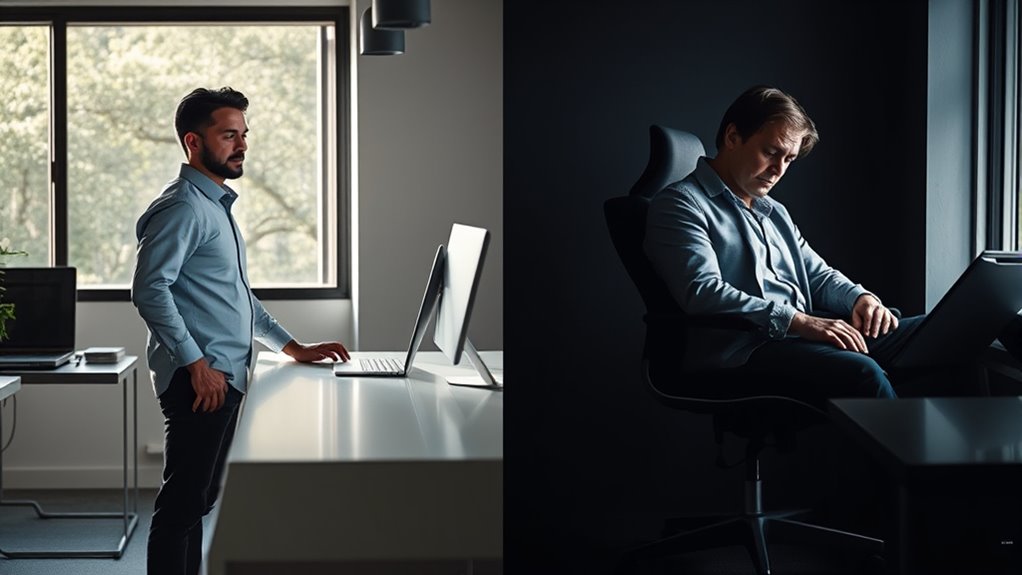
Standing can give you a quick energy boost, helping you stay alert throughout the day. It also reduces fatigue compared to sitting for long periods, so you may feel more refreshed. Plus, good posture can enhance your focus and keep fatigue at bay.
Energy Boost From Standing
Research shows that switching to a standing work position can considerably increase your energy levels. When you stand, blood flow improves, delivering more oxygen and nutrients to your brain and muscles, which keeps you alert. Standing also encourages better posture, reducing discomfort that can drain your focus. Here are three ways standing boosts your energy:
- Enhanced Circulation: Standing stimulates better blood flow, preventing the sluggishness caused by prolonged sitting.
- Increased Alertness: The active position helps you stay more attentive and engaged during work tasks.
- Reduced Lethargy: Standing minimizes the dips in energy that often occur after long periods of sitting, helping you stay energized throughout the day.
Fatigue Reduction Benefits
Switching to a standing work position can substantially reduce feelings of fatigue and help maintain higher energy levels throughout the day. Standing encourages more movement, which keeps your blood flowing and prevents the sluggishness that often comes with prolonged sitting. When you stand, you’re less likely to experience the stiffness and tiredness that can drain your energy. This shift also reduces muscle fatigue caused by static postures, helping you feel more alert and engaged. Additionally, standing promotes better circulation, decreasing the likelihood of lethargy. As a result, you’re more likely to stay focused and productive, with less dips in energy. Overall, embracing a standing work setup can be a simple yet effective way to combat fatigue and sustain your energy levels longer.
Posture’s Impact on Alertness
Maintaining good posture while working plays a crucial role in how alert and energized you feel throughout the day. When you sit or stand with proper alignment, blood flow improves, delivering oxygen and nutrients to your brain. This boosts your focus and reduces feelings of fatigue. Poor posture, on the other hand, can cause discomfort and sluggishness, draining your energy.
Here are three ways posture impacts alertness:
- Proper alignment enhances circulation, keeping you more awake.
- Reduced muscle strain minimizes fatigue and discomfort.
- An upright position promotes better breathing, increasing oxygen intake.
Strategies for Alternating Between Sitting and Standing

To effectively alternate between sitting and standing throughout your workday, it’s important to establish a clear schedule and set reminders. Decide on specific intervals—such as 30 minutes sitting, then 15 standing—and stick to them. Use alarms or app notifications to prompt you when it’s time to switch positions. This prevents you from staying in one posture too long and helps build a routine. Incorporate short breaks to stretch or walk around, which supports muscle movement and circulation. Keep your progression smooth by preparing your workspace for quick shifts—adjust your desk height or grab a standing desk converter. Consistency is key, so make this routine a habit to maximize comfort, reduce fatigue, and improve overall productivity.
Tools and Equipment to Support a Dynamic Work Routine
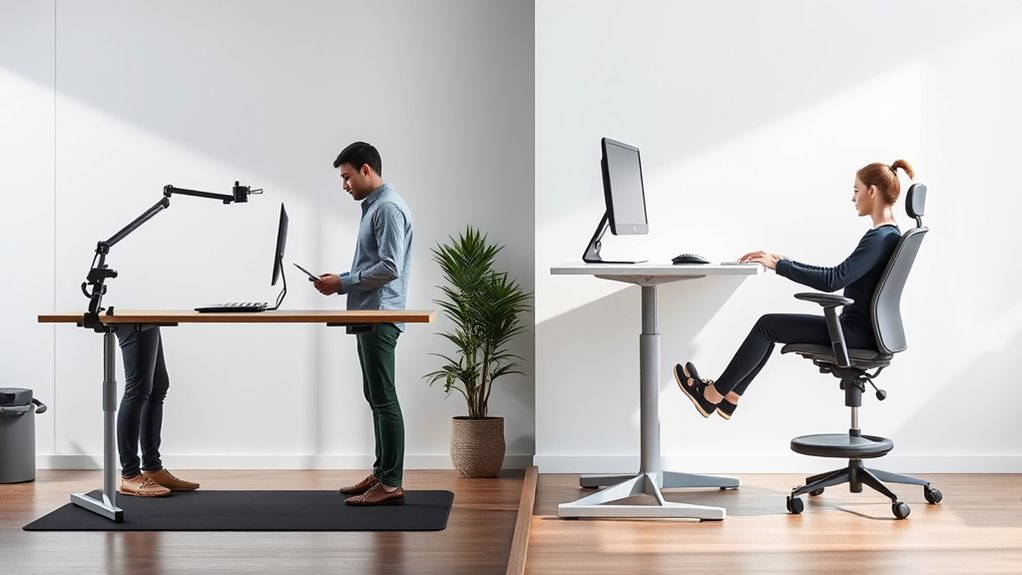
Using the right tools and equipment can make alternating between sitting and standing much easier and more comfortable. Investing in ergonomic gear helps prevent strain and boosts productivity. Here are three essential items to support your dynamic work routine:
- Adjustable Standing Desk: Lets you switch seamlessly between sitting and standing positions, promoting movement throughout the day.
- Anti-Fatigue Mat: Provides cushioning and reduces pressure on your feet and legs when standing for extended periods.
- Monitor Arms: Allow you to easily reposition your screen at eye level, reducing neck strain when switching postures.
These tools help maintain comfort, improve posture, and encourage movement, making it easier to stay active and focused during your workday.
Tips for Establishing a Comfortable and Healthy Work Environment

Creating a comfortable and healthy work environment starts with optimizing your space to support good posture and reduce distractions. Position your desk and monitor at eye level to avoid neck strain, and keep frequently used items within easy reach. Use an ergonomic chair that supports your lower back and allows your feet to rest flat on the floor. Guarantee your workspace is well-lit, preferably with natural light, to minimize eye strain. Keep your area tidy to reduce clutter and improve focus. Incorporate adjustable elements, like sit-stand desks or footrests, to promote movement throughout the day. Take regular breaks to stretch and change positions, which helps prevent stiffness and fatigue. Setting up your workspace thoughtfully enhances comfort and supports your overall well-being.
Frequently Asked Questions
How Can I Prevent Discomfort When Switching Between Sitting and Standing?
To prevent discomfort when switching between sitting and standing, take frequent breaks to move around and stretch. Use an ergonomic chair and adjustable desk to maintain proper posture. When standing, wear supportive shoes and shift your weight regularly. During sitting, keep your feet flat and back supported. Incorporate movement, like walking or stretching, to reduce stiffness and improve circulation, making changeovers smoother and more comfortable.
Are There Specific Jobs Better Suited for Sitting or Standing Work?
Think of your job as a garden: some tasks flourish with sitting, like planting seeds, while others thrive when standing, like pruning. Jobs like data entry or writing are better suited for sitting, offering focus and comfort. Conversely, roles involving physical tasks or customer interaction benefit from standing, enabling mobility and energy. By matching tasks to your body’s needs, you nurture productivity and avoid burnout, just like tending a healthy garden.
What Are the Long-Term Health Risks of Exclusively Standing or Sitting?
Long-term, sitting can lead to health issues like obesity, heart disease, and poor posture, while standing excessively increases risks of varicose veins, musculoskeletal problems, and foot pain. You might develop muscle strain or joint problems if you stay in one position too long. To protect your health, alternate between sitting and standing, take regular breaks, and incorporate movement into your routine. Balance is key to reducing these long-term risks.
How Can Employers Support Employees in Alternating Work Postures?
To support employees in alternating postures, you should encourage regular breaks, promote sit-stand desks, and foster a culture that values movement. Remind staff to switch between sitting and standing throughout the day, and provide ergonomic resources to prevent strain. Offering flexibility and education on proper posture helps reduce health risks, boosts comfort, and increases productivity, ensuring employees stay healthy and engaged while working.
What Are the Best Exercises to Reduce Fatigue From Prolonged Standing?
Think of your legs like a car engine—they need regular check-ins to stay efficient. To reduce fatigue from prolonged standing, do calf raises, ankle rolls, and heel-to-toe shifts every hour. Stretch your calves and hamstrings during breaks. For example, I once stood for hours at a fair, but short stretches kept me energized. These quick exercises boost circulation, decrease soreness, and keep you comfortable throughout your shift.
Conclusion
So, next time you’re debating sitting versus standing, remember: neither is perfect, and your body’s just here to remind you. Embrace a balanced routine, or risk turning into a couch potato or a human statue. After all, a little movement beats endless hours of stillness—unless you want to become a professional statue. Keep shifting, stay mindful, and maybe, just maybe, you’ll avoid turning into a sedentary sculpture. Your back will thank you!