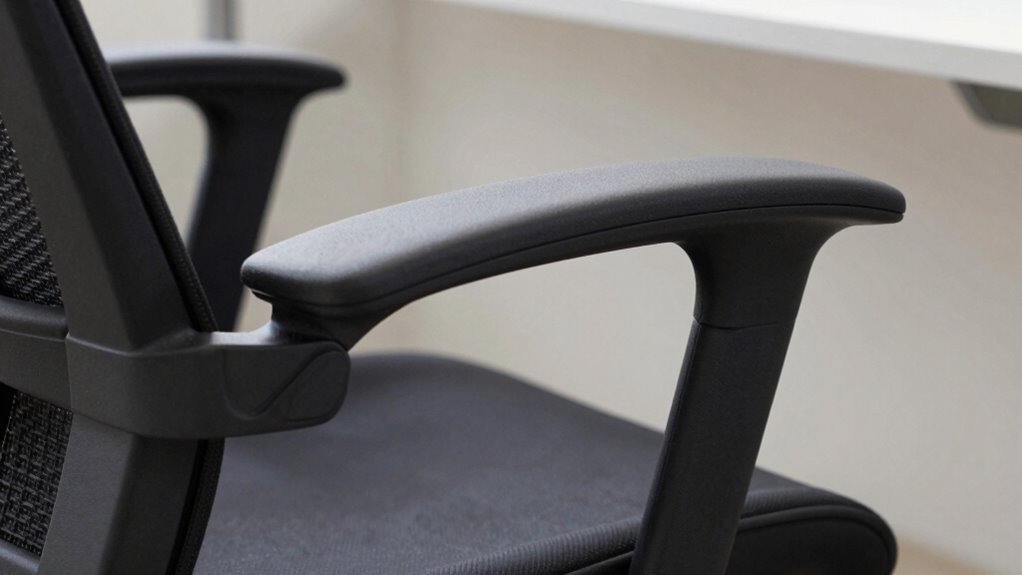

To explain chair armrest position, focus on adjusting them to support your arms comfortably without causing shoulder strain. Set the height so your elbows stay at about a 90-degree angle, and make sure they’re close enough for relaxed shoulders. Adjust the width so your arms rest naturally without spreading or bunching. Proper placement guarantees good posture, prevents muscle tension, and promotes comfort during long use. Keep exploring for more tips to perfect your armrest setup.
Key Takeaways
- Proper armrest height should align with elbows at a 90-degree angle for ergonomic support.
- Adjust armrest width to match shoulder width and promote natural arm positioning.
- Position armrests close enough to support arms without causing shoulder tension.
- Correct placement helps maintain neutral shoulder posture, reducing neck and back strain.
- Customize armrest settings based on activity, lowering or raising for optimal comfort and support.

HOLLUDLE Ergonomic Mesh Office Chair – 3D Adjustable Lumbar Support & 3D Armrests, V-Shaped Back, Adjustable Desk Chair for Office & Home, Black
[Advanced 3D Lumbar Support] Customize your comfort with Holludle's unique 3D lumbar support. Adjust it up, down, forward,…
As an affiliate, we earn on qualifying purchases.
As an affiliate, we earn on qualifying purchases.
The Importance of Proper Armrest Height
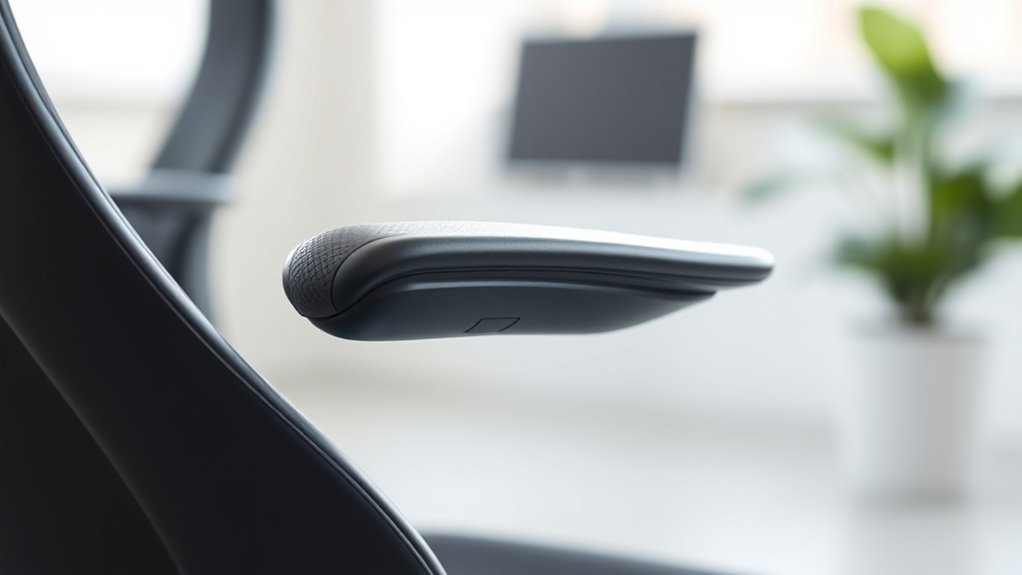
Proper armrest height is essential for maintaining good posture and preventing discomfort during extended periods of sitting. When your armrests are too high, they can cause your shoulders to hunch, leading to tension and strain. If they’re too low, your arms may hang awkwardly, increasing pressure on your shoulders and neck. Ideally, your armrests should align with your elbows, forming a 90-degree angle when you sit upright. This position supports your arms naturally, reducing muscle fatigue and promoting better circulation. Correct height also helps keep your spine in a neutral position, preventing slouching or leaning forward. Taking the time to set your armrests at the right height can considerably improve your comfort and reduce the risk of musculoskeletal issues over time. Proper support plays a key role in maintaining overall ergonomic health during long sitting sessions. Additionally, adjusting your armrests to the correct height encourages musculoskeletal health and promotes overall comfort throughout the day. Incorporating smart ergonomic adjustments can further optimize your sitting posture for long-term well-being, especially as adaptive technology becomes more prevalent in ergonomic furniture design. Ensuring your armrests are adjustable allows for personalized comfort tailored to your unique body needs.
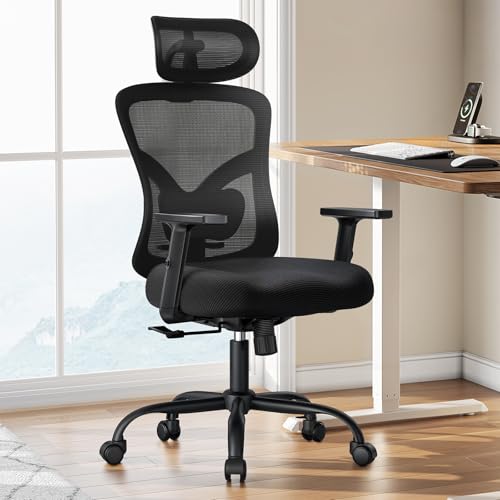
Marsail Ergonomic Office Chair Ergonomic Gaming Chair with Lumbar Support, 2D Headrest, Adjustable Armrests, Contoured Seat Cushion, Computer Desk Chair with Wheels for Home and Office
Adjustable Lumbar Support: This ergonomic office chair is designed to align with the natural curve of your spine….
As an affiliate, we earn on qualifying purchases.
As an affiliate, we earn on qualifying purchases.
Adjusting Armrest Width for Comfort

Adjusting the armrest width to suit your body helps guarantee your arms rest comfortably without unnecessary strain. To find the right fit, start by loosening the adjustment mechanism. Then, gently move the armrests closer together or farther apart until they align with your shoulders. Proper ergonomic positioning is essential for maintaining comfort and preventing strain. Properly aligning the armrests can also help reduce musculoskeletal stress, enhancing overall comfort. Additionally, ensuring the adjustment mechanism is securely tightened helps maintain the correct position during use. Maintaining the correct armrest width can also contribute to better posture during extended periods of sitting. Finally, tighten the screws or levers to lock the armrests in place. Here’s how to do it:
- Loosen the adjustment screws or levers.
- Move the armrests to match the width of your shoulders or natural arm position.
- Tighten the screws or levers to lock the armrests in place.
Ensuring the width supports your arms comfortably prevents shoulder tension and promotes better posture. Take your time to find the perfect fit, and you’ll enjoy enhanced comfort throughout your work or relaxation sessions.

Aloudy Ergonomic Memory Foam Office Chair Armrest Pads, Comfy Gaming Chair Arm Rest Covers for Elbows and Forearms Pressure Relief(Set of 2), Stretch Fit, Black
PLEASE MEASURE FIRST: Our pad size 9.5'' x 4.5'' x 1.5'' fits chair arms from 6 to 10.5…
As an affiliate, we earn on qualifying purchases.
As an affiliate, we earn on qualifying purchases.
Optimal Armrest Placement Relative to Desk and Body
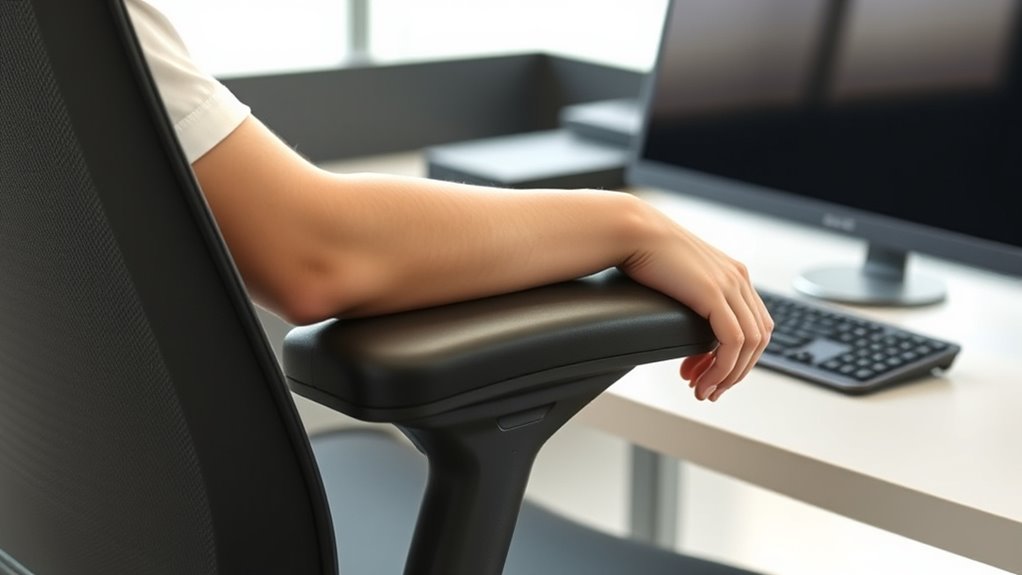
Once you’ve set the armrest width to match your shoulders, the next step is to position the armrests in relation to your desk and body for ideal comfort. You want the armrests to support your arms without forcing your shoulders upward or causing strain. Adjust the height so your forearms are parallel to the ground or slightly angled downward. The armrests should be close enough to your body to relax your shoulders but not so tight that they restrict movement. Position them so your elbows form about a 90-degree angle when typing or working. Ensure the armrests don’t push your wrists upward or cause you to lean forward. Proper placement helps reduce tension and encourages a natural, comfortable posture throughout your work session. Considering ergonomics principles, properly adjusted armrests can significantly improve overall comfort and prevent repetitive strain injuries. Regularly assessing your position and making small adjustments can also contribute to long-term posture improvement and comfort. Additionally, staying attentive to armrest positioning can help you maintain a healthy ergonomic setup over time.

Primy Drafting Chair Tall Office Chair with Flip-up Armrests Executive Ergonomic Computer Standing Desk Chair with Lumbar Support and Adjustable Footrest Ring (Black)
Adjustable Drafting Chair:This high rotary drawing chair has a foot stool with adjustable height, and the 90 degree…
As an affiliate, we earn on qualifying purchases.
As an affiliate, we earn on qualifying purchases.
The Impact of Armrest Position on Posture and Ergonomics

The position of your armrests directly influences your posture and overall ergonomic health. When your armrests are too high or low, you may hunch your shoulders, leading to tension and discomfort. Properly adjusted armrests help you maintain a neutral shoulder position, reducing strain. Consider these key points:
- Keep armrests at elbow height to support your arms comfortably.
- Ensure they don’t push your shoulders upward or cause them to slump.
- Use armrests to support your forearms, minimizing neck and back strain.
- Adjusting armrests to the correct height can also prevent musculoskeletal issues related to poor ergonomics. Proper armrest positioning also encourages better ergonomic posture, which can lead to increased comfort during extended periods of sitting. Additionally, selecting appropriate jewelry materials for office wear can prevent skin irritation caused by prolonged contact with certain metals or fabrics. Maintaining a comfortable sitting environment with well-positioned armrests can further enhance your overall ergonomic health. When your workspace is set up with proper ergonomic principles, it promotes better spinal alignment and reduces the risk of discomfort over time. Proper armrest placement encourages you to sit correctly and stay comfortable during long periods of work or activity.
Tips for Customizing Armrest Settings for Different Activities
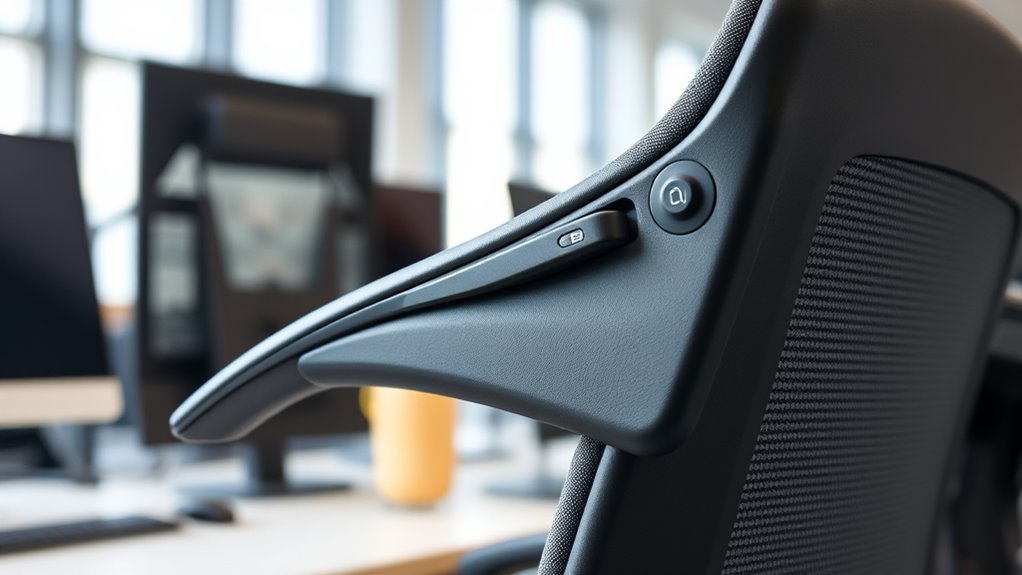
Ever wonder how to set your armrests for different tasks to stay comfortable and productive? Adjust your armrests based on the activity. For typing or detailed work, keep them close enough to support your forearms without raising your shoulders. This helps reduce strain and keeps your wrists in a neutral position. When taking notes or reading, lower the armrests slightly or even remove them if possible, so they don’t interfere with your movement. During breaks or when relaxing, fully raise or detach the armrests to give your shoulders a rest. Regularly tweaking the settings as your tasks change throughout the day ensures optimal comfort. Properly customized armrests help maintain good posture, prevent discomfort, and boost your overall productivity. Additionally, ergonomic adjustments can optimize comfort and reduce the risk of strain during extended periods of activity, especially when integrated with smart home features that monitor and encourage proper posture and nanotechnology innovations that enhance ergonomic furniture design. Incorporating adjustable features into your furniture setup allows for more precise customization tailored to your specific needs.
Frequently Asked Questions
How Do Armrest Positions Vary Across Different Chair Types?
You’ll find armrest positions vary widely across chair types to suit different needs. Office chairs usually have adjustable armrests that move up, down, or sideways for comfort and ergonomics. Gaming chairs often feature padded, adjustable armrests for prolonged use. Lounge chairs might have fixed or minimal armrests, prioritizing relaxation. You can customize armrest height, width, or angle based on the chair design, helping you maintain good posture and comfort during extended sitting.
Can Adjustable Armrests Prevent Repetitive Strain Injuries?
Adjustable armrests can definitely help prevent repetitive strain injuries. Imagine your arms as branches needing gentle support; fixed armrests can cause strain if they don’t match your natural posture. Studies show that ergonomic adjustments reduce muscle tension and discomfort. By customizing your armrest height and angle, you keep your shoulders relaxed and wrists properly aligned, making repetitive tasks less stressful and lowering injury risks over time.
What Materials Are Best for Durable, Ergonomic Armrests?
You should choose armrests made from high-quality materials like durable plastics, reinforced aluminum, or dense foam padding with a sturdy fabric or leather covering. These materials withstand daily use and offer comfort. Look for options with adjustable features to customize height and width, reducing strain on your shoulders and arms. Prioritize ergonomic designs that support natural arm positioning, ensuring long-term durability and comfort during extended periods of sitting.
Are There Specific Armrest Positions for Left-Handed vs. Right-Handed Users?
Think of your chair armrests as the steering wheel of your comfort. Yes, there are specific positions for left-handed and right-handed users. You should position them so your arms rest naturally, reducing strain. Adjust the armrests closer if you’re left-handed to support your dominant side, and do the same for right-handed users. Proper alignment guarantees comfort and prevents discomfort during long hours at your desk.
How Often Should Armrest Settings Be Re-Evaluated for Optimal Comfort?
You should re-evaluate your armrest settings every few months or whenever you notice discomfort. Changes in your posture, workload, or physical condition can affect what feels comfortable. Regular adjustments help prevent strain and maintain good ergonomics. Pay attention to how your shoulders, neck, and arms feel during work or relaxation, and tweak the armrests as needed to stay comfortable and support proper alignment.
Conclusion
Getting your chair armrests just right is like tuning an instrument—you’ll notice the harmony in your posture and comfort. When you adjust the height, width, and placement, you create a supportive foundation for your body. Think of your armrests as the steady drumbeat that keeps your posture in rhythm. So, take the time to customize them; your back, shoulders, and overall ergonomics will thank you for it.