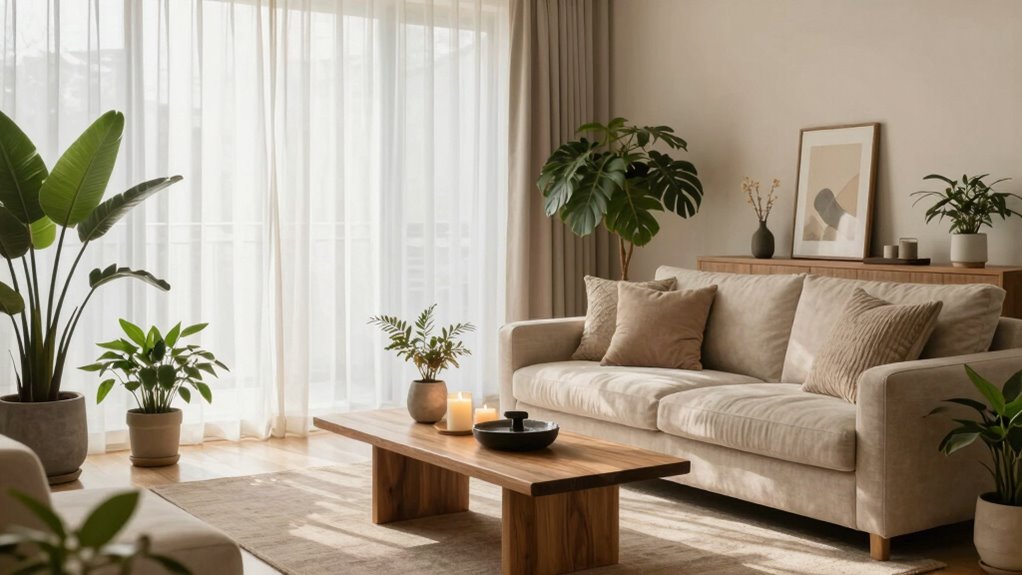

To create a wellness-focused interior, incorporate natural elements like wood, plants, and earthy colors to promote calm. Maximize natural light with thoughtful windows and reflective surfaces to boost mood and energy. Use ergonomic furniture and organize your space to reduce clutter and enhance focus. Add mindfulness areas and biophilic design features to connect with nature. Staying mindful of these principles can transform your space into a tranquil retreat that nurtures your mind and body. Explore more to learn how these ideas come together.
Key Takeaways
- Incorporate natural elements like plants, wood, and stone with earthy colors to create a calming environment.
- Maximize natural light with strategic window placement and reflective surfaces to boost mood and well-being.
- Design clutter-free, open spaces with designated mindfulness zones to promote mental clarity and relaxation.
- Use ergonomic furniture and calming colors to support comfort, focus, and physical well-being.
- Integrate biophilic features such as water elements and outdoor views to strengthen connection with nature.
Incorporating Natural Elements for a Calming Atmosphere
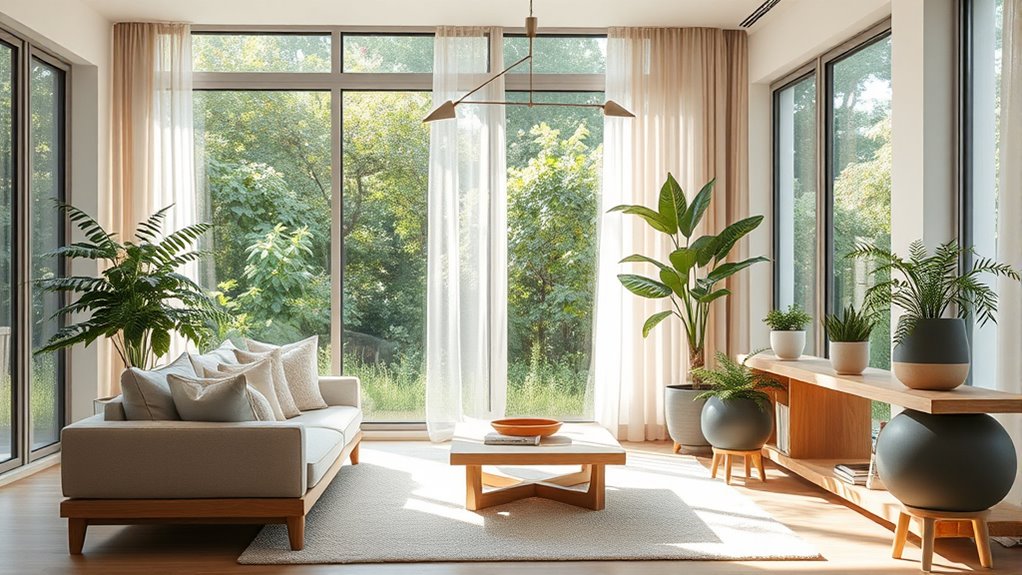
Bringing natural elements into your interior design can substantially enhance the calming atmosphere of a space. Incorporate materials like wood, stone, and bamboo to create a grounding effect that promotes relaxation. Plants are a simple yet powerful way to introduce nature; they improve air quality and add a touch of tranquility. Use soft, earthy color palettes inspired by nature—think greens, browns, and beiges—to evoke serenity. Textures also matter, so opt for natural fabrics like linen, cotton, or wool to add warmth and comfort. Keep clutter minimal, allowing natural elements to stand out and breathe life into your environment. These touches help you feel more connected to nature, reducing stress and fostering a peaceful, restorative space. Incorporating sustainable design principles can further enhance your space’s harmony with the environment while supporting eco-friendly practices. Additionally, selecting the right lighting conditions can amplify the calming effects created by natural elements, making your space even more inviting and peaceful. Embracing biophilic design concepts can deepen your connection to nature and improve overall well-being within your home, especially when supported by natural materials that promote a sense of authenticity and tranquility.
Maximizing Natural Light to Enhance Well-Being
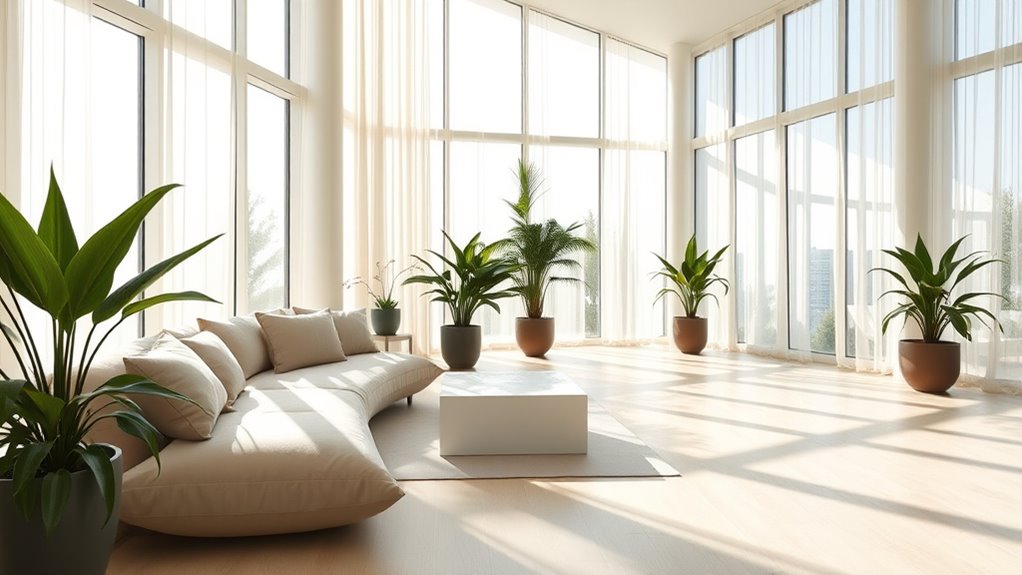
Maximizing natural light can be critically boost your well-being, and strategic window placement plays a vital role. Reflective surfaces and light-colored walls help distribute sunlight evenly throughout your space. Incorporating skylights can bring in even more daylight, creating a bright, uplifting environment. To further enhance your space, consider integrating free floating elements, which can improve airflow and contribute to a more relaxed atmosphere. Additionally, understanding lighting optimization techniques can maximize the benefits of natural illumination in your interior design. Employing energy-efficient lighting solutions can also support sustainability while enhancing overall brightness. Exploring Gold IRA markets can provide insights into secure investment options that promote financial well-being, paralleling the focus on wellness in your interior environment. Emphasizing community-driven design approaches can also foster a healthier and more inviting environment for residents.
Optimal Window Placement
Have you ever wondered how the placement of windows can influence your overall well-being? Properly positioned windows maximize natural light, boost mood, and improve sleep. To achieve this, consider the sun’s path and your room’s purpose. South-facing windows bring consistent daylight, perfect for work or relaxation. East-facing windows greet the morning sun, energizing your mornings. West-facing windows offer warm evening light, ideal for unwinding. North-facing windows provide softer, consistent light, reducing glare. Here’s a quick guide:
| Window Placement | Benefits |
|---|---|
| South-facing | Abundant daylight, enhances mood |
| East-facing | Bright mornings, energizes start |
| West-facing | Warm evening light, relaxing atmosphere |
| North-facing | Soft, consistent light, minimizes glare |
Understanding ventilation considerations can further improve your interior environment by maintaining air quality and comfort. Additionally, proper window insulation can help regulate indoor temperatures and improve energy efficiency. Incorporating natural light optimization strategies can also reduce reliance on artificial lighting, lowering energy costs and supporting overall health. Being mindful of window placement can also impact your privacy and security, so plan accordingly. Considering air quality factors such as ventilation and filtration can further enhance your wellness-focused interior design.
Use of Reflective Surfaces
Reflective surfaces, such as mirrors, glass, or glossy finishes, can profoundly boost natural light in your space by bouncing sunlight deeper into rooms. This increased brightness creates a sense of openness and promotes a positive mood, enhancing your overall well-being. To maximize this effect, strategically place mirrors opposite windows to reflect light into darker corners. Choose polished surfaces that reflect the most light without overwhelming the space. Incorporating reflective materials not only brightens your environment but also adds a touch of elegance and modernity. Additionally, selecting air purifiers with reflective or sleek designs can seamlessly complement your interior, further supporting a healthy environment and inviting atmosphere. Optimizing the placement of reflective elements is essential to fully harness their performance benefits and create a truly uplifting space.
Incorporating Skylights
Did you know that adding skylights can dramatically boost the natural light in your home? Installing skylights allows sunlight to flood your space, creating a bright, uplifting environment that supports your well-being. With more natural light, you can reduce reliance on artificial lighting and improve your mood and energy levels. Proper placement matters—consider bedrooms, kitchens, or living areas where sunlight can be maximized. Modern skylights come with features like UV protection and ventilation, enhancing comfort and safety. Incorporating skylights also helps regulate your circadian rhythm, promoting better sleep and overall health. Navigation and mapping systems in skylights can assist in optimal positioning and operation, enhancing their effectiveness. By opening up your space to the sun, you invite a sense of openness and vibrancy that nurtures both your body and mind. Simple systems for maximizing natural light can make a significant difference in creating a calming, organized home environment. Additionally, integrating smart home automation can optimize the operation of your skylights, allowing you to control lighting levels effortlessly and enhance energy efficiency. Understanding natural light optimization techniques can further help you make the most of your skylight setup.
Choosing Soothing Colors for a Relaxing Environment
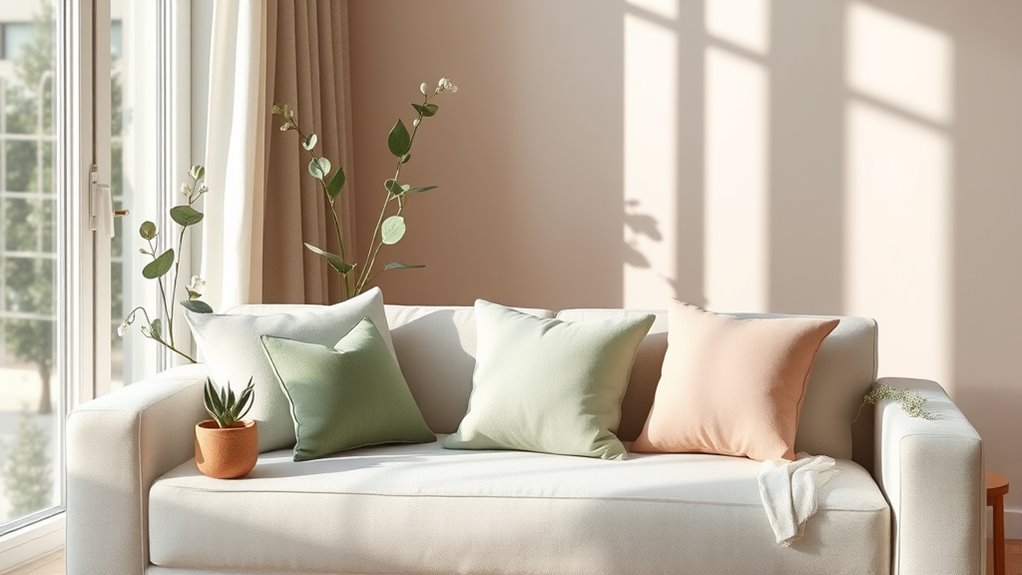
Choosing soothing colors is essential for creating a relaxing environment that promotes wellness. The right hues can calm your mind, reduce stress, and foster tranquility. Soft, muted tones help prevent overstimulation and set a peaceful tone for any space. When selecting colors, focus on shades that evoke serenity and comfort. Light blues and gentle greens are popular choices because they mirror nature and promote calmness. You can also incorporate warm neutrals like beige or soft taupe to add coziness without overwhelming the senses. Remember, the goal is to create a harmonious atmosphere that encourages relaxation and mindfulness.
- Use cool tones like blue and green to evoke calm
- Incorporate warm neutrals for comfort
- Keep colors subtle and muted for serenity
Selecting Ergonomic Furniture for Comfort and Support
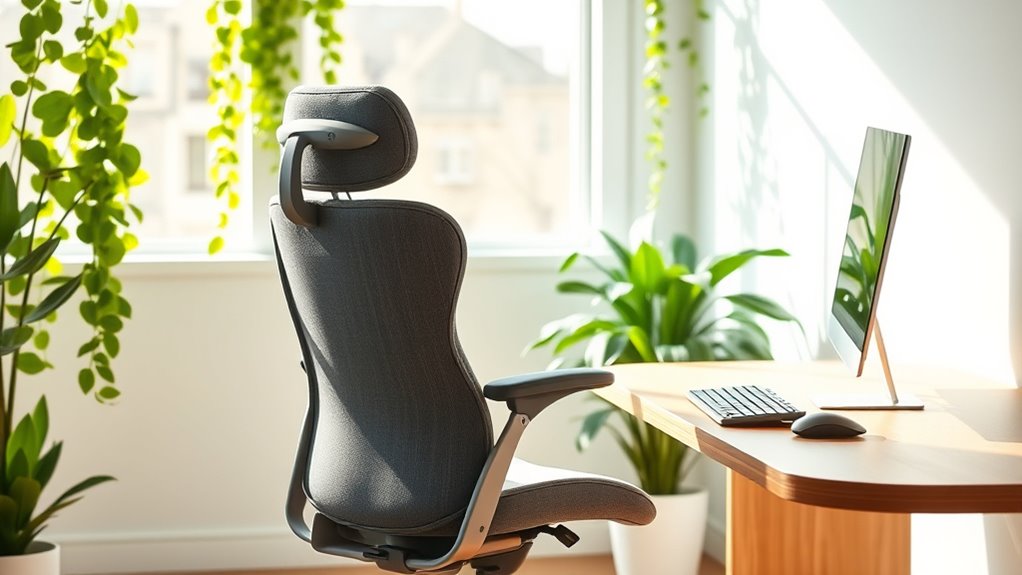
To create a space that truly supports your well-being, selecting ergonomic furniture is essential. Proper furniture reduces strain and enhances comfort, making it easier to focus and relax. Look for chairs with adjustable height, lumbar support, and breathable fabric. Desks should accommodate your height and allow for proper arm positioning. Consider these key features:
| Feature | Benefit | Recommendation |
|---|---|---|
| Adjustable Height | Customizes fit for your body | Use a desk that rises or lowers |
| Lumbar Support | Supports lower back health | Opt for chairs with built-in lumbar support |
| Breathable Material | Keeps you cool during long sessions | Choose chairs with mesh fabric |
Prioritize ergonomic design to create a healthier, more supportive environment. Incorporating ergonomic principles into your interior design can further enhance comfort and promote better posture throughout your space. Additionally, paying attention to postural alignment can help prevent discomfort during extended periods of sitting. Emphasizing body awareness can also contribute to maintaining proper ergonomics and overall well-being.
Creating Spaces That Promote Mental Clarity and Focus
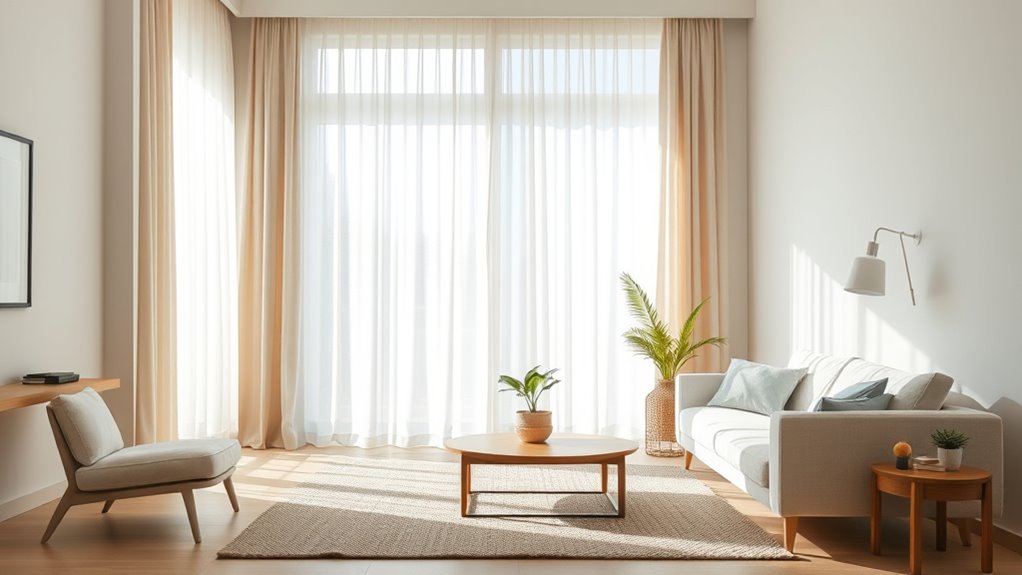
When your workspace features ergonomic furniture, it naturally encourages better posture and reduces physical distractions. This creates a foundation for mental clarity, allowing you to focus more effectively. To enhance focus, consider decluttering your environment—keep only essential items within reach. Use calming colors like soft blues or neutral tones to promote tranquility and concentration. Incorporate task lighting that minimizes glare and shadows, reducing eye strain. Additionally, introduce designated zones for different activities, such as a separate area for brainstorming or deep work. These intentional design choices help create a space that minimizes distractions and supports your mental state, making it easier to stay attentive and productive throughout your day.
Utilizing Biophilic Design Principles for Connection to Nature
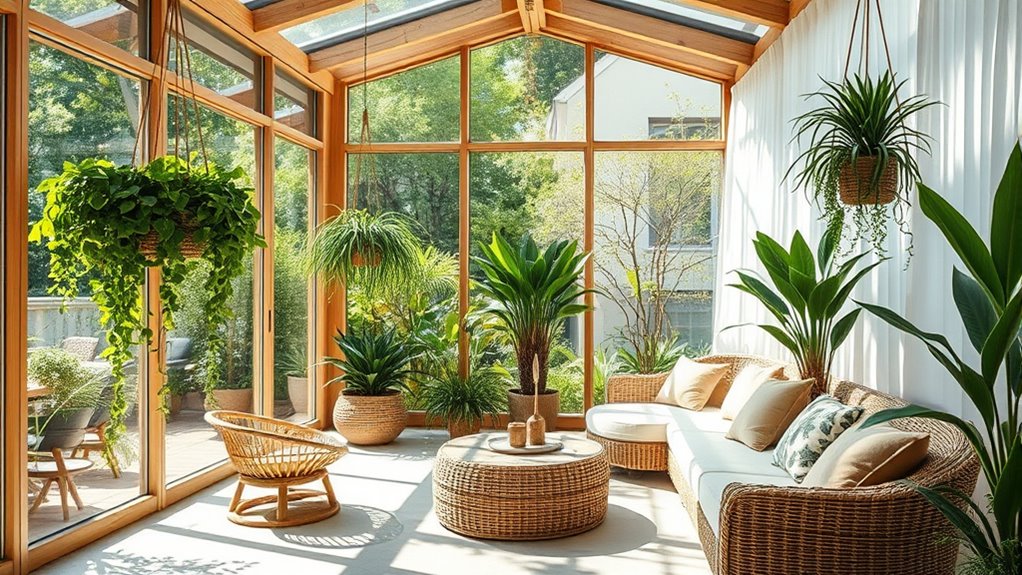
Incorporating biophilic design principles into your space creates a direct connection to nature, which can enhance your well-being and reduce stress. You can achieve this by adding natural elements like plants, water features, or natural light. Strategically placing large windows or skylights invites sunlight, boosting your mood and energy. Using natural materials such as wood, stone, or bamboo helps create a warm, inviting atmosphere. Incorporate views of outdoor landscapes or artwork depicting nature to reinforce that connection. The goal is to blur the boundaries between indoors and outdoors, fostering a sense of tranquility and balance. These elements not only improve aesthetics but also support your mental and physical health by making your environment more alive and vibrant.
Integrating Mindfulness and Meditation Spaces
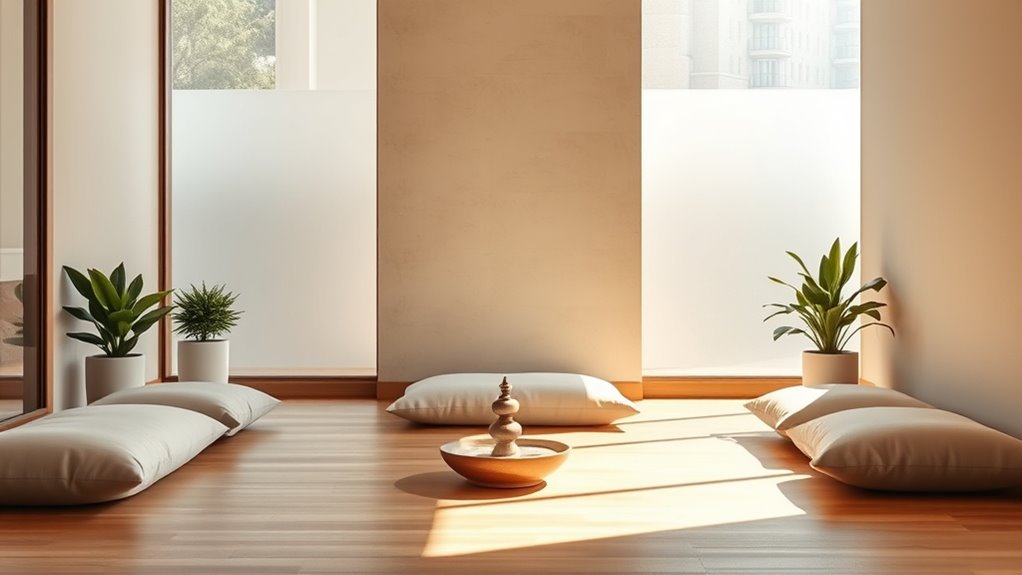
Creating calm environments is essential for effective mindfulness and meditation spaces. You should select soothing elements like soft lighting, gentle colors, and natural textures to foster relaxation. These choices help you design areas where you can truly unwind and focus inward.
Creating Calm Environments
Have you ever noticed how a peaceful space can instantly quiet your mind? Creating calm environments helps you unwind and refocus. To foster tranquility, consider decluttering your space to reduce visual noise. Use soft, natural lighting that mimics daylight and promotes relaxation. Incorporate comfortable seating or cushions for meditation and mindfulness practices. Keep the color palette neutral or muted to avoid overstimulation. Adding elements like plants or water features can also enhance serenity. By intentionally designing your environment with these elements, you create a sanctuary where you can pause, breathe, and reconnect. This calm atmosphere supports your mental well-being, making it easier to practice mindfulness or meditate whenever you need a mental reset.
Choosing Soothing Elements
Choosing soothing elements is essential for designing effective mindfulness and meditation spaces that foster calm and focus. You want to select items that promote relaxation without distraction. Soft lighting, like warm lamps or candles, creates a gentle atmosphere. Incorporate natural materials such as wood, stone, or bamboo to connect with nature and evoke tranquility. Use calming colors like muted greens, blues, or neutrals to support restful feelings. Minimal clutter is key—choose simple, functional furniture and avoid overstimulation. Adding elements like water features or plants can enhance serenity and bring a touch of nature indoors. Remember, your goal is to craft a space that encourages mindfulness, so choose elements that soothe the senses and foster a sense of peace.
Reducing Clutter to Foster a Sense of Peace
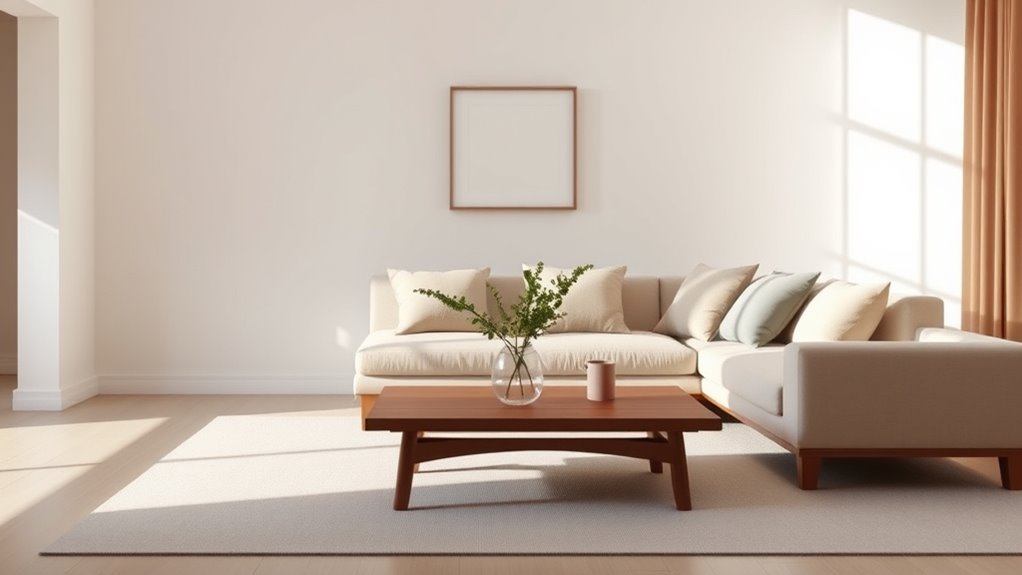
When your space is cluttered, it’s easy to feel overwhelmed and mentally drained. Clearing clutter creates a calming environment, making it easier to relax and focus. Start by sorting items into keep, donate, and discard piles. Regularly declutter surfaces like countertops and desks to prevent buildup. Implement storage solutions that hide away unnecessary items, maintaining visual simplicity. A tidy space minimizes distractions, helping your mind feel more at ease. Remember, less is more—eliminating excess allows the eye to rest and promotes a sense of peace. By keeping your environment organized, you foster tranquility and improve your overall well-being. Small, consistent efforts to reduce clutter can transform your space into a sanctuary of calm.
Using Aromatherapy and Sensory Elements to Elevate Mood
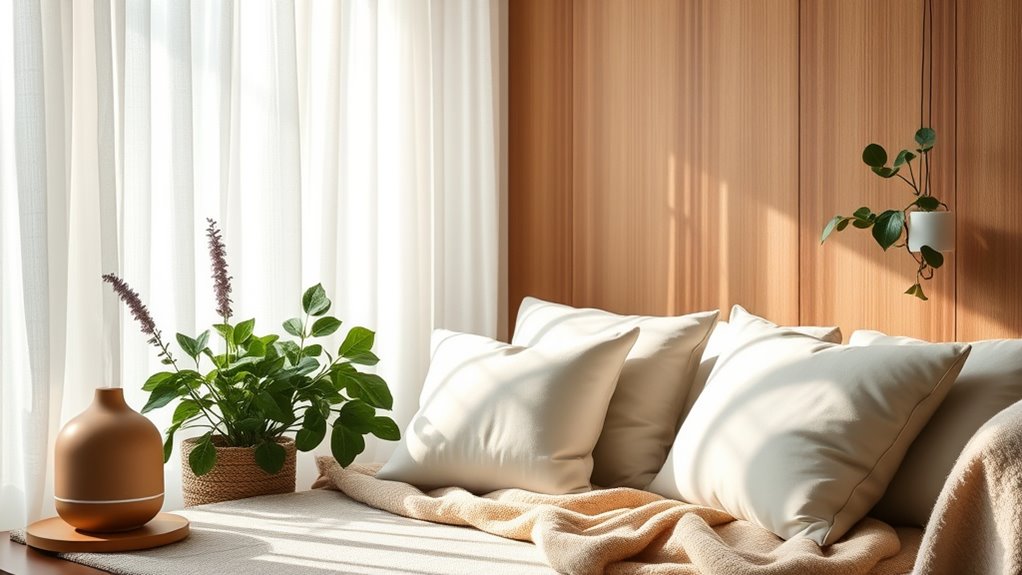
Incorporating aromatherapy and sensory elements into your space can considerably boost your mood and create a more inviting environment. Use essential oils like lavender, peppermint, or citrus in diffusers to introduce calming, energizing, or uplifting scents. Incorporate soft, textured fabrics such as plush blankets or cozy rugs to stimulate your sense of touch. Add calming sounds like gentle music or nature sounds to enhance relaxation. Visual cues, like soothing artwork or warm lighting, also influence your mood. Engage your senses intentionally by creating a multisensory experience that promotes well-being. These small yet impactful adjustments can transform your space into a sanctuary that nurtures your mental and emotional health daily. Sensory elements make your environment more vibrant, comforting, and tailored to your mood.
Frequently Asked Questions
How Can I Incorporate Wellness Principles Into Small or Rented Spaces?
You can incorporate wellness principles into small or rented spaces by maximizing natural light, using calming colors, and adding plants for better air quality. Opt for multi-functional furniture to save space and reduce clutter, creating a peaceful environment. Incorporate scent diffusers or candles for relaxation and guarantee good ventilation. Personalize with meaningful decor to boost mood, making your space both functional and nurturing for your well-being.
What Are Cost-Effective Ways to Enhance Wellness Through Interior Design?
You can enhance wellness cost-effectively by decluttering your space, which reduces stress and promotes calm. Add plants to improve air quality and boost mood without spending much. Use calming colors like soft blues or greens to create a serene environment. Incorporate natural light by opening blinds or rearranging furniture. Finally, introduce cozy elements like soft textiles or aromatherapy to foster relaxation and well-being without breaking the bank.
How Can I Balance Aesthetics and Functionality in Wellness-Focused Spaces?
You can balance aesthetics and functionality by choosing calming colors and natural materials that look good and promote wellness. Incorporate versatile furniture that’s both stylish and practical, like multi-use pieces. Keep the space clutter-free to enhance flow and tranquility. Use lighting wisely with adjustable options to suit different moods. Prioritize comfort with ergonomic designs, ensuring the space feels inviting without sacrificing beauty or usability.
What Materials Are Best for Maintaining Indoor Air Quality and Wellness?
You should choose low-VOC paints, natural wood, and non-toxic materials to improve indoor air quality. Incorporate materials like bamboo, cork, and organic cotton, which are sustainable and emit fewer harmful chemicals. Avoid synthetic fabrics and plastics that can off-gas toxins. Regularly ventilate your space and use air purifiers with HEPA filters to further reduce pollutants. These choices help create a healthier, more wellness-oriented environment.
How Do I Personalize Wellness-Oriented Design to Reflect My Lifestyle?
You personalize your wellness-oriented design by choosing colors, textures, and elements that resonate with your lifestyle. Incorporate calming tones if you seek relaxation, or energizing accents if you need motivation. Add plants for freshness, incorporate your favorite artwork for inspiration, and select furniture that fits your daily routines. Reflect your hobbies and personality through decor choices, creating a space that feels authentic and supportive of your well-being.
Conclusion
As you embrace wellness-focused design, you might notice how sunlight filters softly through your space, highlighting the calming colors and natural elements you’ve chosen. Perhaps a gentle breeze carries the scent of lavender from your aromatherapy. With clutter cleared and mindful moments woven in, your environment becomes a sanctuary where tranquility and clarity effortlessly intertwine, making every breath and glance feel like a quiet reminder that true well-being begins at home.