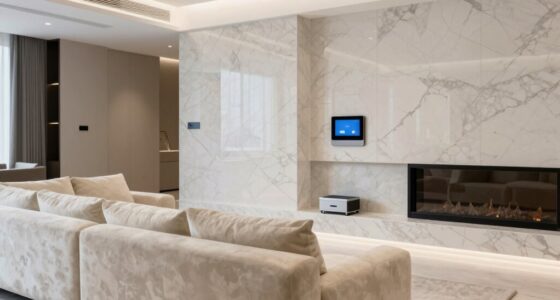

Minimalism focuses on simplicity, reducing clutter, and creating a calm environment, while smart functionality enhances convenience through technology like automation and intelligent devices. Balancing both can bring peace and efficiency, but it requires mindful integration. Too much tech may create sterility or dependency, so it’s key to choose devices carefully and prioritize intentional design. Want to learn how to blend these approaches harmoniously? Keep exploring how you can create a sustainable, serene space tailored to your lifestyle.
Key Takeaways
- Minimalism emphasizes simplicity and decluttering, while smart functionality integrates technology to enhance convenience and efficiency.
- Minimalist spaces promote tranquility and mental clarity, whereas smart tech can reduce effort but may introduce complexity.
- Balancing both involves selective use of devices that support a minimalist aesthetic without cluttering the environment.
- Over-reliance on smart devices can compromise the emotional and tactile benefits of minimalist living.
- Effective integration requires mindful implementation to preserve minimalism’s serenity while benefiting from smart technology.
Defining Minimalism and Its Core Principles
Minimalism is a philosophy that emphasizes simplicity and intentionality in design and lifestyle. At its core, it encourages you to focus on what truly matters by reducing clutter and unnecessary possessions. Space optimization is a key principle, helping you create a calming environment where every item has a purpose. Incorporating essential oils for relaxation and sleep can further enhance the tranquility of your space, promoting emotional well-being. This not only makes your space feel larger and more functional but also reduces stress. Material sustainability is equally important, prompting you to choose eco-friendly, durable materials that minimize waste and environmental impact. Additionally, integrating mindful practices like sound healing can enhance emotional well-being and promote a balanced lifestyle. Recognizing and eliminating passive voice in communication can further clarify your message and improve overall effectiveness. For those interested in eco-friendly transportation options, exploring electric bikes can be a practical step toward sustainability. Embracing space-saving furniture can help maximize small living areas and enhance functionality. By embracing these principles, you cultivate a lifestyle that values quality over quantity, mindful consumption, and environmental responsibility. Minimalism isn’t just about aesthetics; it’s a way to foster clarity, purpose, and harmony in your daily life.
The Appeal of Smart Functionality in Modern Living
Smart functionality makes everyday tasks more convenient and saves you time. With integrated technology, your home and devices work seamlessly to improve your lifestyle. This blend of efficiency and ease is what makes smart living increasingly appealing today. Additionally, local automation systems enable your devices to respond dynamically to your routines, further enhancing convenience. Exploring trusted businesses and services in your area can help you find reliable solutions to set up and optimize these smart systems. Incorporating modern kitchen technology can further elevate your smart living experience, creating a cohesive and highly functional environment. Embracing specialized truck accessories can also enhance your vehicle’s smart capabilities for a more tailored experience. Understanding the importance of accessible and affordable smart tech can help make these innovations more attainable for everyone.
Convenience and Efficiency
As technology advances, smart functionality enhances daily life by making tasks quicker and more straightforward. You’ll notice how devices seamlessly adapt to your routines, reducing the need for complex interactions that clash with traditional aesthetics. You can also see how integrated systems improve overall coherence within your environment, emphasizing harmony and simplicity. Additionally, connected home devices work together to create a unified experience, further simplifying your daily interactions. Smart systems often incorporate user-friendly interfaces, making them accessible for users of all ages and tech skills. This integration promotes seamless connectivity, ensuring that all devices work harmoniously without disrupting the aesthetic flow of your space. Instead of cluttered gadgets or overwhelming interfaces, smart systems often blend into your environment, offering a minimalist look that avoids sensory deprivation. This convenience means you spend less time managing devices and more time enjoying your space. Smart features optimize energy use, streamline chores, and provide instant control, boosting efficiency. The result is a living environment that feels both elegant and functional, freeing you from unnecessary effort. Ultimately, smart functionality delivers a balance of simplicity and productivity, transforming your everyday experience into something effortless and satisfying. Smart technology also promotes accessibility, making it easier for seniors to engage with their environment independently.
Enhanced Lifestyle Integration
Modern living seamlessly integrates technology into daily routines, making your environment more responsive and intuitive. Smart devices enhance your lifestyle by optimizing space, reducing clutter, and streamlining tasks. With automation, you can control lighting, climate, and appliances effortlessly, freeing up physical and mental space. This integration also promotes sensory reduction, minimizing distractions, and creating a calmer, more focused environment. Instead of multiple remotes or switches, a single app or voice command manages everything, making your home feel more cohesive. By blending technology seamlessly into your space, you experience a more efficient, comfortable, and harmonious daily life. Additionally, understanding safe electrical practices ensures these smart systems operate reliably and securely, safeguarding your home and data. Properly maintaining and configuring smart devices also involves system calibration, which helps optimize their performance and longevity. Incorporating energy efficiency measures ensures that your smart setup not only enhances convenience but also reduces your overall energy consumption. Implementing proper wiring techniques can further improve the safety and reliability of your smart home setup. Embracing professional installation can further guarantee that your smart technology functions safely and effectively. Smart functionality helps you prioritize what truly matters, fostering a lifestyle that feels less chaotic and more aligned with your needs.
Aesthetic and Psychological Benefits of Minimalist Design
Minimalist design offers more than just clean lines and simple forms; it creates an environment that enhances your well-being. By reducing clutter, you focus on what truly matters, which can lower stress and increase mental clarity. Color psychology plays a significant role here—soothing neutral tones evoke calmness, while carefully chosen accent colors can boost positivity. The emotional resonance of minimalist spaces fosters a sense of tranquility and order, helping you feel more centered. When your surroundings are streamlined and thoughtfully curated, you experience fewer visual distractions, promoting better concentration and relaxation. This design approach encourages mindfulness and intentional living, allowing you to appreciate the beauty in simplicity. Incorporating elements like gelato or other sensory experiences can further enhance the calming atmosphere. Additionally, integrating natural elements such as native plants can strengthen the connection to the outdoors, further promoting mental well-being. Understanding the importance of specialized investment options like Gold IRAs can help you create a balanced financial environment that complements your minimalist lifestyle. Moreover, engaging in practices such as somatic therapy can support emotional resilience and mental clarity, aligning with the principles of minimalist living. Ultimately, minimalist spaces nurture your mental health by creating a serene, balanced environment.
How Technology Enhances Convenience and Efficiency
Technology makes your daily routines simpler by streamlining tasks and reducing effort. It automates routine processes, so you save time and focus on what truly matters. As a result, your experience becomes more efficient and effortless.
Streamlining Daily Tasks
As daily routines become busier, leveraging smart devices can substantially reduce the time and effort required to complete common tasks. With technology, you can:
- Automate reminders for grocery shopping or appointments, saving mental space.
- Use smart home hubs to control multiple devices, minimizing clutter and maximizing space saving furniture.
- Employ voice-activated assistants to set timers, send messages, or adjust lighting effortlessly.
These tools streamline your day, making chores quicker and less stressful. By reducing physical clutter through smart solutions, you free up space and create a calmer environment. Integrating technology into your routine enhances efficiency, allowing you to focus on more important activities. Ultimately, smart devices help you manage daily tasks with ease while maintaining a clean, minimalist space.
Automating Routine Processes
When you automate routine processes, you instantly enhance your daily efficiency and simplify tasks. Smart technology handles repetitive chores like adjusting thermostats, controlling lighting, or managing appliances, saving you time and mental energy. This automation also promotes energy conservation by optimizing energy use based on your habits, reducing waste and lowering utility bills. Additionally, it supports material sustainability by minimizing unnecessary consumption and waste. With automation, you’re not just making life easier—you’re contributing to a more sustainable environment. These systems operate seamlessly in the background, allowing you to focus on more meaningful activities. By integrating automation into your routine, you create a smarter, more efficient living space that aligns with minimalist principles without sacrificing convenience.
Enhancing User Experience
Automating routine processes already streamlines your daily tasks, but the true power of smart systems lies in how they enhance your overall experience. They create a seamless, sensory experience that feels intuitive and satisfying. Consider these ways technology boosts convenience and efficiency:
- Personalized interactions—adjusts lighting, temperature, and sound to suit your mood, promoting sustainable design by reducing unnecessary energy use.
- Smart notifications—keep you informed without overwhelming, ensuring you stay connected effortlessly.
- Intelligent automation—anticipates your needs, such as preheating your home or brewing coffee, saving time and effort.
Challenges and Limitations of a Minimalist Approach
While minimalism offers a sleek and clutter-free aesthetic, it also presents significant challenges that can limit its practicality. Space constraints often force you to prioritize what’s essential, leaving little room for personal items or sentimental belongings. This minimalist approach can create a sense of emptiness or sterility, making it hard to feel truly at home. Emotional attachment to possessions becomes a hurdle, as letting go of cherished items can be emotionally taxing. You might find yourself struggling to balance simplicity with comfort, feeling that the strict reduction of items hampers self-expression. Additionally, maintaining a minimalist space requires ongoing effort to keep clutter at bay, which can become tedious over time. These limitations highlight that minimalism isn’t always the most functional choice for everyone.
Potential Drawbacks of Relying on Smart Devices
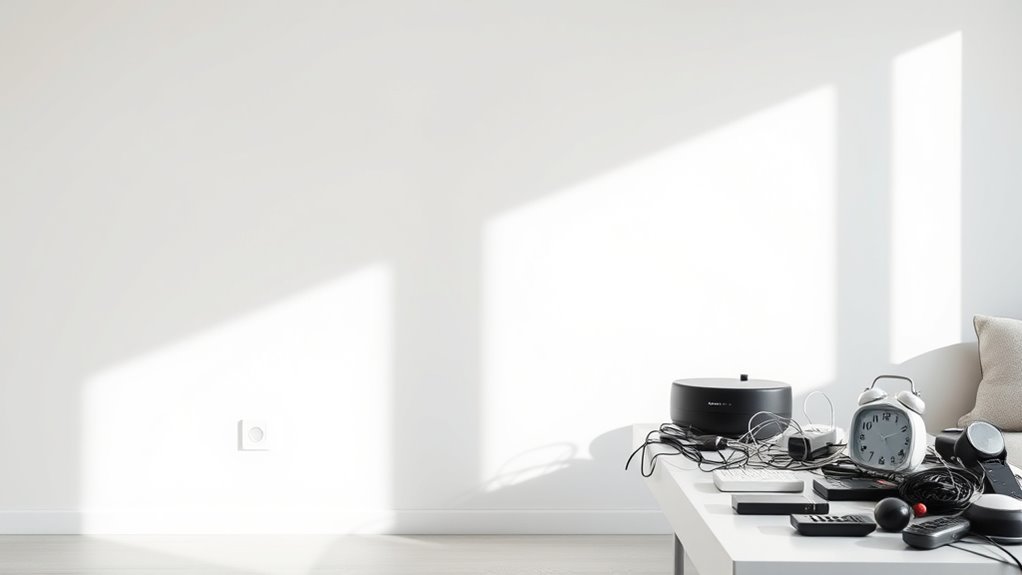
Relying heavily on smart devices can introduce several drawbacks that might impact your daily life. First, increased device dependency can make you feel lost without technology, reducing your ability to handle tasks independently. Second, privacy concerns become significant as smart devices often collect and store personal data, risking breaches or misuse. Third, over-reliance might lead to complacency, decreasing your problem-solving skills and critical thinking. These issues can cause frustration when devices malfunction or become inaccessible. While smart technology offers convenience, it’s essential to contemplate how much you depend on it and the potential risks involved. Balancing smart device use with mindful boundaries helps prevent these drawbacks from overshadowing the benefits.
Finding a Balance: Combining Minimalism With Technology

Balancing the advantages of smart technology with the simplicity of minimalism can create a more fulfilling lifestyle. By selectively integrating smart devices, you can enjoy energy conservation, reducing your environmental footprint without cluttering your space. Use automation tools wisely to control lighting, heating, and appliances, which not only saves energy but also streamlines your daily routines. Additionally, technology can enhance social connectivity by keeping you connected with loved ones while maintaining a minimalist environment. The key is to choose devices that add value without overwhelming your space or mental clarity. Focus on quality over quantity, ensuring each piece of technology serves a purpose. This balanced approach allows you to enjoy the benefits of smart functionality while preserving the calm and simplicity of minimalism.
Practical Tips for Integrating Both Lifestyles
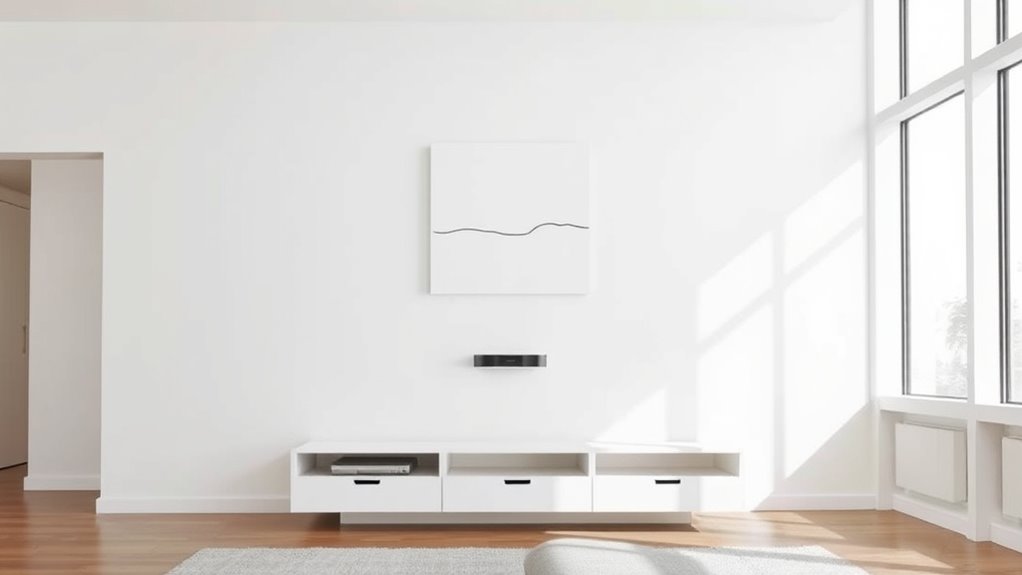
To effectively integrate minimalism and smart functionality, start by evaluating your needs and setting clear priorities. Focus on space optimization by choosing multi-purpose furniture and decluttering regularly. Incorporate sensory design to create a calming environment that feels open and inviting. Here are three practical tips:
Prioritize needs, choose multi-purpose furniture, declutter, and create a calming, sensory-friendly space.
- Limit gadgets to essential ones, ensuring each adds value without cluttering your space.
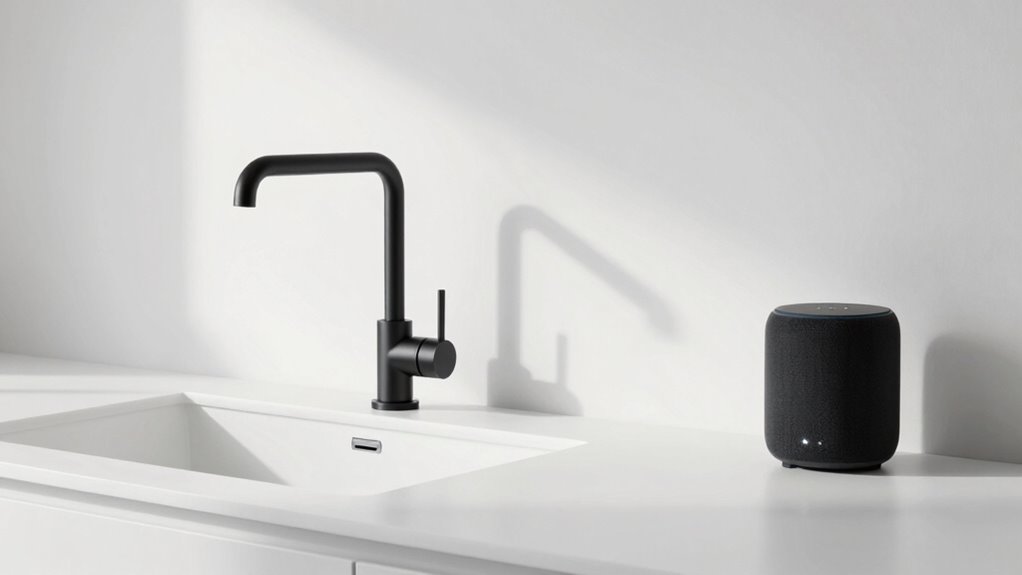
- Use smart technology discreetly, such as hidden speakers or sleek control panels, to maintain a clean aesthetic.
- Opt for muted color schemes and natural textures that promote a tranquil, minimalist vibe while enhancing sensory experience.
Making the Choice: Which Path Suits Your Lifestyle?
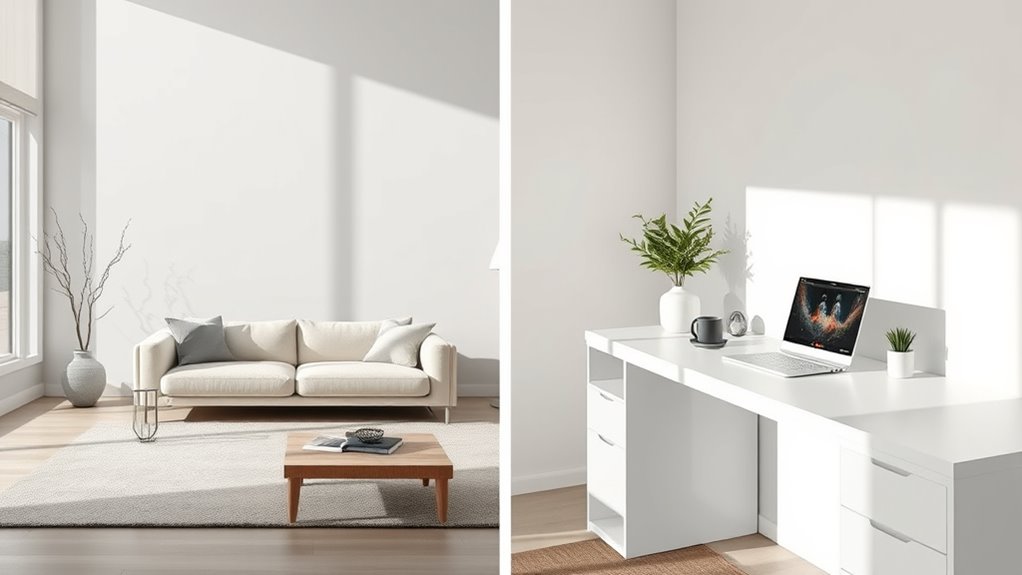
Choosing between minimalism and smart functionality depends on your lifestyle priorities and personal preferences. If sustainable living is important to you, minimalism can help reduce waste and encourage mindful consumption. It promotes simplicity and eco-conscious choices, aligning with values rooted in environmental responsibility. On the other hand, if you thrive on technological convenience and efficiency, smart functionality offers tools that streamline your daily routines and improve connectivity. Cultural influences also shape your decision; some cultures emphasize simplicity and harmony with nature, favoring minimalism, while others celebrate innovation and technological advancement, leaning toward smart solutions. Ultimately, consider what aligns best with your values, habits, and environment. Whether you choose minimalism or smart functionality, your lifestyle will guide you toward the most fulfilling, authentic path.
Frequently Asked Questions
How Does Minimalism Influence Mental Health and Stress Levels?
Minimalism can boost your mental health and reduce stress by encouraging clutter reduction, which creates a calmer environment. When you embrace mindfulness practices, you become more aware of your surroundings, helping you focus and feel more centered. Less clutter means fewer distractions, making it easier to relax and improve your overall well-being. By simplifying your space, you foster a sense of control and peace, positively impacting your mental health.
Can Smart Technology Compromise Privacy in Minimalist Homes?
Sure, your sleek minimalist home might be secretly spying on you. Smart tech, with all its convenience, often comes with privacy concerns and data security risks. You gladly trade decluttered spaces for potential breaches of personal info. It’s like inviting a nosy neighbor into your digital life—fascinatingly intrusive. So, before you embrace that smart fridge or voice assistant, ask yourself: is convenience worth risking your privacy?
Is It Possible to Maintain Minimalism With Advanced Gadgets?
Yes, you can maintain minimalism with advanced gadgets by focusing on tech integration that reduces gadget clutter. Choose multifunctional devices that serve multiple purposes, and hide or organize cables neatly. Prioritize quality over quantity, and only keep gadgets that truly enhance your space and lifestyle. This way, you enjoy the benefits of smart technology without sacrificing the clean, clutter-free aesthetic of minimalism.
How Do Cultural Differences Impact Minimalist and Tech Integration?
You should know that 65% of people in Japan prioritize cultural aesthetics, affecting how they blend tech with minimalism. Cultural differences markedly impact minimalist and tech integration, as regional tech adoption varies based on local values. In some cultures, tech enhances visual simplicity, while others favor more ornate designs. Your approach needs to respect regional preferences, ensuring your tech choices harmonize with local aesthetics and behaviors.
What Future Trends Might Shape Minimalism and Smart Functionality?
You’ll see future design increasingly blending minimalism with smart functionality, driven by sustainability trends. Expect more eco-friendly materials, energy-efficient tech, and streamlined forms that reduce clutter while enhancing convenience. Smart features will become more intuitive, integrating seamlessly into everyday life. You’ll likely notice a shift toward sustainable, minimalist aesthetics that prioritize simplicity, efficiency, and environmental responsibility, shaping how you live and interact with your space in innovative, eco-conscious ways.
Conclusion
Ultimately, finding the right balance between minimalism and smart functionality depends on your lifestyle. Remember, “less is more,” but smart tech can enhance your life without clutter. Embrace simplicity where it matters, and let technology handle the rest. By blending both, you create a space that’s efficient, calming, and tailored to you. Trust your instincts, experiment, and enjoy a harmonious living environment that truly fits your needs.