
When planning your home theater seating layout, focus on maximizing comfort and sightlines by choosing arrangements like curved, tiered, or modular setups that suit your space. Measure your room carefully to avoid overcrowding and make certain proper viewing distances, typically 1.5 to 2.5 times the screen’s diagonal. Think about noise, light, and accessibility for an ideal experience. Keep exploring to discover detailed tips for designing the perfect layout for your home theater.
Key Takeaways
- Measure room dimensions carefully to determine optimal seating capacity and layout options.
- Use curved or tiered arrangements to improve sightlines and create an immersive viewing experience.
- Maintain a viewing distance of 1.5 to 2.5 times the screen’s diagonal for optimal comfort.
- Incorporate modular or flexible seating solutions for adaptable room configurations.
- Position seats to avoid light glare and obstructions, ensuring clear sightlines for all viewers.
Popular Seating Arrangements for Home Theaters
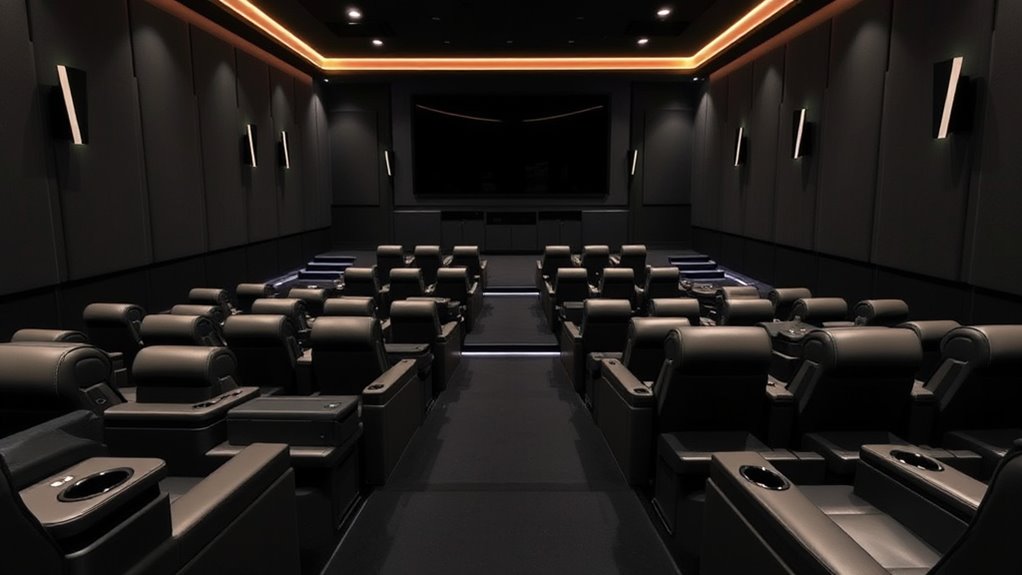
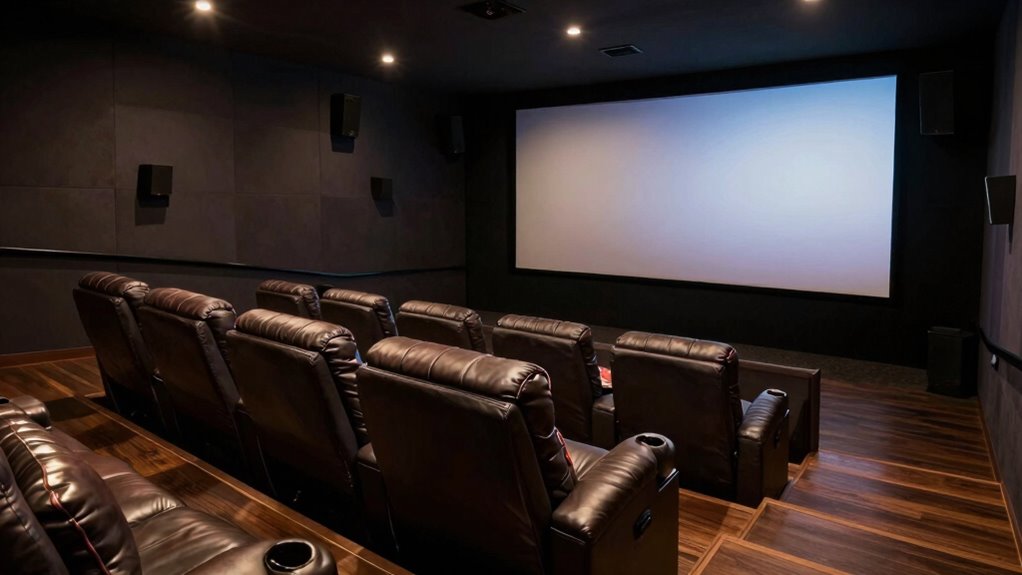
Have you ever wondered which seating arrangement works best for your home theater? Popular options include a traditional row setup, where seats are aligned directly facing the screen, providing a straightforward viewing experience. Alternatively, a curved or semi-circular arrangement enhances sightlines and fosters a more immersive feel. If you prefer a more social setup, consider tiered or stadium seating, which elevates each row for unobstructed views. Modular or sectional sofas offer flexibility, allowing you to customize the space based on your needs and room size. Some homeowners opt for a combination, such as a main row with additional lounge chairs or recliners nearby. Additionally, seat placement plays a crucial role in optimizing viewing angles and comfort, ensuring an engaging entertainment environment. Developing a methodical testing process for arranging your seats can help you achieve the ideal layout tailored to your space. Incorporating proper ventilation can also improve comfort during extended viewing sessions, especially in enclosed rooms. Considering acoustic treatment can further enhance sound quality and overall viewing experience in your home theater.
Factors to Consider When Planning Your Layout
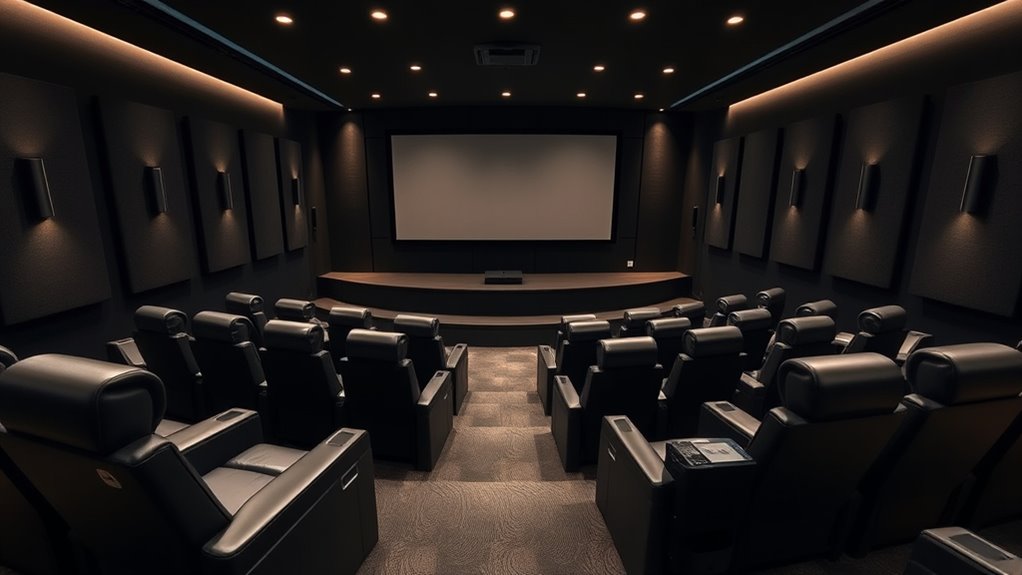
Planning your home theater layout requires careful consideration of several key factors to guarantee a comfortable and immersive experience. First, measure your space accurately to determine how many seats you can fit comfortably without overcrowding. Consider the viewing distance; seats should be positioned about 1.5 to 2.5 times the screen’s diagonal size for ideal viewing. Pay attention to sightlines, ensuring every seat has a clear view of the screen without obstructions. Think about audio placement too—good acoustics are essential for immersion. Proper speaker arrangement can significantly enhance sound quality and overall experience. Additionally, incorporating acoustic treatments can help improve sound clarity and reduce unwanted echoes. A well-thought-out room layout is crucial for optimizing both sightlines and acoustics, creating a balanced environment. Lighting control is another factor; avoid glare on the screen while providing enough ambient light for safety and convenience. Lastly, plan for accessible pathways, making sure everyone can move easily without disrupting the viewing experience. Incorporating simple, practical solutions can help maintain a calm and organized environment. Ensuring proper room acoustics can also contribute to a more realistic and engaging audio experience.
Tips for Maximizing Comfort and Sightlines
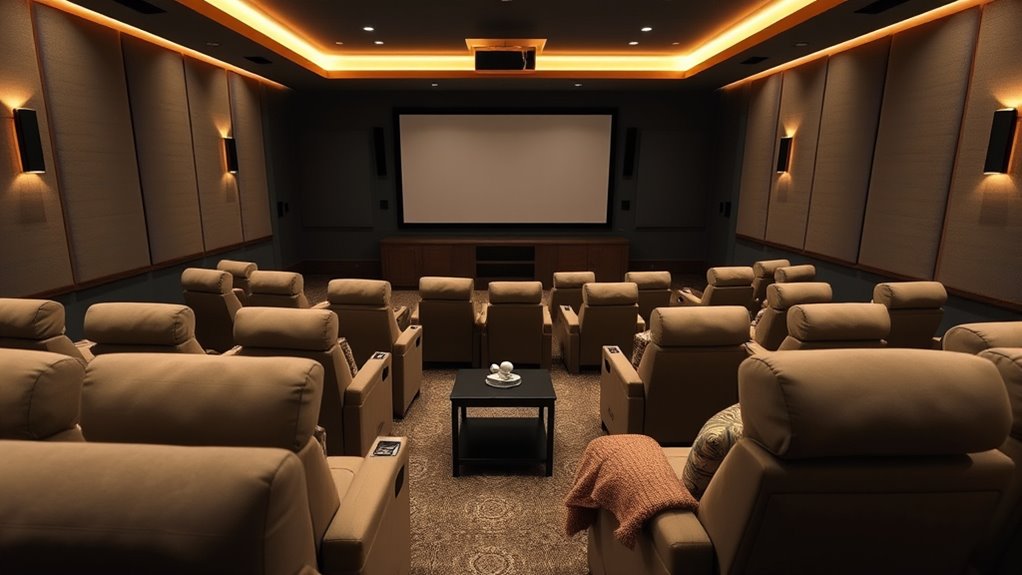
Maximizing comfort and sightlines in your home theater starts with thoughtful seat placement. Position seats so everyone has a clear view of the screen without straining their necks or eyes. Avoid placing seating directly in front of windows or light sources that can cause glare. Stagger seats or use risers, especially in larger rooms, to ensure unobstructed views for all viewers. Maintain proper distance from the screen—generally about 1.5 to 2.5 times the screen width—to prevent eye fatigue. Use comfortable, well-cushioned seats with supportive backs. If possible, arrange seating in a slight curve to align with the screen’s natural angle, enhancing both sightlines and comfort. Additionally, considering parallel‑kit options can help expand your seating arrangement without sacrificing line of sight or comfort. Incorporating vintage-inspired home theater tech can further elevate the aesthetic and functionality of your space. Paying attention to acoustic treatments can also improve sound quality and overall viewing experience. Proper soundproofing techniques can minimize external noise disruptions, creating a more immersive environment. For optimal safety and performance, ensure your home theater wiring and electrical setup adhere to home power safety best practices. Prioritizing these elements creates an immersive, enjoyable viewing experience.
Customizing Seating for Different Room Sizes and Shapes

When customizing seating for different room sizes and shapes, it’s essential to tailor your arrangement to maximize comfort and viewing angles. In small rooms, opt for compact seating that keeps viewers close to the screen, ensuring everyone has a clear line of sight. Use angled or curved arrangements to create a more intimate feel and improve sightlines. For larger or irregularly shaped rooms, consider tiered seating or sectional layouts to prevent obstructions and enhance the viewing experience. Take measurements carefully to determine the most suitable distance from the screen and the best placement of seats. Flexibility is key; avoid rigid arrangements that limit options, and instead, create a layout that adapts to your room’s unique dimensions while maintaining comfort and clear sightlines. Incorporating room layout planning tools can help you design a safe and effective seating setup tailored to your space. Paying attention to viewing angles can further optimize the overall experience and ensure everyone enjoys a comfortable view. Additionally, understanding furniture placement principles can help you maximize space utilization and enhance the room’s functionality. Considering furniture ergonomics can also improve long-term comfort for viewers during extended movie nights.
Innovative and Flexible Seating Options
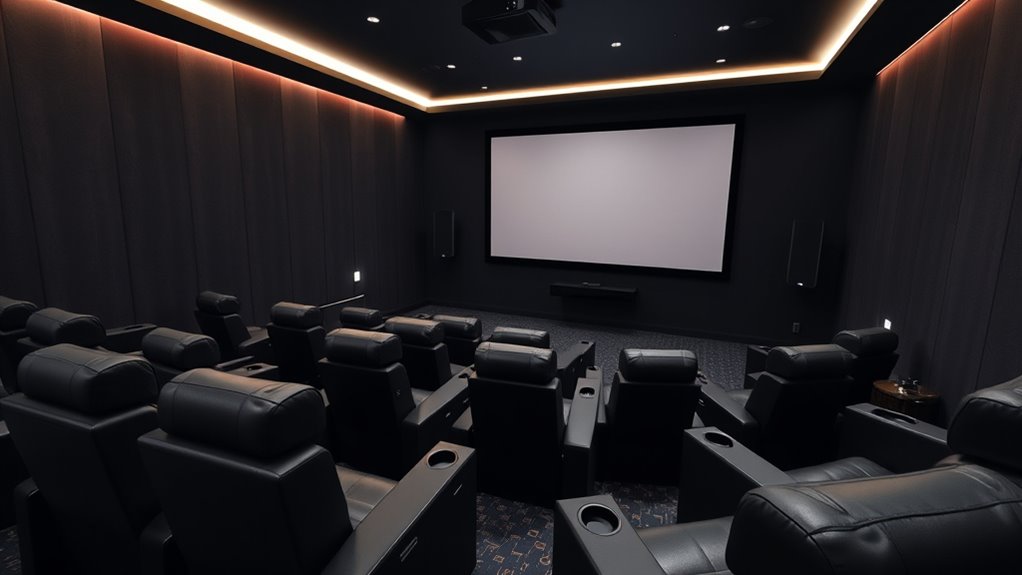
Innovative and flexible seating options can transform your home theater into a versatile and comfortable space. These options adapt to your needs, whether you’re hosting friends or enjoying a quiet night. Consider modular sectional sofas that can be rearranged easily for different layouts. Movable ottomans or poufs add extra seating and can double as tables. Reclining chairs with built-in USB ports offer comfort and convenience. Incorporating outdoor‑kitchen essentials such as weather-resistant covers and versatile tables can also enhance your entertainment space for outdoor movie nights. Additionally, selecting high-quality materials ensures durability and long-lasting style in your seating arrangements. To optimize your setup, ensure your seating arrangements include safe power backup options to keep your entertainment system running smoothly during outages. Moreover, choosing ergonomic designs can greatly improve comfort during extended viewing sessions, especially when considering seating ergonomics to prevent discomfort over long periods.
Frequently Asked Questions
How Do I Choose the Best Seating Layout for a Multi-Purpose Room?
You should start by considering the room’s size and shape, then think about how you’ll use the space most often. Arrange seating to maximize comfort and visibility, ensuring everyone has a good view of screens or focal points. Mix functional zones, like a cozy lounge area and a flexible space for activities. Prioritize flexibility and flow, so the room adapts easily to different uses and gatherings.
What Are the Cost-Effective Options for Upgrading Existing Home Theater Seating?
Looking to upgrade your home theater seating without breaking the bank? You can reupholster your current chairs with affordable fabric, giving them a fresh look. Adding affordable accessories like cushions and lumbar pillows enhances comfort without extra cost. Consider replacing just the cushions or armrests for a cost-effective refresh. Why spend more? Smart upgrades like these can transform your viewing experience while staying within your budget.
How Can I Incorporate Accessibility Features Into My Home Theater Seating?
You can incorporate accessibility features into your home theater seating by choosing chairs with built-in armrests and adjustable heights for easier transfer. Consider adding wider seats or modular sections for better maneuverability. Installing accessible pathways and ensuring controls are within reach helps everyone enjoy the space. You might also include features like vibration alerts or audio enhancements for those with hearing or visual impairments, creating a comfortable environment for all guests.
What Are Common Mistakes to Avoid in Home Theater Seating Design?
You should avoid overcrowding seats, which can hinder movement and comfort. Don’t ignore sightlines; ensure every seat has a clear view of the screen. Skipping proper spacing and legroom leads to discomfort, so plan for adequate distance between rows. Also, avoid poor acoustics and lighting that can distract or strain your eyes. Finally, ignore accessibility features—consider everyone’s needs to create an inclusive, enjoyable viewing experience.
How Do Soundproofing and Acoustics Influence Seating Placement Choices?
Soundproofing and acoustics are your secret weapons, influencing where you sit as if you’re auditioning for a sound engineer’s dream. You’ll want to avoid placing seats where echoes bounce like bad karaoke, and instead, position them where sound waves dance smoothly. Think of acoustic panels as your backstage pass, guiding your seats into perfect harmony—because no one wants to hear their neighbor’s popcorn crunch in surround sound.
Conclusion
Remember, your home theater is your personal escape—like a stage awaiting your perfect scene. By thoughtfully choosing your seating layout, you create a space that’s not just functional but truly immersive. Whether it’s a cozy row or flexible configurations, your choices shape the experience. So, don’t just sit back—sit perfectly, because your ultimate movie night deserves more than just a seat; it deserves a throne crafted by your vision.