To configure Dolby Atmos speakers correctly, place overhead or upward-firing speakers directly above your listening area at ear level when seated. Aim ceiling-mounted speakers 45–60° from your position, and position upward-firing speakers on surfaces angled toward the ceiling. Surround and rear speakers should be placed slightly behind and to the sides at ear level, with proper angles to guarantee immersive sound. Keep obstructions away and fine-tune your system with calibration tools for maximum performance. If you want more tips, keep exploring.
Key Takeaways
- Position overhead or upward-firing speakers directly above the listening area at ear level when seated.
- Aim ceiling-mounted speakers 45–60° from the listening position for even overhead sound distribution.
- Place surround and rear speakers slightly behind and to the sides at ear level, maintaining equidistant placement.
- Ensure all speakers are free from obstructions and mounted securely to optimize sound clarity.
- Use calibration tools to fine-tune speaker angles and levels for immersive Dolby Atmos effects.
Understanding Dolby Atmos Speaker Types and Requirements

To fully enjoy Dolby Atmos sound, you need to understand the different speaker types and their requirements. Dolby Atmos uses multiple speaker configurations to create an immersive audio experience. You’ll typically need overhead speakers or upward-firing speakers that reflect sound off the ceiling. Overhead speakers are installed directly above your listening area, requiring proper placement and mounting. Upward-firing speakers sit on shelves or stands and bounce sound off the ceiling to simulate overhead effects. It’s essential to match the speaker type with your room’s layout and your system’s capabilities. Confirm your receiver supports Dolby Atmos and can handle the number of speakers you plan to install. Knowing these requirements helps you set up a system that truly captures the height and spatial effects Dolby Atmos offers. Proper audio calibration ensures the optimal sound field and immersive experience in your space. Additionally, considering room acoustics can significantly enhance the overall sound quality and immersion. Incorporating speaker placement best practices can further optimize your system for a more convincing three-dimensional soundstage. It’s also beneficial to understand the specific speaker types compatible with Dolby Atmos for tailored setup options.
Optimal Placement for Overhead and Height Speakers
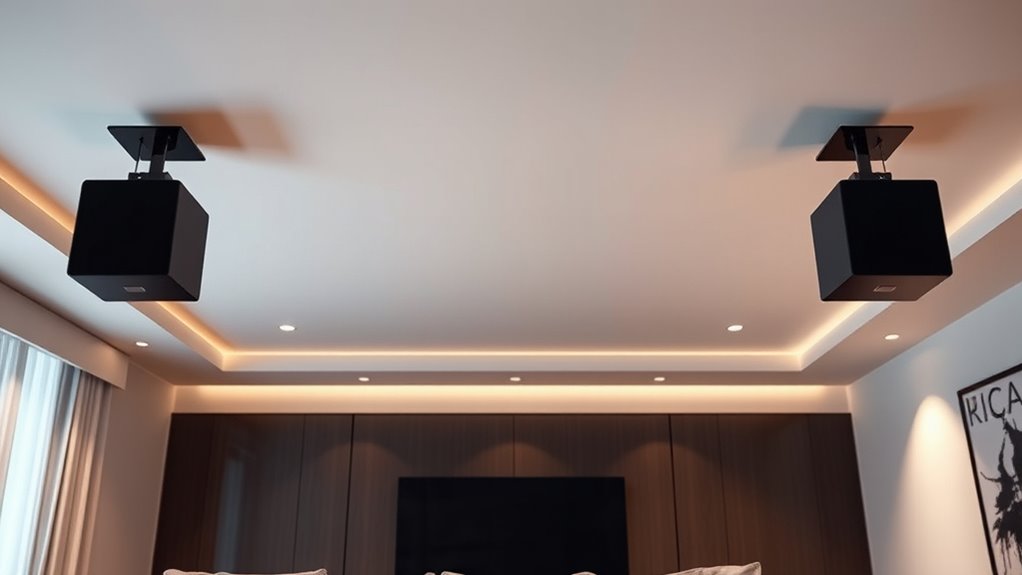
Achieving the best Dolby Atmos experience depends heavily on placing your overhead and height speakers correctly. For ideal sound, position these speakers directly above your listening area, ideally at ear level when seated. If mounting on the ceiling, aim for symmetrical placement, roughly 45 to 60 degrees from your listening position, ensuring even sound distribution. If using upward-firing speakers, place them on sturdy surfaces near your front or rear speakers, angled toward the ceiling to reflect sound downward. Keep clear of obstructions like shelves or light fixtures that could dampen sound quality. Consistency in height and placement ensures immersive overhead effects without distortion or imbalance, giving you a true Dolby Atmos experience. Incorporating connected home audio systems can further optimize your setup and enhance sound performance.
Positioning Front and Center Speakers for Clear Dialogue

Placing your front and center speakers correctly is essential for guaranteeing dialogues are clear and natural. Proper placement directs sound directly toward you, making conversations easy to follow. To optimize your setup, keep these tips in mind:
- Position the center speaker at ear level, directly above or below your TV screen.
- Angle the speakers slightly inward to focus sound toward your listening position.
- Keep front left and right speakers equidistant from the center for balanced sound.
- Ensure there are minimal obstructions between the speakers and your listening spot.
- Using correct calibration techniques can further enhance sound clarity and balance in your setup, ensuring optimal speaker placement for immersive audio.
- Regularly assessing and adjusting your speaker alignment can help maintain optimal sound quality over time.
- Proper speaker positioning is especially crucial for achieving the full benefits of Dolby Atmos technology, which relies on precise speaker placement for immersive sound effects. Additionally, understanding the audio environment in your space can help you make better placement decisions for optimal sound quality.
Following these steps helps your audio stay crisp and clear, improving overall dialogue clarity. Proper placement is key to enjoying immersive, natural sound without distraction.
Arranging Surround and Rear Speakers for Immersive Sound
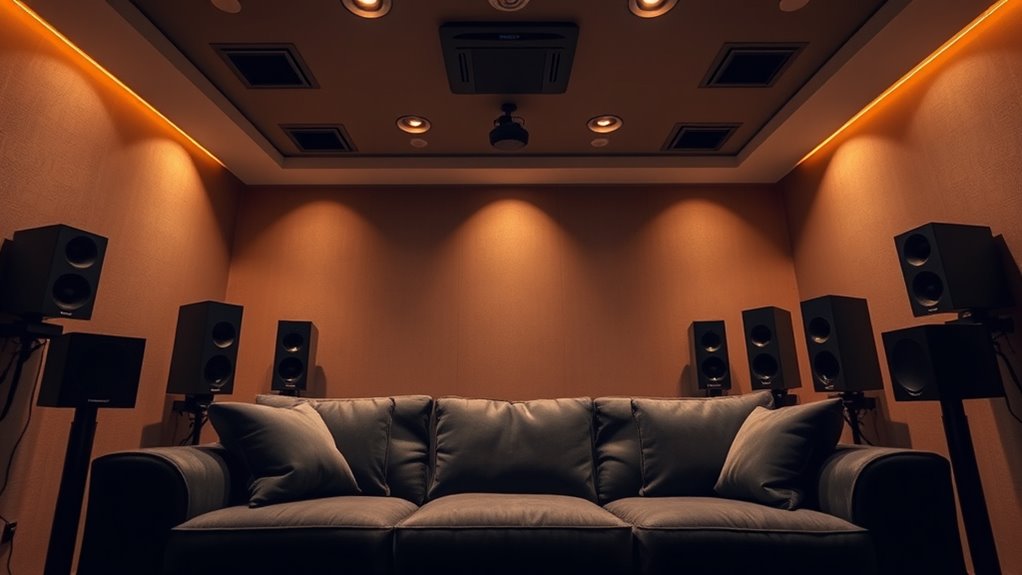
Once your front and center speakers are properly positioned, creating an immersive sound environment involves arranging your surround and rear speakers effectively. Place your surround speakers slightly behind and to the sides of your listening position, roughly at ear level when seated. For rear speakers, position them behind your listening area, aiming them toward the listening spot at a 110- to 120-degree angle from the main listening position. Keep the speakers equidistant from your seat to ensure consistent sound coverage. If possible, angle the speakers slightly inward to direct sound toward your ears. Avoid placing speakers too high or too low, as this can disrupt the immersive experience. Proper placement ensures sound moves seamlessly around you, enhancing the Dolby Atmos effect. Paying attention to speaker placement fundamentals helps maximize the immersive experience and achieve a balanced, enveloping sound. Considering room acoustics can further optimize sound quality and immersion. Additionally, experimenting with speaker height and positioning can fine-tune the overall soundstage for the best possible experience, while ensuring the placement aligns with the recommended speaker angles for optimal surround sound coverage. Being mindful of listener positioning also plays a crucial role in maintaining the integrity of the immersive sound environment.
Tips for Achieving the Perfect Speaker Height and Angle

Getting your speakers at the right height and angle makes a big difference in sound quality. Make sure they’re at your ear level for the best experience. Adjust the angles precisely to guarantee clear, immersive audio from every direction. Proper speaker placement ensures optimal sound performance and enhances your overall listening experience. Additionally, experimenting with audio calibration tools can help fine-tune the sound for your specific environment. Using speaker positioning techniques can further improve the spatial accuracy and clarity of your soundstage. Remember that speaker height and angle are crucial factors in creating a balanced and realistic soundscape, especially when considering the importance of sound quality in an optimal listening setup.
Optimal Ear Level
Have you ever wondered why speaker height makes such a difference in sound quality? The key is aligning your speakers with your ears for ideal listening. When speakers are at ear level, sound reaches you directly, creating a more immersive experience. To achieve this, consider these tips:
- Position speakers so their tweeters are roughly at your ear height when seated.
- Use stands or mounts to raise or lower speakers if needed.
- Ensure your seated position aligns with the speaker height for consistency.
- Keep speakers slightly angled toward your ears for better sound clarity.
- Remember that Free Floating speaker placement can help maintain an optimal sound environment without physical constraints. Additionally, understanding speaker positioning principles can significantly improve your overall listening experience. Proper ear-level placement is essential for enjoying Dolby Atmos at its best, and taking into account listening ergonomics can further enhance sound quality.
Precise Angle Adjustment
Achieving the perfect sound experience depends not only on speaker height but also on the precise angle at which you position them. To optimize your Dolby Atmos setup, tilt your speakers slightly downward toward your seating area, aiming for about 15 degrees. Use a level to verify they’re not tilted too much or too little, which can distort sound clarity. Adjust the speakers so that the sound appears to come from a natural height, aligning with your ears when seated. Fine-tune the angles by listening to favorite content, making small adjustments until the sound feels immersive and balanced. Remember, even a slight change in angle can considerably impact the overall experience, so take your time to find the perfect positioning.
Common Mistakes to Avoid in Dolby Atmos Setup
One of the most common mistakes in setting up Dolby Atmos is placing speakers incorrectly, which can considerably diminish audio quality. Poor placement leads to uneven sound distribution and a loss of the immersive experience. To avoid this, keep these mistakes in mind:
- Mounting speakers too low or too high, disrupting sound directionality.
- Ignoring the recommended angles, causing sound to miss the intended zones.
- Placing speakers too close to walls or corners, resulting in audio reflections and muddiness.
- Overlooking clear pathways, which can block sound travel and reduce clarity.
Using Calibration Tools to Fine-Tune Your System

Using calibration tools is essential for optimizing your Dolby Atmos system and guaranteeing the best possible sound experience. These tools help you adjust speaker levels, distances, and speaker delays accurately, making sure each speaker contributes perfectly to the overall soundstage. Most receivers come with built-in calibration microphones and auto-calibration features that simplify this process. You simply connect the microphone, run the calibration, and let the system analyze your room’s acoustics. This process identifies over- or under-powered speakers and compensates for room anomalies. By fine-tuning your system with calibration tools, you eliminate guesswork, ensure consistent audio performance, and achieve immersive, balanced sound without manual trial and error. Proper calibration maximizes your system’s potential for a truly cinematic experience.
Maintenance and Adjustments for Long-Term Performance

To guarantee your Dolby Atmos system continues to deliver ideal sound quality over time, regular maintenance and adjustments are essential. Over time, dust buildup, loose connections, and environmental changes can affect performance. You should periodically check and clean your speakers, ensuring nothing obstructs the sound path. Confirm that all cables and connections remain secure to prevent signal loss. Adjust settings as needed to accommodate room changes or new equipment.
Here are four key maintenance tasks to keep your system *best*:
- Clean speaker grilles and surfaces regularly.
- Inspect and tighten all cables and connections.
- Recalibrate your system after significant room modifications.
- Update firmware and software for your audio components.
Frequently Asked Questions
Can I Upgrade My Existing Speakers to Dolby Atmos?
Yes, you can upgrade your existing speakers to Dolby Atmos. To do so, you’ll need to add upward-firing or ceiling speakers designed for Atmos, or replace your current speakers with Atmos-compatible models. Make sure your AV receiver supports Dolby Atmos and has enough channels for the upgrade. With these changes, you’ll experience immersive, multidimensional sound that elevates your home theater experience.
How Does Room Acoustics Affect Atmos Speaker Placement?
Think of your room as a concert hall where acoustics shape every note. Your walls, furniture, and layout influence how sound waves dance through the space. Poor acoustics can cause echoes or dead spots, making Atmos effects less immersive. To optimize placement, you should treat reflective surfaces and add sound-absorbing materials. This guarantees your Atmos speakers deliver clear, enveloping sound that truly surrounds you, like being in the front row.
Is a Dedicated Home Theater Room Necessary for Atmos?
You don’t need a dedicated home theater room to enjoy Dolby Atmos. With the right setup, you can experience immersive sound in your living space. Just make certain your room has minimal echo, good speaker placement, and proper calibration. Use furniture and acoustic treatments to improve sound quality. While a dedicated room enhances the experience, flexible setups can still deliver impressive Atmos effects, making it accessible for most spaces.
What Are the Budget-Friendly Options for Atmos Speaker Setup?
You can set up budget-friendly Atmos speakers by opting for affordable upward-firing or height speakers instead of a full dedicated system. Use a good quality AV receiver that supports Atmos, and position your speakers carefully to optimize sound. Consider repurposing existing speakers for height effects or stacking regular speakers to mimic Atmos channels. Prioritize placement and compatibility to get immersive sound without breaking the bank.
How Frequently Should I Recalibrate My Atmos System?
Think of your Atmos system as a musical orchestra; it needs tuning to stay harmonious. You should recalibrate every six months or after significant changes like moving speakers or room modifications. Regular tuning guarantees your sound remains balanced, immersive, and vibrant. Don’t wait for issues—proactively recalibrating keeps your audio experience as flawless as a conductor guiding an orchestra to perfection.
Conclusion
Think of your Dolby Atmos setup as crafting a symphony around you. When each speaker is placed thoughtfully, it creates a harmonious environment where sound becomes a vibrant, immersive experience. Pay attention to details, avoid common pitfalls, and fine-tune your system regularly. Like tuning an instrument, your effort guarantees the music of your favorite movies and shows fills your space perfectly, transforming your room into a personal concert hall where every note resonates with clarity and depth.