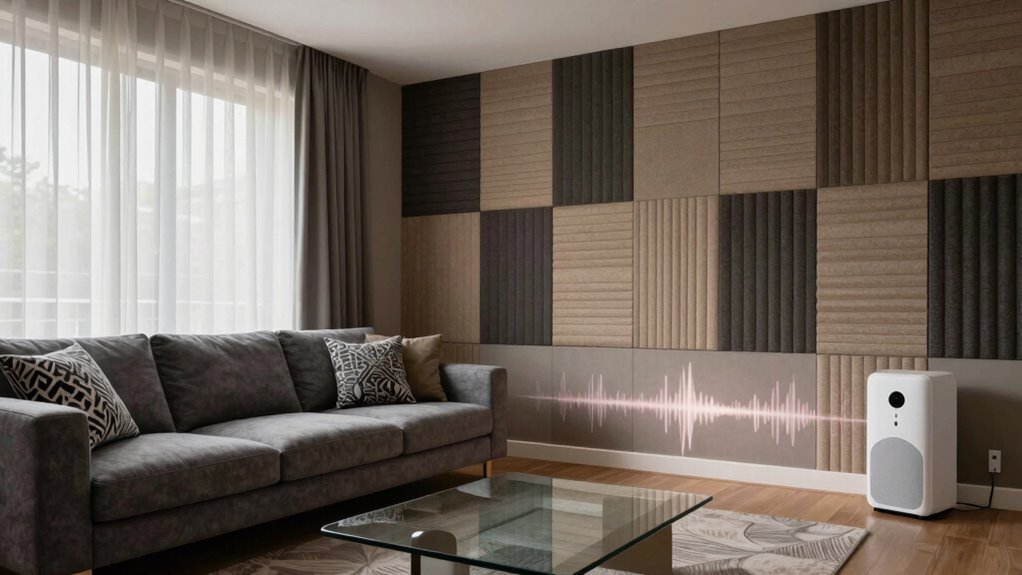

To control noise in modern homes, focus on strategic design and material choices. Use soft, porous materials like carpets, curtains, and upholstered furniture to absorb sound. Install acoustic panels and improve insulation, especially in walls and ceilings, to block noise transmission. Position doors and windows wisely and seal gaps to prevent leaks. Incorporate technology like sound sensors and noise-canceling devices for smarter management. Keep exploring for more practical tips to create a peaceful, quiet living space.
Key Takeaways
- Install acoustic panels and diffusers on walls and ceilings to absorb and scatter sound within the home.
- Use dense insulation like mineral wool or fiberglass in walls and floors to block external noise transmission.
- Incorporate soft, porous materials such as carpets, curtains, and upholstered furniture to reduce echo and sound reflection.
- Seal gaps around windows, doors, and outlets to prevent sound leaks and improve overall noise control.
- Design irregular room shapes and vary ceiling heights to break up sound waves and minimize echo effects.

Focusound 52 Pack Acoustic Foam Panels 1" x 12" x 12" Sound Proof Foam Panles Soundproofing Noise Cancelling Wedge Panels for Home Office Recoding Studio with 300PCS Double-Side Adhesive
Soundproofing – Acoustic foam panels triangular grooves structure for better noise absorption, helps to reduce and absorb unwanted…
As an affiliate, we earn on qualifying purchases.
As an affiliate, we earn on qualifying purchases.
Understanding Soundproofing Basics
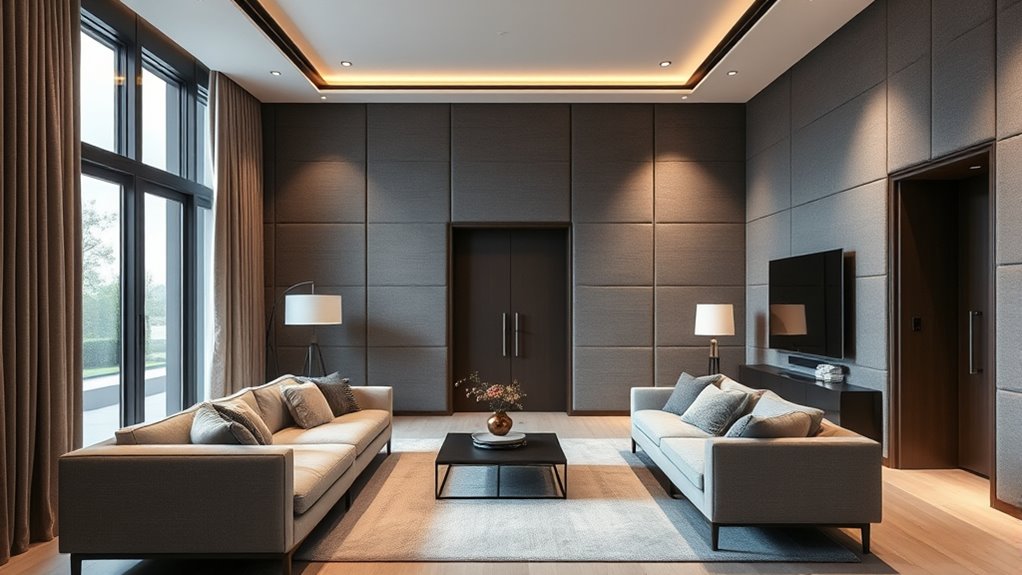
Have you ever wondered how soundproofing actually works? It all begins with understanding that sound travels through vibrations in the air and materials. Soundproofing aims to block or absorb these vibrations before they reach your ears. The key is creating barriers that reduce sound transmission, such as walls, ceilings, and floors. These barriers work by adding mass, damping vibrations, or increasing the distance between sound sources and your living space. The concept involves controlling how sound energy passes through and reflects within a room. Recognizing the basics helps you identify where sound leaks might occur and what strategies can effectively minimize noise. Incorporating smart-home integrations can help monitor and manage noise levels more effectively. Additionally, selecting materials with energy-efficient properties enhances overall soundproofing performance while supporting sustainability goals. Understanding sound transmission is essential for designing effective noise control solutions tailored to your home environment. Moreover, using appropriate construction techniques can further improve noise reduction efforts and create a more peaceful living space.

MAXTID Large Door Draft Stopper for Bottom of Doors 36” Under Door Sweep Noise Blocker Black Gap Stoppers Adjustable Doors Seal Sweep Guard Draft, Window Breeze Stoppers, Home Essentials Gadgets
Large door draft stopper foam is 2 inches in diameter, which is larger than most sellers' foam and…
As an affiliate, we earn on qualifying purchases.
As an affiliate, we earn on qualifying purchases.
Selecting Materials for Noise Reduction
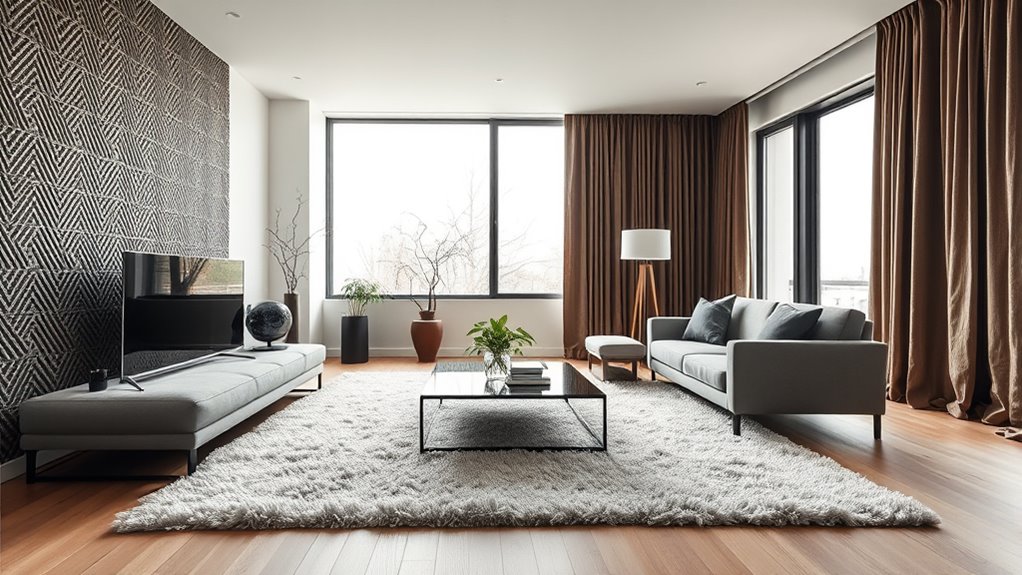
When choosing materials for noise reduction, you need to consider their acoustic properties to ensure they effectively absorb or block sound. You should also weigh the costs and availability, so your choices fit your budget and are easy to source. Making informed decisions helps you create a quieter, more comfortable home environment. Understanding acoustic properties can guide you toward selecting the most suitable materials for your needs. Additionally, considering material durability can ensure your noise control solutions remain effective over time without frequent replacements. Incorporating sound absorption qualities into your selection process can further enhance the effectiveness of your noise reduction strategies. Exploring sound therapy techniques can also provide complementary benefits for managing noise sensitivities and improving overall acoustic comfort. Being aware of sustainable options can also help you choose environmentally friendly materials that are safe and long-lasting.
Acoustic Properties of Materials
What factors should you consider when selecting materials for noise reduction in your home? You need to look at their acoustic properties, especially sound absorption and transmission. Materials with high sound absorption, like acoustic panels or foam, reduce echoes and improve sound quality indoors. For noise transmission, choose dense, solid materials such as mass-loaded vinyl or thick drywall, which block sound from passing between rooms. Permeability also matters—porous materials let sound waves dissipate, decreasing noise levels. Additionally, consider how materials interact with different frequencies; some excel at muffling low-frequency sounds, while others target high frequencies. Combining multiple materials tailored to your specific noise issues offers the best results. Understanding the Free Floating properties of materials helps you select effective noise-reducing options for your home. Moreover, exploring the acoustic properties of various building materials can help you optimize your home’s overall sound environment. Analyzing the sound absorption capabilities of materials allows for more precise noise control strategies. Recognizing how material composition influences sound transmission can further refine your choices. A comprehensive understanding of these acoustic features enables you to make informed decisions for effective noise mitigation. Ultimately, understanding these properties helps you select effective noise-reducing materials for your home.
Cost and Availability
Considering cost and availability is essential when choosing noise-reducing materials for your home. You’ll want options that fit your budget without sacrificing effectiveness. Some materials, like mass-loaded vinyl or specialized acoustic panels, can be expensive and harder to find locally. On the other hand, more common materials, such as thick curtains, rugs, or drywall, are usually affordable and widely accessible. It’s important to balance affordability with performance; cheaper materials may not provide the same level of noise reduction. Check local suppliers or online stores to compare prices and availability. Planning ahead ensures you select materials that are both effective and accessible, helping you create a quieter home without overspending or facing delays. Additionally, considering the durability and resistance to wear and tear of materials can ensure your noise control solutions remain effective over time. Being aware of supply chain issues can help you anticipate potential delays in acquiring certain materials, especially when sourcing specialized products like acoustic panels or soundproof drywall, and researching alternative materials can provide more options. Incorporating smart home technology can also optimize noise management by controlling sound levels and monitoring acoustic performance remotely.

Wall Plug in White Noise Sound Machine for Office Privacy & Noise Canceling, White Noise Machine for Sleeping Adults & Baby, Therapy Noise Blocker with 20 Soothing Sounds & Nightlight by Calm Me.
✨ SUPERIOR SOUND QUALITY – The plug-in white noise sound machine delivers crystal-clear sound, blocking distractions to create…
As an affiliate, we earn on qualifying purchases.
As an affiliate, we earn on qualifying purchases.
Incorporating Acoustic Panels and Treatments

Incorporating acoustic panels and treatments is an effective way to enhance noise control in your home. You can strategically place panels on walls or ceilings to absorb sound waves, reducing echoes and overall noise levels. Choose panels made of sound-absorbing materials like foam or fabric-wrapped options for better performance. Position them in areas where noise tends to bounce or amplify, such as behind your TV, around your workspace, or near noisy appliances. Installing acoustic treatments is straightforward and can be done without major renovations, making it a practical solution for many homes. Not only do they improve sound quality, but they also create a more comfortable living environment. sound-absorbing materials are a key element in achieving optimal noise control and enhancing your home’s acoustics. Additionally, selecting high-quality acoustic panels can further maximize their effectiveness in reducing unwanted noise. Utilizing proper placement techniques can significantly improve the performance of your acoustic treatments and ensure a more peaceful home environment. Employing material grade and quality can also impact the durability and sound absorption efficiency of your acoustic panels. Implementing ventilation considerations can help prevent moisture buildup and maintain the longevity of your acoustic panels.
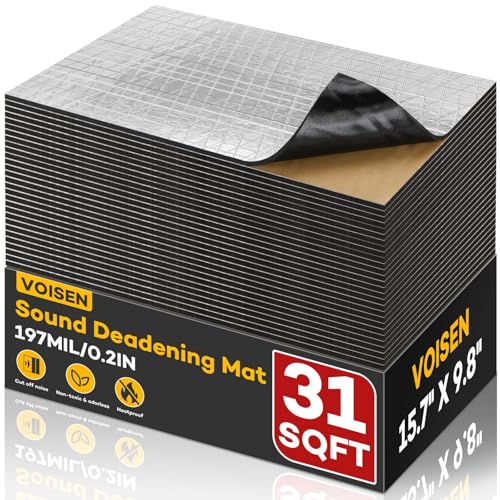
VOISNE Sound Deading Material for Cars,197 mil(5mm) 31 sqft Sound Deadening,Aluminum Foil Foam Automotive Soundproofing Material,Noise Insulation and Vibration Dampening Material 28 Pcs
Sound Deadening Specification: The package includes 28 Pcs sound deadening mat,the size of each sound deadening is 15.7×9.8…
As an affiliate, we earn on qualifying purchases.
As an affiliate, we earn on qualifying purchases.
Designing With Sound Absorption in Mind
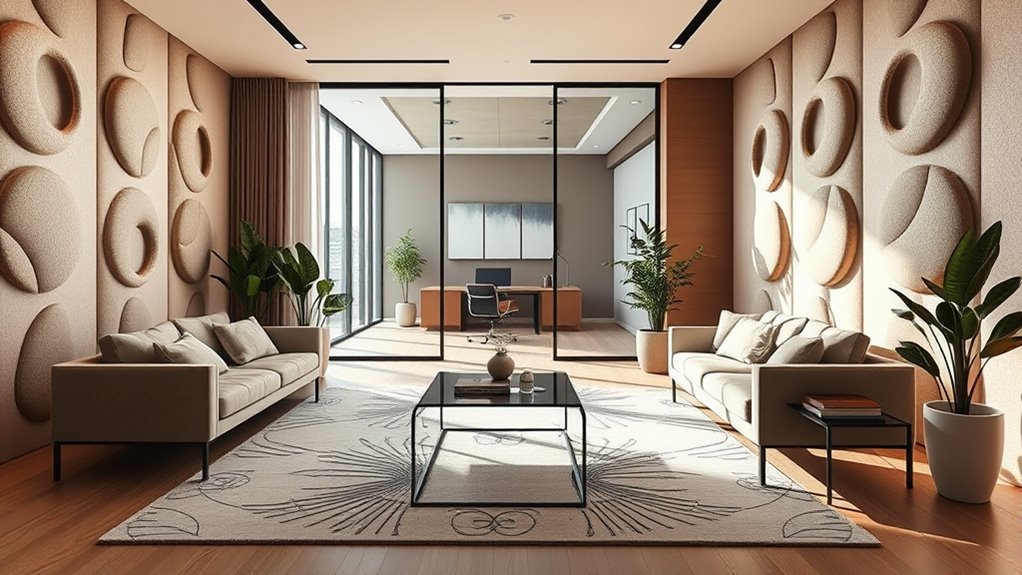
Have you thought about how your room’s design influences sound absorption? The way you arrange furniture and choose materials can substantially reduce noise. To enhance sound absorption, focus on these key aspects:
Optimizing your room’s design with strategic furniture placement and materials can significantly improve sound absorption.
- Room Shape and Size: Irregular shapes and varied ceiling heights help break up sound waves, minimizing echo.
- Material Choices: Use soft, porous materials like carpet, curtains, and upholstered furniture that absorb sound rather than reflect it.
- Surface Treatments: Incorporate built-in or freestanding acoustic panels on walls and ceilings to diffuse sound energy effectively.
Strategic Placement of Doors and Windows
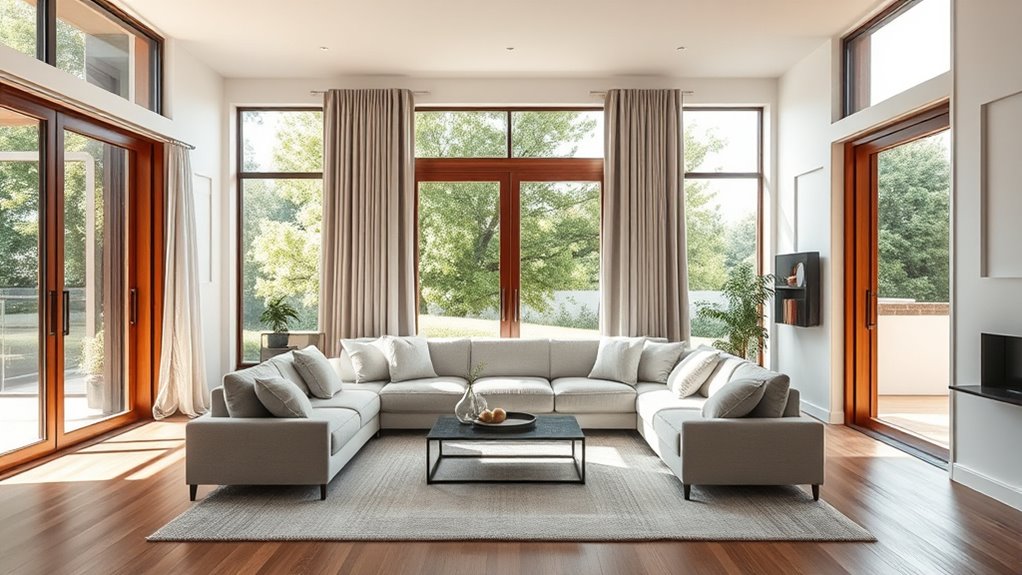
By carefully placing doors and windows, you can markedly reduce noise infiltration in your home. Focus on ideal door placement strategies and position windows to block or redirect sound effectively. Using natural sound barriers, like trees or fences, further enhances your home’s quietness.
Optimal Door Placement Strategies
Strategic placement of doors and windows plays a crucial role in minimizing noise transfer between rooms and from outside sources. To optimize door placement, consider these key strategies:
- Position doors away from noisy areas, such as busy streets or communal spaces, to reduce direct sound entry.
- Use interior doors to isolate noisy zones, like laundry rooms or home offices, from quieter living areas.
- Place doors near sound-absorbing materials or soundproofing panels to enhance their effectiveness.
Additionally, guarantee doors open inward or slide, avoiding configurations that create gaps or leaks. Proper sealing around door frames further minimizes sound transfer. Thoughtful placement combined with quality materials can considerably improve acoustic privacy, making your home a quieter, more comfortable space.
Window Positioning for Silence
Proper window placement can markedly reduce noise infiltration and improve overall acoustic comfort in your home. Position windows away from busy streets or noisy sources to minimize sound entry. Opt for windows facing courtyards or other quiet areas, rather than those directly exposed to external noise. Use double-glazed or laminated glass to enhance noise reduction, especially on windows facing high-traffic zones. Consider installing windows higher up on walls rather than at ground level, as lower placements often pick up more street noise. Keep windows closed during peak noise times, and use strategic placement to prevent sound waves from traveling directly through openings. Thoughtful positioning of windows, combined with quality glazing, creates a quieter, more peaceful indoor environment.
Utilizing Natural Sound Barriers
Positioning doors and windows thoughtfully can considerably block unwanted noise from entering your home. You can improve sound insulation by strategically placing these openings away from noise sources or using natural barriers. For example:
- Locate windows and doors away from busy streets to reduce direct noise entry.
- Use landscaping features like dense shrubs or fences near windows to act as natural sound buffers.
- Install larger, double-glazed windows in areas exposed to external noise, enhancing soundproofing.
Using Furniture and Decor to Dampen Sound

Furniture and decor can considerably reduce noise levels in your home by absorbing and diffusing sound waves. Soft furnishings, like plush sofas, thick curtains, and area rugs, trap sound and prevent it from bouncing around. Strategically placing bookshelves or wall hangings also helps scatter noise, creating a calmer environment.
| Furniture/Decor | Function | Tips |
|---|---|---|
| Upholstered sofa | Absorbs sound waves | Use in living rooms to muffle voices |
| Heavy curtains | Diffuses sound and blocks outside noise | Hang over windows and doors |
| Area rugs | Reduce echo and footstep noise | Layer over hard floors |
Installing Modern Insulation for Noise Control
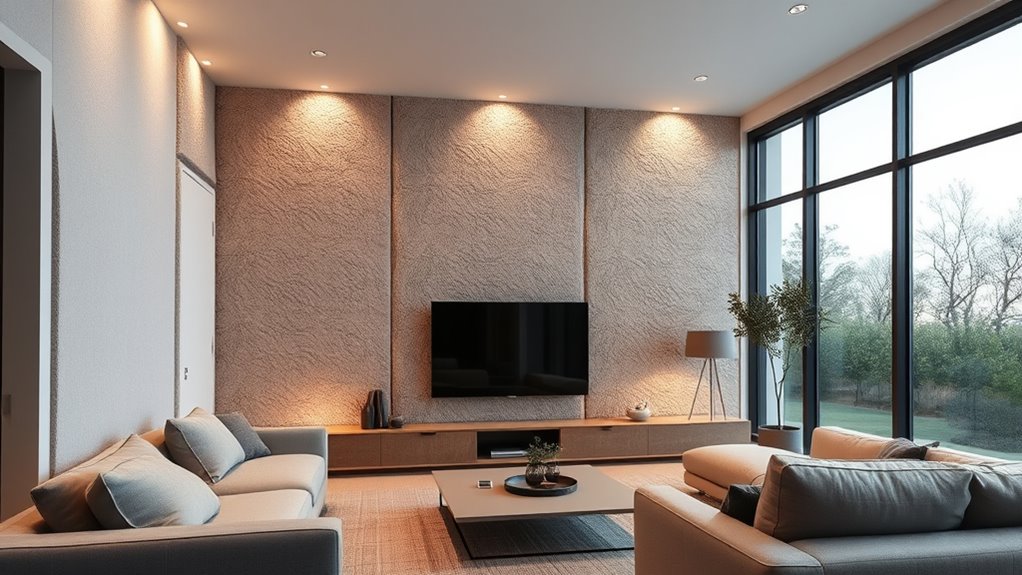
Modern insulation systems have advanced considerably, making it easier than ever to block noise transmission between rooms and from outside sources. To maximize noise control, you should consider upgrading your existing insulation or installing new materials. Here are key steps to guarantee effective soundproofing:
Modern insulation advancements significantly improve noise blocking between rooms and from outside.
- Choose high-density insulation materials like mineral wool or fiberglass batts, which absorb sound waves better than standard options.
- Seal gaps and cracks around electrical outlets, vents, and window frames to prevent sound leaks.
- Add resilient channels or decoupling techniques during wall construction to reduce vibrations and sound transfer between surfaces.
Integrating Technology for Sound Management
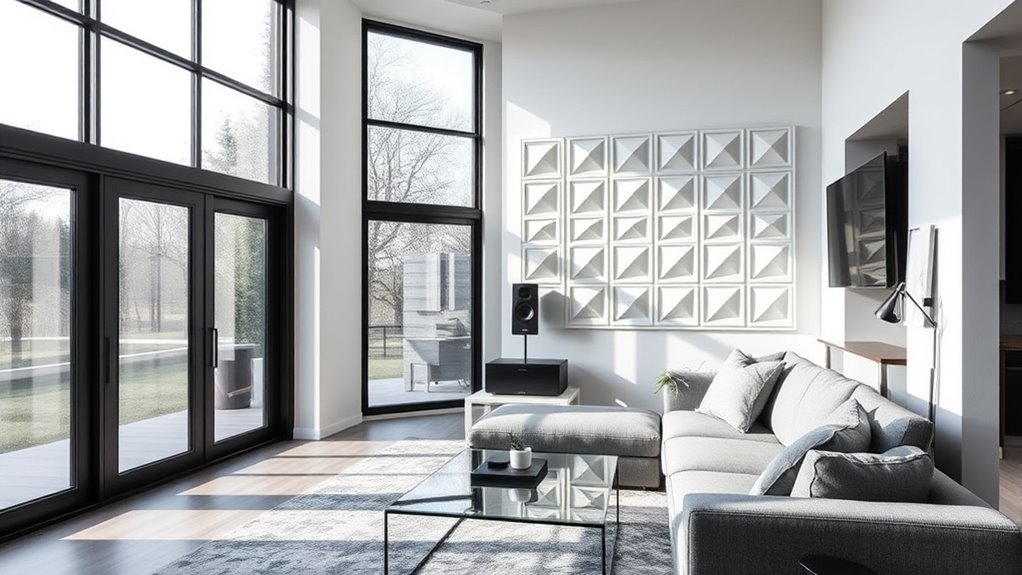
You can enhance sound management in your home by using smart sound sensors that detect noise levels in real-time. Automated noise monitoring systems adjust your environment instantly to keep noise at comfortable levels. Digital soundproofing tools also offer precise control, making it easier to create a peaceful living space with minimal effort.
Smart Sound Sensors
Have you ever wondered how technology can help keep noise levels in check? Smart sound sensors make this possible by continuously monitoring your environment. They detect noise levels and identify sources, allowing you to respond quickly. These sensors can be integrated with your home’s automation system to adjust soundproofing or notify you of disturbances.
Here are three ways they add value:
- Real-time noise detection – instantly alerts you to excessive noise.
- Source identification – pinpoints sounds from specific rooms or devices.
- Data collection and analysis – tracks patterns to optimize sound management over time.
With smart sound sensors, you gain precise control, creating a quieter, more comfortable living space tailored to your needs.
Automated Noise Monitoring
Ever wondered how automated systems can seamlessly manage noise levels in your home? With automated noise monitoring, sensors continuously track sound levels throughout your space. These systems analyze data in real-time, identifying when noise exceeds comfortable thresholds. When that happens, they can trigger adjustments instantly—such as lowering volume on speakers, activating sound-absorbing devices, or even alerting you to noisy disturbances. This proactive approach helps maintain a peaceful environment without constant manual intervention. Modern noise monitoring systems integrate with your home’s automation setup, allowing for personalized settings based on your preferences. As a result, your home adapts dynamically to varying noise levels, ensuring comfort and tranquility at all times. It’s a smart way to keep noise in check effortlessly.
Digital Soundproofing Tools
Digital soundproofing tools leverage advanced technology to effectively reduce and manage noise within modern homes. These tools allow you to customize sound environments, pinpoint noise sources, and implement targeted solutions. For example:
- Smart Acoustic Panels: Use app-controlled panels that adjust their sound absorption properties based on room activity, enhancing noise control dynamically.
- Noise-Canceling Devices: Deploy smart speakers or headphones that emit anti-noise signals, actively canceling unwanted sounds in real time.
- Sound Monitoring Apps: Utilize apps to analyze noise levels, identify problem areas, and suggest specific improvements or adjustments.
Creating Quiet Zones Within the Home
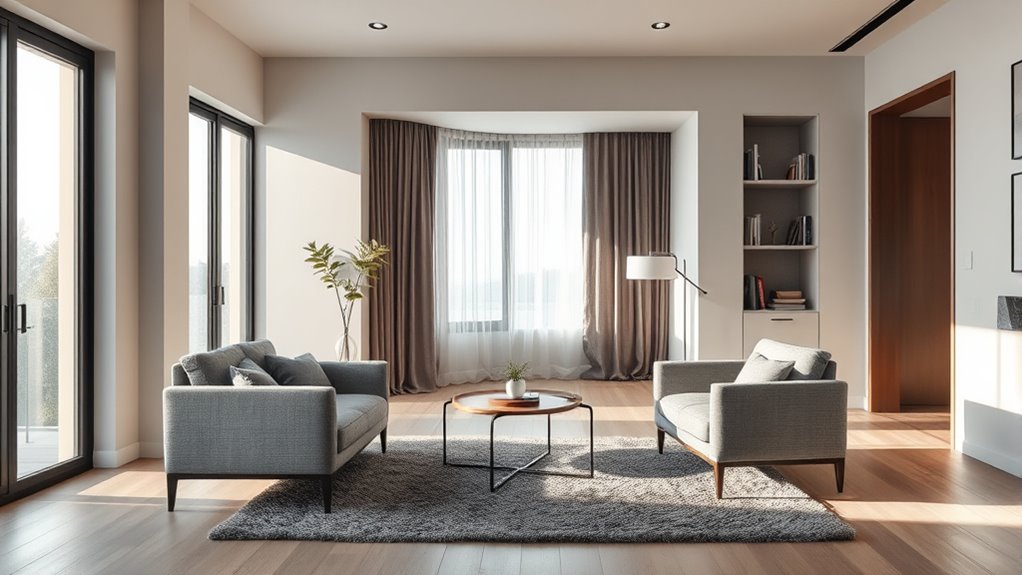
Creating quiet zones within your home is essential for ensuring a peaceful environment amid everyday noise. To do this, designate specific areas as retreats where noise is minimized. Use soundproof doors or curtains to block outside sounds, and choose furniture that absorbs sound, like plush sofas or thick rugs. Position these zones away from noisy appliances or high-traffic areas. Incorporate soft lighting and calming decor to enhance relaxation. If possible, install acoustic panels or wall hangings to reduce echo and sound transmission. Keep electronic devices that generate noise out of these spaces or use headphones. By intentionally creating designated quiet zones, you give yourself a sanctuary for rest, work, or meditation, making your home a truly peaceful haven.
Tips for Maintaining a Peaceful Living Environment
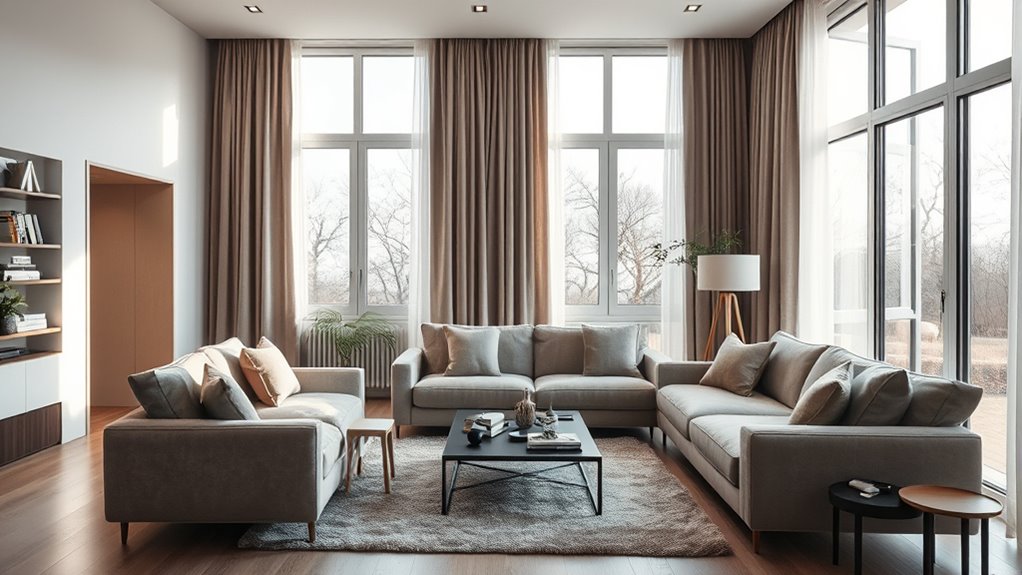
Maintaining a peaceful living environment requires ongoing effort and mindfulness. You can do this by establishing routines that minimize noise disruptions and promote calm. First, schedule quiet hours during early mornings and late evenings to reduce noise pollution. Second, encourage family members to use headphones for loud activities like gaming or music, preventing sound from spreading. Third, keep your home well-maintained, fixing squeaky doors or loose fixtures that can create unnecessary noise. Regularly declutter spaces to reduce stress and create a more serene atmosphere. Additionally, consider adding soft furnishings like rugs and curtains, which absorb sound and further diminish noise. Staying mindful of noise sources and taking proactive steps helps you enjoy a consistently peaceful environment.
Frequently Asked Questions
How Effective Are DIY Soundproofing Methods Compared to Professional Installation?
DIY soundproofing methods can be somewhat effective, but they usually don’t match the results of professional installation. You might notice improvements, like reducing noise transmission, but complete soundproofing often requires specialized materials and precise techniques. If you’re aiming for significant noise reduction, investing in professional help guarantees better results and long-term durability. For smaller issues or budget constraints, DIY methods are a good starting point, but manage expectations accordingly.
What Are the Best Budget-Friendly Materials for Noise Reduction in Apartments?
You can effectively reduce noise in your apartment with budget-friendly materials like weatherstripping, which seals gaps around doors and windows, and heavy curtains or rugs that absorb sound. Installing foam panels or DIY acoustic tiles is also affordable and improves soundproofing. Using bookcases filled with books or fabric wall hangings can further dampen noise. These solutions are inexpensive, easy to implement, and can make a noticeable difference in your living space.
Can Outdoor Noise Be Significantly Reduced With Indoor Soundproofing Techniques?
Yes, indoor soundproofing can considerably reduce outdoor noise. You can seal gaps around windows and doors, add thick curtains, and install acoustic panels or heavy rugs to absorb sound. These techniques create barriers that prevent noise from entering your space. While they won’t eliminate all sounds, they make a noticeable difference, helping you enjoy a quieter environment even in busy urban areas.
How Do Soundproofing Solutions Impact Indoor Air Quality and Ventilation?
They say, “A chain is only as strong as its weakest link,” and soundproofing solutions can influence your indoor air quality and ventilation. While sealing gaps and adding insulation reduce noise, they might also restrict airflow if not designed properly. To keep fresh air circulating, you should incorporate ventilation systems like HRVs or ERVs. Properly balanced, soundproofing can improve comfort without compromising your home’s air quality.
Are There Eco-Friendly Options for Soundproofing That Also Improve Energy Efficiency?
Yes, eco-friendly soundproofing options exist that also boost energy efficiency. You can choose materials like recycled cellulose, sheep’s wool, or cork, which naturally insulate and absorb sound. These sustainable options improve indoor air quality by avoiding harmful chemicals found in synthetic materials. Plus, they help keep your home warmer in winter and cooler in summer, reducing energy bills and your environmental footprint.
Conclusion
By applying these noise control strategies, you can substantially reduce unwanted sound and enjoy a calmer home environment. Did you know that proper soundproofing can decrease noise levels by up to 70%? Whether you’re adding acoustic panels or sealing gaps around doors and windows, taking action makes a real difference. Start today, and transform your space into a peaceful retreat where you can relax and recharge without disruption.