
If you notice a damp, musty smell, water stains, or mold growth in your basement, these are signs of excessive humidity. You should address leaks, control indoor moisture, and improve ventilation with vents, exhaust fans, or opening windows. Regularly maintain your dehumidifier to guarantee it’s working efficiently. Taking these steps helps protect your home’s foundation and prevents mold. Keep exploring to learn more ways to manage basement moisture effectively.

Turn your quiet moments into listening time
- Thousands of audiobooks, podcasts and originals
- Listen on your phone, tablet or Echo — also offline
- Cancel anytime
Key Takeaways
- Look for damp smells, water stains, mold, and structural damage as signs of excess basement humidity.
- Regularly clean and maintain dehumidifiers to improve efficiency and air quality.
- Improve ventilation by adding vents, exhaust fans, or opening windows during dry weather.
- Seal leaks and control indoor moisture sources like laundry and cooking to prevent humidity buildup.
- Combine moisture control strategies for ongoing prevention of mold, odors, and structural issues.
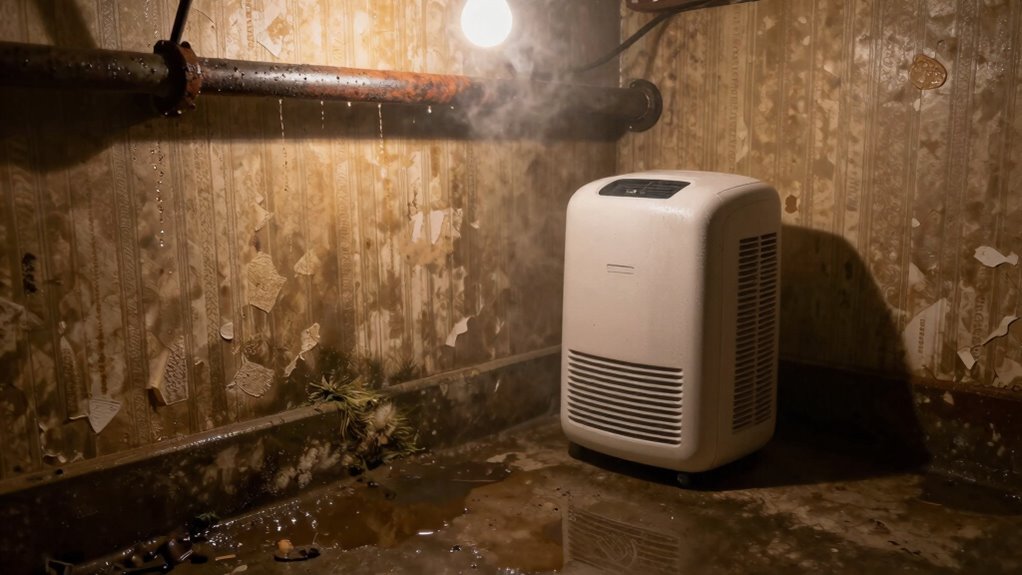
Have you ever noticed a damp smell or water stains in your basement? These signs often point to excess humidity, which can lead to mold growth, musty odors, and even structural damage if left unchecked. Tackling basement humidity starts with understanding its causes and applying effective solutions. One essential step is ensuring proper dehumidifier maintenance. If you already have a dehumidifier, regular cleaning of filters and drainage systems is imperative. A dirty filter reduces efficiency, causing your unit to work harder without effectively removing moisture. Draining the collected water properly prevents overflow, which can worsen humidity issues. If you don’t have a dehumidifier yet, investing in one tailored to your basement size can be a game-changer. It’s worth noting that a well-maintained dehumidifier can considerably improve air quality and protect your home’s foundation. Additionally, choosing the right ventilation solutions can significantly enhance airflow and moisture control. Proper ventilation is also vital because it helps to reduce indoor humidity levels and prevent buildup of moisture.
Regular dehumidifier maintenance, including cleaning filters and draining water, is key to controlling basement humidity effectively.
Beyond equipment upkeep, ventilation improvements play a crucial role. Bad ventilation traps moist air inside, making your basement feel clammy and increasing the risk of mold. To fix this, consider adding or upgrading vents to encourage better airflow. Installing exhaust fans or air vents can help draw out humid air and bring in fresh, dry air from outside. If your basement already has windows, opening them regularly can also help, especially during dry weather. Keep in mind, however, that ventilation alone might not suffice if outdoor humidity is high. In such cases, mechanical ventilation systems, like exhaust fans with humidity sensors, can automatically activate when moisture levels rise, maintaining a healthier atmosphere. Regularly inspecting for water intrusion and promptly sealing any leaks can also prevent additional humidity from entering your basement. It’s also advisable to check the air circulation patterns within your basement to ensure proper airflow and prevent stagnant, moist air pockets.
You should also pay attention to other sources of moisture. Leaks from pipes or cracks in the foundation can considerably contribute to humidity problems. Seal these leaks promptly to prevent water intrusion. Additionally, controlling indoor activities that generate moisture, such as laundry or cooking, can make a difference. Using exhaust fans in these areas helps vent excess humidity outside. To further prevent moisture buildup, consider insulating your basement to reduce temperature fluctuations that cause condensation. Proper insulation not only reduces condensation but also helps in maintaining a consistent temperature, thereby reducing overall humidity levels.
Ultimately, managing basement humidity involves a combination of routine dehumidifier maintenance, ventilation improvements, and addressing water sources. By staying proactive, you prevent mold growth, protect your belongings, and maintain a healthier living space. Regularly checking for signs of excess moisture and taking swift action keeps your basement dry and comfortable. Remember, the key is consistency — maintenance and ventilation should be part of your ongoing home care routine to keep your basement dry and mold-free for years to come.
As an affiliate, we earn on qualifying purchases.
Frequently Asked Questions
How Does Outdoor Weather Affect Basement Humidity Levels?
Outdoor weather considerably impacts your basement humidity levels through climate impact. During rainy or humid days, outdoor moisture seeps in, raising indoor humidity. Conversely, dry, sunny weather helps reduce moisture. Your dehumidifier’s effectiveness depends on these conditions; it works best when outdoor humidity is lower. Keep an eye on weather patterns to manage your basement’s moisture, and adjust your dehumidifier settings to maintain a comfortable, dry environment.
Can Plants Increase Humidity in My Basement?
Yes, plants can increase indoor humidity through transpiration, releasing moisture into the air. When you have many plants in your basement, their combined transpiration can raise humidity levels. This can be beneficial if your basement is too dry, but it might worsen high humidity issues. To manage this, monitor your indoor humidity and adjust plant placement or use dehumidifiers if necessary.
What Are the Health Risks of High Basement Humidity?
High basement humidity can pose health risks by worsening indoor air quality and promoting mold growth. You might experience allergy symptoms, respiratory issues, or asthma flare-ups if mold develops. To protect your health, keep humidity levels in check, guarantee proper ventilation, and prevent mold by controlling moisture. Regularly inspecting your basement and maintaining a dry environment helps reduce these risks and improves overall indoor air quality.
How Often Should I Check My Basement for Humidity Issues?
Think of your basement as a silent sentinel—always watchful. You should check humidity levels at least once a month, especially during seasonal changes or after heavy rains. During these inspections, guarantee your dehumidifier is well-maintained and your basement ventilation is clear. Regular checks help catch issues early, preventing mold and moisture damage. Keep your basement dry and healthy by staying proactive with humidity monitoring.
Can Insulation Help Reduce Basement Humidity?
Yes, insulation can help reduce basement humidity, especially if it includes moisture barriers. Proper insulation enhances insulation effectiveness by preventing cold walls that cause condensation. Moisture barriers within or behind insulation block moisture from seeping in, minimizing dampness. By choosing the right insulation with moisture barriers, you create a more controlled environment, reducing humidity levels and preventing mold growth in your basement.
automatic humidity sensor exhaust fan
As an affiliate, we earn on qualifying purchases.
As an affiliate, we earn on qualifying purchases.
Conclusion
High humidity in your basement can quietly cause mold, damage, and discomfort, turning your space into a hazard. Yet, with simple signs like musty odors or peeling paint, you can spot trouble early. Addressing these issues promptly is like giving your home a gust of fresh air—preventing long-term damage and creating a healthier environment. Don’t ignore the signs; instead, take action now to keep your basement dry and safe.
As an affiliate, we earn on qualifying purchases.
mold and moisture water leak sealant
As an affiliate, we earn on qualifying purchases.
As an affiliate, we earn on qualifying purchases.
Evergreen bestsellers Picks
bestsellers
As an affiliate, we earn on qualifying purchases.