
TL;DR

Turn your quiet moments into listening time
- Thousands of audiobooks, podcasts and originals
- Listen on your phone, tablet or Echo — also offline
- Cancel anytime
Derek Wessman says he became a Japanese citizen and has published a personal account of the naturalization process he began in 2012. He describes extensive requests for personal, family, financial and work records, while stressing that requirements vary and applicants should consult the Ministry of Justice.
Derek Wessman says he became a citizen of Japan and has shared a first-person account of the naturalization process, which he said he began in 2012. His account describes a demanding collection of documents and a process he characterizes as lengthy and partly dependent on official judgment, but he cautions readers that his experience is not a guide to every applicant’s case.
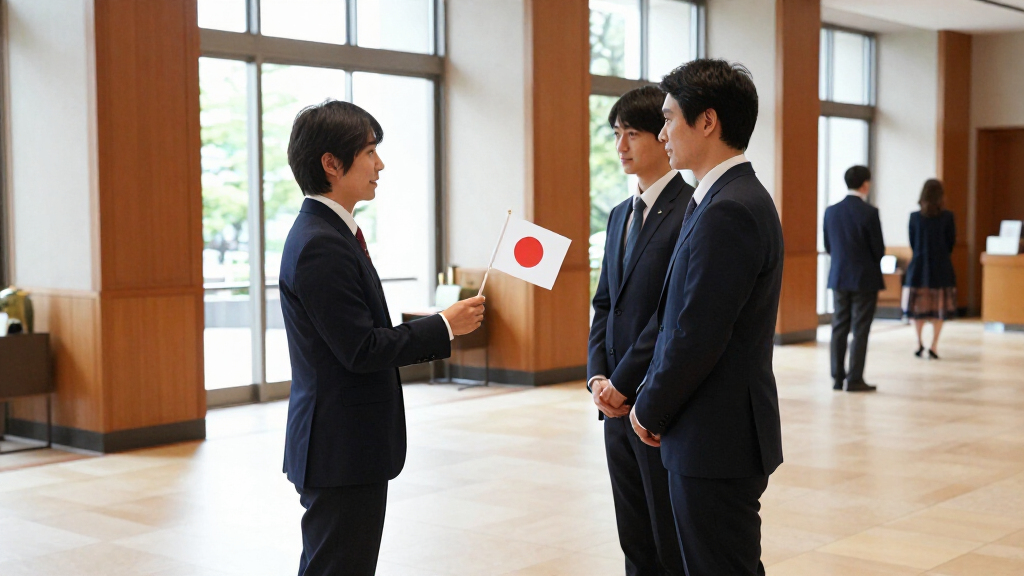
Wessman wrote that he first approached the Legal Affairs Bureau in 2012 while visiting for another matter. He said he had considered naturalizing for a long time and used the visit to speak with the department handling citizenship applications. A Ministry of Justice official asked about his nationality, time living in Japan, marital and family circumstances, and other background details.
In his account, the preliminary document requests included birth and marriage records for relatives, a record of his addresses and education, employment history, tax and insurance payment records, and information about his household finances. He also described requirements relating to his wife and children, his company, bank accounts, passports and driving history. Wessman said English-language documents had to be accompanied by Japanese translations and that documents issued in Japanese generally required an original and a copy.
He presents the list as a recollection, noting that he reconstructed parts of it from spreadsheets and could not remember some details, such as the number of years of tax records requested. The list is therefore an account of documents sought in his case, not an official checklist. Wessman also said the process took at least a year, but the supplied account does not provide a precise date for his application’s approval or citizenship.
A Personal Account, Not a Checklist
Wessman’s post offers a firsthand description of the practical work involved in a Japanese naturalization application, including how records about an applicant’s family, finances and employment may feature in the process. That perspective may help readers understand why preparing an application can take substantial time and coordination.
Its limits are just as important. Wessman explicitly advises prospective applicants to consult their local Legal Affairs Bureau and follow official guidance, rather than relying on an individual account. He says applications are handled individually, so his document list should not be treated as the requirements for someone else. The story is a personal report, not a statement of current government policy.
Japanese naturalization application guide
As an affiliate, we earn on qualifying purchases.
As an affiliate, we earn on qualifying purchases.
Wessman’s 2012 Bureau Visit
Wessman said he had been thinking about naturalization before his first consultation in 2012. He described the meeting as an initial discussion rather than a completed application: an official asked about his personal circumstances and outlined the process and supporting records he would need to assemble.
He also compared that visit with the present-day experience, writing that a first consultation usually requires an appointment and that the official had accommodated him. He attributed the change to more people applying, but the supplied material gives no figures to establish application trends. His comments about the process being intentionally opaque and involving subjective judgment are his assessment, not a quoted government explanation.
“I became a citizen of Japan.”
— Derek Wessman, in his blog account
Japanese translation service for official documents
As an affiliate, we earn on qualifying purchases.
As an affiliate, we earn on qualifying purchases.
Approval Date and Current Rules
The supplied account does not state when Wessman’s naturalization was approved, when he formally became a citizen, or how long his individual application took from filing to decision. It also does not identify which items in his preliminary document list were ultimately required or whether they were requested in the same form throughout the process.
Wessman says requirements differ by applicant and urges readers to verify them with the Legal Affairs Bureau. The source material does not independently confirm his description of government procedures, the number of current applicants, or the present-day document requirements. His comments on opacity and subjective evaluation remain his opinion.
Japanese residence and work record folders
As an affiliate, we earn on qualifying purchases.
As an affiliate, we earn on qualifying purchases.
Applicants Should Seek Official Guidance
Wessman’s practical advice is for anyone considering naturalization to consult the Legal Affairs Bureau serving their area. The next steps for an applicant would depend on that office’s assessment and the person’s individual circumstances; the blog does not set out a universal application sequence or a government timetable.
No further official action, policy change or update to Wessman’s case is described in the supplied material. Readers seeking current requirements should rely on the Ministry of Justice and the relevant Legal Affairs Bureau rather than assuming that a document list recalled from one person’s experience applies to them.
Japanese citizenship application checklist
As an affiliate, we earn on qualifying purchases.
As an affiliate, we earn on qualifying purchases.
Key Questions
Who says they became a Japanese citizen?
Derek Wessman says in a personal blog post that he became a citizen of Japan. The supplied material does not give the date of his naturalization.
When did Wessman begin the process?
He says he first spoke with the naturalization department at a Legal Affairs Bureau in 2012, after deciding during a visit for another matter that he wanted to start the process.
What documents did he describe?
His recollection includes family and civil records, address and education histories, work and tax records, insurance payment evidence, household financial information, and business records. He notes that some details are approximate and his list is not an official checklist.
Can prospective applicants rely on his list?
No. Wessman says applications are assessed individually and recommends consulting the local Legal Affairs Bureau for requirements that apply to a particular case.
Source: hn
Fall Picks
fall essentials
As an affiliate, we earn on qualifying purchases.