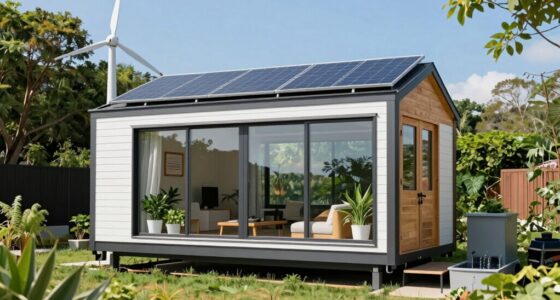
To plan a solar-ready home, start by evaluating your roof’s orientation, pitch, and material to confirm it can support panels safely. Check for shading factors and plan for future expandability with flexible mounts. Guarantee your electrical system can handle added capacity, and consider structural reinforcements if needed. Stay compliant with local codes and permits. By preparing these aspects well, you’ll maximize efficiency and flexibility—more tips ahead to help you get started.
Key Takeaways
- Assess roof orientation, material, and structural capacity to ensure suitability for solar panel installation and support.
- Select optimal site locations with minimal shading, considering future expansion and ease of maintenance.
- Verify electrical infrastructure, including panel capacity and wiring, complying with local codes and permitting requirements.
- Reinforce roof structure as needed to safely support the weight of solar panels and related equipment.
- Incorporate energy-efficient features and plan for future upgrades to maximize long-term system flexibility and cost savings.

ECO-WORTHY 16 Units Solar Panel Mounting Brackets,Z Bracket Sets Lightweight Aluminum Corrosion-Free for RV, Trailer, Boat, Yachs, Wall and Other Off Gird Roof,4 Set of 4 Units
Robustness: The ECO-WORTHY Z solar panel mounting brackets are made of aluminum alloy bracket and stainless steel M6…
As an affiliate, we earn on qualifying purchases.
As an affiliate, we earn on qualifying purchases.
Assessing Roof Orientation and Pitch

Understanding your roof’s orientation and pitch is essential for maximizing solar energy production. The direction your roof faces determines how much sunlight it receives throughout the day. Ideally, a south-facing roof in the northern hemisphere captures the most sunlight, boosting your panels’ efficiency. If your roof faces east or west, you’ll still get good sunlight, but the energy output might be slightly lower. The pitch, or angle, of your roof also matters; a steeper slope can improve sunlight exposure, especially in winter, while a flatter roof may require additional mounting adjustments. Evaluating these factors helps you determine whether your roof is suitable for solar panels and guides you in optimizing their placement for maximum energy generation. Proper assessment ensures you get the most out of your investment. Additionally, considering nanotechnology advancements can lead to the development of more efficient solar panel materials that perform better under various roof orientations and pitches. Incorporating innovative materials can further enhance panel performance and durability across different roofing conditions. Moreover, understanding projected sunlight hours throughout the year can help you plan the most effective system size and layout for your specific location. Conducting a comprehensive site analysis can reveal additional factors that influence solar energy potential. A comprehensive evaluation of roof structural integrity also ensures your roof can support the additional weight of solar panels safely.
![The DIY Off Grid Solar Power Bible: [10 in 1] The Most Complete and Updated Guide to Design, Install, and Maintain Solar Energy Systems for Tiny Homes, Cabins, Rvs, and Boats](https://m.media-amazon.com/images/I/51wGxoWZaLL._SL500_.jpg)
The DIY Off Grid Solar Power Bible: [10 in 1] The Most Complete and Updated Guide to Design, Install, and Maintain Solar Energy Systems for Tiny Homes, Cabins, Rvs, and Boats
As an affiliate, we earn on qualifying purchases.
As an affiliate, we earn on qualifying purchases.
Choosing the Right Location for Solar Panels

Once you’ve evaluated your roof’s orientation and pitch, the next step is to select the most suitable location for your solar panels. Look for areas that receive maximum sunlight exposure throughout the day, ideally facing south if you’re in the Northern Hemisphere. Avoid shaded spots caused by nearby trees, chimneys, or vents, as shading reduces panel efficiency. Consider the accessibility and ease of maintenance when choosing a spot, ensuring panels can be easily cleaned or repaired if needed. Also, verify that the location is free from obstructions like antennas or skylights that could cast shadows. Proper placement enhances energy production and longevity, so take your time to identify the *best* spot that balances sunlight access and practicality. Additionally, understanding solar site assessment can help you evaluate the potential shading and sunlight exposure more accurately. Conducting a shade analysis can further refine your site selection by identifying subtle shading issues that might not be immediately obvious, and utilizing solar path data can assist in predicting seasonal variations in sunlight. Incorporating local climate patterns into your planning can also ensure optimal performance throughout the year. Performing a comprehensive site evaluation can uncover less obvious factors that might impact your solar panel efficiency and durability over time.

ZIBOO FT-2000W Solar Panel Tester MPPT Meter – 2000W Max Power, 150V/35A PV Module Tester for Voc/Isc, Open Circuit Voltage & Short Circuit Current, with Backlight & Data Hold
⚡ Professional-Grade PV Testing Measures maximum power (Pmax) up to 2000W, open-circuit voltage (Voc: 12-150V), and short-circuit current…
As an affiliate, we earn on qualifying purchases.
As an affiliate, we earn on qualifying purchases.
Structural Reinforcements and Roof Load Capacity

Before installing solar panels, you need to assess your roof’s material strength and guarantee it can support the added weight. Upgrading structural supports might be necessary to handle the load safely. Accurate load-bearing calculations help determine if your roof is ready or if reinforcement is required. Consulting a load-bearing assessment can ensure your roof’s safety and longevity. Additionally, understanding whole‑house water filtration systems can be beneficial for sustainable home planning. Incorporating professional voiceover techniques during inspections can improve communication of complex structural assessments to homeowners. Evaluating the roof material and its compatibility with solar panel installation is also crucial for long-term durability. Properly assessing and reinforcing your roof’s structural integrity ensures a secure foundation for your solar investment.
Roof Material Strength
Ensuring your roof can support solar panels starts with evaluating its material strength. Different roofing materials have varying durability and load-bearing capacities. Asphalt shingles are common and generally sturdy enough for solar installations, but excessive weight from snow or debris can weaken them over time. Metal roofs are highly durable, often supporting heavier panels without reinforcement. Tile and slate roofs, while attractive, tend to be fragile and may require additional support or reinforcement before mounting panels. It’s vital to assess the age and condition of your roof, as older materials might not withstand the added weight. Additionally, understanding a roof’s load capacity is essential for safe solar panel installation. Considering structural reinforcements can ensure your roof safely bears the additional load. Conducting a structural assessment can identify potential weaknesses before installation begins, especially if your roof has experienced weather-related stress that could compromise its integrity. Understanding building codes related to roof modifications can prevent compliance issues and ensure proper installation.
Structural Support Upgrades
To support the added weight of solar panels safely, you may need to contemplate structural support upgrades to your roof. This involves evaluating your current roof framing and reinforcing it where necessary. Reinforcements may include adding additional rafters, bracing, or joists to distribute the load evenly. You might also need to upgrade load-bearing walls or install extra support beams to reduce stress on vulnerable areas. Proper upgrades prevent damage or failure, securing your investment and maintaining your home’s safety and integrity over time. Ensuring your roof can handle the weight of both the panels and environmental factors like snow or wind is essential. Consulting with a structural engineer can help determine specific reinforcements needed. Additionally, understanding your home’s structural capacity can help prevent unexpected issues during and after installation. Recognizing your load capacity is vital for selecting appropriate reinforcements and avoiding overload problems. Proper support is crucial for long-term durability and safety. Being aware of building codes and regulations can also ensure your upgrades meet local standards and avoid future compliance issues.
Load-Bearing Calculations
Calculating your roof’s load-bearing capacity is a crucial step in planning for solar panel installation. You need to determine if your roof can support the weight of the panels and mounting equipment without risking structural integrity. Start by reviewing your existing roof’s design and materials, noting the type of decking and framing. Consult a structural engineer or use online calculators to estimate the maximum load your roof can handle. Don’t forget to take into account additional factors like snow, wind, and future upgrades. If your calculations show the load capacity is insufficient, you may need to reinforce your roof with structural supports or upgrade your framing. Proper load-bearing calculations ensure your solar system is safe, durable, and compliant with local building codes.

45inch Solar Panel Mounting Brackets, 4 Sets Solar Panel Mounting Kit for 100-400 Watts Solar Panel, 0 to 90° Adjustable Solar Panel Mounting Rails, Lightweight Aluminum Solar Panel Stand
【HIGH-QUALITY MATERIALS】This solar panel mount kit is made of high-quality aluminum alloy, making it rust- and corrosion-resistant. Its…
As an affiliate, we earn on qualifying purchases.
As an affiliate, we earn on qualifying purchases.
Planning Electrical Infrastructure and Wiring
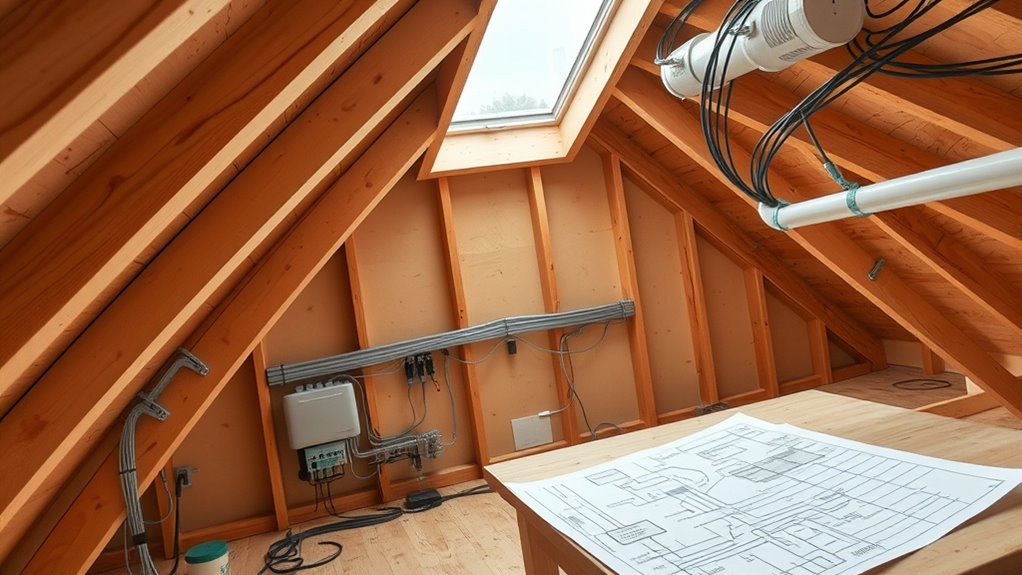
Planning your electrical infrastructure and wiring is a essential step in creating a solar-ready home. Start by ensuring your main electrical panel has enough capacity to handle future solar additions and additional circuits. Install dedicated conduits or conduits with extra capacity where your solar inverter and batteries will connect, making future upgrades easier. Position your meter box and main service panel strategically to minimize wiring length and reduce voltage drop. Use high-quality wiring rated for your local codes, and consider underground wiring for safety and aesthetics. Label all circuits clearly to simplify troubleshooting and future modifications. Proper planning now prevents costly rewiring later. By integrating these elements into your design, you lay a solid foundation for seamless solar system integration and efficient energy management.
Incorporating Future Expandability and Flexibility

To prepare your home for future growth, consider a modular system design that allows easy upgrades and expansions. Planning for future electrical upgrades now guarantees you won’t face costly changes later. By building in flexibility, you can adapt your system as your energy needs evolve.
Modular System Design
Designing a modular solar system means thinking ahead about how your setup can grow and adapt over time. You’ll want to plan for additional panels, inverters, or batteries, even if you don’t need them right now. Use standardized components and connection points so adding new modules later is straightforward. It’s smart to leave space on your roof or install mounting rails that can accommodate future panels. Choose equipment compatible with potential upgrades to avoid costly replacements down the line. By designing with flexibility in mind, you create a system that can expand as your energy needs change. This approach saves you time and money and ensures your solar setup remains efficient and effective for years to come.
Future Electrical Upgrades
When considering future electrical upgrades, it’s important to build flexibility into your system from the start. You should install additional conduit runs and extra breaker spaces in your electrical panel to accommodate future expansions. Planning for higher capacity wiring now guarantees you won’t need costly upgrades later. Think about future technology needs, like electric vehicle chargers or home automation systems, and include dedicated circuits for these. Incorporate subpanels if you anticipate adding more load or zones in the future. Label all wiring clearly for easy identification. By designing your electrical system with expandability in mind, you make future upgrades smoother and more cost-effective. This foresight helps your home stay adaptable, reducing the need for disruptive renovations down the line.
Navigating Building Codes and Permitting Processes
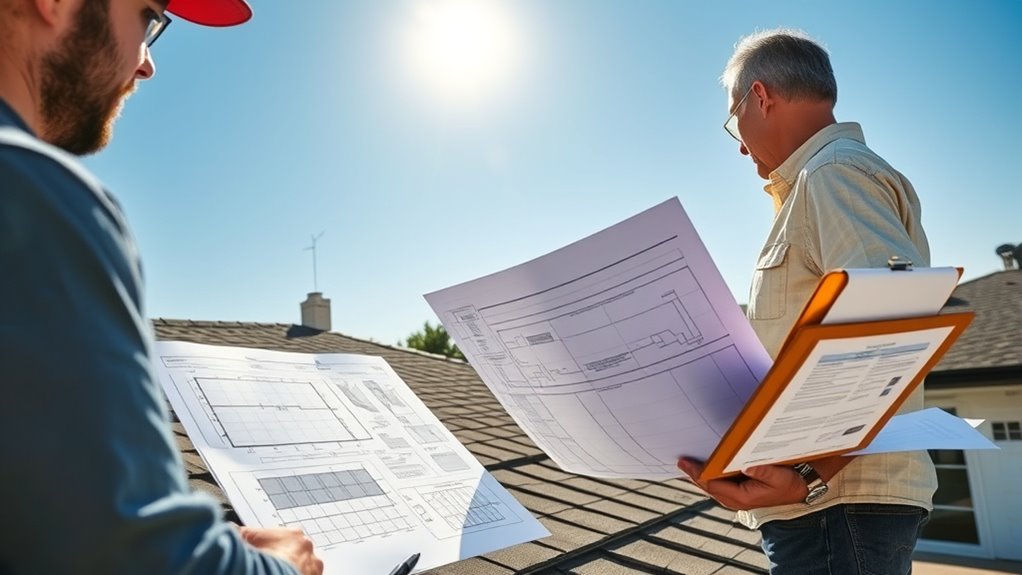
Understanding building codes and permitting processes can feel overwhelming, but grasping the requirements early on will save you time and prevent costly delays. Start by checking local regulations, which vary by city and state. Contact your building department to clarify permit requirements for solar-ready features, such as structural reinforcements or electrical upgrades. Keep detailed documentation, including plans and specifications, to streamline approval. Here’s a quick overview:
| Step | Action | Tip |
|---|---|---|
| 1 | Research local codes | Visit city website or office |
| 2 | Prepare documentation | Include detailed plans and specs |
| 3 | Submit permit application | Follow up regularly to track status |
Being proactive ensures a smoother process from approval to installation.
Integrating Energy Efficiency Measures

Integrating energy efficiency measures into your home’s design can considerably reduce long-term energy costs and enhance overall comfort. Start by selecting high-quality insulation to minimize heat transfer, keeping your home warm in winter and cool in summer. Next, opt for energy-efficient windows and doors that prevent drafts and improve thermal performance. Additionally, incorporate smart home systems to monitor and control energy use effectively. These measures work together to optimize your home’s performance, lowering utility bills and reducing environmental impact. Focusing on energy efficiency from the start ensures your home is prepared for solar integration and future sustainability goals. By making these choices early, you create a more comfortable, cost-effective, and eco-friendly living environment that supports your solar readiness.
Budgeting and Cost-Effective Planning Strategies

Effective budgeting is essential to guarantee your solar-ready home remains affordable without compromising quality. Start by setting a clear financial plan that includes all project costs, from permits to installation. Prioritize cost-effective solutions, such as selecting energy-efficient appliances and materials that reduce long-term expenses. Consider phased upgrades to spread costs over time, making the project more manageable. Shop around for competitive quotes from reputable contractors to find the best deal. Take advantage of incentives, rebates, and tax credits offered for solar and energy efficiency upgrades, which can dramatically lower your upfront costs. Carefully evaluate the return on investment for different options, ensuring that every dollar spent contributes to your home’s sustainability and savings. This strategic approach helps you maximize value while staying within your budget.
Frequently Asked Questions
How Can I Estimate the Long-Term Savings From Solar Installation?
You can estimate your long-term savings by calculating your average annual electricity costs and comparing them with the expected output of your solar system. Factor in installation costs, local electricity rates, potential incentives, and future rate increases. Use online calculators or consult with a solar provider to get personalized projections. This way, you’ll see how much money you could save over the system’s lifespan, making your investment clearer.
What Are Common Pitfalls to Avoid During Solar Home Planning?
Think of planning your solar home as planting a garden—you want it to flourish, not wither. Avoid common pitfalls like underestimating your energy needs, choosing unqualified installers, or ignoring future expansion potential. Double-check your roof’s orientation and shading issues. Don’t rush decisions; instead, research thoroughly and compare options. By steering clear of these mistakes, you’ll set yourself up for maximum savings and a brighter, more sustainable future.
How Does Shading From Trees Affect Solar Panel Efficiency?
Shading from trees markedly reduces your solar panel efficiency by blocking sunlight, which decreases energy production. As leaves and branches grow, they cast shadows over your panels, especially during peak sunlight hours. To maximize efficiency, you should regularly trim nearby trees and choose a location with minimal shading. Planning your installation carefully helps guarantee your panels receive consistent sunlight, boosting your system’s overall performance and saving you money in the long run.
Are There Specific Warranties or Service Requirements for Solar Equipment?
Think of your solar equipment as a trusted partner, needing clear skies to shine brightest. Warranties typically cover repairs or replacements due to defects, and service requirements often include regular inspections to keep your system humming. You’ll want to read the fine print, as some warranties demand specific maintenance routines. Staying proactive with manufacturer guidelines guarantees your solar investment keeps glowing, like a lighthouse guiding your home’s energy journey.
How Can I Maximize Solar Energy Production in Winter Months?
You can maximize solar energy production in winter by ensuring your panels are clean and free of snow. Position them at the ideal angle to capture the low winter sun, and trim nearby trees or obstructions that cast shadows. Consider installing a solar tracking system to follow the sun’s path. Additionally, keep your system well-maintained with regular inspections to prevent shading or dirt buildup that reduces efficiency.
Conclusion
By carefully planning your solar-ready home, you’re planting seeds for a brighter, cleaner future. Every thoughtful step, from roof orientation to permitting, builds a sturdy foundation for sustainable energy. Think of your home as a beacon of hope, shining with possibility and purpose. With attention to detail and a clear vision, you’ll turn your house into a powerful symbol of change—lighting the way toward a greener tomorrow.