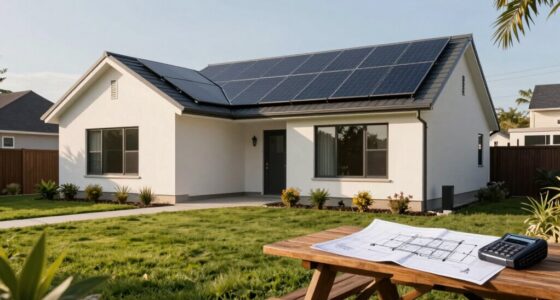
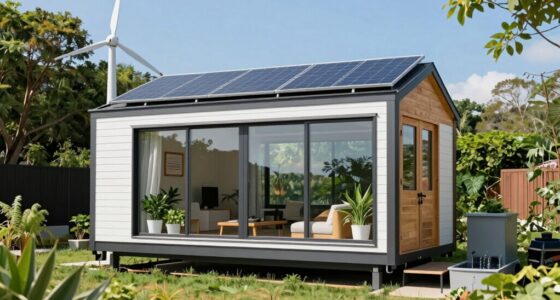
To design resilient home infrastructure, assess risks like floods or earthquakes specific to your area and choose materials that resist decay, moisture, and damage. Incorporate smart tech for early warnings, optimize energy and water efficiency, and select adaptable layouts that can respond to changing needs. Strengthen foundations and structures with reinforced materials, while installing safety and backup systems for emergencies. Learning more can help you build a home that offers lasting protection and adaptability against natural threats.
Key Takeaways
- Conduct comprehensive risk assessments to identify local natural hazards and inform structural reinforcement strategies.
- Select durable, sustainable materials resistant to environmental damage, such as recycled steel, fiber cement, and engineered wood.
- Incorporate energy-efficient and water-saving technologies, including solar panels, smart systems, and rainwater harvesting.
- Design flexible living spaces with adaptable features like movable walls and multi-purpose furniture for emergency response.
- Ensure structural integrity through appropriate foundation choices, regular inspections, and reinforcement techniques to withstand natural disasters.

Quakehold! Furniture Strap Kit, Earthquake Fasteners for Disaster Preparedness, Child Proof Safety Straps for RV, Home Office, Helps Prevent Damage and Injury, Easy to Install, Black
Flexible Nylon Straps Stop Top-Heavy Items Such As China Cabinets, Wall Units, Entertainment Centers From Toppling Over
As an affiliate, we earn on qualifying purchases.
As an affiliate, we earn on qualifying purchases.
Assessing Risks and Planning for Resilience
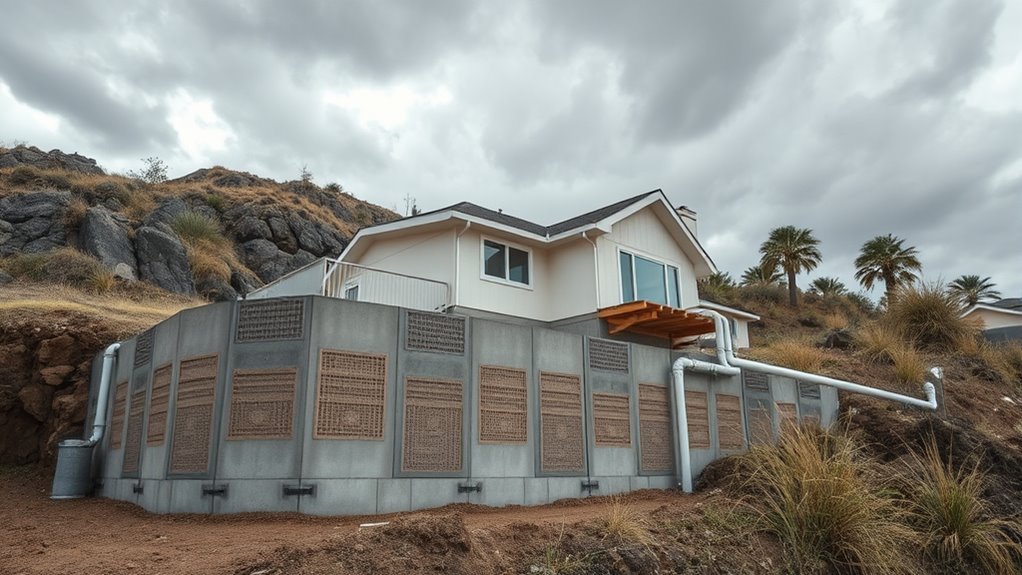
Understanding the risks your home faces is the first step toward designing a resilient infrastructure. You need to evaluate potential threats like floods, earthquakes, storms, and high winds specific to your location. Start by researching historical data and consulting local agencies for hazard maps. Identify vulnerable areas such as basements, entry points, and weak structural components. Planning for resilience means prioritizing these risks and considering how they could impact your home’s safety and functionality. Creating a comprehensive risk assessment** helps you understand likely scenarios and develop mitigation strategies. This proactive approach helps you make informed decisions about upgrades and reinforcements, ensuring your home can withstand adverse events. Incorporating structural reinforcement techniques can further enhance your home’s ability to resist damage during natural disasters. Being prepared minimizes damage, reduces repair costs, and keeps your family safe during emergencies. Trusted home infrastructure design practices can further enhance your home’s resilience against natural disasters. Additionally, understanding credit card security measures can protect your financial assets in case of emergencies or disasters that impact personal data. Recognizing the importance of cultural heritage** in your community can also guide you in preserving local historical structures that might be vulnerable during disasters.

House Wrap, 3 x 150 ft Thick Drop Cloth Vapor Barrier, Heavy-Duty Moisture Barrier & Water-Resistant Plastic sheeting roll for Home Commercial Building Construction, White
【Large & Efficient Coverage】Maximize productivity on your job site. This house wrap comes in a large 3-foot by…
As an affiliate, we earn on qualifying purchases.
As an affiliate, we earn on qualifying purchases.
Selecting Durable and Sustainable Materials
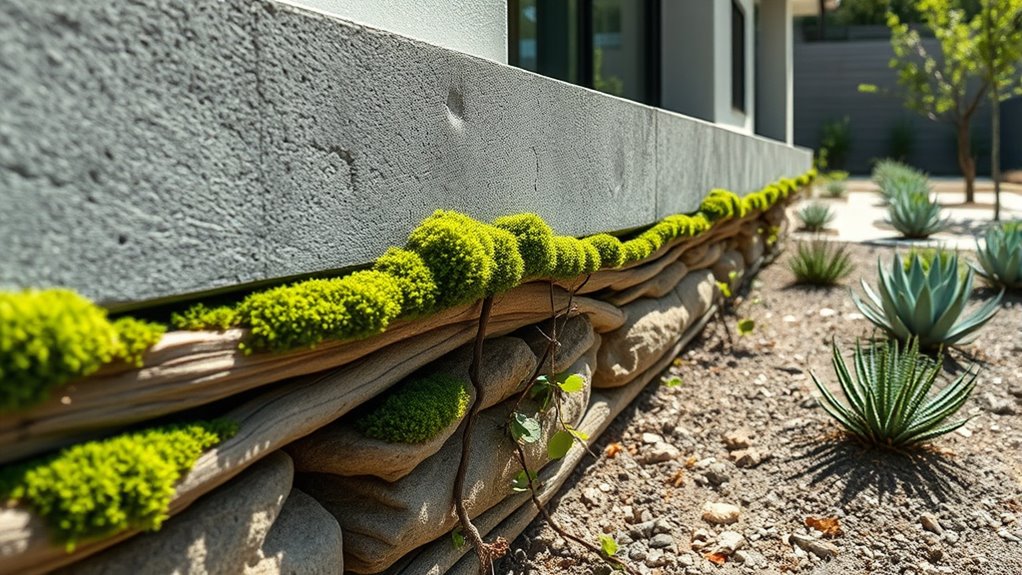
Choosing the right materials is essential for ensuring your home stands up to future challenges. You should consider options that offer both strength and longevity, so your investment lasts over time. Additionally, eco-friendly choices and cost-effective durability can help you build a resilient, sustainable home without overspending. Incorporating high-quality power tools and equipment during construction and maintenance can also improve precision and safety, ensuring your materials are properly installed and cared for over the years. Selecting materials with water-resistant properties can further enhance the durability of your home, especially in the face of environmental stresses, and utilizing sustainable building materials can reduce your overall environmental impact while maintaining structural integrity. Considering preventative maintenance strategies can extend the lifespan of your home’s components and materials. Implementing necessary Cookies for site security and functionality can support ongoing maintenance efforts and protect your investments over time.
Material Strength and Longevity
Have you ever considered how the materials you select can impact your home’s resilience over time? Choosing materials with high strength ensures your home withstands extreme weather, heavy loads, and daily wear. Durability means they resist decay, corrosion, and damage, reducing repair costs and extending your home’s lifespan. For structural components like beams and foundations, opt for concrete or steel, which offer proven longevity. Material properties are essential to understand when selecting components that will endure. Additionally, understanding material safety standards can help ensure your choices meet safety and performance benchmarks. Incorporating material testing methods can provide further assurance of quality and durability. Exploring manufacturing quality can help you identify materials that maintain their integrity longer. Flooring and exterior surfaces should be made from materials that resist moisture and temperature fluctuations, such as brick or treated wood. Don’t overlook the importance of quality in manufacturing; well-made materials maintain their integrity longer. Investing in strong, long-lasting materials pays off by providing a safer, more resilient living environment while minimizing maintenance and replacement needs over the years. Understanding decoding slang can also help you better communicate with suppliers and contractors about material qualities and specifications.
Eco-Friendly Material Choices
Selecting materials that are both durable and eco-friendly can substantially enhance your home’s resilience while reducing environmental impact. Opt for sustainable options like bamboo, reclaimed wood, or recycled metal, which offer strength without depleting natural resources. Use low-VOC paints and non-toxic sealants to improve indoor air quality and minimize harmful emissions. Consider concrete mixes with recycled aggregates or fly ash to strengthen foundations while lowering carbon footprint. Insulating materials such as cellulose or sheep’s wool provide excellent thermal performance and are renewable. Additionally, sustainable building practices can further optimize your home’s resilience and environmental friendliness. Incorporating eco-friendly options not only boosts your home’s ability to withstand extreme weather and wear but also supports a healthier environment. By choosing sustainable, durable materials, you create a resilient home that aligns with eco-conscious principles and long-term durability. Integrating these materials with science-based design enhances both performance and sustainability while leveraging recent advancements in building technology.
Cost-Effective Durability
To guarantee your home remains resilient without breaking the bank, focus on materials that balance durability with affordability. Selecting cost-effective options ensures long-lasting protection without overspending. Here are four key considerations:
- Recycled Steel – Strong, eco-friendly, and resistant to pests and fire. Its high strength-to-weight ratio makes it an ideal choice for structural elements, especially when considering electric power generation needs for sustainable energy solutions. Incorporating material sustainability principles can further enhance your home’s resilience and environmental friendliness. Additionally, recycled steel contributes to climate resilience by reducing environmental impact. Its recyclability aligns with green building practices, helping to minimize construction waste and promote eco-conscious development.
- Fiber Cement Siding – Durable, low maintenance, and weather-resistant.
- Engineered Wood – Less expensive than traditional wood, with improved stability.
- Bamboo – Fast-growing, sustainable, and surprisingly strong for flooring and panels. Incorporating energy-efficient building practices further enhances your home’s sustainability and resilience.
Prioritize these materials based on your climate and needs. By choosing wisely, you create a resilient home that withstands challenges while remaining budget-friendly. This approach maximizes both durability and sustainability in your infrastructure design.

ECO-WORTHY 10KW Output 9.36KWH Off Grid Solar System Complete Kit for Home:12pcs 195W Solar Panels(2340W)+10KW 120V/240V Inverter (UL 1741)+ 2pcs 48V 100AH Lithium Batteries(UL 1973&UL 9540A)
[Ideally Output of 9.36KWH] The power of 9.36KWh per day under 4 hours full sunshine by the 2340W…
As an affiliate, we earn on qualifying purchases.
As an affiliate, we earn on qualifying purchases.
Incorporating Smart Technologies for Disaster Preparedness
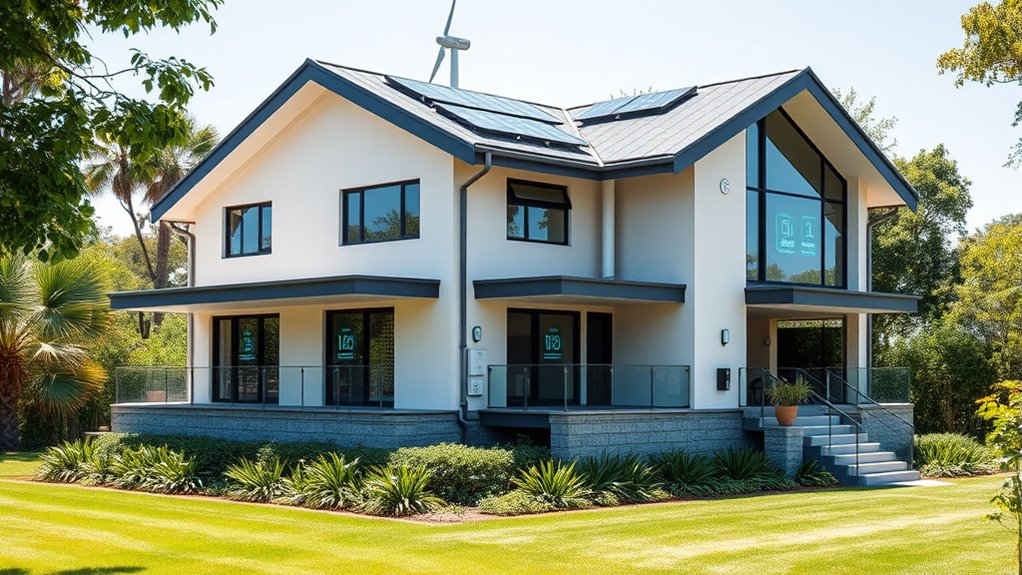
Integrating smart technologies into home infrastructure enhances disaster preparedness by providing real-time alerts, automated responses, and data-driven insights. With connected sensors and devices, you can monitor structural integrity, detect hazards like gas leaks or flooding, and receive instant notifications on your smartphone. Automated systems can shut off utilities or activate backup power during emergencies, reducing potential damage. Cloud-based data collection helps analyze patterns over time, improving your overall resilience. Voice assistants and smart alarms ensure you’re promptly informed, even if you’re away. These technologies empower you to respond swiftly, minimize risks, and safeguard your home and loved ones. By leveraging smart systems, you create a proactive environment that anticipates problems and acts before disaster strikes.

4-Tier Slim Rolling Cart with Pull-Out Baskets & Wooden Top — Narrow Mobile Storage Organizer, Multipurpose Utility Cart with Handle for Small Spaces, Kitchen, Bathroom, Laundry Room, Office, Brown
Premium Space-Saving Design: Measuring just 15.7"L x 7.9"W x 30.1"H, 4-story narrow storage cabinet with removable wheels, anti-tip,…
As an affiliate, we earn on qualifying purchases.
As an affiliate, we earn on qualifying purchases.
Designing Flexible and Adaptive Living Spaces

Designing flexible and adaptive living spaces means creating environments that can easily accommodate changing needs and unforeseen circumstances. You want your home to evolve with your lifestyle, offering versatility and resilience. To achieve this, consider these strategies:
- Use movable walls or partitions to reconfigure rooms quickly.
- Incorporate multi-purpose furniture that adapts to various functions.
- Install adjustable lighting and ventilation systems for different scenarios.
- Plan for open floor layouts that can be easily subdivided or expanded.
These approaches allow you to respond to emergencies or lifestyle shifts without extensive renovations. Flexibility guarantees your space remains functional, comfortable, and resilient, no matter what challenges arise. Your home becomes a dynamic environment that supports your needs today and tomorrow.
Enhancing Structural Integrity and Foundations

Ensuring your home’s structural integrity begins with selecting a strong foundation tailored to your soil and environmental conditions. You should assess soil stability, drainage, and load-bearing capacity before choosing a foundation type. Reinforced concrete slabs, pier and beam, or deep foundations like piles may be necessary based on local conditions. Incorporate quality materials and proper engineering techniques to prevent settlement, cracking, or shifting over time. Regular inspections and maintenance help identify early signs of stress, such as cracks or uneven floors. Additionally, integrating reinforcement methods like steel rebar or fiber mesh strengthens the foundation against natural forces. By prioritizing a robust, well-designed foundation, you set the groundwork for a resilient home capable of withstanding environmental stresses and maintaining long-term stability.
Implementing Energy and Water Efficiency Measures

Implementing energy and water efficiency measures helps you reduce costs and boost resilience. You can incorporate energy-saving technologies, water conservation strategies, and smart system integrations to optimize resource use. These approaches work together to create a more sustainable and responsive home infrastructure.
Energy Saving Technologies
Have you considered how energy-efficient technologies can substantially reduce your home’s environmental footprint and utility bills? Implementing these solutions makes a real difference. For example, you can:
- Install LED lighting to cut electricity use.
- Use smart thermostats to optimize heating and cooling.
- Incorporate high-efficiency appliances that consume less energy.
- Add solar panels to generate renewable power.
These technologies work together to minimize energy waste and lower costs. LED lights last longer and use less power, while smart thermostats learn your schedule to prevent unnecessary heating or cooling. High-efficiency appliances, like refrigerators and washers, reduce consumption without sacrificing performance. Solar panels harness sunlight, providing a clean energy source that cuts reliance on fossil fuels. Adopting these measures makes your home more resilient and eco-friendly.
Water Conservation Strategies
Water conservation strategies play a crucial role in making your home more sustainable and cost-effective. By adopting efficient water use practices, you reduce utility bills and lessen your environmental impact. Installing low-flow fixtures, such as showerheads and faucets, can notably cut water consumption. Collecting rainwater for outdoor use and fixing leaks promptly also enhance efficiency. Here’s a quick comparison:
| Strategy | Benefits |
|---|---|
| Low-flow fixtures | Reduce indoor water use; save money |
| Rainwater harvesting | Lowers dependency on municipal water; eco-friendly |
| Leak repairs | Prevent water waste; lower bills |
Implementing these measures ensures your home remains resilient while conserving essential water resources. Small changes can lead to substantial savings and a more sustainable future.
Smart System Integration
Integrating smart systems into your home allows you to efficiently manage energy and water use with minimal effort. These systems automate monitoring and control, ensuring ideal resource use. For example, you can:
- Use smart thermostats to adjust heating and cooling based on occupancy, reducing energy waste.
- Install sensor-driven water valves to detect leaks and shut off water automatically.
- Implement automated lighting systems that turn off when rooms are unoccupied, saving power.
- Connect all devices to a centralized app for real-time tracking, enabling quick adjustments and identifying inefficiencies.
Smart integration makes your home more resilient by reducing consumption, lowering costs, and preventing damage. It also simplifies maintenance and encourages sustainable habits, all while maintaining comfort and convenience.
Integrating Emergency Systems and Safety Features
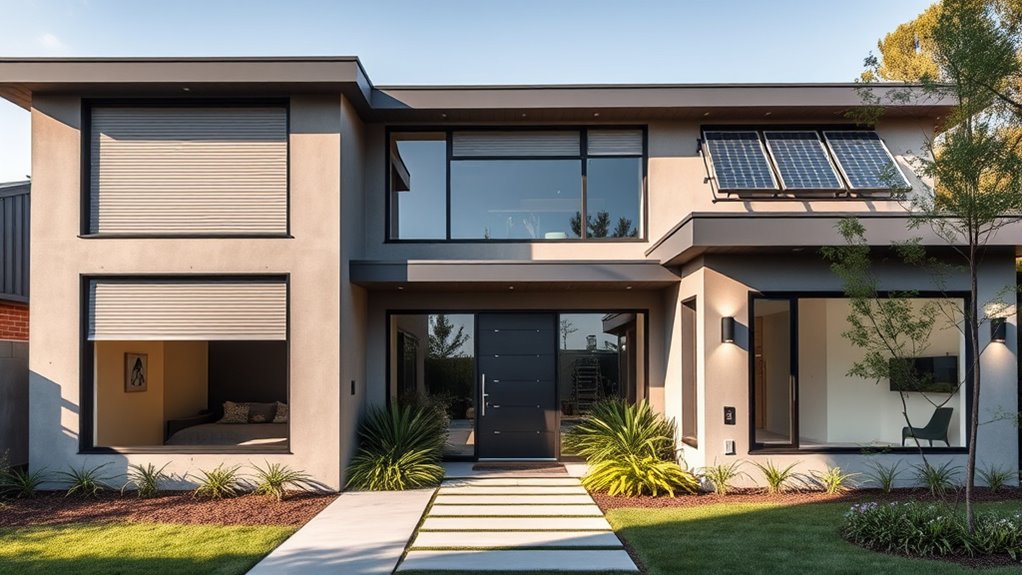
In today’s home design, incorporating emergency systems and safety features is essential for ensuring resilience during crises. You should install reliable smoke and carbon monoxide detectors throughout your home to provide early alerts. Consider adding emergency lighting that activates during power outages, ensuring safe evacuation. Integrate a backup power source, like a generator or solar system, to keep critical systems running when the grid fails. Safety features such as fire suppression systems, reinforced entry points, and secure locks enhance security and safety. It’s also wise to include communication tools like intercoms or emergency radios for quick contact with authorities. These measures help you respond swiftly and effectively, minimizing damage and protecting your loved ones during unexpected events.
Maintaining and Upgrading Resilient Infrastructure Over Time
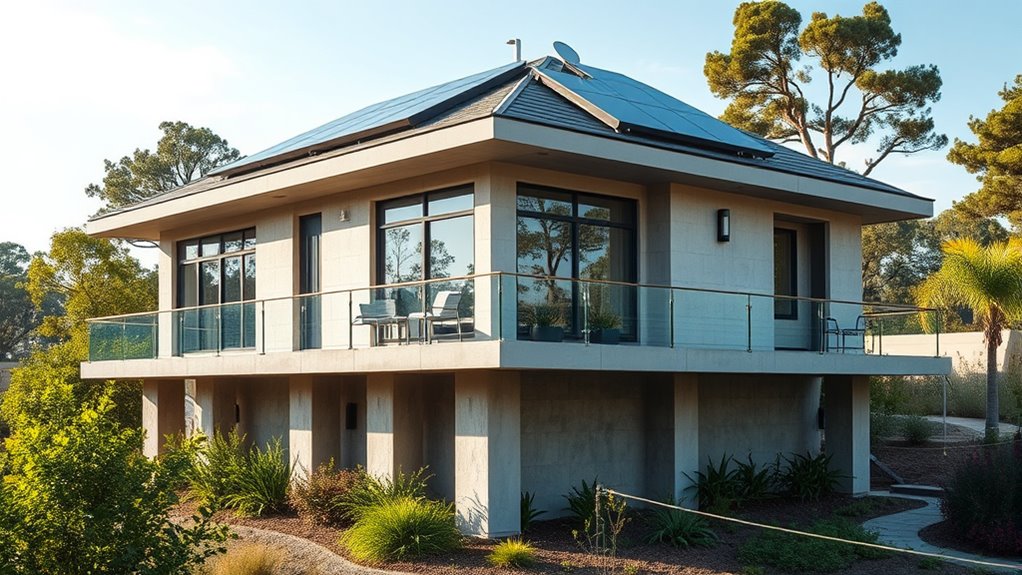
Regular maintenance and timely upgrades are essential to keeping your home’s resilient infrastructure effective over the years. You should regularly inspect key systems and components to identify wear and potential issues early. Prioritize these actions:
- Schedule routine inspections of structural elements and utilities.
- Replace or repair parts showing signs of deterioration.
- Upgrade systems to incorporate new technologies or standards.
- Keep detailed records of maintenance activities and upgrades.
Frequently Asked Questions
How Do Local Climate Conditions Influence Resilient Home Design Choices?
Local climate conditions directly shape your home design choices. For hot, humid areas, you’ll want features like good ventilation, shaded windows, and moisture-resistant materials. In colder regions, insulation, double-glazed windows, and sturdy roofing prevent heat loss. If you’re in a hurricane zone, reinforced structures and impact-resistant windows are essential. Understanding your climate helps you select materials and features that protect your home and keep it comfortable year-round.
What Are the Cost Implications of Implementing Resilient Infrastructure?
Implementing resilient infrastructure is like planting a sturdy tree; it costs more upfront but pays off with fewer repairs and lower maintenance over time. You’ll face higher initial investments for durable materials and advanced systems, yet these costs are offset by savings on repairs and energy efficiency. While it requires a bigger wallet now, your home becomes a fortress that withstands storms and saves you money in the long run.
How Can Homeowners Balance Resilience With Aesthetic Appeal?
You can balance resilience with aesthetic appeal by choosing durable, visually pleasing materials and integrating them into your home’s design. Opt for stylish, impact-resistant windows or sleek, weather-resistant roofing that enhances your home’s look. Incorporate resilient features subtly, like decorative storm shutters or elegant landscaping that doubles as windbreaks. Prioritize customization to match your style while ensuring your home remains protected during adverse conditions.
What Training Is Needed for Proper Maintenance of Resilient Systems?
Did you know that proper maintenance can extend the lifespan of resilient systems by up to 50%? To keep your systems in top shape, you should undertake specialized training in areas like electrical safety, stormwater management, and HVAC maintenance. Many manufacturers offer certification courses, and local workshops can also provide hands-on skills. Regular inspections, understanding system manuals, and staying updated on best practices are essential for effective maintenance.
Are There Building Codes Specifically Addressing Resilience in Vulnerable Areas?
Yes, building codes in vulnerable areas often include specific requirements for resilience. You should check local codes for provisions on wind resistance, floodproofing, seismic safety, and storm preparedness. These regulations aim to enhance your home’s ability to withstand natural disasters. By complying with these codes, you help guarantee your home’s safety and durability, reducing damage and protecting your investment during extreme weather events or other hazards.
Conclusion
Building resilient home infrastructure is like tending a garden—you need to nurture it continuously to withstand storms. By evaluating risks, choosing durable materials, and integrating smart, adaptive features, you create a sanctuary that stands strong against nature’s challenges. Regular maintenance and upgrades keep your home resilient over time. Stay proactive, and your home will be a steady fortress, weathering any storm that comes its way, standing tall and secure for years to come.