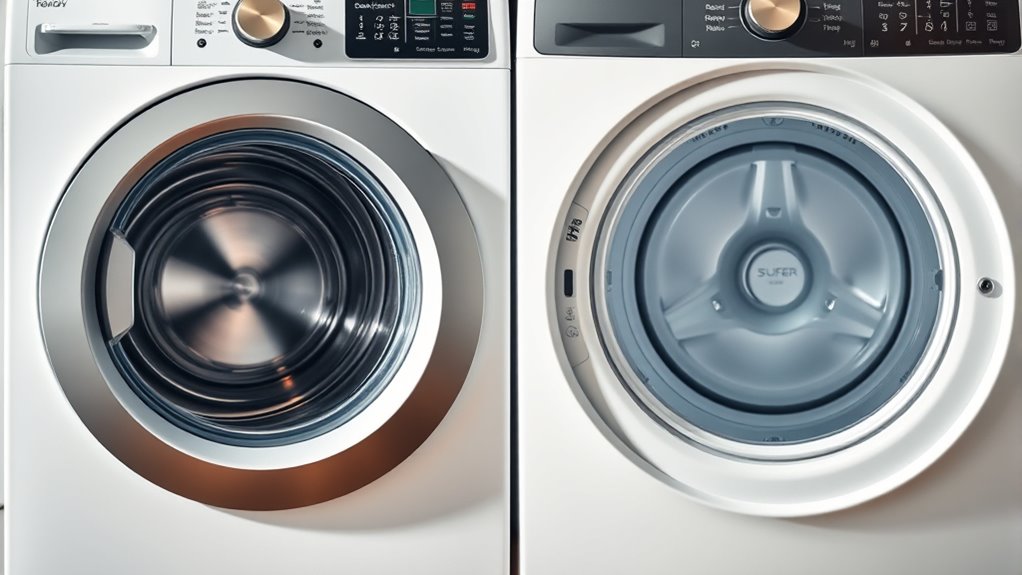
To deep clean your washing machine, you’ll find differences between front-load and top-load models. Front-load machines are prone to mold in the door seal and need regular cleaning of the gasket, drum, and drainage system. Top-load machines usually accumulate detergent residues in the drum and pump filter, requiring periodic hot-water cycles with vinegar or bleach. Maintaining both types prevents odors and buildup—stay with us to learn more tips for effective cleaning and freshness.
Key Takeaways
- Front-load washers are more prone to mold buildup around the door seal, requiring thorough gasket cleaning.
- Top-load machines typically have fewer mold issues but need attention to the drum, agitator, and pump filter.
- Both models benefit from monthly deep cleaning cycles with hot water, vinegar, or commercial cleaners.
- Front-loads need gasket wiping after each wash to prevent mold and soap scum accumulation.
- Regular maintenance extends lifespan, improves performance, and keeps both types odor-free and hygienic.
Over time, your washing machine can accumulate dirt, soap scum, and unpleasant odors that regular cleaning might not remove. Left unchecked, detergent residue can build up inside the drum and hoses, leading to a dingy appearance and compromised cleaning performance. Additionally, mold buildup becomes a serious concern, especially in areas with high humidity or poor ventilation. These issues not only make your laundry smell bad but can also cause skin irritation or allergic reactions. To keep your machine running efficiently and smelling fresh, a deep clean is vital.
When it comes to deep cleaning, the approach varies considerably between front-load and top-load washing machines. Front-load models tend to be more prone to mold buildup around the door seal, which is often hidden but can harbor mold and mildew if not cleaned regularly. The rubber gasket around the door traps moisture, soap scum, and detergent residue, creating an ideal environment for mold growth. To combat this, you should wipe down the gasket thoroughly after each wash and run a cleaning cycle with a commercial washing machine cleaner or a mixture of white vinegar and baking soda. Running an empty hot water cycle with these cleaners helps break down detergent residue and remove mold spores, keeping the drum and seals sanitary. Regular maintenance also helps prevent detergent residue buildup, which is essential for optimal performance.
Top-load washing machines, on the other hand, typically have fewer issues with mold around the lid or in hard-to-reach areas since their lids are usually open and allow better airflow. However, they are not immune to detergent residue buildup at the bottom of the drum or in the pump filter, which can cause odors and reduce efficiency. Regularly running a hot water cycle with a cup of bleach or vinegar helps dissolve detergent residue and eliminate mold spores. It’s also wise to clean the agitator and drain pump filter periodically to prevent buildup and odors.
Both types benefit from a monthly deep clean to prevent detergent residue and mold buildup. For front-load machines, pay special attention to the door gasket and seal, making sure to wipe away any mold or soap scum. For top-loads, focus on the drum, agitator, and filter. No matter your model, leaving the lid or door slightly open after washes encourages air circulation, reducing moisture and preventing mold growth. Maintaining a consistent cleaning schedule will ensure your washing machine stays fresh, odor-free, and functions efficiently for years to come.

ACTIVE Mold Stain Remover Gel Cleaner Heavy Duty Stain Cleaner for Front Loader Washing Machine Seal, Bathroom Grout, Shower, Caulk – Front Load Washer Cleaning Solution – 7 Fl Oz
Fast and Effective: ACTIVE Seal & Grout Stain Remover is a Powerful Whitening Deep Cleaner. Mildew Stain Remover…
As an affiliate, we earn on qualifying purchases.
As an affiliate, we earn on qualifying purchases.
Frequently Asked Questions
How Often Should I Deep Clean My Washing Machine?
You should deep clean your washing machine every 1 to 3 months to prevent detergent buildup and mold. Regular deep cleaning helps keep your appliance fresh, guarantees peak performance, and extends its lifespan. For front-load washers, focus on sealing areas, while top-load models benefit from cleaning the drum and agitator. Consistent maintenance prevents odors, keeps mold at bay, and guarantees your clothes come out fresh and clean every time.
Can I Use Natural Cleaning Agents for Deep Cleaning?
Yes, you can use natural cleaners and eco-friendly solutions for deep cleaning your washing machine. Vinegar and baking soda are popular choices that effectively remove soap scum, mold, and odors without harsh chemicals. Simply run a hot cycle with vinegar or baking soda to refresh your machine. These natural cleaners are safe, affordable, and environmentally friendly, making them a great option for maintaining your washer’s cleanliness.
Is It Necessary to Disconnect the Washer During Deep Cleaning?
Think of your washing machine as a delicate dance partner that needs a break after every routine. You should disconnect it during deep cleaning to guarantee electrical safety and prevent accidents. This step also helps with water drainage, avoiding leaks or spills. By unplugging, you protect yourself and your appliance, allowing a thorough clean without risking electrical mishaps or water damage, making the process safer and more effective.
What Are Signs My Washer Needs a Deep Clean?
You’ll notice your washer needs a deep clean if it has persistent odors or if detergent buildup causes soap scum and residue. If clothes start smelling musty or if you see mold around the door seal, it’s time to clean. Additionally, if your laundry isn’t coming out fresh despite regular washing, a deep clean helps with odor elimination and removes buildup, ensuring your machine functions efficiently and smells fresh.
Are There Differences in Cleaning Techniques for Newer Models?
Yes, newer models often have advanced features that influence your cleaning techniques. You should use specialized cleaning cycles designed for these appliances, as they optimize cleaning with built-in sensors and higher temperatures. Follow manufacturer instructions, and consider running a deep clean cycle periodically. These features help maintain your washer’s performance and hygiene, making it easier to keep your machine fresh without extra effort.

Affresh Washing Machine Cleaner, Helps Power Away Odor Causing Bacteria & Grime Deep Inside Pump, Valve & Hoses, 6 Time Release Tablets, 6 Month Supply
Suitable for various washers: front, top, and HE machines
As an affiliate, we earn on qualifying purchases.
As an affiliate, we earn on qualifying purchases.
Conclusion
Now that you know the differences between front-load and top-load washers, it’s clear how essential a deep clean is to keep your machine running smoothly. Think of it like maintaining your trusty steed—regular care prevents breakdowns and keeps things fresh. So, roll up your sleeves, channel your inner medieval knight, and give your washer the royal treatment it deserves. After all, even in a modern world, a clean machine is truly timeless.

Washing Machine Cleaner Descaler 24 Pack – Deep Cleaning Tablets For HE Front Loader & Top Load Washer, Septic Safe Eco-Friendly Deodorizer, Clean Inside Drum and Laundry Tub Seal – 12 Month Supply
Works With All Washers – Perfect For High Efficiency Or Standard Toploader, Front Loading Compatible With GE, LG,…
As an affiliate, we earn on qualifying purchases.
As an affiliate, we earn on qualifying purchases.

20PCS Washing Machine Water Filter, Diameter 2CM/0.79Inch Washing Machine Filter, Washer Water Inlet Valve Filter-Screen, Washing-Machine Hose-Filter, Washing-Machine Replacement Repair Kit
【Effective Filtering】This washing machine water filter is designed with a fine filter mesh to effectively capture debris, prevent…
As an affiliate, we earn on qualifying purchases.
As an affiliate, we earn on qualifying purchases.