Acting within the first five minutes after a spill is key to saving your fabrics from permanent stains. Blot the liquid gently to absorb it—don’t rub, which can push the stain deeper. Rinse with cold water from the back to loosen the spill. Using household items like vinegar, baking soda, or dish soap can boost your efforts. For more helpful tips on quick stain fixes and fabric care, keep exploring these simple yet effective techniques.
Key Takeaways
- Act immediately after a spill; prompt response prevents stains from setting into fibers.
- Gently blot the stain with a clean cloth or paper towel to absorb excess liquid without rubbing.
- Rinse the affected area with cold water from the back to loosen and flush out the stain.
- Use natural household agents like vinegar, baking soda, or dish soap for quick, effective treatment.
- Avoid delay; early intervention significantly increases the chances of complete stain removal and fabric preservation.
Why Timing Matters in Stain Removal
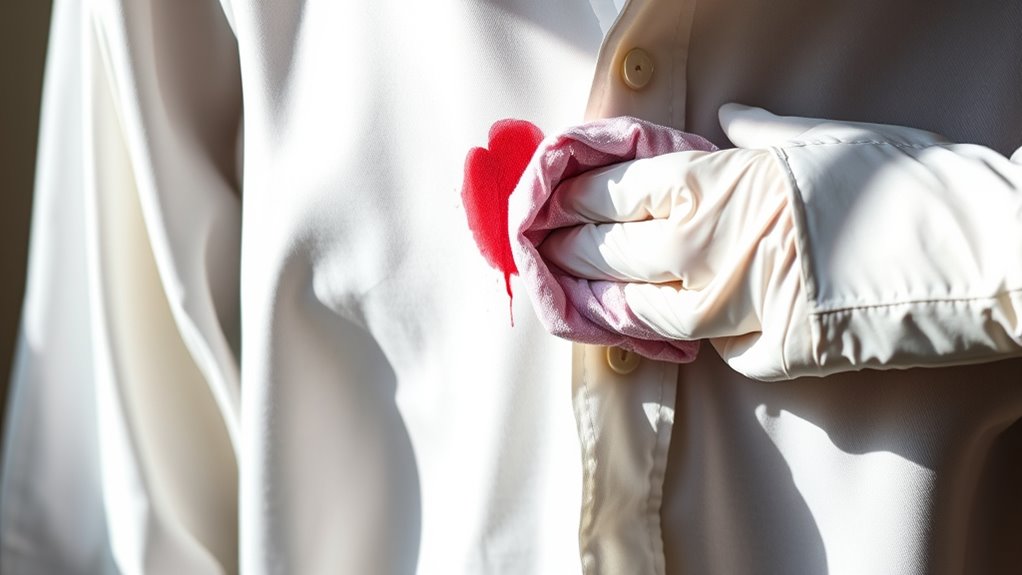
Timing is crucial when it comes to removing stains because the sooner you act, the easier it is to lift the stain completely. When a spill happens, the stain starts setting into the fabric almost immediately. If you delay, the stain can bond with fibers, making it much harder to remove. Quick action prevents the stain from penetrating deeply or drying out, which complicates removal efforts. The longer a stain sits, the more it becomes embedded, requiring stronger chemicals or professional cleaning. Acting promptly keeps cleanup simple and effective. Remember, timely intervention preserves the fabric’s appearance and extends its life. So, whenever a spill occurs, don’t wait—immediate action is your best defense against stubborn stains. Modern kitchen technology can even assist with stain detection and treatment, making prompt response easier. Additionally, understanding home textile properties can help you choose the most appropriate cleaning method for different fabrics. Knowing how fabric composition influences stain removal can further improve your chances of success. Implementing stain removal techniques quickly can also minimize the need for harsh chemicals and reduce damage to delicate fabrics. Being aware of cleaning appliance features can help you select the right tools to tackle stains efficiently.
Immediate Steps to Take After a Spill
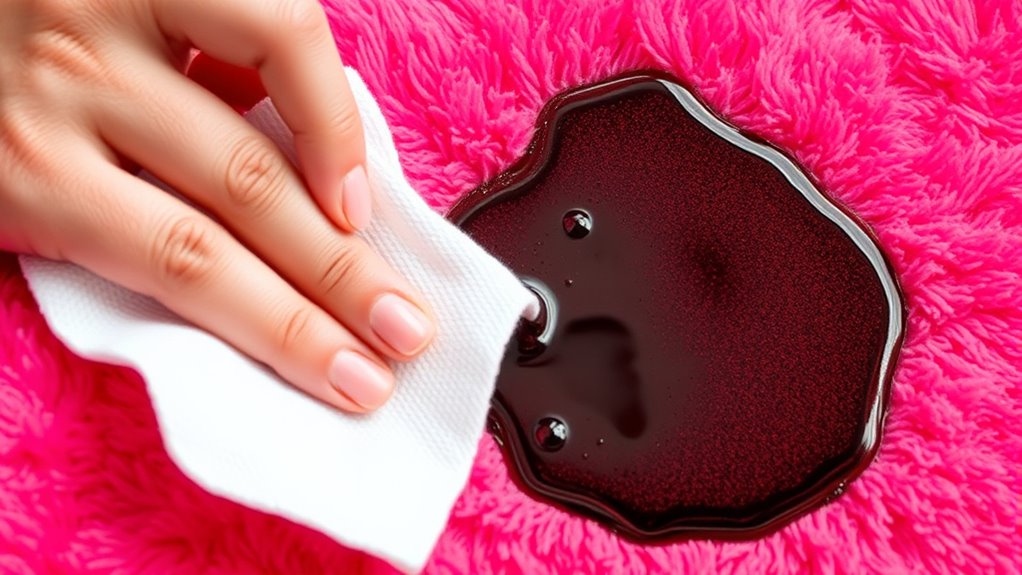
When a spill happens, act quickly and don’t delay. Blot the area gently to remove excess liquid, but avoid rubbing, which can spread the stain. Taking these immediate steps helps prevent the stain from setting, making it easier to clean later. Additionally, using essential oils for stain removal may provide natural assistance in breaking down certain types of stains. Ensuring proper air purifier maintenance can also help remove airborne particles that might cause additional staining or odors. Incorporating auditory processing techniques in your cleaning routine may also improve your ability to detect and address stubborn stains early, especially when combined with professional services offered to ensure thorough cleaning.
Act Quickly, Don’t Delay
The moment a spill occurs, quick action can prevent stains from setting and becoming much harder to remove. As soon as you notice the spill, grab a clean cloth or paper towel and gently blot the area. Avoid rubbing, which can push the stain deeper. If possible, run cold water over the fabric from the back side of the stain to flush out as much of the substance as you can. The sooner you act, the better your chances of easy removal later. Don’t wait until the stain dries or sets; delaying allows the stain to bond with the fabric fibers, making it more stubborn and difficult to lift. Acting immediately keeps your options open and gives you a much higher chance of saving your clothes. Additionally, understanding stain removal basics can help you choose the most effective method for different types of stains.
Blot, Avoid Rubbing
Immediately after a spill, it’s essential to blot the area rather than rub it. Rubbing pushes the stain deeper and can damage fibers. Instead, gently press a clean cloth or paper towel onto the spill to absorb as much liquid as possible. Patting helps lift the stain without spreading it. Here’s a visual to guide you:
| Action | Tool Needed | Result |
|---|---|---|
| Blot gently | Clean cloth or paper towel | Removes excess liquid |
| Avoid rubbing | – | Prevents spreading stain |
| Continue blotting | Fresh cloth if needed | Keeps fabric intact |
Focus on patience and light pressure. This approach preserves your fabric and sets the stage for effective stain removal.
Common Household Solutions for Fresh Stains
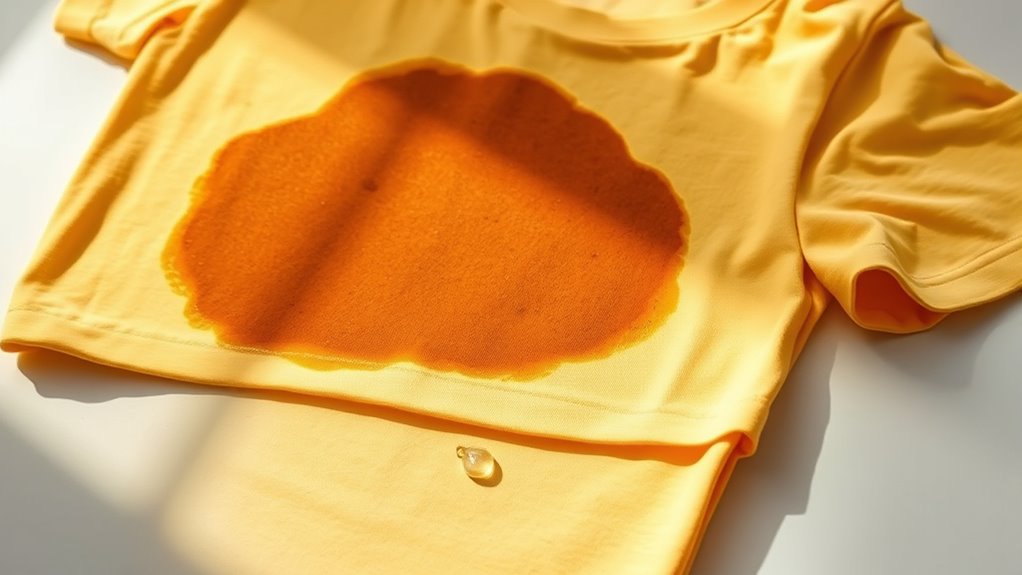
When a stain is fresh, acting quickly can make all the difference. You can often use simple techniques like blotting or rinsing to prevent it from setting. Natural cleaning agents like vinegar or baking soda are effective, inexpensive options you probably already have at home. Incorporating saline solution or saline spray into your cleaning routine can also help loosen stubborn stains and promote overall fabric health. Using household cleaning solutions smartly can further enhance stain removal efforts without damaging delicate fabrics. Additionally, understanding Free Floating stain behavior can help you apply the most effective removal techniques tailored to different fabric types. Being aware of ventilation considerations can also help prevent mold or odor issues that sometimes accompany stain treatments.
Immediate Action Techniques
Act quickly when a stain occurs, as prompt action can prevent it from setting and becoming much harder to remove. The first step is to blot the stain gently with a clean cloth or paper towel to absorb excess liquid. Avoid rubbing, which can spread the stain or push it deeper. Rinse the fabric with cold water if possible, then apply a household solution like dish soap, vinegar, or baking soda paste directly to the stain. Let it sit for a few minutes before blotting or rinsing again. Use the table below to choose the right immediate action based on the stain type:
| Stain Type | Immediate Action | Household Solution |
|---|---|---|
| Food & Beverages | Blot, rinse with cold water | Dish soap or vinegar solution |
| Oil & Grease | Blot, sprinkle baking soda | Baking soda paste |
| Protein & Blood | Blot, rinse with cold water, treat quickly | Cold water and dish soap |
Natural Cleaning Agents
Natural cleaning agents are effective and affordable options for tackling fresh stains right at home. You can often use common household items like baking soda, white vinegar, lemon juice, or salt. For example, sprinkle salt on a red wine spill to absorb the liquid, then blot it gently. White vinegar mixed with water works well on odors and protein stains like sweat or blood. Lemon juice acts as a natural bleach for white fabrics, but test first to avoid discoloration. Baking soda can lift grease and neutralize odors when applied directly and left to sit briefly. These natural agents are gentle yet powerful, making them perfect first-line options before resorting to chemical stain removers. Incorporating natural stain-fighting agents can also help monitor your overall wellness, including managing skin and fabric health through smart cleaning routines. Understanding fabric types can help you choose the most suitable natural cleaning method for each material. Recognizing the benefits of eco-friendly cleaning solutions promotes a sustainable approach to laundry care. Using these agents consistently can also extend the lifespan of your garments by reducing the wear caused by harsher chemicals. Keep these staples handy for quick, eco-friendly stain treatments.
Do’s and Don’ts for Different Fabric Types
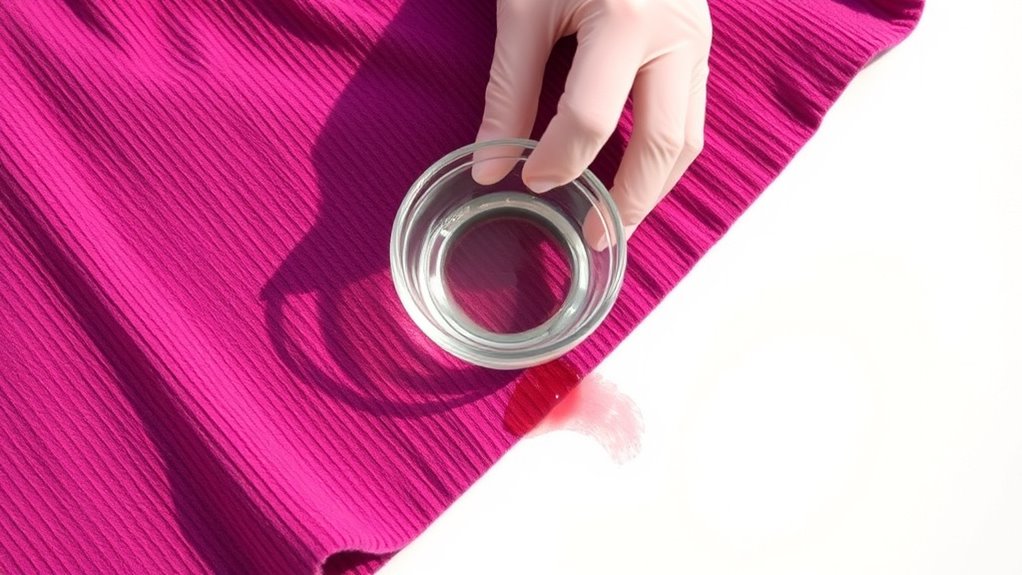
Different fabric types require specific stain removal approaches to prevent damage and guarantee effective cleaning. For delicate fabrics like silk or wool, avoid harsh chemicals and abrasive scrubbing, as these can weaken fibers or cause discoloration. Instead, gently blot the stain with a mild solution and always test spot treatments first. Cotton and linen are more resilient, so you can use slightly stronger cleaning agents, but still avoid bleach on colored fabrics to prevent fading. Synthetic fabrics like polyester are usually durable but can melt or warp if exposed to high heat, so skip hot water and high-temperature drying. Always read care labels before treating, and when in doubt, opt for gentle methods to protect your fabrics while effectively removing stains.
Tricks for Stubborn Stains That Don’t Budge

When faced with stubborn stains that refuse to come out, patience and the right techniques make all the difference. Start by gently blotting, not rubbing, to avoid spreading the stain. Apply a pre-treatment solution or a mixture of dish soap and water directly to the stain. Let it sit for a few minutes before washing. For tougher stains, consider using a stain remover with enzymes or oxygen-based bleach, but always test first. Remember, some stains require multiple treatments.
| Effective Technique | Purpose |
|---|---|
| Blotting | Prevents spreading and pushes out stain |
| Pre-treatment | Loosens ingrained stain |
| Gentle agitation | Breaks down stubborn residue |
| Repeating process | Ensures complete stain removal |
When to Seek Professional Help
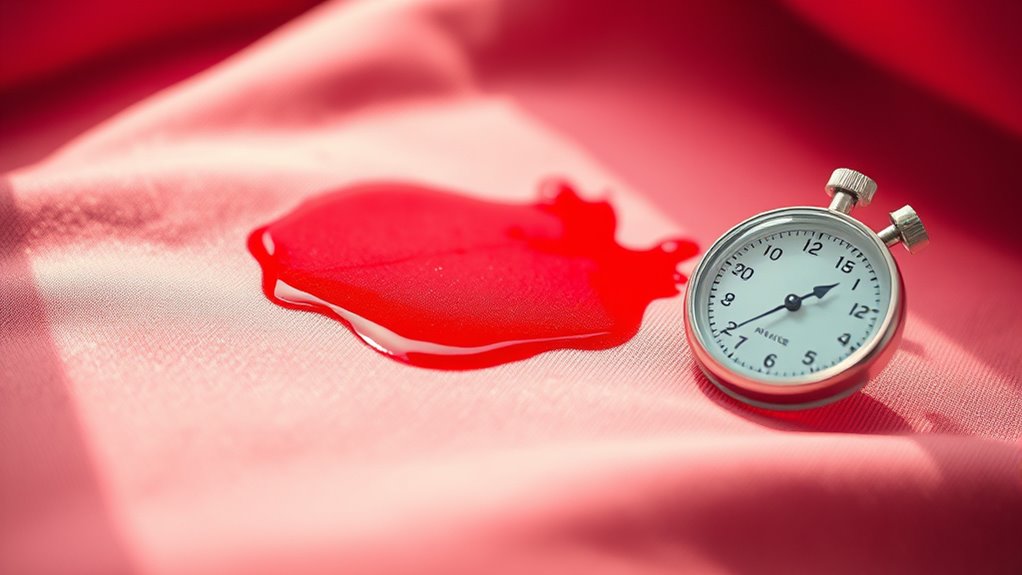
Sometimes, stubborn stains resist even your best efforts, making it clear that professional help is necessary. If a stain remains after multiple treatments or seems to set deeper into the fabric, don’t keep scrubbing blindly. Delaying professional help can sometimes worsen the damage or make the stain impossible to remove. Also, if you’re dealing with delicate fabrics like silk, wool, or vintage items, it’s best to consult a specialist to avoid accidental damage. When the stain covers a large area or involves substances like ink, grease, or dye, a professional cleaner has the tools and expertise to handle it safely. Recognizing these signs ensures your fabrics are treated properly and preserved, saving you frustration and potential loss. Proper stain removal techniques can also help prevent damage to the fabric’s integrity over time, especially when combined with quality assurance practices that ensure effective cleaning. Additionally, understanding professional cleaning options can help maintain the fabric’s appearance and longevity. Being aware of specialized cleaning methods can further prevent irreversible damage and extend the life of your garments.
Tips for Preventing Future Stains

To keep stains from becoming a persistent problem, taking proactive steps can make a big difference. Always treat spills immediately; blot, don’t rub, to prevent the stain from setting. Use protective sprays on fabrics prone to stains, like upholstery or clothing, especially before exposure to potential messes. When cooking or eating, wear aprons or old clothes, and be cautious around liquids and oils. Keep stain-prone items separate and wash them promptly to avoid set-in stains. Regularly inspect and maintain your laundry tools—clean your washing machine and filters—to ensure effective cleaning. Educate yourself about the types of stains that are tricky and how to handle them. Small habits like these can save you time, effort, and keep your fabrics looking newer longer.
Frequently Asked Questions
Can Using Hot Water Set Certain Stains Permanently?
Yes, using hot water can set certain stains permanently, especially protein-based ones like blood or sweat. When you apply hot water directly to these stains, it can cause the stain to bond more tightly with the fabric fibers. To avoid this, always test the stain first and use cold or lukewarm water for initial treatment, especially with delicate or protein stains, to prevent setting them permanently.
Are Homemade Stain Removers Safe for All Fabric Colors?
Think of homemade stain removers as a double-edged sword—they can be gentle or harsh depending on the recipe. Generally, they’re safe for most fabric colors if you stick to mild ingredients like baking soda, vinegar, or dish soap. However, always do a patch test on a hidden area first. Some homemade solutions might cause colors to fade or bleed, so proceed with caution and patience for best results.
How Do Age and Type of Stain Affect Removal Success?
Older stains tend to be more challenging because they set deeper into the fibers, making removal harder. Fresh stains are easier to lift, especially if you act quickly. The type of stain also matters—oil, protein, or tannin stains require different treatments. You’ll have better success if you identify the stain early and choose the appropriate method, as waiting or using the wrong approach can set the stain permanently.
Is It Better to Blot or Rub When Treating a Stain?
You should blot rather than rub when treating a stain. Blotting gently lifts the stain without spreading it or damaging the fabric fibers. Rubbing can push the stain deeper and cause fraying or fading. Use a clean cloth or paper towel to absorb the stain, working from the outside in. This careful approach keeps your fabric intact and increases the chances of successful stain removal.
Can Repeated Washing Damage Delicate Fabrics Over Time?
Repeated washing can be as brutal as a hurricane on delicate fabrics, slowly wearing them down over time. You might not notice it after one wash, but the fibers weaken with each cycle, causing fading, fraying, or even tears. To protect your delicate clothes, wash them gently, use mild detergents, and avoid excessive scrubbing. This way, your favorite pieces stay vibrant and intact for years to come.
Conclusion
Remember, acting quickly is your secret weapon—think of it as wielding a magic wand like Cinderella’s fairy godmother. The 5-minute rule can save your fabrics from becoming lost treasures in the attic of stains. So, stay vigilant and don’t let stains turn your wardrobe into a modern-day Midas touch gone wrong. With these simple steps, you’ll keep your clothes looking fresh and vibrant, proving that a swift response truly can work wonders—just like a fairy tale ending.