
If pet hair is taking over your home, try using the 3-zone strategy for better control. Divide your space into high-traffic areas, pet sleeping zones, and less-used spots. Target each with specific cleaning tools like HEPA vacuums, microfiber cloths, and washable covers. Routine grooming and barriers also help keep hair contained. Want to learn how to implement these tips effectively and keep your home pet-hair free? Keep going for more expert advice.
Key Takeaways
- Dividing your home into high, moderate, and low-traffic zones allows targeted cleaning, reducing pet hair buildup efficiently.
- Regular vacuuming and grooming tailored to each zone help prevent loose hair from settling or spreading.
- Using barriers like washable covers and door mats contains pet hair within designated areas, minimizing overall spread.
- Implementing zone-specific tools such as HEPA vacuums and microfiber dusters enhances cleaning effectiveness.
- Consistent maintenance, including washing bedding and grooming pets, keeps pet hair levels manageable year-round.
Understanding the 3-Zone Concept for Pet Hair Management
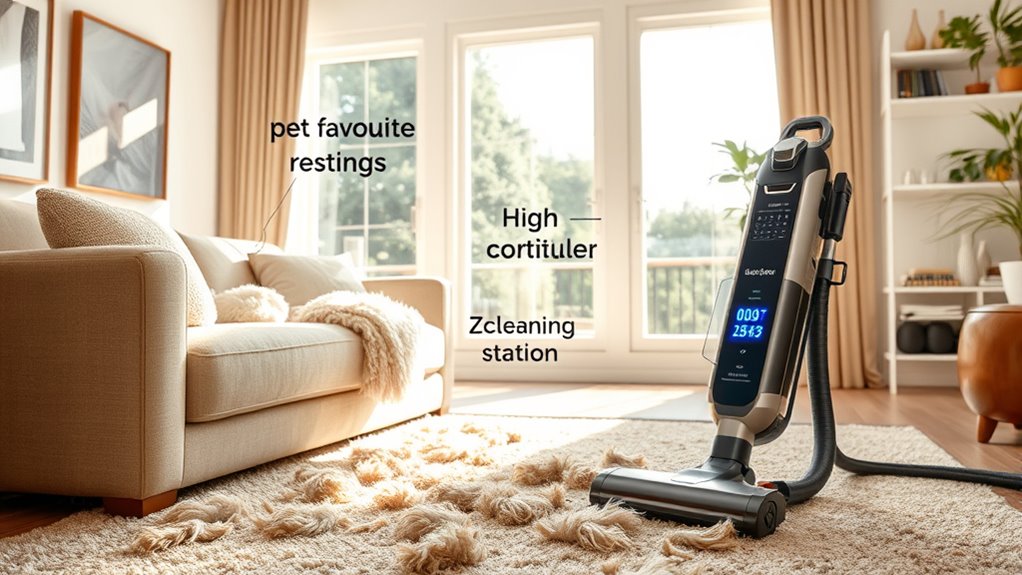
To effectively manage pet hair, understanding the 3-Zone Concept is essential. This approach helps you organize your cleaning efforts by dividing your home into three specific areas based on pet activity levels and hair accumulation. The idea is to target each zone with tailored cleaning strategies, making your routine more efficient. Zone 1 covers high-traffic areas where pet hair tends to gather quickly, while Zone 2 includes spaces with moderate pet activity. Zone 3 involves areas with minimal pet contact, needing less frequent cleaning. Recognizing these zones allows you to prioritize cleaning tasks, prevent hair buildup, and maintain a cleaner, hair-free environment. Consistent cleaning routines play a vital role in maintaining the effectiveness of this system and reducing pet hair accumulation over time. Additionally, integrating natural cleaning methods can further reduce pet hair and allergens in your home. Developing a focused cleaning plan tailored to each zone ensures that you stay on top of pet hair removal and keep your living space comfortable. Regularly inspecting your cluttered areas can also help identify hidden hair hotspots that need extra attention. Moreover, understanding the behavior patterns of your pets can help anticipate where hair might accumulate the most.
Zone 1: High-Traffic Areas and Main Living Spaces
Ever wonder why your pet’s hair seems to accumulate so quickly in certain areas? It’s usually because these spots are high-traffic zones where your pet spends a lot of time. To keep them cleaner, focus on maintaining these areas regularly. Here are three tips:
High-traffic pet areas need regular cleaning to reduce hair buildup and keep your home tidy.
- Frequent vacuuming to catch loose hair before it settles, especially using tools designed for pet hair removal.
- Designate specific mats or rugs where your pet spends time, making hair cleanup easier.
- Use lint rollers or brush tools daily on furniture and upholstery to reduce hair buildup.
- Regularly evaluate the lifecycle and performance metrics of your cleaning tools to ensure optimal effectiveness.
- Consider investing in air purifiers to help reduce airborne pet hair and dander in your living spaces.
Zone 2: Pet Sleeping and Playing Zones
Pet sleeping and playing areas tend to gather a lot of pet hair because your furry friend spends significant time there. Since your pet relaxes and plays in these zones, hair naturally sheds onto beds, cushions, and toys. To manage this, designate specific zones for sleeping and play, making cleanup easier. Regularly vacuum or shake out bedding and toys to remove loose hair. Using washable covers on pet beds allows for quick laundering, reducing hair buildup. Encourage your pet to stay within these designated areas by providing comfortable, inviting spaces. Groom your pet frequently to minimize shedding in these zones. Keeping these areas tidy not only reduces pet hair spread but also creates a cleaner, more comfortable environment for both you and your pet. Incorporating effective cleaning tools can further streamline hair removal and maintenance efforts. Additionally, utilizing pet-specific vacuums can significantly reduce hair accumulation and simplify cleanup. Regular grooming combined with long-lasting pet hair removers can help keep these zones even cleaner over time. Being mindful of hair shedding patterns can also help you better anticipate and manage hair in these high-traffic areas.
Zone 3: Less-Frequented or Storage Areas
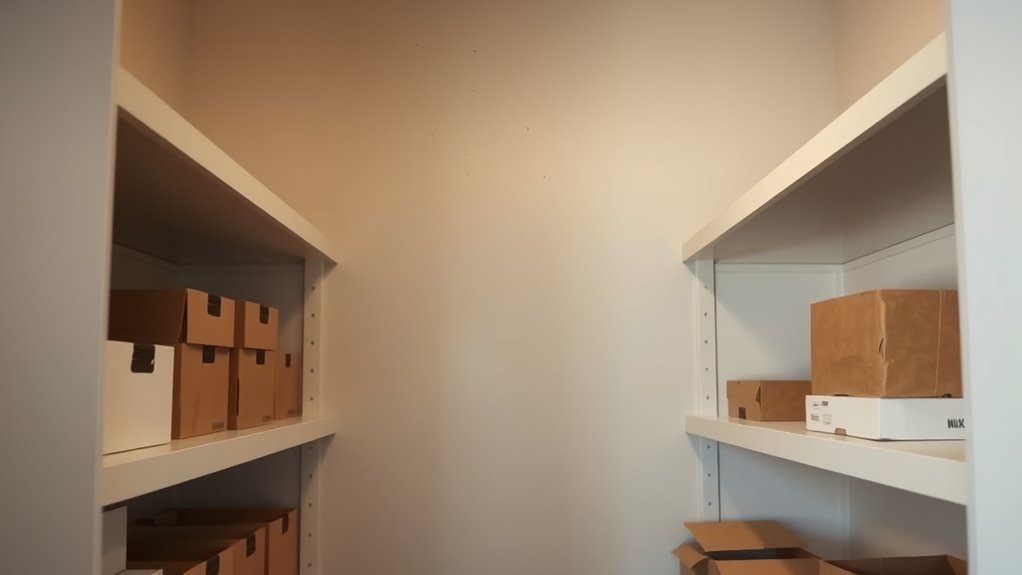
Since less-frequented or storage areas are used less often, dust and pet hair tend to accumulate unnoticed, creating hidden buildup over time. To keep these spaces clean, focus on targeted maintenance. First, regularly dust shelves, corners, and hidden surfaces with a microfiber cloth or dusting tool. Second, vacuum storage closets, basements, and attics using a high-suction vacuum equipped with a brush attachment to pick up pet hair effectively. Third, declutter these areas periodically to minimize surfaces where pet hair can settle and to make cleaning easier. Additionally, air circulation in these spaces can help reduce dust and pet hair buildup by preventing stagnation. Improving air flow through vents or fans can significantly decrease the amount of pet hair and dust that settles in these areas. Regularly inspecting and maintaining ventilation systems also ensures consistent airflow and reduces allergen buildup. Incorporating air filtration systems into these zones can further improve air quality and help trap airborne pet hair particles. Enhancing air quality in these areas promotes a healthier environment by reducing allergens and pet hair particles. By paying attention to these hidden spots, you prevent pet hair from becoming a silent, stubborn problem. Regular upkeep in storage zones helps keep your entire home cleaner and pet hair-free, even in the least frequented spaces.
Selecting the Right Tools for Each Zone
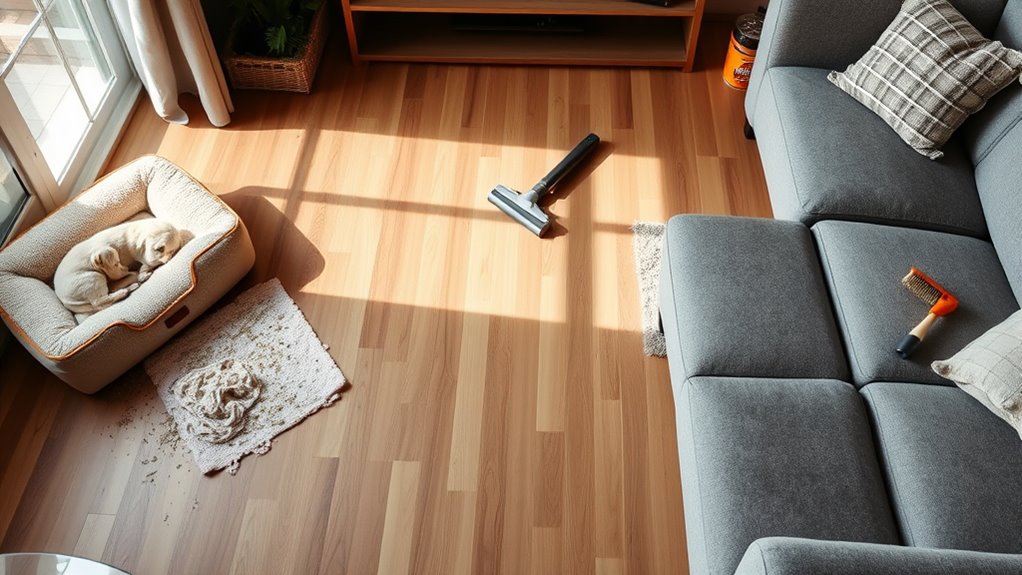
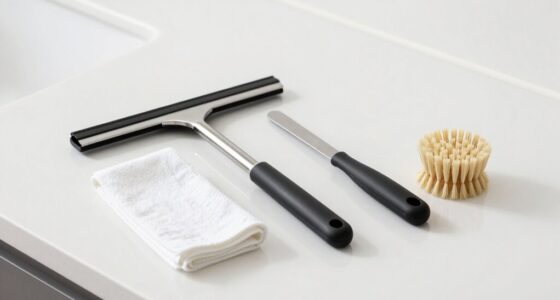
Choosing the right tools for each zone makes pet hair removal more effective and easier. In high-traffic areas like the living room, use a rubber-bristled broom or a lint roller to quickly pick up hair from carpets and furniture. For your bedrooms and closets, a handheld vacuum with a brush attachment works well on bedding and fabric surfaces. Storage and less-frequented zones benefit from a microfiber cloth or dust mop that can trap hair without scattering it. For tight spaces, such as corners or vents, a small upholstery brush or a crevice tool helps dislodge hair from hard-to-reach spots. Selecting tools tailored to each zone ensures thorough cleaning and saves you time and effort, making pet hair management less of a chore. Incorporating the right vacuum attachments can further enhance your cleaning efficiency and help tackle pet hair more effectively. Additionally, using tools designed for fabrics and upholstery can prevent damage and improve hair removal on delicate surfaces, which aligns with the importance of luxurious fabrics in premium cleaning tools. Understanding the different zones in your home allows you to customize your cleaning approach for maximum effectiveness.
Daily Habits to Minimize Pet Hair Spread
Implementing daily habits can substantially reduce the spread of pet hair throughout your home. Start by establishing a quick daily grooming routine, such as brushing your pet’s coat, to remove loose hair before it sheds everywhere. Next, incorporate these habits:
- Vacuum high-traffic areas daily to catch hair before it settles.
- Wipe surfaces and furniture regularly with a damp cloth to pick up loose hair.
- Encourage your pet to stay off furniture by using designated zones or covers, making hair cleanup easier.
Deep Cleaning Techniques for Each Zone
Deep cleaning each zone in your home is essential for fully eliminating pet hair and dander. Start by vacuuming carpets, rugs, and upholstery thoroughly with a high-efficiency particulate air (HEPA) filter vacuum. Use a damp microfiber cloth to wipe down hard surfaces, including baseboards, furniture, and window sills, to pick up lingering hair. Don’t forget to clean under furniture and behind appliances where hair can hide. For floors, mop with a pet-safe cleaner to remove dirt and hair trapped in crevices. Pay special attention to areas your pet frequents, like pet beds and favorite spots. Regular deep cleaning keeps pet hair at bay and improves overall indoor air quality, making your home cleaner and healthier. Additionally, using specialized cleaning tools designed for pet hair can enhance your cleaning effectiveness. Incorporating air purifiers with HEPA filters can further reduce airborne pet dander and allergens, contributing to a healthier environment. Employing effective cleaning techniques ensures comprehensive removal of pet hair from all surfaces.
Using Coverings and Barriers to Reduce Hair Transfer
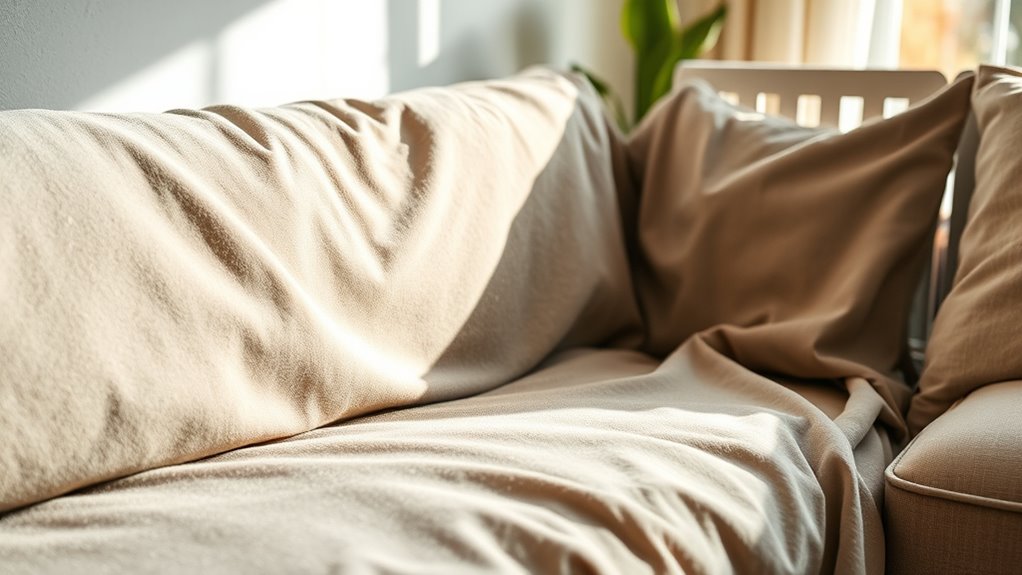
To effectively minimize pet hair transfer between rooms and onto your furniture, using coverings and barriers can make a significant difference. By creating physical boundaries, you prevent hair from spreading unnecessarily. Consider these options:
- Use slipcovers or washable throws on furniture to catch hair and make cleaning easier.
- Place door mats or pet barriers at entrances to limit hair from entering other areas.
- Cover vents or air return grilles with fine mesh to reduce airborne hair circulation.
These simple barriers help contain pet hair in designated zones, making cleanup more manageable. They also protect your furniture and floors from frequent hair buildup. Regularly washing and replacing covers ensures they stay effective, keeping your space cleaner and less hairy.
Maintenance and Regular Upkeep Strategies
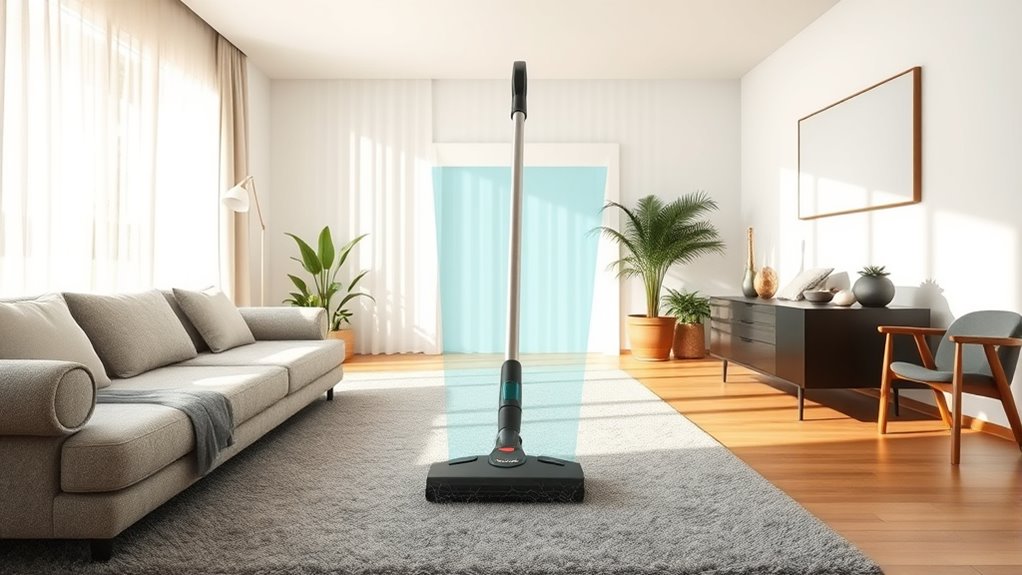
Regular maintenance is key to controlling pet hair buildup and keeping your home tidy. You should vacuum frequently, especially in high-traffic areas and on furniture, to remove hair before it settles. Use a vacuum with a HEPA filter to trap allergens and hair effectively. Regularly wash pet bedding, throws, and curtains to eliminate hair and dander. Consider using a handheld lint roller or sticky tape to quickly pick up hair on clothing and upholstery. Maintain your grooming routine by brushing your pet regularly; this reduces the amount of loose hair around the house. Additionally, inspecting and cleaning air filters helps prevent pet hair from circulating in your HVAC system. Consistent upkeep minimizes pet hair accumulation and makes cleaning less overwhelming over time.
Tips for Keeping Your Home Pet-Hair Free Year-Round
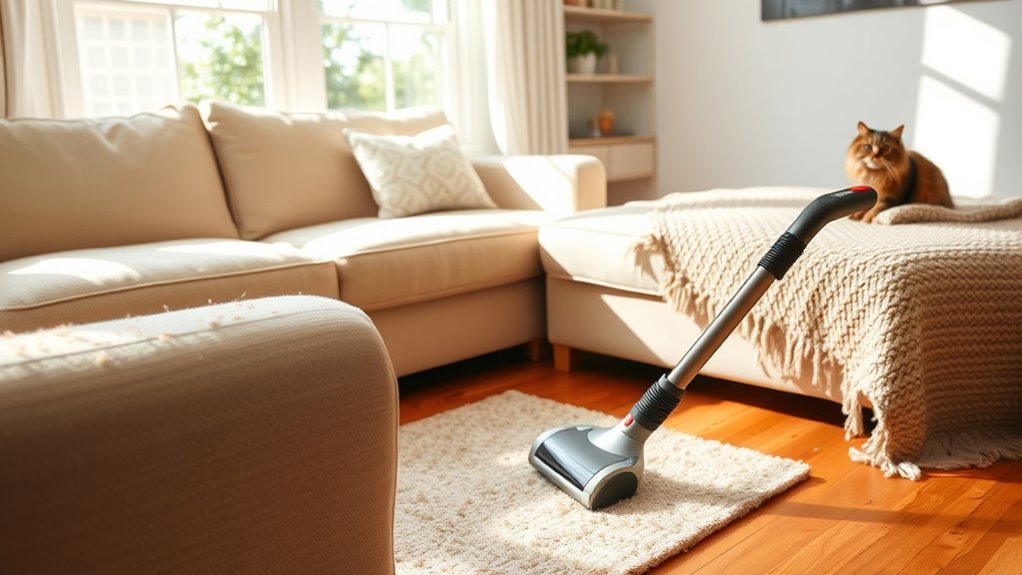
To keep pet hair under control all year, establish a regular grooming routine for your pets to reduce shedding. Use effective cleaning methods like vacuuming with a pet-friendly attachment and lint rollers to quickly pick up hair. Creating designated pet zones can also confine shedding to specific areas, making cleanup easier and more efficient.
Regular Grooming Routine
Maintaining a consistent grooming routine is one of the most effective ways to control pet hair around your home. Regular brushing reduces loose fur that would otherwise end up everywhere. Here are three tips to keep your pet well-groomed:
- Brush daily or several times a week, depending on your pet’s coat type, to remove loose hair before it sheds.
- Bathe your pet regularly to minimize shedding and keep their coat healthy.
- Trim your pet’s fur as needed, especially in areas prone to matting, to lessen hair breakage and shedding.
Sticking to these grooming habits minimizes the amount of pet hair that floats around your home, making cleaning easier and keeping your space cleaner and more comfortable for everyone.
Effective Cleaning Methods
Keeping pet hair under control requires more than just grooming; it’s essential to adopt effective cleaning methods that target hair in every corner of your home. Regular vacuuming with a high-efficiency filter is vital, especially for carpets and upholstery. Use lint rollers or adhesive tapes on furniture and clothing to quickly pick up stray hairs. Consider using microfiber cloths for dusting surfaces, as they trap hair better than traditional dusters. Also, wash bedding and cushion covers frequently to prevent build-up. Here’s a quick comparison:
| Method | Best For | Frequency |
|---|---|---|
| Vacuuming | Carpets, furniture | Weekly |
| Lint rollers | Clothing, furniture | Daily as needed |
| Washing textiles | Bedding, pet beds | Weekly or bi-weekly |
Consistent cleaning keeps pet hair at bay year-round.
Designated Pet Zones
Designated pet zones can markedly reduce pet hair spread throughout your home. By setting specific areas for your pet, you contain shedding and make cleaning easier. To optimize this strategy:
- Choose a comfortable, easily accessible spot for your pet’s bed and toys.
- Use washable mats or covers to protect furniture and floors.
- Encourage your pet to stay within these zones with positive reinforcement.
This focused approach minimizes hair transfer to other areas, simplifies vacuuming, and keeps your home tidier. Consistently maintaining these zones helps your pet develop habits that limit hair dispersal. Over time, you’ll notice less pet hair on furniture and floors, making daily cleaning less of a chore. Implementing designated pet zones is a simple yet effective way to keep your home pet-hair free all year round.
Frequently Asked Questions
How Often Should I Vacuum Each Zone to Control Pet Hair Effectively?
You should vacuum each zone at least two to three times a week to keep pet hair under control. High-traffic areas, like living rooms and entryways, may need daily attention. Use a vacuum with a strong brush and HEPA filter for best results. Regular cleaning prevents hair buildup, reduces allergens, and keeps your space fresh. Adjust your schedule based on your pet’s shedding habits and the amount of hair they leave behind.
Can Specific Flooring Types Reduce Pet Hair Accumulation?
Choosing the right flooring can considerably reduce pet hair buildup. Hardwood and tile floors don’t trap hair like carpets, making hair easier to clean and less likely to accumulate. Laminate and vinyl also resist hair collection better than plush carpets. By opting for these surfaces, you’ll find it easier to keep your home tidy, reducing the frequency and effort needed to manage pet hair.
Are There Hypoallergenic Solutions for Pet Hair Allergies?
Yes, you can find hypoallergenic solutions for pet hair allergies. Opt for air purifiers with HEPA filters to trap allergens, and choose furniture made from non-porous materials like leather or vinyl, which are easier to clean. Regularly vacuum with a high-efficiency vacuum cleaner, and wash bedding and curtains frequently. These steps help reduce pet hair and dander, alleviating allergy symptoms and creating a more comfortable living space.
How Do I Train Pets to Stay Out of Certain Zones?
You can train your pets to stay out of certain zones by using consistent boundaries and positive reinforcement. Start by designating specific areas as off-limits and use barriers like baby gates or closed doors to enforce this. Whenever your pet respects the boundary, reward them with treats or praise. Be patient and persistent, as it takes time for pets to learn new rules, and always use gentle, encouraging methods.
What Are Eco-Friendly Cleaning Products Suitable for Pet Hair Removal?
Imagine you’re a gardener tending to vibrant, blooming flowers. Eco-friendly cleaning products like castile soap, white vinegar, and baking soda are gentle yet effective for pet hair removal. You can mix castile soap with water for a natural spray, use white vinegar to break down pet dander, or sprinkle baking soda on upholstery before vacuuming. These options keep your home fresh without harming your furry friends or the environment.
Conclusion
By applying the 3-zone strategy, you create a clear map to conquer pet hair everywhere—like painting a clean canvas across your home. Focus your efforts on high-traffic areas, pet zones, and storage spots, using the right tools and techniques. Keep your home a hair-free haven year-round, transforming chaos into calm. With consistency, you’ll see pet hair vanish like shadows at dawn, leaving your space fresh, inviting, and truly yours.