To keep your laminate and vinyl floors in great shape, use less water during cleaning. Excess moisture can seep into seams and cause swelling, warping, or mold. Instead, opt for damp microfiber cloths or mops with gentle, pH-neutral cleaners, applying solutions sparingly. Avoid harsh chemicals and over-wetting, as these can damage the surface. Following this simple ‘less water’ rule helps prolong your floors’ lifespan and keeps them looking their best—discover how to do it properly.
Key Takeaways
- Use minimal water with damp microfiber mops to prevent moisture damage to laminate and vinyl floors.
- Excess water can seep into seams, causing swelling, warping, mold, and long-term damage.
- Choose gentle, pH-neutral cleaners and avoid harsh chemicals that can harm surface finishes.
- Properly prepare cleaning tools by wringing out excess water and working in small sections.
- Regular sweeping or vacuuming before damp mopping helps maintain cleanliness without over-wetting.

LEVOIT Air Purifiers for Home Large Room Up to 1875 Ft² with Washable Pre-Filter, AHAM VERIFIDE, Air Quality Monitor, HEPA Sleep Mode for Allergies, Pet Hair in Bedroom, Vital 200S-P, White
𝐖𝐇𝐘 𝐂𝐇𝐎𝐎𝐒𝐄 𝐀𝐇𝐀𝐌 𝐕𝐄𝐑𝐈𝐅𝐈𝐃𝐄 𝐏𝐑𝐎𝐃𝐔𝐂𝐓𝐒: AHAM (Association of Home Appliance Manufacturers) is an ANSI-accredited organization that sets strict...
As an affiliate, we earn on qualifying purchases.
Understanding the Composition of Laminate and Vinyl Floors
Understanding what makes up laminate and vinyl floors is essential for proper cleaning and maintenance. Laminate floors consist of a fiberboard core topped with a photographic layer that mimics wood or stone, sealed with a clear protective layer. Vinyl floors are made from synthetic materials, often PVC, with a wear layer that protects against scratches and stains. Both types are designed to be durable and resistant to everyday wear, but their compositions differ markedly. Laminate’s layered construction makes it sensitive to excess moisture, which can cause swelling or warping. Vinyl’s flexible, waterproof surface handles moisture better but can still be damaged by harsh chemicals or excessive water. Knowing these differences helps you choose the right cleaning methods and products to keep your floors looking their best. Proper cleaning techniques also involve understanding water-resistant materials, ensuring you avoid excess water that could harm your flooring. Additionally, selecting cleaning methods that respect product warranties can help maintain your floors’ longevity and appearance. Being aware of moisture sensitivity is particularly important when selecting cleaning tools and solutions to prevent damage. For instance, using overly wet mops or steam cleaners can compromise the integrity of laminate flooring, which is why less water is recommended. Understanding these material properties aids in preventing damage and ensures effective cleaning practices.

LEVOIT Air Purifier for Home Large Room Up to 1073Ft² with Air Quality Monitor, AHAM VERIFIDE, Smart WiFi, Washable Pre-Filter, HEPA Sleep Mode for Pets, Allergies, Dust, Pollen, Vital 100S-P, White
𝐖𝐇𝐘 𝐂𝐇𝐎𝐎𝐒𝐄 𝐀𝐇𝐀𝐌 𝐕𝐄𝐑𝐈𝐅𝐈𝐃𝐄 𝐀𝐈𝐑 𝐏𝐔𝐑𝐈𝐅𝐈𝐄𝐑𝐒: AHAM (Association of Home Appliance Manufacturers) is an ANSI-accredited organization that sets...
As an affiliate, we earn on qualifying purchases.
Why Excess Water Can Damage Your Floors
Excess water can cause your laminate and vinyl floors to swell and warp, leading to unsightly damage. When water seeps into the seams or cracks, it creates a perfect environment for mold and mildew to grow. Keeping water off your floors is essential to maintain their appearance and longevity. Additionally, using appropriate cleaning methods helps prevent moisture buildup that can compromise the flooring’s integrity. Implementing AI-powered tools can assist in monitoring and maintaining optimal moisture levels during cleaning routines. Proper floor maintenance techniques are crucial for extending the lifespan of your floors and avoiding costly repairs, especially when combined with reliable gadget insights to choose the right tools for the job.
Swelling and Warping Risks
When water seeps into laminate or vinyl flooring, it can cause serious damage by causing the materials to swell and warp. This swelling occurs because the water penetrates the surface and gets trapped beneath, where it can’t evaporate quickly. As the moisture settles, the fibers and backing materials expand, leading to visible buckling or bending. Warping results when the floor’s structure loses its flatness and begins to lift or distort. Excess water accelerates these issues, weakening the adhesive bonds and compromising the floor’s integrity. Once swelling and warping set in, repairs can be costly and sometimes require replacing entire sections. That’s why it’s essential to control water exposure and clean your floors carefully to prevent these damaging effects from happening. Proper water management can help maintain your flooring’s durability and appearance over time, especially by understanding the damage mechanisms involved. Additionally, using appropriate cleaning techniques can further reduce the risk of water-related damage. Being aware of installation best practices can also help prevent water from seeping into vulnerable areas and causing damage. Implementing smart home automation with water leak sensors can provide early alerts and help prevent extensive damage.
Mold and Mildew Growth
Water that seeps into laminate or vinyl floors doesn’t just cause swelling and warping; it also creates the perfect environment for mold and mildew to grow. These fungi thrive in damp, dark spaces, risking your health and damaging your floors further. Once mold appears, it spreads quickly, leading to foul odors, discoloration, and potential respiratory issues. Proper floor safety techniques, such as avoiding excessive water during cleaning, can help prevent these issues before they start. Additionally, understanding how modern kitchen technology can support better cleaning practices ensures your floors stay dry and healthy. Using smart cleaning tools designed for minimal water use can further reduce moisture exposure. Your floors can quickly become a breeding ground for bacteria if excess water persists, emphasizing the importance of moisture control in floor maintenance. Employing preventative measures can be an effective way to maintain a healthy and durable flooring environment.

KNKA Air Purifier for Home Bedroom Large Room Up to 1,695 Ft² in 1 Hr, HEPA Air Cleaner with Washable Pre-Filter, AQI Display, ECO Mode, Sleep Mode, Pet Mode for Pets, Dust, Pollen, APH4000
𝐇𝐢𝐠𝐡 𝐂𝐀𝐃𝐑 𝐕𝐚𝐥𝐮𝐞: This air purifier provides reliable performance with a Smoke/Dust/PM2.5 CADR of 226 CFM (384 m³/h)...
As an affiliate, we earn on qualifying purchases.
The Risks of Using Too Much Water During Cleaning

Using too much water while cleaning laminate or vinyl floors can cause serious damage over time. Excess moisture seeps into seams, cracks, and beneath the surface, leading to swelling, warping, and buckling. This weakens the flooring’s structure and shortens its lifespan. Over-wetting also promotes mold and mildew growth, especially in hidden areas, creating health hazards. Additionally, water trapped under the surface can cause discoloration or peeling of the top layer. Even if your floors seem sturdy, repeated exposure to excess water can compromise their integrity. It’s vital to use minimal water and avoid flooding the surface during cleaning. Stick to damp mops or microfiber cloths to keep your floors clean without risking long-term damage. Proper cleaning techniques also include understanding flooring material properties to prevent accidental damage. Recognizing the moisture tolerance of your specific flooring type is essential for safe cleaning practices. Being aware of manufacturer recommendations can further help you avoid common pitfalls and preserve your floors’ durability. To further protect your flooring, consider preventative maintenance strategies that can extend its lifespan. Incorporating correct cleaning tools can also make a significant difference in maintaining your floors effectively.

LEVOIT Humidifiers for Bedroom Home, Smart Warm and Cool Mist Air Humidifier for Large Room, Auto Customized Humidity, Fast Symptom Relief, Easy Top Fill, Essential Oil, Quiet, OasisMist4.5L, White
𝙍𝙖𝙥𝙞𝙙 𝙈𝙤𝙞𝙨𝙩𝙪𝙧𝙚, 𝙄𝙣𝙨𝙩𝙖𝙣𝙩 𝙍𝙚𝙡𝙞𝙚𝙛: Dealing with sinuses, congestions, and restless sleep. Our humidifier with warm and cool mist,...
As an affiliate, we earn on qualifying purchases.
How to Properly Prepare Your Cleaning Solution
To clean your floors effectively, start by using just enough water to dampen a cloth—too much can cause damage. Choose gentle, pH-neutral cleaners that won’t harm the surface or finish. Be sure to mix your solutions carefully to guarantee they’re effective without being overly concentrated.
Use Minimal Water
Preparing your cleaning solution with minimal water is essential for protecting your laminate or vinyl floors. Excess moisture can seep into seams, causing warping and damage over time. To achieve this, use a well-diluted solution, mixing a few drops of cleaner into a damp microfiber cloth or mop. Avoid drenching the floor; instead, wring out excess moisture thoroughly. Here’s a quick guide:
| Step | Tip | Reason |
|---|---|---|
| Use a damp cloth/mop | Squeeze out excess water | Prevents over-wetting |
| Avoid soaking the floor | Keep solution light | Reduces risk of damage |
| Check for dryness | Mop should be just damp | Ensures effective cleaning without harm |
Choose Gentle Cleaners
Choosing gentle cleaners is crucial to protect your laminate and vinyl floors from damage. Harsh chemicals can cause discoloration, warping, or surface deterioration. Always opt for pH-neutral or specifically formulated floor cleaners designed for laminate or vinyl surfaces. Before mixing, read labels carefully to verify the cleaner is safe for your flooring type. Avoid bleach, ammonia, or abrasive scrubbers, as these can leave scratches or degrade the finish. Using a gentle cleaner helps preserve the floor’s appearance and longevity. When preparing your solution, measure the recommended amount precisely—using too much can leave residue, while too little may be ineffective. Remember, the goal is to clean effectively without risking any harm to your flooring’s surface or finish.
Mix Solutions Properly
Properly blending your cleaning solution guarantees your floors stay safe and spotless. Start by following the manufacturer’s instructions on the cleaner’s label, ensuring you use the right amount of product for the amount of water. Use a clean bucket and fill it with warm water, then add the cleaner gradually, stirring gently to combine. Avoid over-concentrating the solution, as too much cleaner can damage your flooring. If you’re using a DIY solution, such as a mix of water and a small amount of mild soap or vinegar, measure carefully—about a quarter cup of vinegar or soap per gallon of water is usually enough. Mixing thoroughly ensures an even distribution, so your floor gets cleaned without any residue or streaks. Proper preparation makes all the difference.
Techniques for Damp Mopping Your Floors Effectively
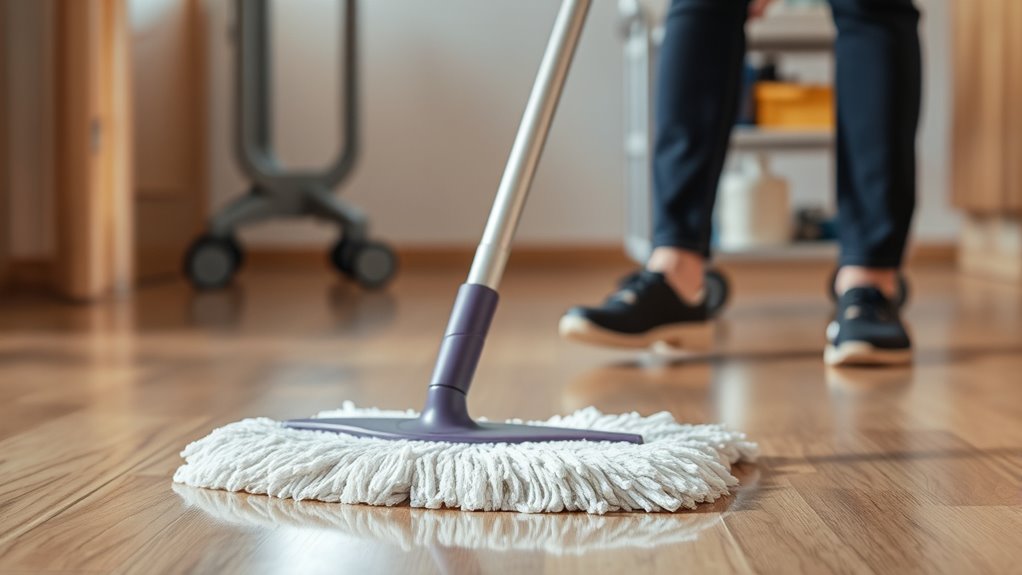
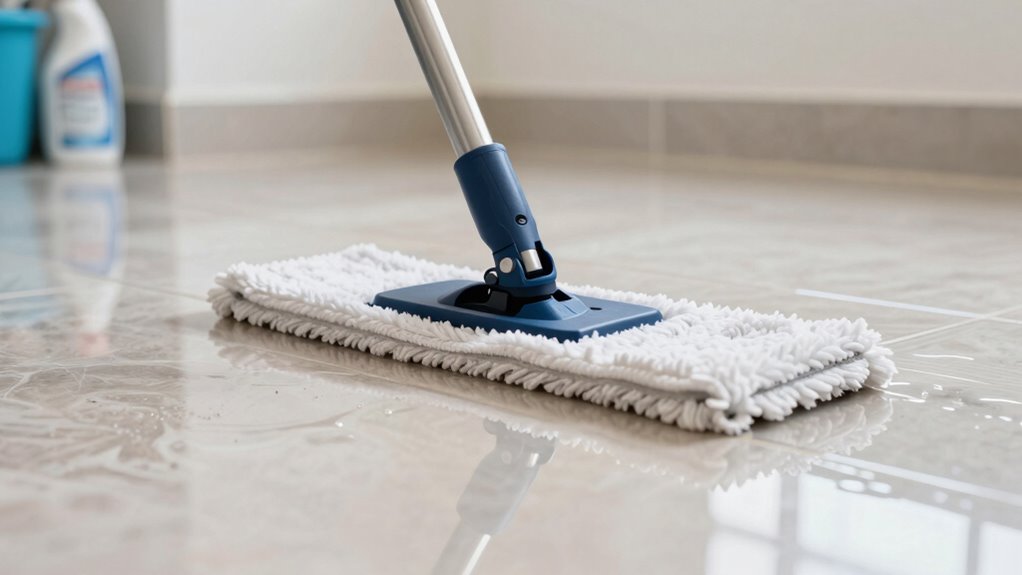
Damp mopping is an effective way to keep your laminate and vinyl floors clean without causing damage. To do it right, start by thoroughly vacuuming or sweeping your floor to remove loose dirt and debris. Use a microfiber mop or a well-wrung cloth to prevent excess water from seeping into seams or edges. Avoid soaking the mop; it should be damp, not dripping. Work in small sections, wiping in straight, gentle strokes to lift dirt effectively. Rinse and wring the mop frequently to avoid spreading grime. After mopping, go over the floor with a dry cloth or mop to remove any residual moisture. This method ensures your floors stay clean, shiny, and damage-free, aligning with the ‘less water’ rule for laminate and vinyl surfaces.
Choosing the Right Cleaning Products for Laminate and Vinyl
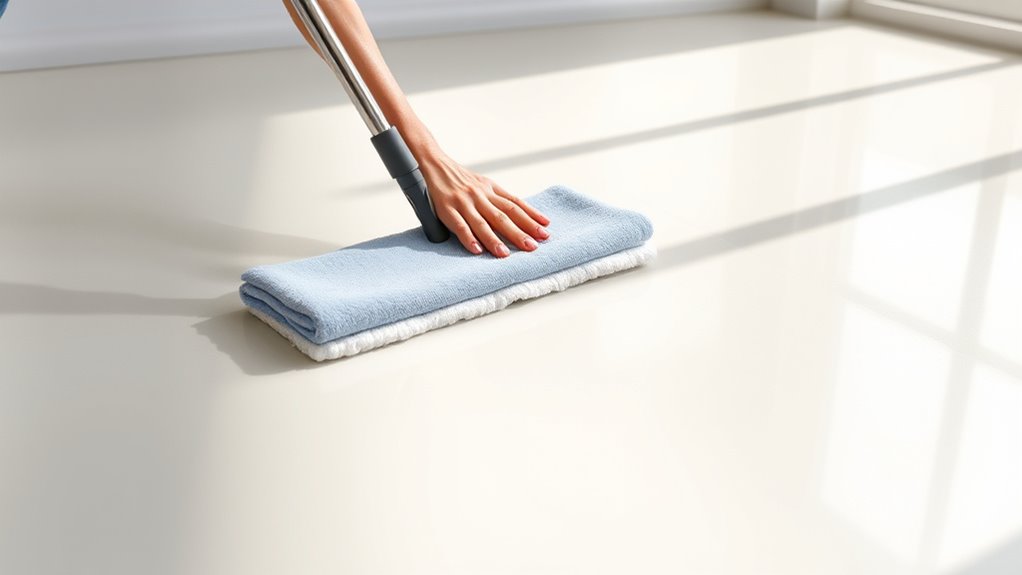
Selecting the right cleaning products is essential to preserving the appearance and integrity of your laminate and vinyl floors. Use gentle, pH-balanced cleaners specifically formulated for these surfaces. Avoid harsh chemicals like bleach, ammonia, or abrasive scrubbers, as they can damage the finish or cause discoloration. Stick to products labeled safe for laminate and vinyl, or make your own mild solution with a few drops of dish soap in water. Always read labels to ensure compatibility. Test new products in a small, hidden area first. Remember, less is more—using too much cleaner can leave residue or make your floors slippery. By choosing appropriate, gentle cleaners, you help maintain your floors’ shine and durability over time.
Tips for Removing Stubborn Dirt and Stains With Minimal Water
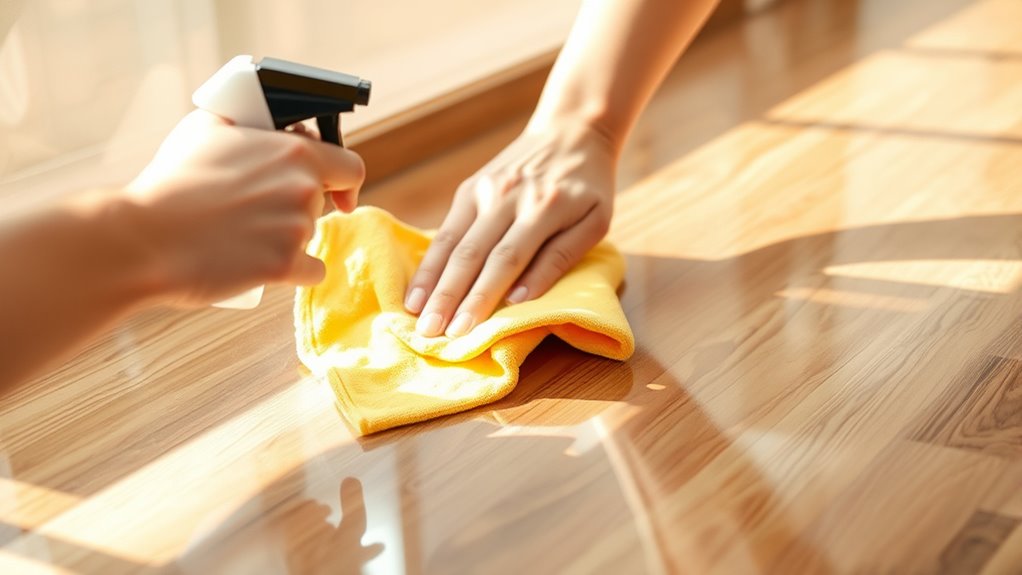
When tackling stubborn dirt and stains on your laminate or vinyl floors, using minimal water helps prevent damage and keeps your floors looking their best. Start by applying a small amount of a gentle cleaner directly to the stain. Use a soft cloth or sponge to gently scrub the area, avoiding excessive rubbing that can damage the surface. For greasy spots, a mixture of a few drops of dish soap with water works well. Rinse your cloth frequently to prevent spreading dirt. For tougher stains, consider applying a specialized stain remover designed for laminate or vinyl floors, following the product instructions carefully. Always use a damp, not soaking, cloth to lift dirt and avoid excess moisture that could cause warping or swelling.
Common Mistakes to Avoid When Cleaning Your Floors
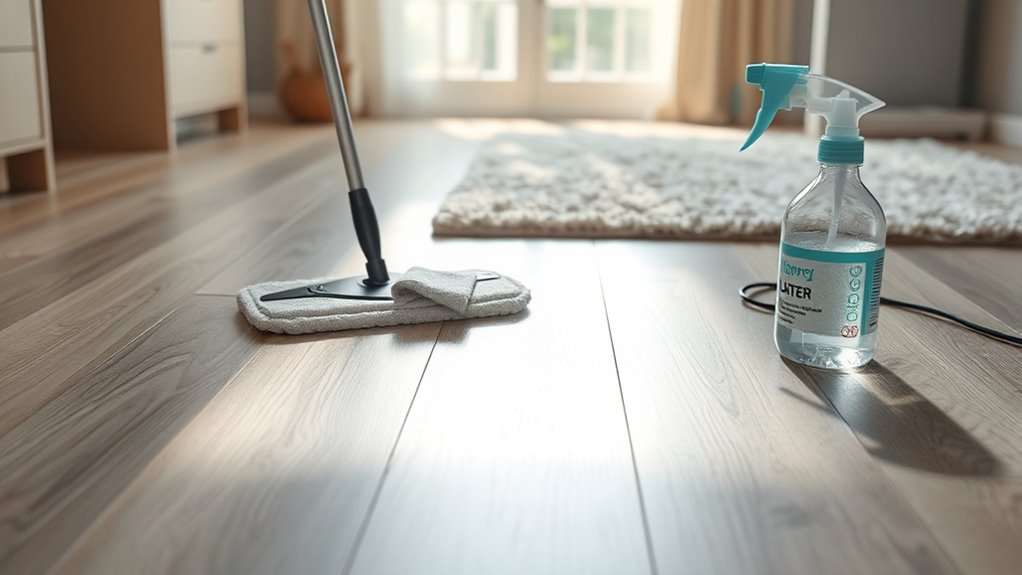
One common mistake to avoid is using harsh cleaning tools or abrasive scrubbing pads, which can scratch or damage the surface of your laminate or vinyl floors. Instead, opt for soft microfiber cloths or mops. Using too much water is another error; excess moisture can seep into seams and cause warping or swelling. Also, avoid strong chemical cleaners not designed for these floors, as they may discolor or degrade the surface. To help you identify what to use and avoid, here’s a quick guide:
| What to Use | What to Avoid |
|---|---|
| Microfiber cloths, gentle cleaners | Steel wool, abrasive pads |
| Damp mop, minimal water | Excess water, harsh chemicals |
Long-Term Benefits of Following the ‘Less Water’ Rule
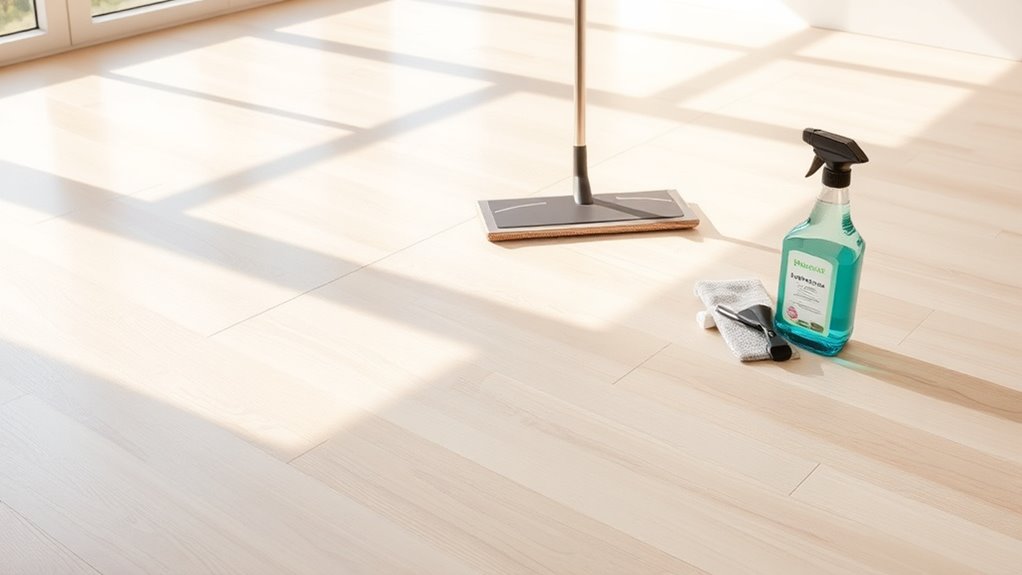
By using less water when cleaning your laminate and vinyl floors, you help preserve their integrity over time. Excess moisture can seep into seams, causing swelling, warping, or damage to the underlying subfloor. Over time, this can lead to costly repairs or the need for replacement. Additionally, using less water reduces the risk of streaks, residue, and dirt buildup, keeping your floors looking cleaner longer. This gentle approach also minimizes the need for harsh chemicals, protecting your indoor air quality. Consistently following the ‘less water’ rule guarantees your floors stay durable, attractive, and in good condition for years. In the long run, it saves you time, effort, and money, making your cleaning routine more effective and sustainable.
Frequently Asked Questions
Can Using Less Water Improve the Longevity of My Floors?
Yes, using less water can improve your floors’ longevity. When you avoid excessive moisture, you reduce the risk of warping, swelling, and damage to the laminate and vinyl surfaces. Less water also means fewer streaks, mold, and mildew buildup, helping your floors stay cleaner and looking newer longer. Stick to damp mops and quick-drying cleaning methods to protect your floors and keep them in top condition.
Are There Specific Cleaning Tools Recommended for Minimal Water Cleaning?
Think of your cleaning tools as a gentle brush for a delicate painting. You should use microfiber mops or cloths, which are highly effective at trapping dust and dirt with minimal water. A spray mop is also excellent, allowing you to control water use precisely. I once cleaned my floors with just a damp microfiber cloth, and they looked spotless—proof that minimal water tools work wonders.
How Often Should I Clean My Laminate or Vinyl Floors With Minimal Water?
You should clean your laminate or vinyl floors with minimal water at least once a week to keep them looking fresh and prevent dirt buildup. If you notice spills or dirt between regular cleanings, do spot cleaning immediately. Using a damp mop or microfiber cloth helps you avoid excess moisture, which can damage the flooring over time. Regular, gentle cleaning preserves your floors’ appearance and longevity.
Does the Type of Dirt Affect the Amount of Water Needed for Cleaning?
Imagine dirt as stubborn mud splattered across your floor. Yes, the type of dirt affects how much water you need. Heavier grime, like mud or sticky spills, calls for a damp cloth or mop with a little more water to loosen it up. Light dust or crumbs, however, require just a gentle swipe with barely dampened cloths. Adjust your water based on the mess to keep your floors looking their best.
Can I Use Homemade Cleaning Solutions With Less Water Safely?
Yes, you can use homemade cleaning solutions with less water safely on laminate and vinyl floors. Focus on mixing small amounts of gentle ingredients like vinegar and water, ensuring you don’t oversaturate the surface. Apply the solution sparingly with a damp cloth or mop, avoiding excess moisture. This approach helps protect your floors from damage while effectively cleaning, keeping them looking fresh and new.
Conclusion
By following the ‘less water’ rule, you protect your floors from potential damage and prolong their lifespan. Remember, gentle guidance and minimal moisture make maintenance manageable, preventing problems like warping and warping. Stay savvy with suitable solutions, smart techniques, and simple steps to keep your laminate and vinyl floors looking their best. So, stay steady, stay smart, and steer clear of excess water to guarantee your floors stay fabulous for years to come.