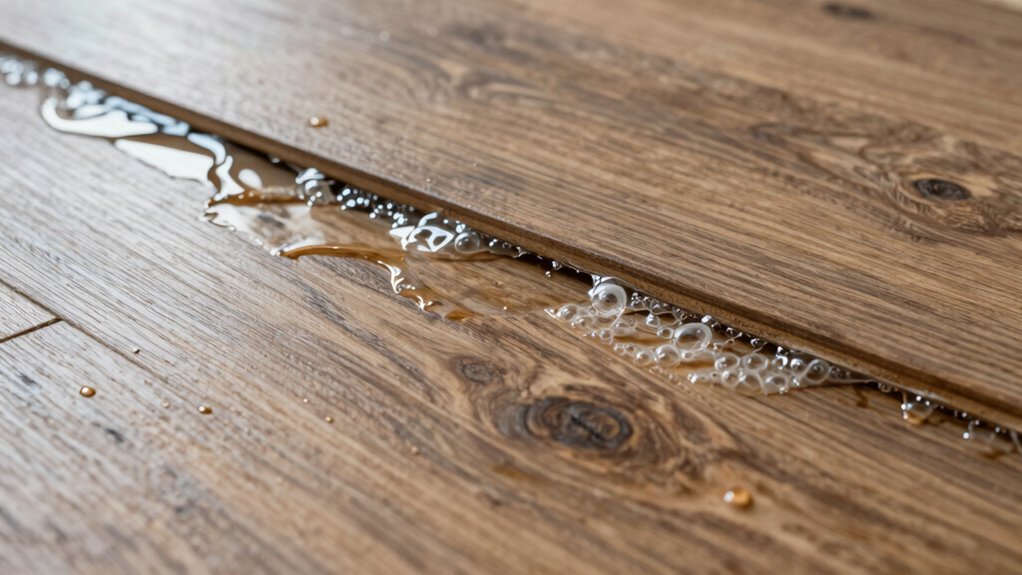

Moisture is the main cause of bubbling and swelling in laminate flooring. If you use too much water during cleaning, allow spills to sit, or don’t install proper moisture barriers, water can seep into seams or beneath the surface. High humidity indoors can also cause your laminate to absorb moisture and swell over time. To keep your floors smooth and flat, it’s essential to control humidity and water exposure—there’s more to prevent and fix these issues if you keep exploring.
Key Takeaways
- Water absorption from spills, leaks, or high humidity causes laminate swelling and bubbling.
- Sealing seams and using moisture barriers during installation prevent water infiltration.
- Excessive or prolonged moisture exposure under the surface leads to trapped water and bubble formation.
- Improper cleaning with too much water increases the risk of moisture seeping into seams.
- Maintaining indoor humidity between 35-55% helps minimize expansion and prevents bubbling.

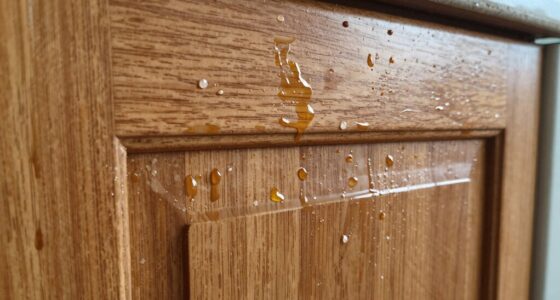
Have you ever noticed your laminate flooring warping or bulging unexpectedly? If so, you’re not alone. This common issue often results from water absorption, which causes the material to swell and lose its smooth, flat appearance. Laminate floors are designed to withstand daily wear, but moisture is a persistent enemy. When water seeps into the seams or gets trapped beneath the surface, it causes the underlying fiberboard core to absorb moisture, leading to swelling. The damage isn’t always obvious at first; you might notice a slight bulge or a raised edge, but over time, these spots can worsen into full-blown bubbles or warped planks.
Water absorption can cause laminate floors to warp or bulge unexpectedly.
The key to preventing this kind of damage is effective humidity control. Laminate flooring is sensitive to changes in moisture levels, and fluctuations can cause the material to expand or contract. If the air in your home becomes too humid, the moisture can penetrate the surface and be absorbed by the core, especially if the flooring wasn’t installed with proper expansion gaps or moisture barriers. Conversely, overly dry conditions can cause the planks to shrink and lead to gaps. Maintaining a stable humidity level—ideally between 35% and 55%—helps keep the flooring stable and minimizes the risk of swelling. Proper installation techniques and moisture barriers are also crucial in preventing water intrusion.
Water absorption isn’t just about spills or leaks; it can also happen from high humidity or improper cleaning. Using excessive water when mopping or cleaning your floors can lead to water seeping into the seams and getting trapped underneath. This trapped moisture doesn’t evaporate easily, especially if there’s poor ventilation, and over time, it causes the laminate to swell. That’s why it’s critical to use minimal water and a damp, well-wrung mop when cleaning. Also, installing a vapor barrier beneath the laminate during installation can serve as a safeguard against moisture rising from the subfloor.
To further protect your flooring, consider investing in a humidifier or dehumidifier, depending on your climate and season. These devices help regulate indoor humidity, reducing the chances of water absorption and swelling. Regularly inspecting your floor for signs of moisture ingress—like small bubbles or discoloration—can alert you early to potential problems. If water damage occurs, acting quickly to dry out the affected area and removing the source of moisture can help prevent further swelling. Ultimately, controlling humidity and avoiding excessive water exposure are your best defenses against laminate swelling, keeping your floors looking smooth and beautiful for years to come.

ROBERTS 70-115 Moisture Barricade Underlayment Film, for Vinyl, Laminate SPC, Engineered Wood Floors, 6 mil. Thick, Polyethylene, 120 Sq. Foot Roll, Black
For use as a vapor barrier when installing Vinyl, laminate, SPC and engineered wood flooring
As an affiliate, we earn on qualifying purchases.
As an affiliate, we earn on qualifying purchases.
Frequently Asked Questions
How Long Does Laminate Swelling Typically Take to Appear?
Typically, laminate swelling can appear within 24 to 48 hours after moisture exposure. The moisture detection process helps identify leaks early, but the swelling timeline varies based on the amount of water and the laminate’s quality. If you notice bubbling or warping, act quickly. Keep an eye on the affected area, as swelling can develop rapidly once moisture penetrates the surface, so timely response is essential to prevent damage.
Can Swelling Be Reversed Once It Occurs?
Swelling can’t typically be completely cured once it happens, but you can minimize damage by managing moisture absorption. Act quickly to dry the area and reduce further swelling, preventing it from worsening. While some minor swelling might settle over time, most cases require replacing the affected plank or section. To prevent future issues, focus on moisture prevention methods, like using dehumidifiers and sealing edges, to keep your laminate looking flawless and swelling-free.
Are Certain Laminate Brands More Resistant to Moisture?
Yes, some laminate brands offer better moisture resistance than others. When you do a brand comparison, you’ll find that brands like Pergo and Armstrong tend to have enhanced moisture-resistant features, making them more durable against spills and humidity. Choosing a brand with superior moisture resistance helps prevent swelling and bubbling. Always check product specifications and reviews to guarantee you select a laminate that’s best suited for areas prone to moisture.
What Specific Cleaning Products Should I Avoid?
You should avoid using harsh chemicals and abrasive cleaners on your laminate floors. These products can strip away the protective layer, causing damage and potential bubbling. Stick to mild, laminate-specific cleaners and soft cloths or mops. Regularly cleaning with gentle products helps maintain your floor’s appearance and prevents moisture from seeping in, reducing the risk of swelling and bubbling over time.
Is Professional Repair Necessary for Severe Bubbling?
If the bubbling is severe, you should consider professional repair rather than DIY fixes, especially since extensive damage can be tricky to fix yourself. While DIY solutions might seem cost-effective, they often don’t address underlying moisture issues, risking further damage. Professional repair guarantees proper fixing and can save you money long-term, as it prevents the need for costly replacements later. Prioritize expert help when bubbling is significant.

Laminate Floor Sealer and Luxury Vinyl Protector_Luxury Floor Seal Matte 1 Qrt
Exellent Wear and Scuff resistance/Low Maintenance Matte Look/Easy tu Use, Fast Drying
As an affiliate, we earn on qualifying purchases.
As an affiliate, we earn on qualifying purchases.
Conclusion
To keep your laminate looking its best, avoid common moisture mistakes like excessive water exposure and improper cleaning. Did you know that over 60% of laminate damages stem from water-related issues? Staying vigilant about spills and humidity can prevent bubbling and swelling. By taking simple precautions, you’ll extend your laminate’s lifespan and maintain its sleek appearance. Don’t let moisture mishaps ruin your investment—act now to protect your floors and enjoy long-lasting beauty.

LEVOIT Top Fill Humidifiers for Bedroom, 2.5L Tank for Large Room, Easy to Fill & Clean, 28dB Quiet Cool Mist Air Humidifier for Home Baby Nursery & Plants, Auto Shut-off for Safety, 25H
𝙁𝙖𝙨𝙩 𝙃𝙪𝙢𝙞𝙙𝙞𝙛𝙞𝙘𝙖𝙩𝙞𝙤𝙣 𝘼𝙡𝙡 𝙉𝙞𝙜𝙝𝙩: Runs for up to 25 hours on low thanks to its SUPER LARGE capacity…
As an affiliate, we earn on qualifying purchases.
As an affiliate, we earn on qualifying purchases.

The Original Fix-A-Floor Loose Tile Repair Adhesive PRO Pack! Includes a Micro Syringe Injector and Two Drill Bits -Tile, Porcelain, Ceramic, Marble, Stone, Wood Floor. Pack of 2
Extra strength formula: Fix-A-Floor tile glue is specially formulated to re-bond loose and hollow tiles, marble, stone, and…
As an affiliate, we earn on qualifying purchases.
As an affiliate, we earn on qualifying purchases.