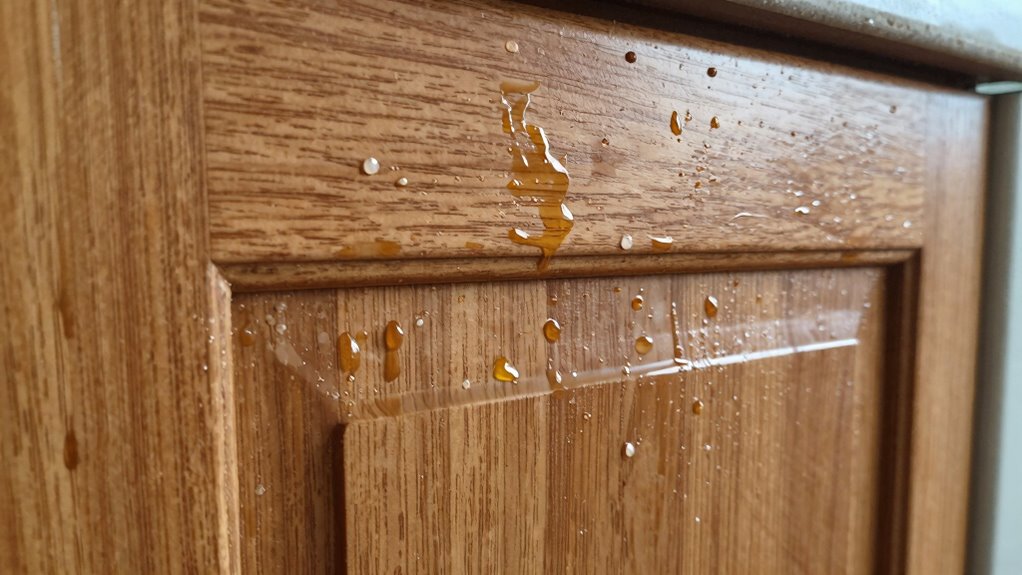
Grease from cooking fumes and splatters builds up on your cabinets over time, creating a sticky film that feels unpleasant. Tiny oil particles float in the air and land on surfaces, especially during frying or grilling, sticking more in humid or hot conditions. Without regular cleaning, this layer thickens and becomes harder to remove. If you want to find out effective ways to clean and prevent future buildup, keep exploring the solutions available.
Key Takeaways
- Grease from cooking fumes and splatters settles on cabinets, forming a sticky film over time.
- Tiny airborne oil particles land on surfaces, creating a persistent, tacky residue.
- Lack of regular cleaning allows grease to accumulate, making it harder to remove and increasing stickiness.
- Grease bonds with cabinet finishes, trapping dirt and dust, which enhances the sticky feel.
- Proper cleaning techniques with vinegar, baking soda, or degreasers can effectively remove grease buildup.
The Causes of Grease Buildup on Kitchen Cabinets
Grease buildup on kitchen cabinets often results from cooking fumes and splatters that settle on surfaces over time. When you cook, tiny oil particles become airborne and land on cabinets, gradually forming a sticky film. Splatters from frying, sautéing, or grilling add to this layer, especially if you don’t wipe surfaces regularly. Over time, the grease accumulates, sticking to the cabinet surfaces and attracting dust and dirt. Humidity and heat from cooking can also cause grease to adhere more firmly, making it harder to remove. If you don’t clean your cabinets frequently, this buildup becomes thicker and more challenging to eliminate. Regular cleaning routines can help prevent excessive grease from settling and becoming harder to remove, maintaining a cleaner kitchen environment. Additionally, understanding the sources of grease can help you develop better strategies to minimize buildup, such as improving ventilation during cooking. Proper cleaning techniques are essential to effectively break down and remove stubborn grease layers without damaging your cabinets.
How Grease Makes Cabinets Feel Sticky
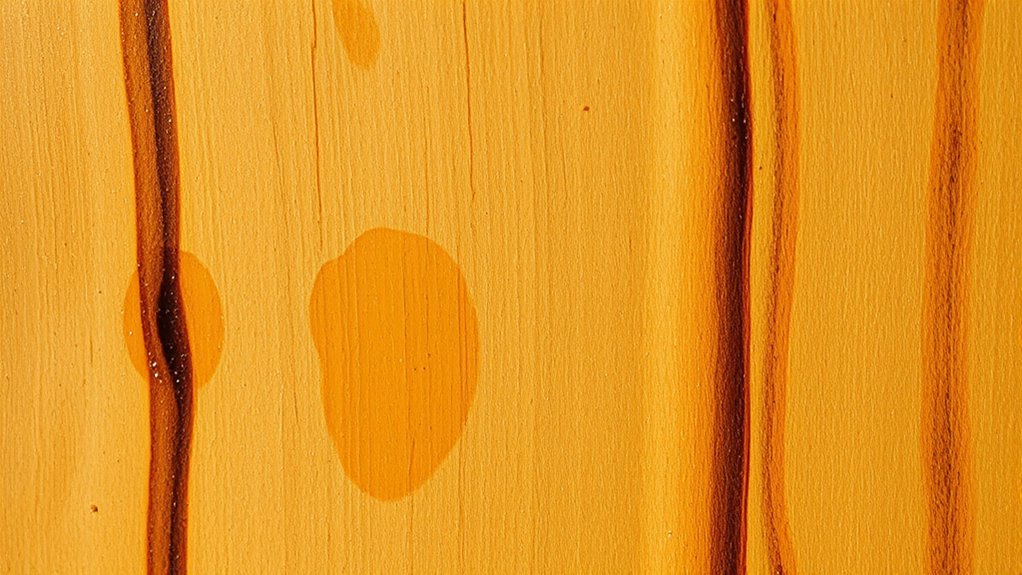
When grease builds up on your cabinets, it creates a layer that feels slick and sticky to the touch. This happens because kitchen grease contains fats, oils, and food particles that cling to surfaces. Over time, these substances bond with the cabinet’s finish, forming a stubborn film. As more grease accumulates, the layer thickens, making the surface feel tacky rather than smooth. The stickiness results from the oil-based compounds trapping dirt and dust, which further enhances the sensation. This greasy film not only feels unpleasant but also attracts more dirt, compounding the problem. The longer the grease remains, the more it embeds into the cabinet’s finish, making it feel sticky and difficult to clean without proper methods. Additionally, understanding how grease interacts with different finishes can help in choosing the most effective cleaning approach.
Effective Techniques for Removing Kitchen Grease
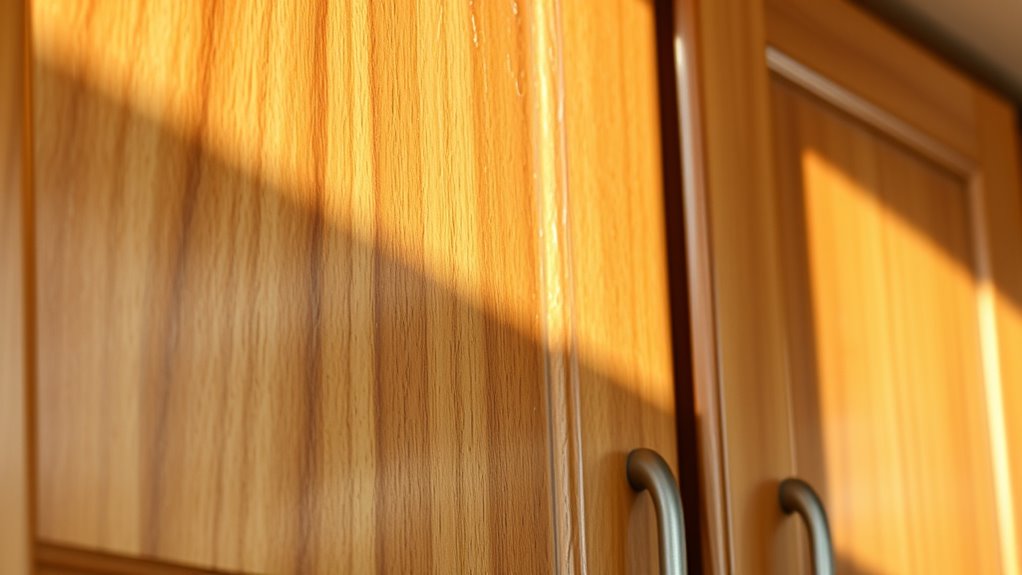
Are you struggling to remove stubborn kitchen grease from your cabinets? Don’t worry—these effective techniques can help. First, mix a solution of equal parts warm water and vinegar, then wipe down the cabinets with a soft cloth. Second, for tougher grease, create a paste with baking soda and water, applying it gently with a sponge before rinsing. Third, for persistent buildup, use a commercial degreaser, following the instructions carefully. Always test a small area first to avoid damage. Regularly cleaning with these methods prevents grease from sticking and keeps your cabinets looking fresh. Additionally, modern kitchen technology can include smart cleaning devices that automate part of your maintenance routine. Incorporating proper cleaning techniques and understanding how kitchen appliances contribute to grease buildup can further enhance your results and prevent future buildup. By using these simple steps, you’ll eliminate grease efficiently and restore your cabinets’ cleanliness without harsh scrubbing or chemicals.
Preventing Future Grease Accumulation
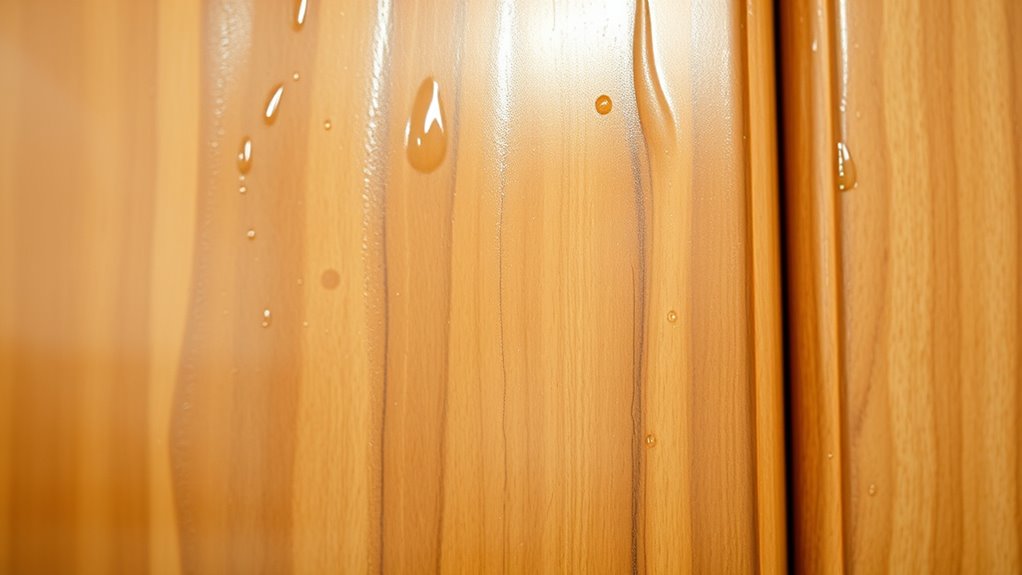
Maintaining a grease-free kitchen starts with proactive habits that prevent buildup before it begins. Regularly clean surfaces after cooking, especially stove and countertops, to stop grease from settling. Use a splatter guard when frying or simmering to contain splashes. Keep your range hood filters clean, as they trap airborne grease. Consider installing grease-resistant coatings on cabinets and walls to make cleaning easier. Additionally, understanding home and small-shop power can help you choose the best appliances and ventilation systems to minimize grease-related issues. Incorporating ventilation efficiency into your kitchen design can significantly reduce airborne grease particles. Proper airflow management ensures that grease and fumes are effectively removed from the cooking area. Here’s a quick guide:
| Habit | Tool or Tip | Frequency |
|---|---|---|
| Wipe surfaces after cooking | Microfiber cloth | Daily |
| Clean range hood filters | Warm soapy water | Weekly |
| Use grease-resistant paint | Specialty coating | During renovations |
Tips for Maintaining a Clean and Fresh Kitchen Surface

A clean and fresh kitchen surface not only looks inviting but also helps prevent the buildup of grease and bacteria. To keep your surfaces in top shape, consider these tips. First, regularly wipe down counters and cabinets with a mild, grease-cutting cleaner to remove residue before it thickens. Second, establish a daily cleaning routine—spend just a few minutes each day tidying up to prevent grime from accumulating. Third, use doormats and encourage mindful cooking habits, like covering pots, to reduce splatters. These small steps make a big difference in maintaining a pristine kitchen. Additionally, understanding the importance of filtration systems can improve overall cleaning effectiveness, helping to keep airborne grease and particles under control. Proper airflow around the area, as recommended for air purifier maintenance, can further enhance cleanliness by reducing airborne contaminants. Implementing air quality improvements can also help prevent sticky residue from settling on surfaces, making cleaning easier over time. Maintaining proper ventilation is essential in reducing airborne grease, which can contribute to stickiness on surfaces. Regularly inspecting and maintaining your kitchen exhaust system ensures optimal removal of airborne grease, further reducing surface buildup. Consistency is key; sticking to these habits keeps your surfaces spotless, fresh, and more resistant to sticky buildup over time.
Frequently Asked Questions
Can Certain Cabinet Finishes Resist Grease Buildup Better?
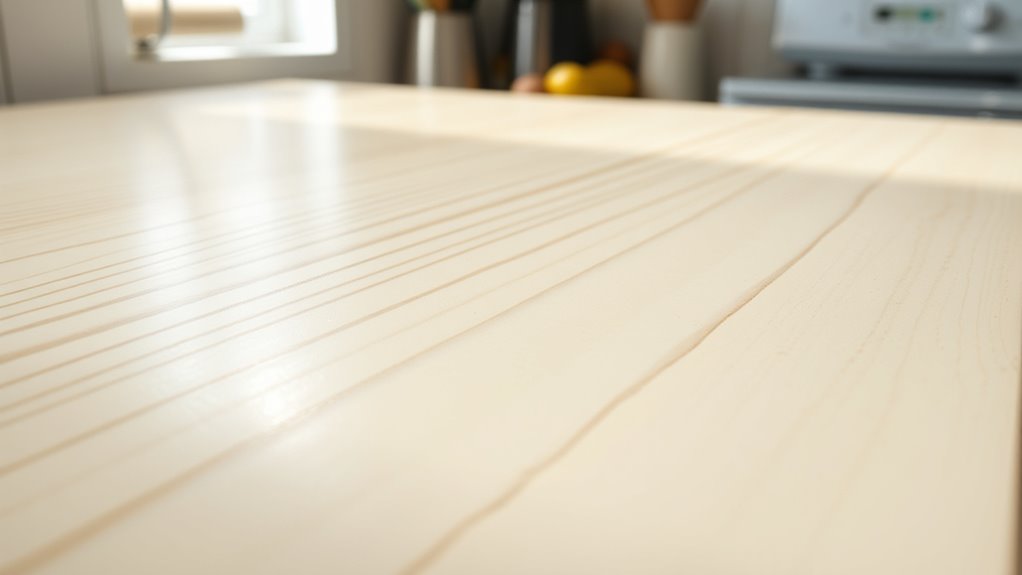
Yes, certain cabinet finishes resist grease buildup better. Satin or semi-gloss finishes tend to repel grease and are easier to clean than matte or flat paints. Lacquer or polyurethane coatings create a smooth surface that prevents grease from adhering strongly. You should choose these finishes if you want to minimize stickiness and make cleaning easier. Regular wiping with mild soap and water will also help maintain a grease-resistant surface.
Are Natural Cleaning Agents More Effective Than Chemical Cleaners?
Natural cleaning agents can be as effective as chemical cleaners when used properly. I once tried lemon and baking soda on greasy cabinets, and they worked wonders—like a fresh breeze clearing out stubborn grime. Scientific studies show natural options can break down grease just as well, without harsh chemicals. So, you can confidently choose natural cleaners for a safer, eco-friendly, and equally effective kitchen cleanup.
How Often Should I Deep Clean Greasy Kitchen Cabinets?
You should deep clean your greasy kitchen cabinets every three to six months. Regular cleaning prevents grease buildup from becoming sticky and hard to remove. If you cook frequently or notice grease accumulating quickly, consider cleaning more often. Use a gentle cleaner or a mix of warm water and dish soap to avoid damaging the finish. Staying consistent guarantees your cabinets stay clean, shiny, and free from sticky residue.
Does Humidity Influence Grease Accumulation on Cabinets?
Imagine humidity as a silent artist, slowly painting your cabinets with invisible layers of moisture. Yes, humidity influences grease buildup—higher moisture levels make grease more likely to stick and accumulate. When the air’s damp, grease particles cling more firmly to surfaces, turning your cabinets sticky over time. To combat this, use exhaust fans and dehumidifiers, and wipe down cabinets regularly to keep grease and humidity in check.
Can Indoor Air Purifiers Reduce Grease in the Kitchen?
Indoor air purifiers can help reduce grease in your kitchen by capturing airborne particles and airborne grease molecules. However, they aren’t a complete solution for grease buildup on cabinets. To effectively clean and prevent stickiness, you should regularly wipe down surfaces with a degreasing cleaner. Using an air purifier alongside routine cleaning minimizes airborne grease and keeps your kitchen fresher and less sticky over time.
Conclusion
Now that you know how grease sneaks onto your cabinets and how to banish it, keeping your kitchen gleaming is within your reach. Regular cleaning and a touch of elbow grease will prevent that sticky feeling—just like the good old days of shining armor. Don’t forget, a clean kitchen isn’t just for looks; it’s for your health too. So roll up your sleeves, and let your kitchen shine brighter than a knight’s armor in the sun.