Grout sealing helps when your grout is porous, dirty, or prone to stains, creating a barrier against moisture, mold, and discoloration. It’s especially beneficial in high-traffic or damp areas. However, if your grout is new, clean, and undamaged, sealing right away isn’t necessary. Over-sealing or sealing damaged grout can trap dirt and moisture instead. To learn how to determine if your grout needs sealing and the best approach, keep going for helpful insights.
Key Takeaways
- Grout sealing is beneficial when grout is porous, dirty, or prone to stains, providing water and stain resistance.
- Newly installed, clean, and undamaged grout may not require sealing immediately; cleaning may suffice.
- Over-sealing or sealing damaged grout can trap dirt, moisture, and mold, causing more harm than good.
- Use penetrating sealers for long-term protection; topical sealers add surface shine but may require reapplication.
- Proper cleaning and maintenance are essential first steps; sealing is a targeted enhancement, not a cure-all.
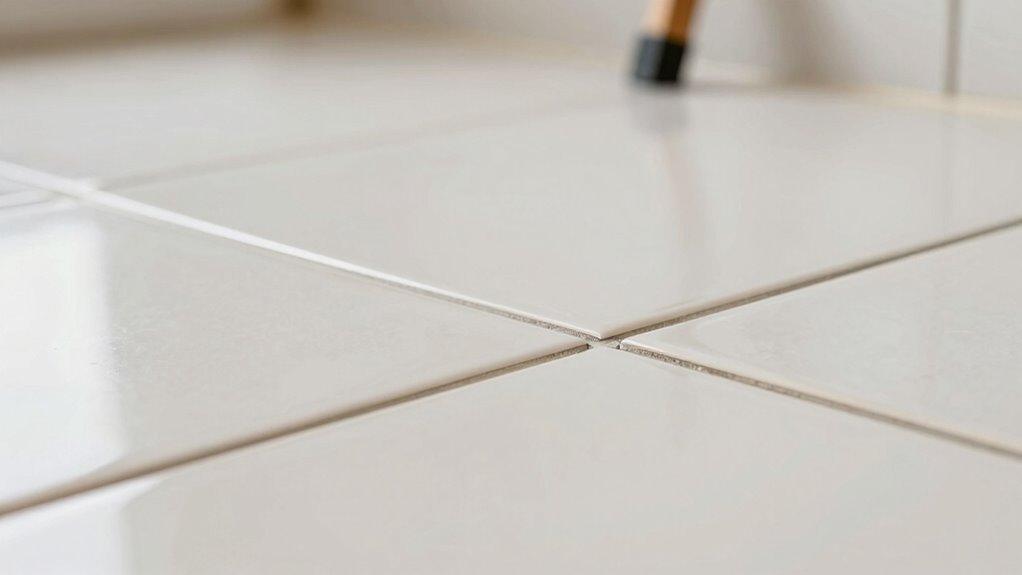
Are you wondering why grout sealing is essential for your tile surfaces? It’s a common question, and the answer lies in understanding how grout functions and how sealing can protect it. Grout, the material filling the gaps between tiles, is porous by nature, which means it readily absorbs moisture, dirt, and stains. Without proper protection, this absorption can lead to discoloration, mold, and even structural damage over time. Sealing the grout creates a barrier that repels water and stains, making maintenance easier and extending the lifespan of your tile installation.
Grout is porous; sealing protects against stains, mold, and damage for longer-lasting, easier-to-maintain tiles.
To get the most out of grout sealing, you need to be mindful of your cleaning techniques. Regular cleaning is crucial, but it’s equally important to use the right cleaning methods to avoid damaging the grout or stripping away the sealant. Gentle cleaning solutions, such as pH-neutral cleaners or a mixture of water and mild detergent, are usually sufficient for routine maintenance. Avoid harsh chemicals or abrasive scrubbers that can scratch the grout or wear down the sealant prematurely. When cleaning, use a soft brush or cloth to dislodge dirt from the grout lines without causing damage. This routine not only keeps your tiles looking fresh but also helps maintain the integrity of the sealing materials over time.
Speaking of sealing materials, choosing the appropriate product is vital. There are various types of sealants available—penetrating sealers that soak into the grout and form a protective barrier beneath the surface, and topical sealers that sit on top of the grout for a more shiny appearance. Your choice depends on factors like the location of your tiles, the level of foot traffic, and your aesthetic preferences. For high-moisture areas such as bathrooms or kitchens, a high-quality penetrating sealer is often the best option because it offers long-lasting protection without altering the appearance of your tiles. When applying sealing materials, ensure you follow the manufacturer’s instructions carefully—apply evenly, avoid over-saturating, and give the sealant enough time to cure before exposing the surface to water or dirt.
However, it’s important to recognize that grout sealing isn’t always necessary or beneficial. Some marketing campaigns push the idea that sealing is a magic fix for all grout issues, but that’s not true. If your grout is new, clean, and in good condition, sealing might not be necessary right away. Over-sealing or sealing old, damaged grout can trap dirt and moisture, leading to more problems. Instead, focus on proper cleaning techniques first; sealing should be a targeted step to protect and prolong your grout’s lifespan, not a blanket solution. Understanding when grout sealing helps and when it’s just marketing can save you time and money while ensuring your tile surfaces stay beautiful and functional for years to come. Additionally, high-quality projectors can enhance your visual inspection of grout condition, making it easier to determine when sealing is truly needed.
Frequently Asked Questions
How Often Should Grout Sealing Be Performed for Optimal Protection?
You should reseal your grout every 1 to 2 years for ideal protection. Regular maintenance tips include checking for signs of wear or stains, which indicate it’s time to reseal. The sealing frequency depends on the traffic and use of the area; high-traffic spots may need sealing more often. Staying on top of this keeps your grout resistant to stains and moisture, extending its lifespan effectively.
Can Grout Sealing Be Applied to All Tile Types?
You might think grout sealing can be applied to every tile type, but that’s not true—some tiles, like porcelain with incredible durability and natural stone, need special care. Sealing works wonders on most, but natural stones like marble or limestone can absorb sealers unevenly or be damaged by harsh chemicals. Always check if your tile is compatible first; otherwise, you risk ruining its appearance and integrity.
Is Grout Sealing Effective Against Mold and Mildew?
Grout sealing can be effective against mold prevention and mildew resistance when applied properly. It creates a barrier that reduces moisture absorption, making it harder for mold and mildew to thrive. However, sealing isn’t a complete solution; regular cleaning and good ventilation are essential. You should reseal periodically, especially in humid areas, to maintain its effectiveness and keep your grout looking fresh and mold-free.
What Are the Signs That Grout Needs Resealing?
Your grout starts whispering its need for attention when it loses its vibrant color and surface shine, like a faded painting. Look for signs like discoloration, staining, or a dull, matte appearance that indicates it’s absorbing water and dirt. If water no longer beads on the surface or the grout appears blotchy, it’s time to reseal. These changes reveal your grout’s call for protection, keeping your space fresh and resilient.
Are There Any DIY Grout Sealing Methods Recommended?
Yes, you can try DIY methods for grout sealing, but be aware of common sealing misconceptions. Use a clean, dry applicator and apply a penetrating sealer evenly across the grout lines, avoiding excess. Let it sit as recommended before wiping off the residue. While DIY sealing can save money, make certain you follow instructions carefully, since improper sealing may lead to faster dirt buildup or mold. Always read product labels for best results.
Conclusion
Ultimately, grout sealing is like a coat of armor—great for protection, but it’s not a miracle cure. When you keep up with regular sealing, your tiles stay cleaner and brighter, like a fresh coat of paint. But don’t rely on it alone; neglecting proper cleaning can make even the best sealant pointless. Think of sealing as part of your routine armor, not a substitute for good maintenance—because sometimes, a little effort beats marketing hype.