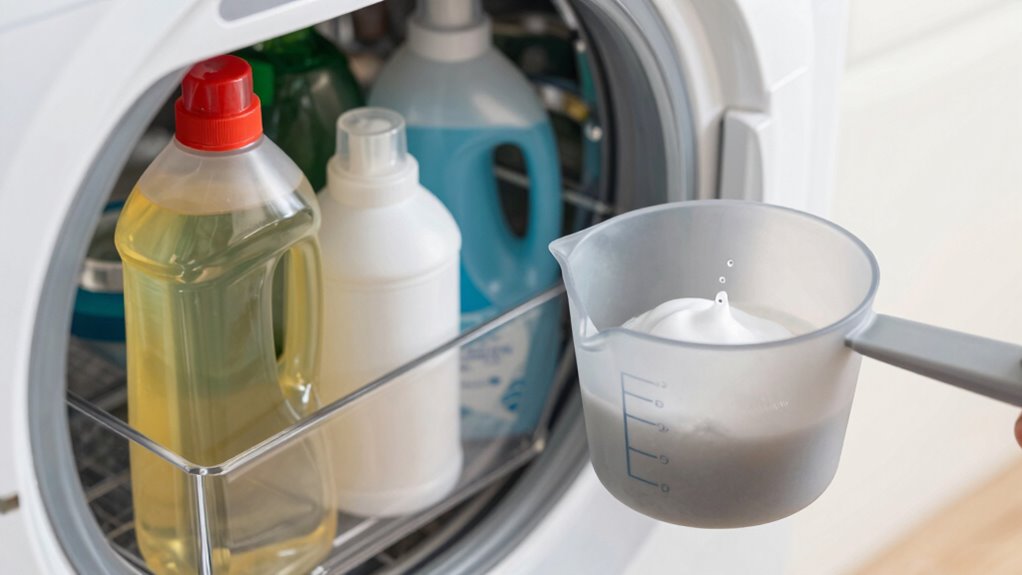

To get your laundry clean without causing machine issues, use the right amount of detergent based on load size, soil level, and water hardness. Often, a small capful of liquid detergent or a measured scoop of powder is enough for regular loads, while larger or heavily soiled ones need more. Overusing soap can cause excess suds and damage, and underusing it leaves your clothes unclean. Keep these tips in mind to optimize your laundry routine. If you continue, you’ll discover even more useful insights.
Key Takeaways
- Use the detergent cap’s measurement markings or a scoop to ensure accurate dosing.
- Adjust the amount based on load size, soil level, and water hardness for effective cleaning.
- Avoid filling liquid detergent caps to the brim; a small amount is often sufficient for light loads.
- Follow packaging instructions and measure powder detergent carefully to prevent residue buildup.
- Overdosing wastes detergent and damages the machine, while under-dosing reduces cleaning effectiveness.
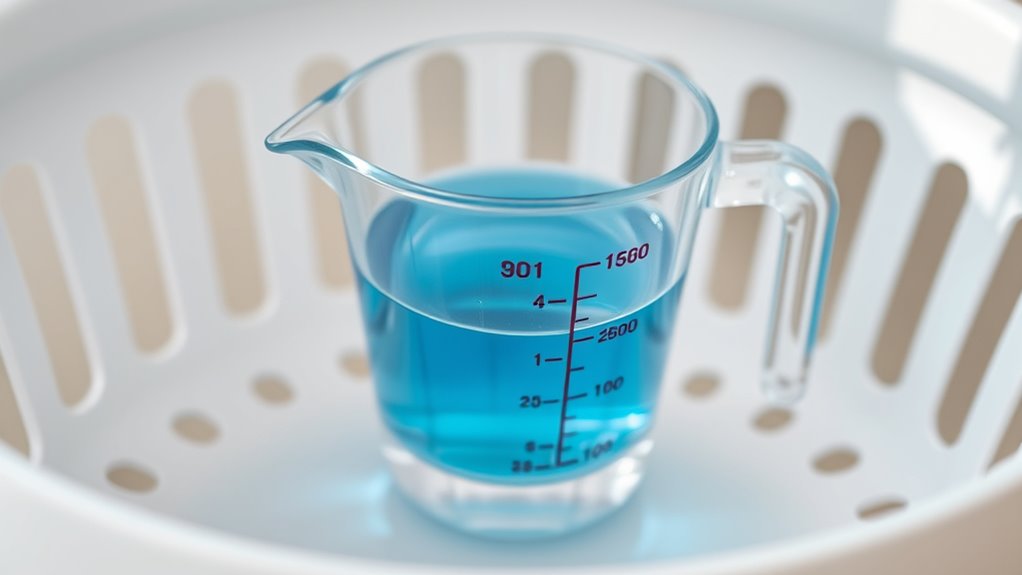
Are you using the right amount of detergent for your laundry? It might seem simple—just pour in some soap and toss in your clothes—but using too much or too little can lead to problems. Whether you prefer liquid detergent or powder detergent, understanding proper dosing is key to getting clean clothes without wasting product or damaging your machine. Liquid detergent is convenient and easy to measure, often coming with a cap that makes it simple to pour the correct amount. Powder detergent, on the other hand, usually requires a scoop, and it’s essential to pay attention to how much you’re adding. Both types have recommended amounts listed on their packaging, but these are just guidelines. Your actual needs depend on several factors, including load size, soil level, water hardness, and your washing machine type.
When dealing with liquid detergent, it’s tempting to fill the cap to the brim, but that’s often more than necessary. Using too much liquid soap can cause excess suds, which can interfere with the rinsing process and even damage your machine over time. Conversely, under-dosing might leave your clothes less clean or cause you to run an extra cycle, wasting water and energy. The key is to measure carefully—most liquid detergents have markings on the cap to help you dose appropriately based on load size and soil level. For small or lightly soiled loads, a small capful usually suffices, whereas larger or heavily soiled loads may need a bit more.
With powder detergent, it’s equally important to measure accurately. Using a full scoop for a small load can lead to soap residue on your clothes and buildup in your washing machine. Many people tend to overuse powder detergent because they think more soap equals cleaner clothes, but that’s not the case. Overuse can cause excessive suds or residue that’s tough to rinse out, especially if your machine isn’t designed for high suds. On the flip side, using too little powder may not provide enough cleaning power, especially on heavily soiled laundry. To avoid this, follow the instructions on the packaging, and use a measuring scoop to ensure consistency. Additionally, understanding the natural effects of detergent overuse can help you make smarter choices about dosing.
Ultimately, finding the right amount of detergent depends on knowing your laundry needs and understanding the product you’re using. Both liquid and powder detergents come with dosing recommendations, but adjusting based on your specific circumstances is often necessary. Overdosing wastes money and can harm your machine, while under-dosing risks less effective cleaning. By paying attention to these details and measuring carefully, you’ll keep your clothes cleaner, your machine healthier, and your wallet happier.
Frequently Asked Questions
Can I Use Less Detergent for Eco-Friendly Cleaning?
Yes, you can definitely use less detergent for eco-friendly cleaning. Reducing your detergent amount not only decreases chemical runoff but also minimizes environmental impact. Focus on proper dosing to guarantee your cleaning remains effective while supporting eco-friendly cleaning practices. By practicing detergent reduction, you help conserve resources and promote sustainability. Just make sure to follow the recommended guidelines to keep your cleaning efficient and eco-conscious.
How Does Water Temperature Affect Detergent Dosage?
You might notice that water temperature unexpectedly influences detergent effectiveness and dosage. Hot water boosts cleaning power, often allowing you to use less detergent because it dissolves and activates more efficiently. Conversely, cold water may require slightly more soap to achieve the same cleanliness, as it slows down the cleaning process. So, adjusting your detergent amount based on water temperature guarantees ideal cleaning without waste, saving you both detergent and energy.
Is It Safe to Mix Different Detergent Brands?
Mixing different detergent brands isn’t generally safe because of potential detergent compatibility issues, which can lead to ineffective cleaning or residue buildup. Always check the label for brand mixing safety, as some formulas may react unpredictably. To be safe, stick to one brand per wash cycle or choose compatible products. This guarantees ideal cleaning performance and prevents damage to your laundry or washing machine.
What Are the Signs of Using Too Much Detergent?
If you’re using too much detergent, you’ll notice residue left on clothes and surfaces, which can cause skin irritation. Your laundry might also smell overly strong or feel stiff, indicating excess soap. Additionally, you may see suds spilling over or hear gurgling in your washing machine. These signs suggest you’re using too much, so cut back to prevent detergent buildup that can irritate your skin and damage fabrics.
How Do Laundry Loads Differ for Hand-Washing Versus Machine-Washing?
When hand-washing, use a small amount of liquid or powder detergent, focusing on gentle agitation. For machine-washing, load size determines how much detergent you need—more for larger loads. Liquid detergents dissolve quickly, ideal for hand-washing, while powders work well in machines. Always follow product instructions, but generally, hand-wash requires less detergent than machine loads, which benefit from appropriate dosing to prevent residue.
Conclusion
Now that you know how much detergent to use, you can wash smarter, save money, and protect the environment. Measure carefully, follow instructions, and adjust as needed. Avoid waste, prevent buildup, and keep your clothes and appliances in top shape. By dosing right, you guarantee cleaner results, longer-lasting detergents, and a healthier home. So, be precise, be mindful, and enjoy the benefits of proper detergent use every time you wash.