
To deep clean without burnout, tackle one room at a time using a simple checklist. Start with the living room, removing clutter, dusting, and vacuuming thoroughly. Move to the kitchen, disinfect countertops, clean appliances, and maintain your sink. Focus afterward on the bathroom’s surfaces and ventilation. Next, organize and sanitize the bedroom, then clear your home office. Finishing touches like fresh linens help you stay motivated. Keep a steady pace, and you’ll master all-encompassing cleaning effortlessly—more tips await if you keep going.
Key Takeaways
- Break tasks into small, manageable steps for each room to avoid feeling overwhelmed.
- Prioritize high-traffic areas and routine maintenance to reduce deep cleaning workload.
- Use a checklist to stay organized and ensure consistent progress without burnout.
- Schedule cleaning sessions in short, focused intervals to maintain energy and motivation.
- Incorporate breaks and reward yourself to stay motivated and prevent exhaustion during deep cleaning.

USANOOKS Microfiber Cleaning Cloth Grey – 12 Pcs (12.5"x12.5") – High Performance – 1200 Washes, Ultra Absorbent Microfiber Towel Weave Grime & Liquid for Streak-Free Mirror Shine – Car Washing Cloth
10x GRIP-ROOT WEAVE – TRAP MORE, WORK LESS: Ultra-absorbent microfiber towels for car Grip Root weave works like…
As an affiliate, we earn on qualifying purchases.
As an affiliate, we earn on qualifying purchases.
Living Room Deep Clean

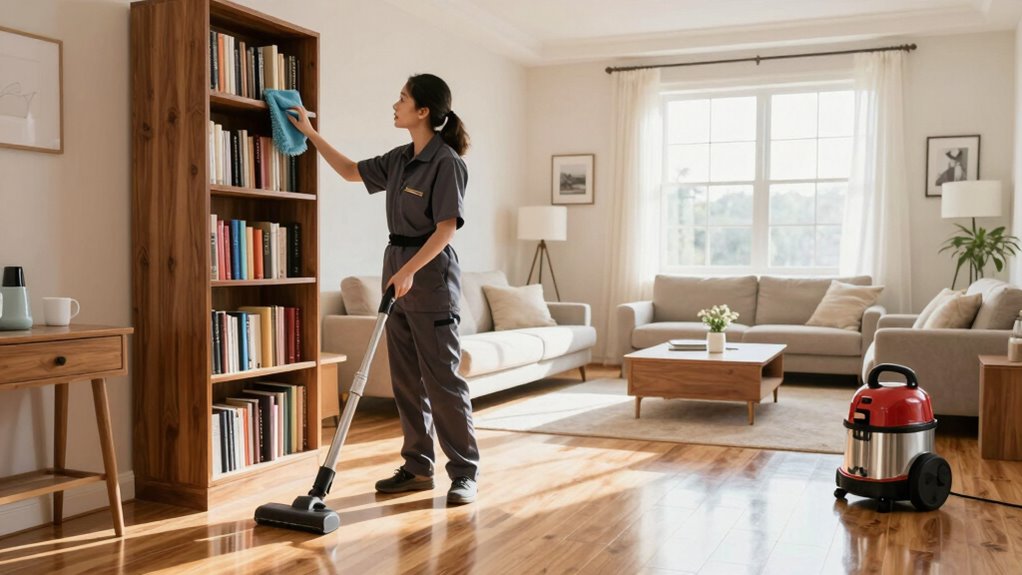
To give your living room a thorough deep clean, start by removing all clutter and items from surfaces. Clear away magazines, remote controls, and decor so you have a clean space to work with. Next, dust all surfaces, including shelves, picture frames, and baseboards, using a microfiber cloth or duster. Don’t forget to vacuum or sweep the floors thoroughly, paying special attention to corners and under furniture. If you have upholstery, consider vacuuming sofas and chairs to remove dust and debris. Wiping down windowsills, light switches, and door handles with a damp cloth helps eliminate hidden germs and dirt. This step verifies you remove hidden dirt and prepare your space for a deeper clean. Keeping your surfaces clear makes cleaning more efficient and helps you see your progress clearly. Additionally, inspecting your projector setup for proper contrast ratio settings ensures optimal image quality during movie nights. Regularly checking and maintaining vintage audio equipment can also enhance your home entertainment experience. Taking time to assess your cleaning tools and replacing worn-out supplies can make your deep cleaning routine more effective and less stressful, especially when considering safety precautions to prevent accidents during cleaning. Furthermore, incorporating glycolic acid into your skincare routine can help maintain healthy skin after cleaning sessions, especially when dealing with accumulated dirt and oil.

Dirt Devil Portable Spot Cleaner Machine for Carpet and Upholstery, Powerful Suction Spot Cleaning Machine with Versatile Tools, Pair with Dirt Devil Portable Spot Cleaner Solution
EASY-TO-USE DESIGN: The Dirt Devil Portable Spot Compact Carpet Cleaning Machine comes with all the features necessary for…
As an affiliate, we earn on qualifying purchases.
As an affiliate, we earn on qualifying purchases.
Kitchen Sanitation and Shine

To keep your kitchen spotless, focus on disinfecting your countertops effectively and using the right techniques. Regularly clean your appliances to prevent buildup and maintain their shine. Don’t forget to care for your sink and faucet, ensuring they stay germ-free and sparkling clean. Incorporating proper cleaning methods can further enhance your sanitation efforts and help maintain a healthy kitchen environment. Additionally, adopting nanotechnology-based cleaning solutions can improve sanitation efficiency and reduce chemical use in your cleaning routine. Employing smart home technology such as automated disinfecting devices can also streamline your cleaning process and ensure consistent hygiene standards. Understanding deep-sky imaging can also help you make informed decisions about securing your financial future while maintaining peace of mind.
Countertop Disinfection Tips
Keeping your countertops sanitized is essential for a clean and safe kitchen. Start by removing all items and wiping the surface with a damp cloth to clear away crumbs and spills. Use a disinfectant spray or a mixture of equal parts water and white vinegar to kill germs—apply generously and let it sit for a few minutes. For tougher spots, scrub with a soft brush or sponge. Rinse the surface with a clean, damp cloth to remove any residue, then dry with a microfiber towel to prevent streaks. Remember to disinfect high-touch areas like handles and edges regularly. Avoid using abrasive cleaners that can damage your surface. Consistent disinfection keeps your countertops hygienic and gleaming, making your kitchen safer and more inviting. Incorporating proper sanitation practices helps maintain a germ-free environment and prolongs the lifespan of your surfaces. Regularly disinfecting high-touch areas is a key step in maintaining overall kitchen cleanliness. Additionally, understanding cleaning appliances and systems can streamline your routine and ensure thorough sanitation. Being aware of kitchen surface materials can help you choose the most effective cleaning methods for each type.
Appliance Cleaning Strategies
Achieving a spotless and sanitized kitchen starts with effective appliance cleaning strategies. Focus on regular maintenance to prevent buildup and ensure hygiene. Use appropriate cleaners for each appliance: a mixture of baking soda and vinegar for surfaces, and specialized cleaners for delicate parts. Always unplug appliances before cleaning, and avoid abrasive scrubbers that can damage finishes. Incorporating energy-efficient cleaning methods can further enhance sustainability and reduce environmental impact. Additionally, selecting methods that utilize less water and harsh chemicals supports overall kitchen sustainability efforts. Employing low-water cleaning techniques can help conserve resources while maintaining effective sanitation.
Sink and Faucet Care
A clean sink and shiny faucet are key to a hygienic kitchen. To maintain their appearance and cleanliness, regularly scrub the sink with a non-abrasive cleaner, paying attention to corners and drains. Wipe down the faucet with a soft cloth to remove water spots and fingerprints. To remove mineral deposits, soak a cloth in vinegar and wrap it around the faucet for a few minutes. Rinse thoroughly and buff dry for a sparkling finish. Remember to clear out any debris from the drain and run hot water to flush it. Keep the area around the sink dry to prevent mold. Regular maintenance keeps your sink and faucet looking great and functioning properly. Additionally, ensuring that the faucet and sink are free from infection risks helps maintain a safe and sanitary kitchen environment.
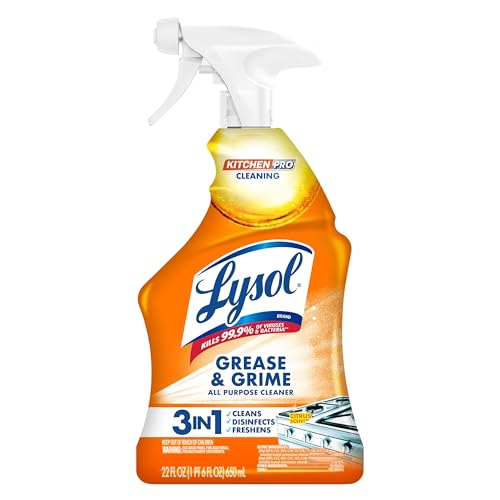
Lysol Pro Kitchen Spray Cleaner and Degreaser, Antibacterial All Purpose Cleaning Spray for Kitchens, Countertops, Ovens, and Appliances, Citrus Scent, 22oz
ELIMINATES 99.9% OF KITCHEN VIRUSES AND BACTERIA INCLUDNG SALMONELLA AND E.COLI: Lysol Pro Kitchen Cleaner is tested and…
As an affiliate, we earn on qualifying purchases.
As an affiliate, we earn on qualifying purchases.
Bathroom Refresh and Disinfection
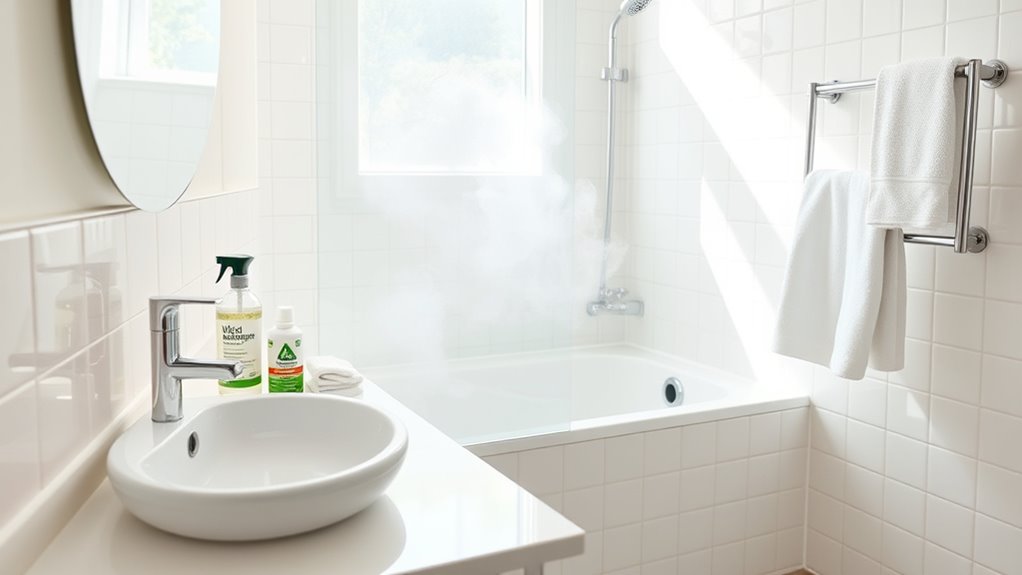
To refresh your bathroom, start by scrubbing toilets and sinks to remove grime and stains. Next, disinfect all surfaces thoroughly to kill germs and guarantee a hygienic space. Don’t forget to improve ventilation and control odors for a fresh, clean environment. Incorporating compact living principles can help maximize storage and organization, making maintenance easier. Additionally, utilizing air purifiers can significantly reduce airborne pollutants and allergens, enhancing overall air quality. Being aware of psychological manipulation tactics can also help you recognize and prevent potential stressors during cleaning routines, ensuring a more relaxed experience. Paying attention to safety considerations ensures that your cleaning practices remain safe and effective throughout the process. Applying home energy strategies can also streamline your cleaning routines by reducing energy waste and promoting efficiency.
Scrubbing Toilets and Sinks
Scrubbing toilets and sinks is an essential step in revitalizing your bathroom and ensuring it’s properly disinfected. Start by applying a bathroom cleaner or disinfectant to the surfaces. Use a scrub brush or sponge to work on stubborn stains and grime. Pay attention to hard-to-reach areas like around the toilet base and under the sink. Rinse thoroughly with clean water to remove residue. For a sparkling finish, wipe down surfaces with a microfiber cloth. Visualize the process with these details:
- Loosening mineral deposits and soap scum
- Scrubbing around the toilet bowl rim and under the seat
- Removing soap scum from sink edges and faucets
- Dislodging grime from drain openings
- Wiping down to leave a shiny, clean surface
- Incorporate Free Floating techniques to access hidden spots behind fixtures and under cabinets for a thorough clean. These methods can help you reach areas that are typically difficult to access, ensuring a comprehensive bathroom sanitation process.
This targeted cleaning refreshes your bathroom’s look and hygiene.
Disinfecting Surfaces Thoroughly
After scrubbing away grime and soap scum, it’s time to thoroughly disinfect all bathroom surfaces. Spray a disinfectant on countertops, sink basins, and faucet handles, ensuring full coverage. Let it sit for the recommended contact time to kill germs effectively. Wipe down surfaces with a clean cloth or paper towel, paying attention to high-touch areas like light switches and doorknobs. Don’t forget to disinfect the toilet seat, lid, and flush handle. Use a separate cloth or disposable wipe for these spots to prevent cross-contamination. For tiles and grout, apply a disinfectant cleaner and scrub with a brush to remove any lingering bacteria. Once done, dry surfaces for a streak-free finish. Proper disinfection helps prevent the spread of germs and keeps your bathroom safe.
Ventilation and Odor Control
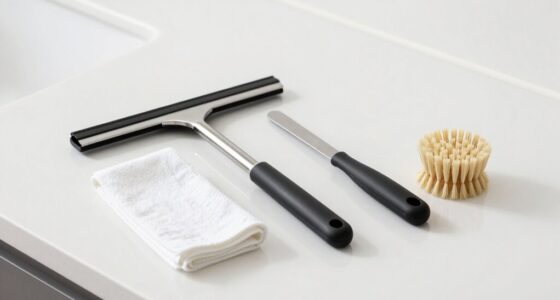
Ensuring proper ventilation is essential for maintaining a fresh and odor-free bathroom. It helps remove moisture, mold, and lingering smells, making your space healthier and more inviting. Start by opening windows and turning on exhaust fans during and after cleaning. Use a squeegee or towel to wipe down wet surfaces, reducing moisture buildup. Consider placing moisture-absorbing products like silica gel or activated charcoal to keep the air dry and fresh. Regularly clean and maintain ventilation systems to guarantee they work efficiently. Additionally, use air fresheners or natural odor absorbers like baking soda or essential oils to keep the space smelling clean. These simple steps create a balanced environment, preventing odors from settling and promoting ongoing freshness.

Dailytop UV Light Sanitizer with Radar,Ozone Free Ultraviolet Light Sanitizer for Room,Home Disinfection Device,UVO Lamp with Remote Control,15/30/60 Minutes Timer
A Smarter, Safer Way to a Fresh Home –Home Disinfection Device for Homes with Kids & Pets. Tired…
As an affiliate, we earn on qualifying purchases.
As an affiliate, we earn on qualifying purchases.
Bedroom Tidy and Sanitise

To effectively tidy and sanitize your bedroom, start by removing clutter and putting away items in their designated spots. This clears surfaces and creates a calm space for cleaning. Next, make your bed, smoothing out sheets and fluffing pillows to instantly refresh the room’s appearance. Dust all surfaces, including nightstands, dressers, and shelves, using a damp cloth to pick up dirt and dust. Wipe down high-touch areas like light switches, door handles, and remote controls with disinfectant. Vacuum or sweep the floor thoroughly, paying attention to corners and under furniture. If you have carpets, consider steam cleaning for a deeper sanitization. Finishing with fresh bedding and fluffing pillows will leave your bedroom feeling clean, inviting, and sanitized.
Home Office and Common Areas
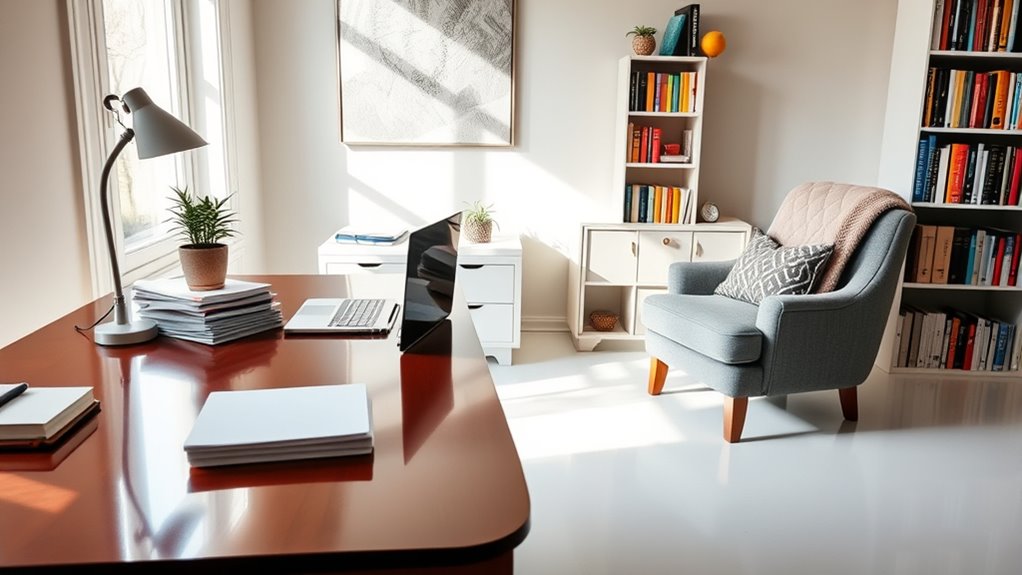
Have you ever noticed how clutter and dust can make your home office and common areas feel chaotic and uninviting? A thorough clean can transform these spaces into relaxing, productive zones. Start by dusting surfaces like shelves, picture frames, and lighting fixtures. Wipe down desks and tables to remove smudges and crumbs. Vacuum or sweep the floors, paying attention to corners and under furniture. Clear out any clutter, such as papers or unused items, to create a tidy environment. Don’t forget to clean windows and glass surfaces for clarity. Consider freshening the air with a quick wipe of vents or air filters. These simple steps will leave your shared spaces feeling fresh, organized, and welcoming.
Final Touches and Maintenance Tips
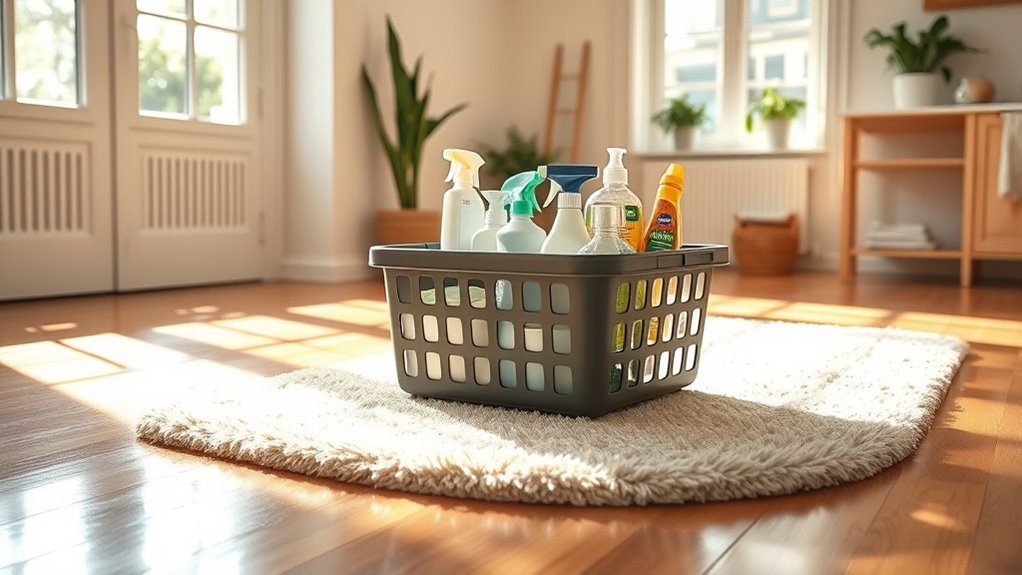
After completing your deep clean, it’s important to focus on final touches that keep your space looking its best. Start by fluffing cushions and pillows to restore their shape and appearance. Wipe down surfaces one last time to catch any dust or smudges that may have been missed. Consider adding fresh linens or decorative touches, like new towels or plants, to give rooms an instant upgrade. Establish a routine to maintain cleanliness, such as daily quick tidies or weekly spot cleaning. Keep cleaning supplies accessible and organized for easy touch-ups. Regularly airing out rooms helps reduce odors and humidity. By staying consistent with these simple habits, you’ll preserve your deep-cleaned space, making it easier to enjoy a fresh, healthy environment every day.
Frequently Asked Questions
How Often Should I Deep Clean Each Room for Optimal Cleanliness?
You should deep clean your bathroom and kitchen every 1-2 months to prevent buildup of grime and germs. Living areas and bedrooms need deep cleaning every 3-6 months, depending on use and household size. Don’t forget high-touch surfaces like doorknobs and switches—clean them more often. Regular deep cleaning maintains cleanliness and reduces stress, so set reminders to stay consistent and avoid feeling overwhelmed.
What Eco-Friendly Cleaning Products Are Safest for My Family?
You should look for eco-friendly cleaning products labeled as non-toxic, biodegradable, and free from harsh chemicals like ammonia and bleach. Brands like Seventh Generation, Mrs. Meyer’s, and Ecover offer safe options for your family. Always read labels carefully, avoid sprays with strong fragrances, and opt for products with plant-based ingredients. This way, you keep your home clean and safe without exposing your loved ones to harmful chemicals.
How Can I Prevent Future Dirt Buildup After Thorough Cleaning?
Did you know regular maintenance can reduce dirt buildup by up to 50%? To prevent future grime, establish a routine cleaning schedule, focusing on high-traffic areas. Use eco-friendly products to keep your home safe, and don’t forget to wipe down surfaces weekly. Keep clutter to a minimum and encourage family members to tidy up daily. Consistency is key; a little effort now saves you big cleaning headaches later.
What Are Quick Tips for Maintaining Cleanliness During Busy Weeks?
During busy weeks, you can maintain cleanliness by tackling small tasks daily, like wiping counters and tidying up clutter. Use a microfiber cloth for quick dusting and keep cleaning supplies within reach for fast spot cleans. Prioritize high-traffic areas and stay consistent—set a timer for 5-10 minutes each day to stay on top of messes. These small habits prevent buildup and make deep cleaning less overwhelming.
How Do I Involve Family Members Without Feeling Overwhelmed?
Think of involving your family as planting seeds for teamwork. You can assign simple tasks, like setting the table or sorting laundry, making chores feel less overwhelming. Keep expectations clear and celebrate small wins together. Use a shared calendar or chart to track progress, so everyone stays motivated. Remember, teamwork turns a mountain into a molehill, transforming cleaning from a chore into a family bonding activity.
Conclusion
As you step back and admire your sparkling, invigorating space, feel the calm wash over you. Your home isn’t just cleaner—it’s a sanctuary where every breath feels lighter and more invigorating. With each room shining and every surface gleaming, you’ve created a peaceful haven free from stress and burnout. Keep this feeling alive with regular upkeep, and let your clean, cozy space be the backdrop for joyful moments and restful days ahead.