Mixing household cleaners like bleach and ammonia creates toxic chloramine fumes that can irritate your lungs and eyes. Combining bleach with acids such as vinegar releases dangerous chlorine gas. Using vinegar and baking soda together neutralizes cleaning power and produces potentially harmful gases. Mixing rubbing alcohol with bleach or ammonia releases chloroform, posing serious health risks. Avoid combining multiple chemicals at once; if you want to stay safe, you’ll find helpful tips on preventing these dangerous mistakes.
Key Takeaways
- Never mix bleach with ammonia or acidic cleaners like vinegar, as it produces toxic chloramine or chlorine gas.
- Avoid combining rubbing alcohol with bleach or ammonia, which releases dangerous gases like chloroform and chloramine vapors.
- Do not mix baking soda with vinegar in enclosed spaces, as the rapid CO₂ release can cause pressure buildup and release harmful fumes.
- Using multiple cleaners simultaneously without proper ventilation can cause unintended chemical reactions and toxic fumes.
- Always read labels carefully, avoid mixing different household chemicals, and store products separately to prevent hazardous reactions.

LEVOIT Air Purifiers for Home Large Room Up to 1875 Ft² with Washable Pre-Filter, AHAM VERIFIDE, Air Quality Monitor, HEPA Sleep Mode for Allergies, Pet Hair in Bedroom, Vital 200S-P, White
𝐖𝐇𝐘 𝐂𝐇𝐎𝐎𝐒𝐄 𝐀𝐇𝐀𝐌 𝐕𝐄𝐑𝐈𝐅𝐈𝐃𝐄 𝐏𝐑𝐎𝐃𝐔𝐂𝐓𝐒: AHAM (Association of Home Appliance Manufacturers) is an ANSI-accredited organization that sets strict...
As an affiliate, we earn on qualifying purchases.
Mixing Bleach and Ammonia
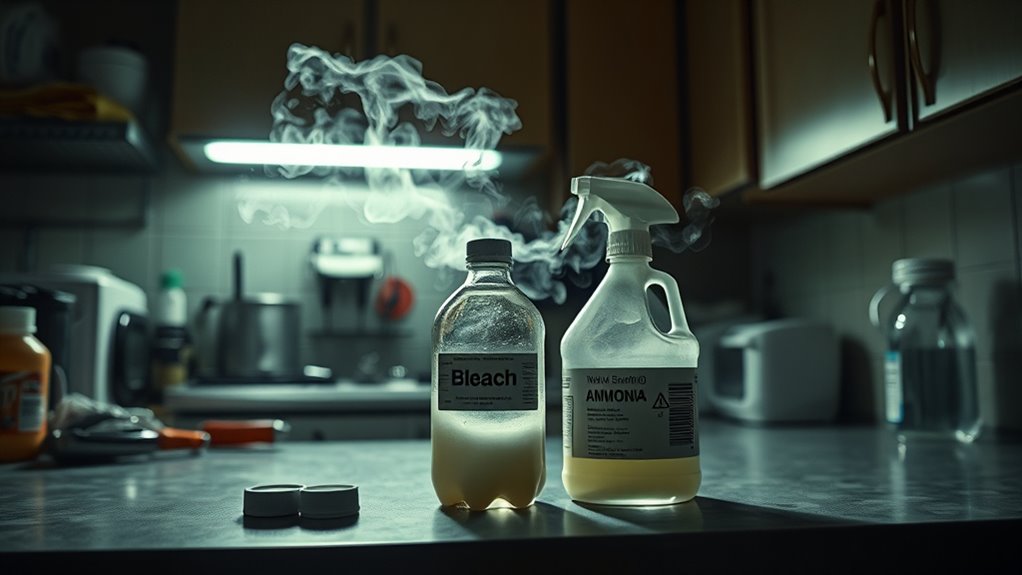
Mixing bleach and ammonia is extremely dangerous because it creates a toxic gas called chloramine vapor. When these chemicals combine, they produce chloramine, which irritates your eyes, nose, throat, and lungs. Breathing in chloramine vapor can cause coughing, shortness of breath, and chest pain, and in severe cases, it may lead to pneumonia or fluid buildup in your lungs. If you accidentally mix these substances, you might experience difficulty breathing or a burning sensation in your chest. Immediate fresh air and medical attention are vital if symptoms worsen. Never combine bleach with ammonia or products containing ammonia. Always read labels carefully, and if you’re unsure about a cleaner’s ingredients, avoid mixing it with other chemicals altogether. Your safety depends on avoiding these dangerous combinations.

LEVOIT Air Purifier for Home Large Room Up to 1073Ft² with Air Quality Monitor, AHAM VERIFIDE, Smart WiFi, Washable Pre-Filter, HEPA Sleep Mode for Pets, Allergies, Dust, Pollen, Vital 100S-P, White
𝐖𝐇𝐘 𝐂𝐇𝐎𝐎𝐒𝐄 𝐀𝐇𝐀𝐌 𝐕𝐄𝐑𝐈𝐅𝐈𝐃𝐄 𝐀𝐈𝐑 𝐏𝐔𝐑𝐈𝐅𝐈𝐄𝐑𝐒: AHAM (Association of Home Appliance Manufacturers) is an ANSI-accredited organization that sets...
As an affiliate, we earn on qualifying purchases.
Combining Bleach With Acidic Cleaners
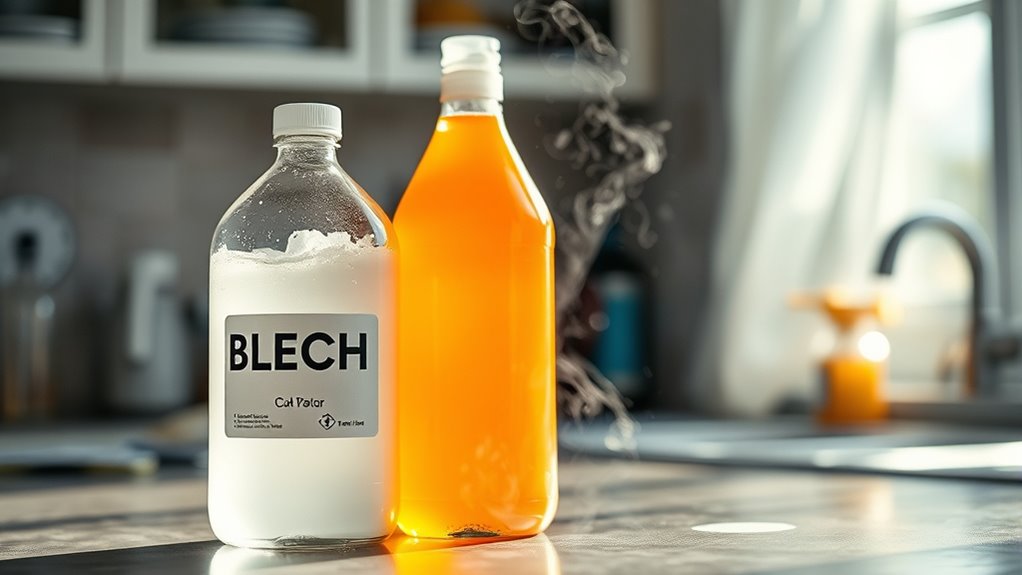
Combining bleach with acidic cleaners can be just as hazardous as mixing bleach and ammonia. When you mix these, you produce chlorine gas, a toxic and potentially deadly substance. Chlorine gas irritates your eyes, throat, and lungs, and in high concentrations, it can cause severe respiratory problems. Many acidic cleaners, like vinegar or certain bathroom and toilet bowl cleaners, contain acids that react violently with bleach. Even a small amount of acid can trigger a dangerous chemical reaction. Always read labels carefully and avoid combining bleach with any product that lists acids or contains vinegar, citric acid, or other acidic compounds. Understanding chemical reactions can help you recognize dangerous mixing situations—always err on the side of caution. If you’re unsure, it’s safest to use each cleaner separately and rinse surfaces thoroughly between applications.

LEVOIT Air Purifier for Home Allergens Pet Hair in Bedroom, Covers Up to 1073 ft² by 56W High Torque Motor, AHAM VERIFIDE, 3-in-1 Filter with HEPA Sleep Mode, Remove Dust Smoke Odor, Core300-P, White
WHY CHOOSE AHAM VERIFIDE AIR PURIFIERS: AHAM (Association of Home Appliance Manufacturers) is an ANSI-accredited organization that sets...
As an affiliate, we earn on qualifying purchases.
Using Vinegar and Baking Soda Simultaneously

When you mix vinegar and baking soda, you produce carbon dioxide gas that causes fizzing. This reaction can temporarily boost cleaning power, but it also neutralizes both substances, reducing their effectiveness. Using them together at the same time often leads to less effective results than when used separately. Additionally, the reaction releases toxic fumes, which can be harmful if inhaled in enclosed spaces. The electric power generation from this reaction is minimal and not suitable for any practical energy use, highlighting the importance of proper cleaning methods. It’s also important to note that these reactions can create a false sense of cleanliness, leading to overlooked dirt or allergens. Furthermore, the release of volatile compounds can contribute to respiratory irritation in sensitive individuals. Understanding chemical reactions helps to prevent unsafe mixing and ensures safer cleaning practices.
Produces Carbon Dioxide
Have you ever wondered why your volcano science project suddenly foams over? When you mix vinegar and baking soda, a chemical reaction produces carbon dioxide gas. This gas creates bubbles and causes the foaming eruption. You might not realize that this reaction also releases a lot of gas quickly, which can be dangerous if trapped in a small space.
Here’s a quick look at what happens:
| Reactants | Gas Produced | Result |
|---|---|---|
| Vinegar + Baking Soda | Carbon Dioxide (CO₂) | Bubbles, fizz, eruption |
| Trapped in container | Accumulates pressure | Potential explosion risk |
| Proper ventilation | Safe release of gas | Avoids hazards |
Always handle these substances carefully to prevent accidents and toxic fumes.
Creates Fizzing Reaction
Mixing vinegar and baking soda together triggers a lively fizzing reaction that’s both fun and educational. When these two substances combine, the acid in vinegar reacts with the baking soda’s sodium bicarbonate, producing carbon dioxide gas. This gas forms bubbles that rapidly escape, creating the fizzy eruption you see. The reaction is quick and vigorous, making it popular for science experiments and cleaning demonstrations. However, it’s important to understand that this fizzing isn’t dangerous in small amounts. It’s simply the release of CO₂ gas, which escapes into the air. While the reaction itself doesn’t produce toxic fumes, the vigorous bubbling can cause messes or accidental spills. Always handle these ingredients carefully, especially in confined spaces, to avoid unexpected splatters or overflows. Additionally, understanding the chemical properties of these substances helps prevent unsafe reactions or misunderstandings about their safety. Being aware of gas release can further aid in preventing accidents during chemical reactions. Recognizing reaction speed can help in timing and controlling such experiments more effectively. Moreover, knowing how reaction byproducts behave is essential for safe handling and cleanup.
Neutralizes Cleaning Power
Using vinegar and baking soda together can weaken each other’s cleaning effectiveness if applied at the same time. When mixed directly, the acid in vinegar reacts with the alkaline in baking soda, producing carbon dioxide gas and water. This neutralization process cancels out their cleaning properties, leaving you with a less effective solution. If you want to use both, apply them separately—use baking soda first to scrub and loosen grime, then follow with vinegar to disinfect and rinse. Combining them prematurely reduces their ability to clean and can waste your time and effort. Remember, their power lies in their individual properties, not in mixing them together. To get the best results, avoid combining vinegar and baking soda in the same container or cleaning step. Proper cleaning techniques can help maximize their benefits without neutralizing their cleaning power. Additionally, understanding the chemical reactions involved can help you avoid common mistakes and improve your cleaning efficiency.

WINIX 5510 Air Purifier (New Generation of 5500-2 with App Support) for Home Large Room Up to 1881 Ft² in 1 Hr, True HEPA, High Deodorization Carbon Filter and Auto Mode, Captures Pet Allergies, Smoke
𝐀𝐇𝐀𝐌 𝐕𝐞𝐫𝐢𝐟𝐢𝐝𝐞 𝐚𝐭 𝟑92 𝐬𝐪 𝐟𝐭.: Also cleans rooms up to 1,882 sq ft in 1 hour (941...
As an affiliate, we earn on qualifying purchases.
Mixing Rubbing Alcohol With Bleach or Ammonia

Mixing rubbing alcohol with bleach or ammonia can produce dangerous gases that pose serious health risks. These chemical reactions release toxic fumes that can irritate your respiratory system or cause more severe harm. Always handle cleaning products carefully and never combine them unless you’re sure it’s safe. Proper chemical handling is essential to prevent accidental exposures and ensure safety during cleaning. Additionally, understanding the chemical properties of these substances can help you avoid hazardous combinations. Being aware of water-based solutions and their interactions can further reduce the risk of unintended chemical reactions. Knowing how chemical reactions occur when mixing certain substances can also help prevent dangerous outcomes. Recognizing safe mixing practices and following manufacturer guidelines can significantly reduce the chance of hazardous fumes forming.
Dangerous Gas Formation
Have you ever wondered what dangerous gases can form when cleaning chemicals are combined? Mixing rubbing alcohol with bleach or ammonia can produce toxic fumes that pose serious health risks. When you combine rubbing alcohol (isopropanol) with bleach, it can release chloroform—a substance linked to dizziness, nausea, and even unconsciousness in high doses. Similarly, mixing alcohol with ammonia creates hazardous vapors like chloramines, which irritate your lungs and eyes. These gases are invisible and highly toxic, making it easy to accidentally inhale dangerous fumes without realizing it. Always remember that combining these chemicals creates unstable reactions, releasing gases that can quickly harm your respiratory system. Never mix cleaning products unless you’re certain they’re safe to combine.
Health Risk Alerts
Because combining rubbing alcohol with bleach or ammonia can produce dangerous gases, it is crucial to understand the health risks involved. When you mix these substances, toxic fumes like chloroform or chloramine vapors can form. Inhalation of these gases can cause respiratory irritation, coughing, and difficulty breathing. Prolonged exposure may lead to more severe health issues, including nausea, dizziness, or even damage to your lungs and nervous system. Children, pregnant women, and those with pre-existing health conditions are especially vulnerable. Always avoid mixing chemicals in your home. If accidental mixing occurs, move to fresh air immediately and seek medical attention if you experience symptoms. Recognizing these risks helps you prevent harmful exposures and maintain a safe environment.
Combining Hydrogen Peroxide With Organic Materials

Combining hydrogen peroxide with organic materials can be dangerous if you’re not careful. Organic materials like paper, cloth, or plant matter can react violently when exposed to hydrogen peroxide, especially at higher concentrations. This reaction may produce heat, sparks, or even fires, risking burns or property damage. For example, mixing hydrogen peroxide with cellulose-based substances can cause rapid decomposition, releasing oxygen and increasing the risk of combustion. Additionally, organic matter can act as a catalyst for decomposition reactions, which can lead to unpredictable and hazardous outcomes. Always store hydrogen peroxide separately from organic materials, and avoid adding it to any substance that might contain organic compounds. Proper storage safety practices are essential to prevent accidental reactions. If you need to disinfect or clean with hydrogen peroxide, use it in appropriate concentrations and follow safety guidelines. Ignoring these precautions can lead to hazardous situations and serious injuries.
Using Multiple Chemical Cleaners at Once

Using multiple chemical cleaners at once can be extremely hazardous if you’re not careful. When you mix different products without understanding their interactions, you risk releasing toxic fumes or creating dangerous chemical reactions. Even if each cleaner is safe alone, combining them can produce harmful gases like chloramine vapors or chlorine gas. Always read labels and follow instructions closely. If you’re unsure whether two cleaners can be used together, it’s best to avoid mixing them altogether. Use separate cleaning steps, rinsing thoroughly between products. Ventilate the area well during and after cleaning. Remember, more is not better—using multiple cleaners simultaneously increases the chance of accidental hazardous reactions. Being aware of chemical interactions and proper handling procedures can significantly reduce the risk of hazardous fumes. Additionally, understanding the chemical composition of each product helps you make safer choices and avoid unintended dangerous reactions.
Mixing Toilet Bowl Cleaners With Other Products

Mixing toilet bowl cleaners with other cleaning products can lead to dangerous chemical reactions that pose serious health risks. Many toilet bowl cleaners contain acids or bleach, which can react violently if combined with other chemicals. For example, mixing a bleach-based cleaner with ammonia-based products creates chloramine vapors, which cause respiratory issues and eye irritation. Combining toilet bowl cleaners with acidic or alkaline substances can produce toxic fumes or even release chlorine gas. Always read labels carefully and avoid mixing different cleaners, especially those with unknown ingredients. Using multiple products together without understanding their chemical interactions can result in harmful fumes that may cause nausea, coughing, or more severe health problems. It is crucial to recognize chemical incompatibilities and prioritize proper cleaning practices. When in doubt, use cleaning products separately and ensure proper ventilation. Understanding chemical reactions is essential to prevent dangerous outcomes when cleaning. Being aware of common household chemical dangers can help you avoid accidental exposures and health hazards.
Combining Drain Cleaners With Other Chemicals
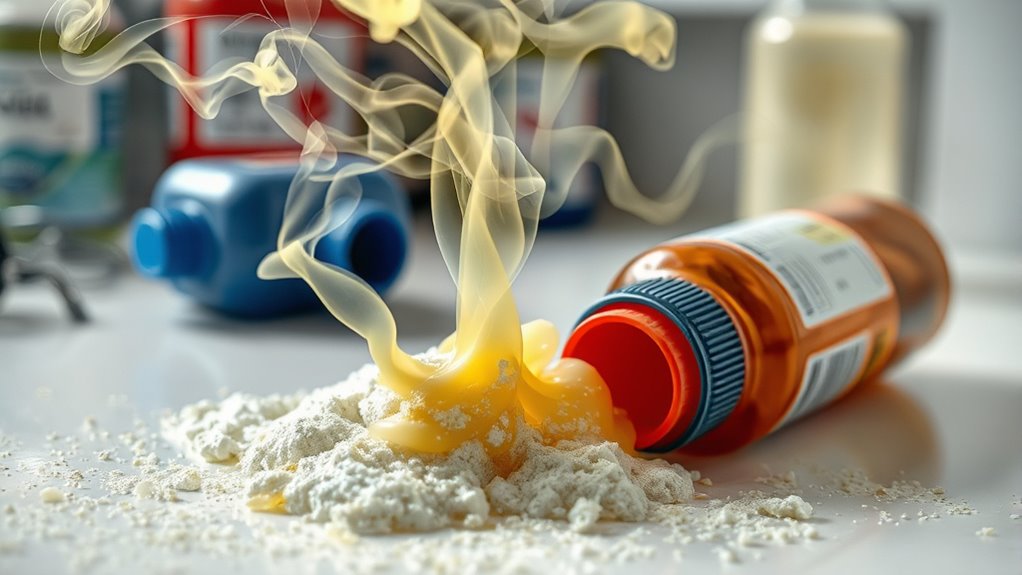
When drain cleaners are combined with other chemicals, dangerous reactions can occur instantly, releasing toxic fumes or causing explosions. For example, mixing a drain cleaner containing sodium hydroxide with an acid can produce heat and harmful gases. Always avoid combining drain cleaners with bleach, ammonia, or other household chemicals. The table below highlights common risky combinations:
| Safe Practices | Dangerous Combinations |
|---|---|
| Use drain cleaners alone | Mix with bleach or ammonia |
| Follow label instructions | Combine with acids or acids |
| Vent area well after use | Mix different chemical cleaners |
Understanding these risks helps you prevent hazardous reactions. Never assume that combining chemicals is safe—most reactions are unpredictable and can cause serious health issues or property damage. Always read labels carefully and store chemicals separately.
Frequently Asked Questions
How Can I Identify Dangerous Chemical Combinations in My Cleaning Products?
You can identify dangerous chemical combinations by carefully reading label instructions and warnings. Always check for ingredients like bleach, ammonia, or acids, and avoid mixing products containing these. Use separate containers for different cleaners and never combine them unless verified safe. When in doubt, consult manufacturer guidelines or look up specific chemical interactions online. Staying informed and cautious helps prevent toxic fumes and guarantees your safety during cleaning.
Are There Safe Alternatives to Common Harmful Mixing Practices?
Yes, there are safe alternatives to harmful mixing practices. Think of cleaning as cooking; use pre-mixed, commercially available products designed for specific tasks. Always read labels carefully, avoid mixing chemicals, and opt for natural solutions like vinegar and baking soda for many cleaning needs. These options keep your space safe, like a well-tuned orchestra, without risking toxic fumes. Stick to proven, simple methods for a cleaner, safer home.
What Are the Signs of Toxic Fume Exposure During Cleaning?
You might notice difficulty breathing, dizziness, or a burning sensation in your eyes, nose, or throat during cleaning. You could also experience headaches, coughing, or nausea. If you sense a strange or chemical smell, leave the area immediately and get fresh air. Persistent symptoms or irritation mean you should seek medical attention promptly. Always prioritize proper ventilation and wear protective gear to prevent exposure to toxic fumes.
How Should I Store Cleaning Chemicals to Prevent Accidental Mixing?
A stitch in time saves nine, so store your cleaning chemicals carefully. Keep each chemical in its original container with clear labels, and never transfer them to unmarked bottles. Store acids and alkalis separately, and avoid stacking incompatible products. Use a designated, well-ventilated cabinet away from children and pets. Regularly check for leaks or damage, and always close lids tightly after use. This prevents accidental mixing and keeps everyone safe.
What Immediate Steps Should I Take if I Accidentally Mix Toxic Chemicals?
If you accidentally mix toxic chemicals, immediately evacuate the area to avoid inhaling fumes. Ventilate the space by opening windows and doors if it’s safe. Don’t try to neutralize or clean up the spill yourself; call emergency services or a hazardous materials team for guidance. Keep others away until professionals arrive and ensure you wear protective gear if you must handle the situation. Your priority is safety.
Conclusion
Remember, mixing chemicals is like playing with fire—one wrong move can ignite dangerous fumes. Stay vigilant and treat each cleaner like a guarded treasure, never combining them without knowing the risks. Think of your home as a delicate symphony; a single discordant note can turn harmony into chaos. By respecting these boundaries, you’ll keep your space safe and your air pure, transforming everyday cleaning into a safe, peaceful ritual rather than a hazardous gamble.