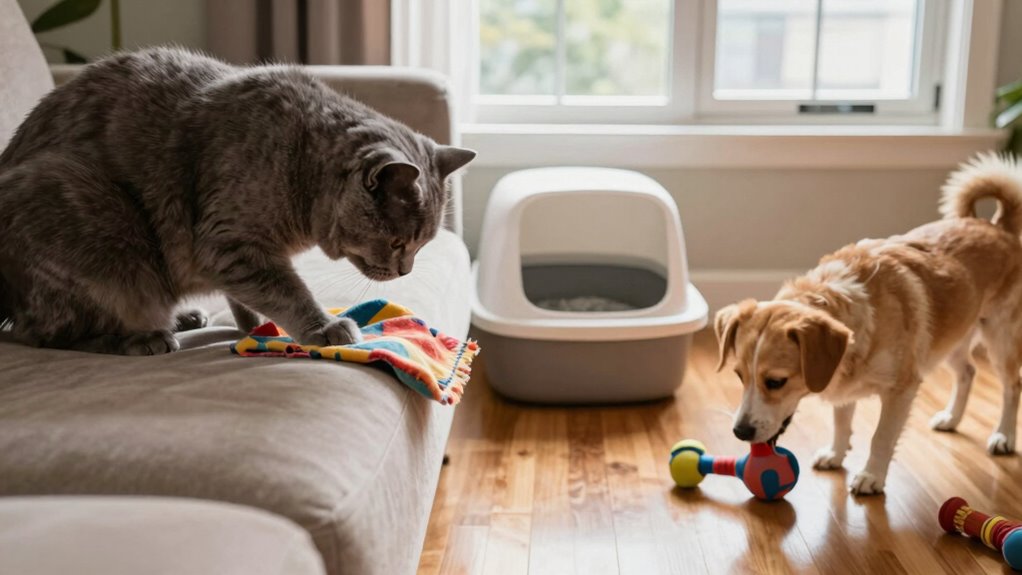

To keep your home clean with pets, sweep or vacuum floors daily and mop with natural solutions like vinegar and water to neutralize odors. Regularly vacuum fabric furniture and use baking soda to absorb smells. Scoop litter boxes daily and clean them weekly with odor-control litters or deodorizing pellets. Consistently brushing your pets reduces shedding, and airing out spaces helps manage odors. Continuing further will give you more effective tips to maintain a fresh, pet-friendly home.

Turn your quiet moments into listening time
- Thousands of audiobooks, podcasts and originals
- Listen on your phone, tablet or Echo — also offline
- Cancel anytime
Key Takeaways
- Vacuum and sweep floors daily to remove pet hair, dirt, and prevent odor buildup.
- Use natural cleaning solutions like vinegar and water for mopping hard floors.
- Regularly vacuum and steam clean fabric furniture and curtains to eliminate hair and odors.
- Scoop litter boxes daily and clean weekly with soap and water to control odors effectively.
- Maintain good ventilation and use air purifiers to reduce pet-related smells in living spaces.
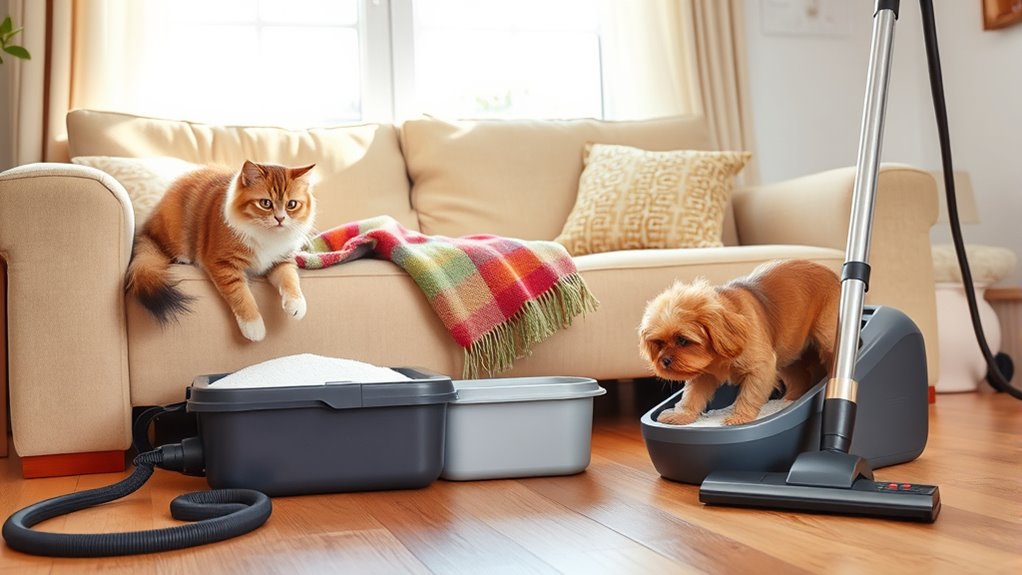
Having pets can bring joy and companionship, but it also means you need to stay on top of cleaning. One of the biggest challenges pet owners face is managing pet hair and controlling odors. Staying consistent with pet hair removal techniques keeps your home looking tidy and helps reduce allergens. Use a high-quality vacuum with a brush roll designed for pet hair, or invest in a handheld lint roller for quick fixes on furniture and clothing. Regularly brushing your pets also markedly reduces loose hair, preventing it from spreading across your floors and furniture. Incorporate daily grooming routines to keep hair shedding manageable.
Consistent pet hair removal and daily grooming keep your home tidy and reduce allergens.
When it comes to odor control, ventilation is your best friend. Open windows regularly to let fresh air circulate, and consider using air purifiers equipped with HEPA filters to trap pet dander and odors. Cleaning pet bedding and blankets weekly minimizes lingering smells and reduces bacteria buildup. Wash these items with enzyme-based cleaners that break down odor-causing substances, and avoid harsh chemical air fresheners that can clash with pet smells or irritate sensitive noses.
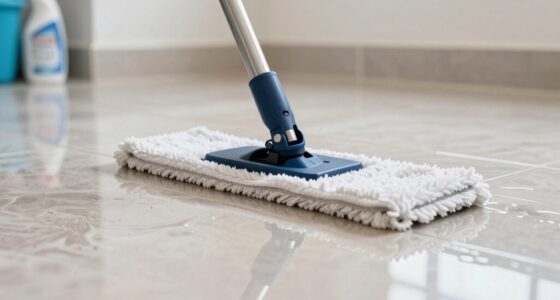
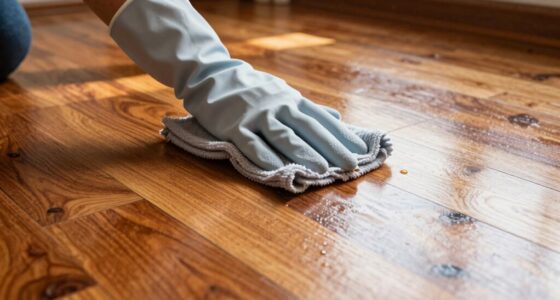
Floors require frequent attention to keep them clean and odor-free. Sweeping or vacuuming daily prevents pet hair from accumulating and keeps dirt and dander in check. Mop hard floors with natural cleaning solutions like vinegar and water, which cut through grime and neutralize odors naturally. For carpets, steam cleaning every few months can eliminate deep-seated pet odors and stains. Use pet-safe cleaning products to avoid exposing your furry friends to harmful chemicals.
Fabric areas such as couches, curtains, and cushions tend to trap pet hair and odors over time. Regularly vacuum fabric furniture using upholstery attachments, and consider steam cleaning fabric surfaces periodically to remove embedded hair and smells. For quick pet hair removal from upholstery, use rubber gloves or a damp sponge to gather hair effectively. When dealing with persistent pet odors in fabric areas, sprinkle baking soda on surfaces, let it sit for a few hours, then vacuum it up. Baking soda absorbs odors naturally, leaving your home smelling fresh.
Additionally, air purification can significantly improve indoor air quality by capturing airborne pet allergens and odors, making your space more comfortable. Litter areas also demand regular upkeep to keep odors in check. Scoop litter boxes at least once a day and thoroughly clean them with soap and water weekly. Consider using odor-control litters or adding deodorizing pellets to the box to minimize smells. Placing the litter box in a well-ventilated spot helps disperse odors, and using a covered box can contain smells better—just make sure it’s cleaned regularly to prevent odor buildup inside.
Products Worth Considering

Levoit Eleva 300X HEPA Air Purifier for Home and Bedroom

Coway Airmega 250 Air Purifier for Large Rooms

Levoit Core 400S-P Smart Air Purifier for Large Rooms
As an affiliate, we earn on qualifying purchases.
Frequently Asked Questions
How Often Should I Deep Clean Pet Areas?
You should deep clean your pet areas at least once a month to keep them fresh and hygienic. Regular vacuum maintenance helps remove pet hair and dander, preventing buildup. For stains, use effective stain removal tips like blotting and gentle cleaning solutions promptly. Deep cleaning frequency may increase if you have multiple pets or if areas get heavily soiled, ensuring a clean, healthy space for your pets and your family.
What Non-Toxic Cleaning Products Are Safe for Pets?
Think of your cleaning routine as a gentle breeze guiding your home’s harmony. You can use non-toxic cleaning products made from natural ingredients, like vinegar, baking soda, and lemon, which act as safe, chemical alternatives. These natural options effectively clean floors, fabrics, and litter areas without risking your pet’s health. Always check labels to make certain ingredients are pet-friendly, turning your home into a safe haven where cleanliness and care flourish together.
How Can I Prevent Pet Hair From Settling?
To prevent pet hair from settling, you should focus on regular pet hair removal and hair shedding prevention. Brush your pets frequently to reduce loose hair, and vacuum often using a high-quality, pet-specific attachment. Use washable, lint-free cloths for quick cleanup and consider air purifiers to capture airborne hair. Keeping your pets well-groomed and maintaining a consistent cleaning routine helps minimize pet hair accumulation on floors and furniture.
Are There Specific Cleaning Techniques for Pet Allergies?
You can effectively manage pet allergies by regularly maintaining your air purifier and employing allergen reduction techniques. Make sure to change filters frequently and clean vents to guarantee peak performance. Use HEPA filters to trap pet dander and dust mites, and vacuum with a HEPA-equipped cleaner often. Additionally, wash pet bedding and fabrics regularly to minimize allergens. These steps help create a cleaner indoor environment and alleviate allergy symptoms.
How Do I Train Pets to Avoid Dirtying Certain Areas?
You can train your pets to avoid dirtying certain areas by using consistent training techniques. Start with clear boundaries, using commands like “leave it” or “no,” and reward good behavior with treats or praise. Redirect their pet behavior to appropriate spots, like designated litter or bedding areas. Be patient and consistent, and gradually reinforce these habits. Over time, your pets will learn to respect the areas you want kept clean.
Conclusion
By maintaining regular cleaning routines for your floors, fabrics, and litter areas, you’ll create a healthier space for both you and your pets. Consistency is key—think of it as “an ounce of prevention is worth a pound of cure.” With a little effort, your home can stay fresh and odor-free, making life more enjoyable for everyone. Keep up the habits, and you’ll enjoy a cleaner, happier home where your pets thrive.