You should replace your sponges, brushes, and pads when they show signs of wear, such as tears, frayed edges, or loss of stiffness, and when they develop persistent odors or discoloration. Bacterial buildup may also require immediate disposal if you notice slimy textures or mold. For ideal hygiene, swap out tools every 1-2 weeks or after about 10-15 uses, especially if they’re heavily used. If you want to keep your cleaning routine effective and germ-free, continue exploring these tips.
Key Takeaways
- Replace sponges and pads every 1-2 weeks or when persistent odors, discoloration, or stains remain after cleaning.
- Discard brushes with frayed, bent, or splayed bristles that have lost stiffness or show uneven wear.
- Check for slimy, sticky textures, dark spots, or mold growth as signs it’s time to replace cleaning tools.
- Remove and replace tools exhibiting tears, holes, or significant damage compromising effectiveness and safety.
- Regularly inspect for signs of bacterial buildup or material degradation and replace to maintain hygiene and cleaning efficiency.

DYMOLL Dish Wand Refills 8Packs,Sponge Replacement Heads,Dish Wand Sponge Refill for Kitchen Cleaning
WHAT YOU GET : Dish wand replacement sponge heads pack of 8
As an affiliate, we earn on qualifying purchases.
As an affiliate, we earn on qualifying purchases.
Signs That Your Sponge Has Outlived Its Usefulness
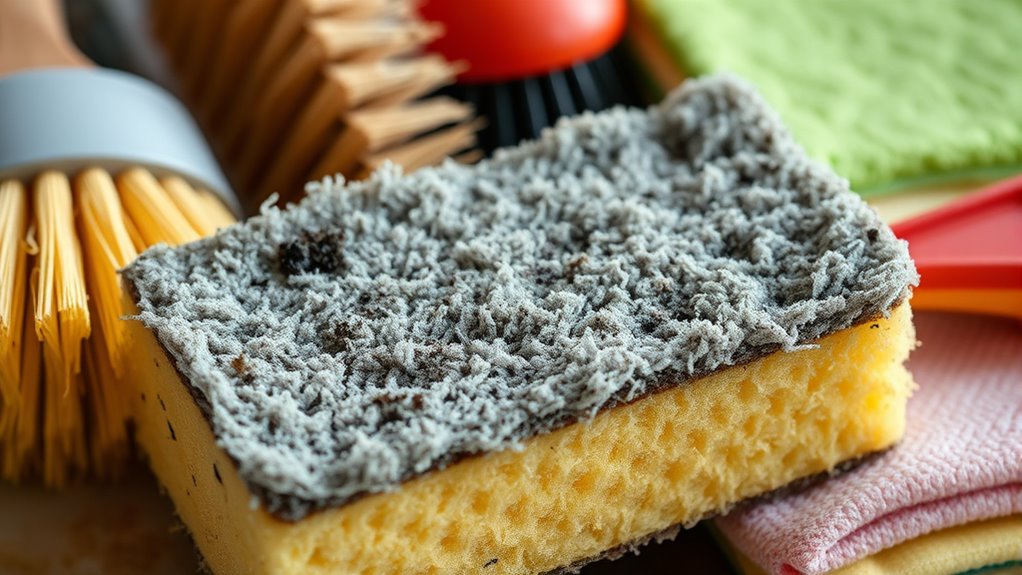
Even if your sponge looks okay on the surface, it might be time to replace it if you notice certain signs. First, check for persistent odors that won’t go away even after rinsing thoroughly. A foul smell indicates bacteria buildup, which can’t be fully cleaned. Next, examine the texture; if the sponge feels slimy or sticky, it’s a sign of mold or bacteria growth. Additionally, if the sponge has developed tears, holes, or frayed edges, it’s losing its ability to clean effectively. Discoloration that doesn’t fade after washing is another indicator. Furthermore, bacteria buildup can occur rapidly in moist environments, making regular replacement essential. Finally, if you notice soap or dirt residue remaining after cleaning, your sponge isn’t doing its job anymore. When these signs appear, it’s best to replace your sponge to maintain hygiene and cleaning efficiency. Regularly replacing cleaning tools is also essential for hygiene maintenance and overall effectiveness. To ensure your cleaning tools stay in top condition, consider the longevity of cleaning tools and replace them periodically.

20 Pack Miaozhun Double-Ended Gun Cleaning Brush, 7 Inch Nylon Bristle Brushes, Gun Cleaning Supplies Kit, All Purpose Cleaning Brush with Plastic Handle
Versatile All-Purpose Cleaning Brush: This multi-functional cleaning brush is expertly designed for a wide range of cleaning tasks….
As an affiliate, we earn on qualifying purchases.
As an affiliate, we earn on qualifying purchases.
How to Spot Worn-Out Brush Bristles

You can tell your brush bristles are worn out when you notice visible bending or fraying. If the bristles feel softer or less stiff than before, it’s a sign they’re losing their effectiveness. Also, check for uneven wear, which indicates it’s time to replace your brush for better cleaning results. Regular inspection of piercing care and hygiene tools can help prolong their lifespan and ensure optimal performance. Incorporating sustainable cleaning practices by replacing worn tools at the right time supports both hygiene and environmental responsibility. Monitoring auditory processing cues can also help identify when tools like brushes and sponges need replacement to maintain effective cleaning. Additionally, understanding personality assessments like the 16PF can aid in developing better cleaning routines tailored to individual preferences and habits.
Visible Bending or Fraying
When inspecting your cleaning tools, look closely at the bristles for signs of wear. If you notice the bristles bending easily or appearing frayed at the ends, it’s a sign they’re worn out. Bent bristles can’t effectively scrub surfaces, and frayed tips may scratch or damage delicate materials. Check for uneven or misshapen bristles, which indicate excessive use or damage. If the bristles splay outward or lose their original shape, it’s time to replace the tool. Maintaining a sharp bristle profile ensures peak cleaning performance. Regularly examining your brushes and replacing them when you see bending or fraying helps keep your cleaning routine efficient and your surfaces protected. Additionally, tool longevity depends on proper maintenance and timely replacements to prevent ineffective cleaning.
Loss of Bristle Stiffness
Over time, cleaning tools can lose their bristle stiffness, which diminishes their effectiveness. When bristles become soft or floppy, they won’t scrub surfaces properly, making your cleaning less efficient. To spot this, press the bristles against a hard surface and see if they bend easily or stay flattened. Worn-out bristles often spread apart or splay in different directions, reducing their ability to pick up dirt or debris. If you notice a significant loss of firmness, it’s a sign that the bristles have worn down and the tool isn’t performing as it should. Additionally, if the bristles shed excessively or become misshapen, it’s time to replace the brush. Proper maintenance of cleaning tools can help prevent the accumulation of bacteria and prolong their usability. Regularly inspecting your tools for signs of wear can also help you recognize when replacement is necessary, ensuring you maintain optimal cleaning performance. To further enhance cleaning tool longevity, consider cleaning and drying tools thoroughly after each use. Maintaining stiff bristles ensures you get thorough cleaning and prolongs the life of your tools. Incorporating proper cleaning tool maintenance practices can further extend their lifespan and optimize cleaning results.
Uneven Bristle Wear
Uneven bristle wear is a common sign that your cleaning tool is nearing the end of its lifespan. You’ll notice some bristles are shorter or frayed, while others remain intact. This unevenness means the brush isn’t cleaning effectively anymore, as worn-out bristles can’t reach into crevices or scrub surfaces properly. Check for bent, broken, or missing bristles, especially at the edges or center. If you see patches where bristles are markedly shorter or splayed out, it’s time to replace the brush. Continuing to use it can damage surfaces or spread dirt instead of removing it. Regularly inspecting bristle wear helps you maintain cleaning efficiency and ensures you don’t waste time on tools that aren’t doing their job.

AIDEA Non-Scratch Scouring Pads, Dish Scrubber Pads for Household and Kitchen, Multipurpose Scour Pads for Cleaning, 24 Pack, 5.5in*3.5in
Versatility at Its Best: AIDEA non-scratch scouring pads excel at tackling a variety of cleaning tasks; effortlessly handle…
As an affiliate, we earn on qualifying purchases.
As an affiliate, we earn on qualifying purchases.
Detecting Bacterial Buildup in Cleaning Pads
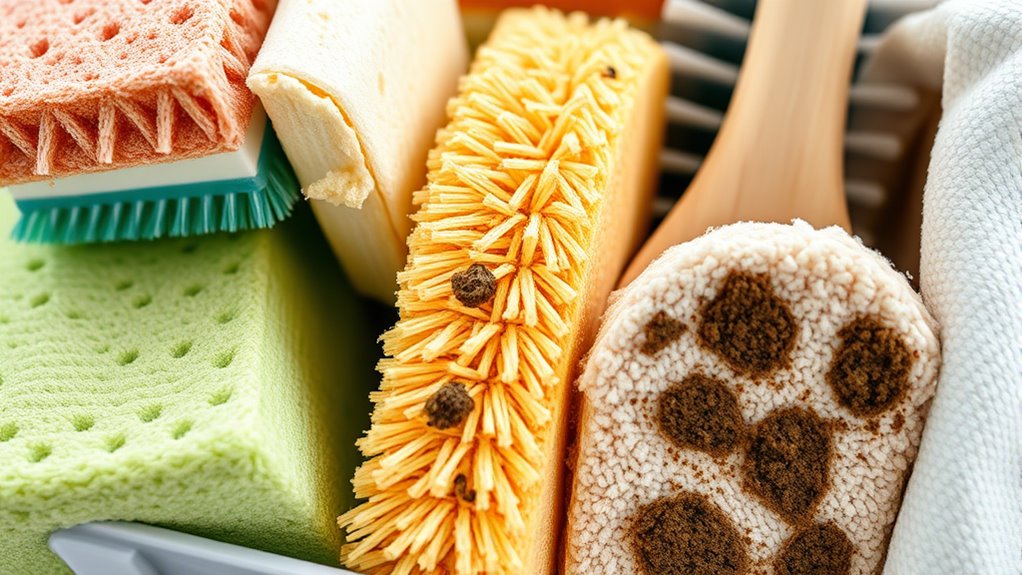
Detecting bacterial buildup in cleaning pads is vital to maintaining a hygienic environment. Over time, moisture and food particles can cause bacteria to thrive in the fibers, even if the pad looks clean. You might notice a musty smell or see dark spots that don’t wash away easily. Feel the texture; if it feels slimy or sticky, bacteria could be present. Regular inspection helps you identify these signs early. To confirm, you can soak the pad in a mixture of water and a disinfectant or bleach, then check for persistent odors or discoloration. Remember, bacteria can cause stains, odors, and even health issues, so replacing or thoroughly sanitizing pads when you notice signs of bacterial buildup is essential for maintaining a safe, clean space.

Scotch-Brite Odor Resist Non-Scratch Scrub Sponge, Dishwasher-Safe Kitchen Sponges that Resist Bacterial Odors, Multipurpose Dish Sponge for Gentle Cleaning, 6 Dish Sponges
SIX SCRUBBING SPONGES: This pack of Scotch-Brite Odor Resist Non-Scratch Scrub Sponges includes 1 pack of six sponges.
As an affiliate, we earn on qualifying purchases.
As an affiliate, we earn on qualifying purchases.
The Impact of Discoloration and Odors
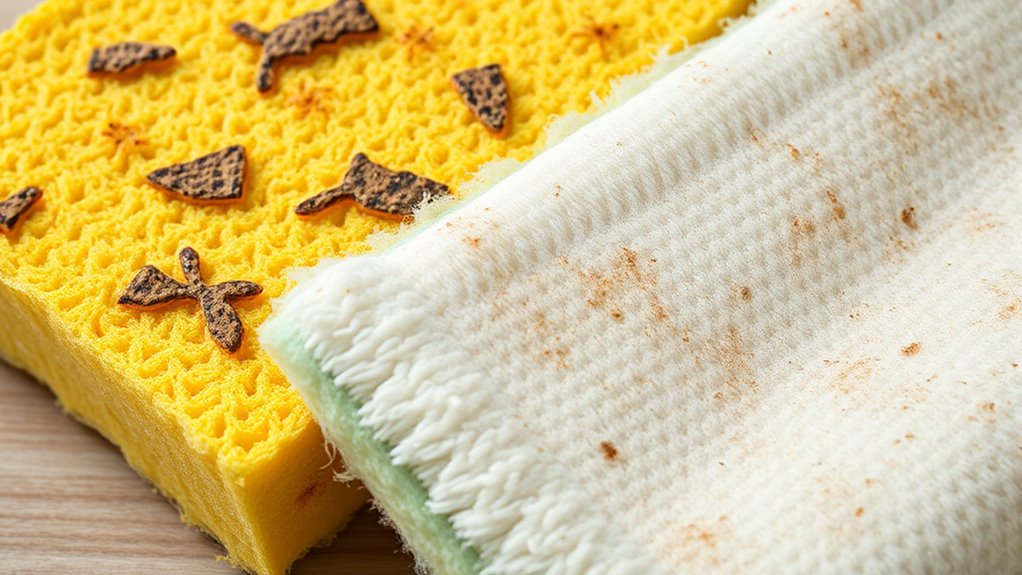
You might notice stains or spots on your cleaning tools that don’t come out easily, signaling potential damage. Persistent odors can make your tools unpleasant to use and may indicate bacterial growth. Discoloration and material breakdown reduce their effectiveness and lifespan, so paying attention to these signs is essential. Additionally, using high-quality cleaning tools can help maintain their durability and performance over time. Regularly inspecting your tools for wear and tear can prevent the need for premature replacements and ensure optimal cleaning results. Being aware of the material composition of your cleaning tools can also guide you in choosing appropriate cleaning and maintenance methods. Recognizing signs of material degradation early can help extend the life of your tools and maintain their cleaning efficiency.
Visible Stains and Spots
Visible stains and spots can markedly diminish the appearance of your cleaning tools, making them look dirty even after they’ve been washed. These blemishes can also harbor bacteria, reducing cleaning effectiveness. When you notice discoloration or persistent spots, it’s a clear sign that the tool may need replacing. Consider replacing your cleaning tools if you see:
- Deeply ingrained stains that won’t wash out
- Discoloration that affects cleaning performance
- Residue buildup that causes spots
- Faded or worn-out appearance
- Visible mold or mildew growth
Ignoring these signs can lead to ineffective cleaning and potential health risks. Regularly inspecting your tools guarantees they remain hygienic and effective, saving you time and effort in the long run. Using proper cleaning techniques and replacing worn tools can help maintain hygienic standards. A modern kitchen equipped with innovative cleaning solutions can also help maintain more hygienic tools through automated and precision cleaning techniques. Staying updated on trends in cleaning technology can provide additional ways to keep your tools in optimal condition.
Persistent Unpleasant Odors
Persistent unpleasant odors can develop on cleaning tools over time, especially when discoloration and residue accumulate. These odors can transfer to surfaces you clean, making tools feel unclean even after washing. To prevent this, inspect your tools regularly for signs of odor and discoloration. If odors persist despite cleaning, it’s a sign it’s time to replace the tool. Regularly maintaining your tools and replacing worn items helps ensure a hygienic cleaning process and prevents odor transfer. Additionally, proper storage of your cleaning tools can reduce moisture buildup and inhibit odor-causing bacteria growth.
Discoloration and Material Breakdown
Discoloration and material breakdown often result from prolonged exposure to moisture, residues, and bacteria, which weaken the integrity of cleaning tools. Over time, you may notice your sponges, brushes, or pads losing their original color, turning dull or stained. This deterioration isn’t just cosmetic; it signals that bacteria and mold could be lurking, increasing the risk of spreading germs. Replacing tools at this stage helps maintain cleaning effectiveness and hygiene. Keep an eye out for:
- Bleached or faded colors
- Persistent stains that won’t wash out
- Frayed or crumbling bristles
- Soft or spongy textures
- Unpleasant odors despite cleaning
Addressing these signs promptly guarantees you’re not just cleaning surfaces but also preventing potential health hazards.
Frequency of Replacing Different Cleaning Tools
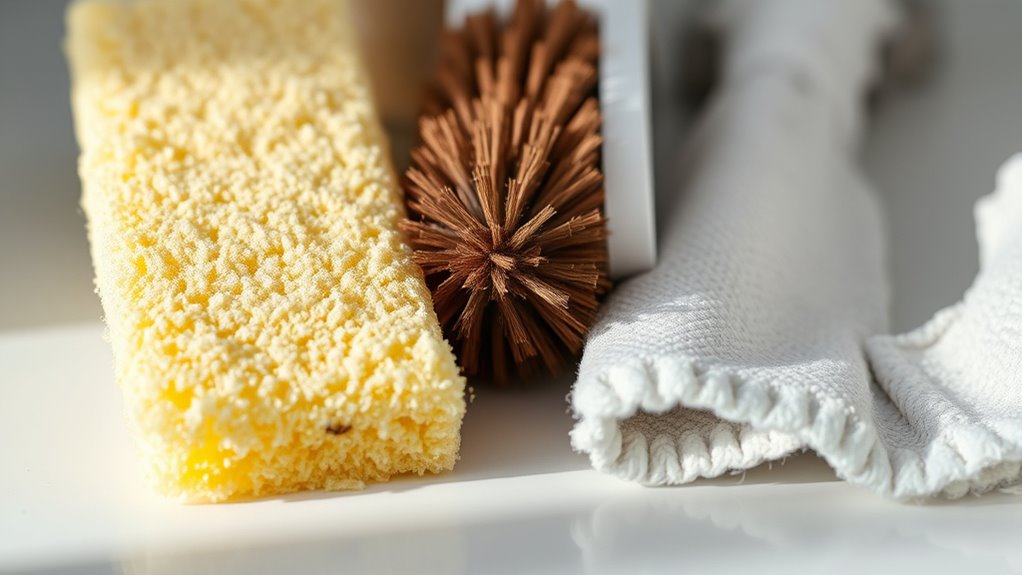
Knowing when to replace your cleaning tools is essential for maintaining their effectiveness and ensuring a hygienic environment. Sponges and scrub brushes should be replaced every one to two weeks if used frequently, as they harbor bacteria and mold over time. For pads used on floors or appliances, replace them after about 10 to 15 uses or when they show signs of wear, such as tearing or loss of abrasiveness. Small brushes or detail tools can last longer but need replacement when bristles fray or become loose. Regularly inspecting your tools helps you determine the right time to swap them out. Using worn or dirty tools reduces cleaning efficiency and can spread germs, so timely replacements are vital for effective, hygienic cleaning routines.
Proper Cleaning and Maintenance to Extend Tool Life
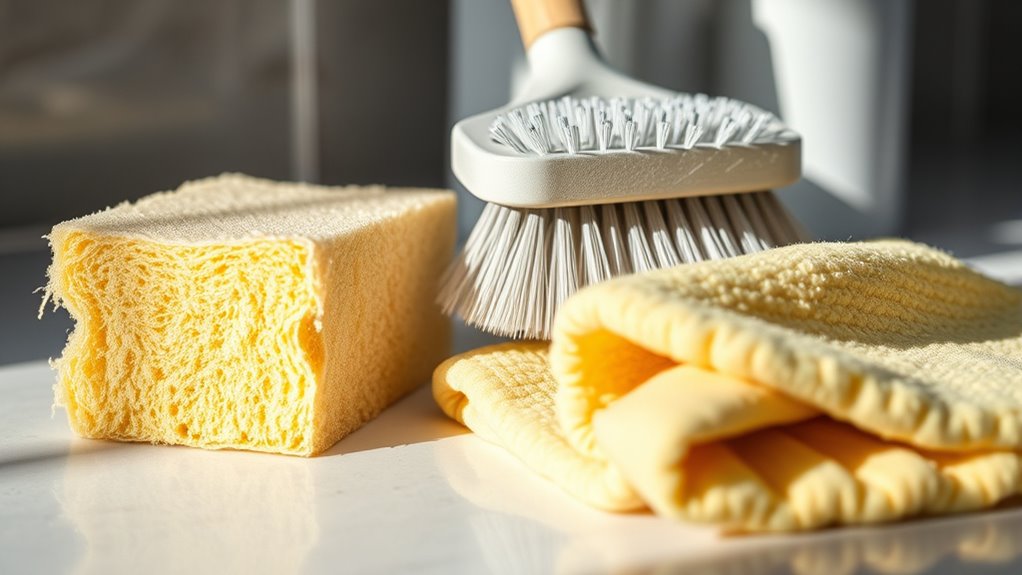
Regularly cleaning your tools after each use not only keeps them hygienic but also prolongs their lifespan. To do this effectively, rinse tools thoroughly to remove debris and soap residues. Sanitize with a mild bleach solution or vinegar to eliminate bacteria. Dry tools completely to prevent mold and rust. Store them in a dry, well-ventilated area, avoiding damp spaces. Regular maintenance also involves inspecting for dirt buildup and scrubbing stubborn spots. Keep your tools in good shape by:
- Rinsing thoroughly after each use
- Sanitizing periodically
- Drying completely before storage
- Inspecting for damage or residue
- Storing in a dry, organized place
These steps ensure your cleaning tools stay effective longer, saving you money and effort over time.
When to Discard Tools Due to Damage or Tears
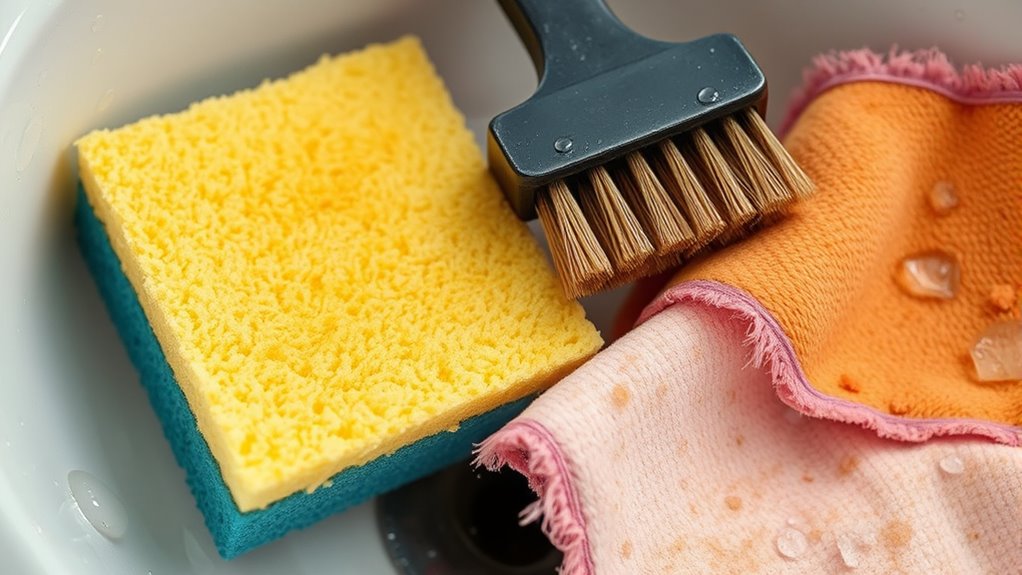
Even with proper maintenance, tools can become unsafe or ineffective if they sustain significant damage or tears. When you notice cracks, deep cuts, or frayed bristles, it’s time to discard the tool. Tears or rips in sponges, pads, or brushes create gaps where dirt and germs can hide, reducing cleaning effectiveness and risking cross-contamination. Damaged handles or broken parts can compromise your grip, increasing the chance of accidents. Don’t wait until the damage worsens; using compromised tools can damage surfaces or pose safety hazards. Regularly inspect your cleaning tools for tears, cracks, or missing bristles. If damage is beyond minor wear, replace the tool promptly. Staying vigilant ensures your cleaning remains effective and safe, protecting both your surfaces and your health.
Choosing the Right Replacement Schedule for Your Routine

Establishing a replacement schedule for your cleaning tools guarantees they stay effective and safe to use. To determine the right timing, consider how frequently you clean and the type of surfaces you tackle. Regularly inspect your tools for wear, odors, or buildup. Setting reminders helps keep your routine consistent. Keep in mind these tips:
- Replace sponges every 1-2 weeks to prevent bacteria buildup
- Swap out brushes after 3-6 months for ideal cleaning
- Change pads monthly if used daily
- Rotate tools weekly to avoid cross-contamination
- Follow manufacturer recommendations for specific tools
Safe Disposal Practices for Used Cleaning Tools
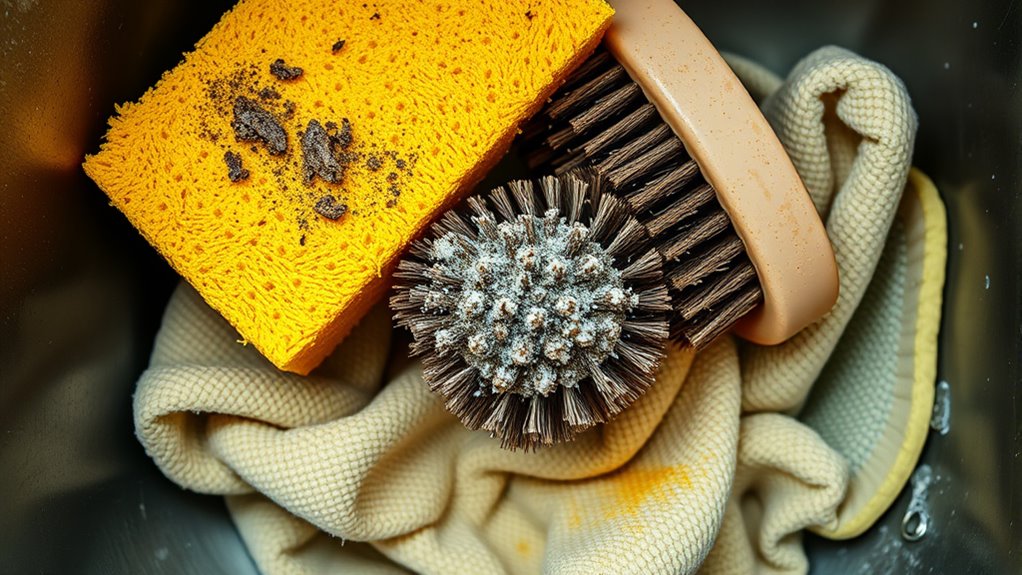
When disposing of used cleaning tools, you need to follow proper methods to prevent the spread of germs and bacteria. Make sure you separate contaminated tools and dispose of them responsibly, considering environmental impacts. By doing so, you reduce the risk of cross-contamination and protect both your health and the planet.
Proper Disposal Methods
Are you unsure how to dispose of used cleaning tools safely? Proper disposal prevents germs from spreading and protects the environment. First, thoroughly rinse tools to remove dirt and bacteria. If the item is disposable, place it in your regular trash. For reusable tools, consider repurposing or recycling if possible. Always check local disposal regulations. When discarding, keep these points in mind:
- Wrap contaminated tools in plastic before trashing
- Avoid flushing sponges or brushes down the drain
- Use designated recycling centers for plastic parts
- Disinfect tools before disposal if contaminated with chemicals
- Do not toss into compost or yard waste bins
Following these steps ensures safe, responsible disposal and helps maintain a hygienic environment.
Prevent Cross-Contamination
Proper disposal of cleaning tools isn’t just about protecting the environment—it’s also key to preventing cross-contamination. Always separate used tools that have come into contact with raw or contaminated surfaces from clean ones. Rinse sponges, brushes, and pads thoroughly with hot water to remove debris and bacteria before disposal. If the tools are heavily soiled or contaminated, consider disinfecting them with a bleach solution or replacing them entirely. Wrap disposable tools in sealed bags to contain germs and prevent spread during disposal. Never leave used cleaning tools lying around where they can come into contact with other items or surfaces. By following these practices, you reduce the risk of transferring germs, bacteria, and harmful pathogens, ensuring a safer environment for everyone.
Environmental Considerations
Ever considered how your disposal methods impact the environment? Properly disposing of used cleaning tools helps reduce waste and prevent pollution. You can extend the life of the planet by following eco-friendly practices. For example, consider recycling or repurposing items whenever possible. Avoid throwing plastics into regular trash; instead, look for local recycling programs. Compost biodegradable materials like natural scrubbers or wooden brushes. Minimize waste by choosing tools with replaceable heads over single-use products. Properly dispose of chemical-laden sponges and pads by following local hazardous waste guidelines. Also, clean tools thoroughly before disposal to prevent bacteria spread. Remember, small actions like these collectively make a significant difference in protecting the environment.
Tips for Selecting New, Hygienic Cleaning Supplies
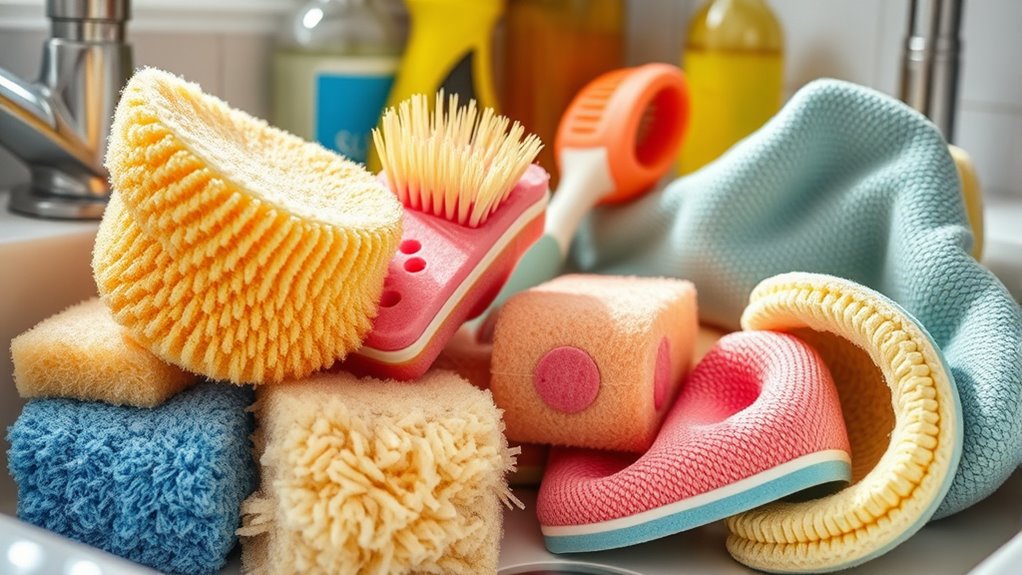
Choosing the right cleaning supplies is essential for maintaining a hygienic environment. When selecting new tools, look for ones made from antimicrobial materials or those labeled as hygienic and easy to clean. Opt for supplies with smooth surfaces that don’t trap dirt or bacteria, making them easier to disinfect. Consider the size and shape of the tools to ensure they fit your cleaning tasks comfortably. Avoid porous materials like natural sponges that harbor germs; instead, choose synthetic alternatives that dry quickly and resist bacteria buildup. Check product labels for proper cleaning instructions and replace supplies regularly to prevent bacteria growth. Investing in high-quality, hygienic tools guarantees your cleaning efforts are effective and safe, reducing the risk of cross-contamination.
Frequently Asked Questions
Can Cleaning Tools Be Sanitized for Reuse?
Yes, you can sanitize cleaning tools for reuse. To do so, soak sponges, brushes, and pads in a mixture of hot water and bleach or vinegar for about five minutes. Rinse thoroughly and let them dry completely. This process kills bacteria and mold, making your tools safe to use again. Regular sanitizing helps prevent cross-contamination and keeps your cleaning tools in good condition.
Are There Eco-Friendly Options for Replacing Cleaning Tools?
Think of eco-friendly cleaning tools as your modern-day Excalibur for a greener planet. You can opt for bamboo brushes, compostable sponges, and reusable microfiber pads to replace traditional ones. These options reduce plastic waste and are often biodegradable. Plus, many are just as effective. So, go ahead—embrace sustainable choices, and you’ll be helping the environment while keeping your home spotless. It’s a win-win, no tech wizardry required!
How Do I Choose the Best Cleaning Tool for Specific Surfaces?
You should choose a cleaning tool based on your surface type. For delicate surfaces like glass or electronics, use soft cloths or microfiber pads to avoid scratches. For tough grime on tiles or countertops, opt for scrub brushes or abrasive pads. Always consider the material’s durability and cleaning requirements. Test a small area first, and select tools that won’t damage the surface while effectively removing dirt and grime.
What Are the Health Risks of Using Old or Contaminated Cleaning Tools?
Using old or contaminated cleaning tools can pose health risks like spreading bacteria, mold, and germs. You might develop allergies, skin irritations, or respiratory issues if you don’t replace or clean them regularly. Mold growth on sponges and brushes can cause infections, especially if you have cuts or weak immune systems. To stay safe, replace or sanitize your tools often and avoid reusing dirty or worn-out items.
How Can I Prevent Cross-Contamination Between Different Cleaning Tasks?
To prevent cross-contamination, carefully clean and consistently categorize your cleaning tools. Conquer clutter by color-coding sponges, brushes, and pads for specific tasks, and always disinfect after each use. Avoid cross-contamination by changing tools frequently and storing them separately. Keep your cleaning kit clean, and never reuse contaminated tools. This simple, strategic sanitation minimizes microbial migration, making your cleaning routine safer, smarter, and more sanitary.
Conclusion
Remember, your cleaning tools are the loyal soldiers of your home. When they show signs of wear or harbor unseen germs, it’s time to send them to the cleaning tool graveyard and bring in fresh allies. Treat your tools like trusted companions—replace, disinfect, and choose wisely. This way, your cleaning routine stays sharp and your home stays sparkling, turning everyday chores into a dance of cleanliness and freshness.