
To create a safe storage and routine plan for cleaning with kids at home, start by using clear, labeled containers to make tidying easy and visual. Keep hazardous items out of reach and store cleaning tools securely. Establish consistent routines, like tidying after play or before dinner, and involve your kids in planning to boost engagement. Incorporate fun tasks and celebrate small wins to encourage responsibility. Keep exploring for more tips to make cleaning safe and enjoyable for everyone.
Key Takeaways
- Tailor chores to children’s developmental levels to ensure safety and boost motivation.
- Use clear, labeled, and color-coded storage solutions to promote safe and organized spaces.
- Establish consistent routines with designated times for cleaning to build habits and reduce resistance.
- Incorporate fun activities like games and scavenger hunts to make cleaning engaging for kids.
- Encourage children’s ownership by involving them in planning and offering choices to foster responsibility.
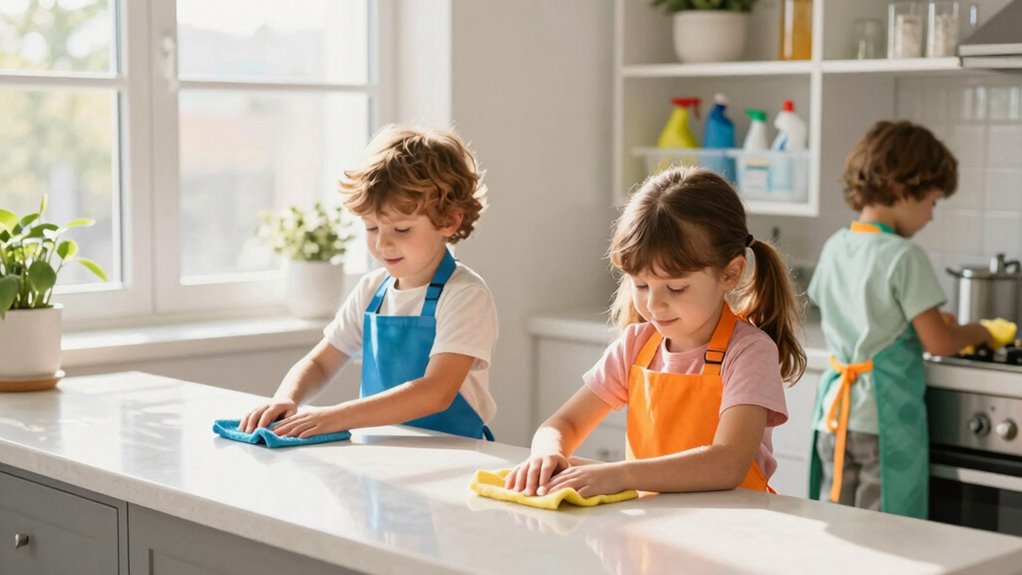
Cleaning with kids at home can be a rewarding way to teach responsibility and teamwork, but it also requires patience and planning. To make the process smooth and enjoyable, start by assigning age appropriate tasks. Younger children can handle simple chores like picking up toys, wiping down surfaces, or putting laundry in the hamper. Older kids can take on more involved tasks such as vacuuming, sweeping, or organizing shelves. When you tailor chores to their developmental level, they’re more likely to succeed and stay motivated. Plus, it prevents frustration for everyone involved.
To keep kids engaged and motivated, turn cleaning into a fun activity by incorporating cleaning games. For instance, set a timer and challenge your children to see how many toys they can put away before it goes off, or make a game out of matching color-coded cloths to their designated spots. You can also create a scavenger hunt for small items that need to be picked up, turning a chore into an adventure. These games not only make cleaning less tedious but also foster a sense of accomplishment and independence. Remember to praise their efforts and celebrate small wins, which encourages a positive attitude toward chores.
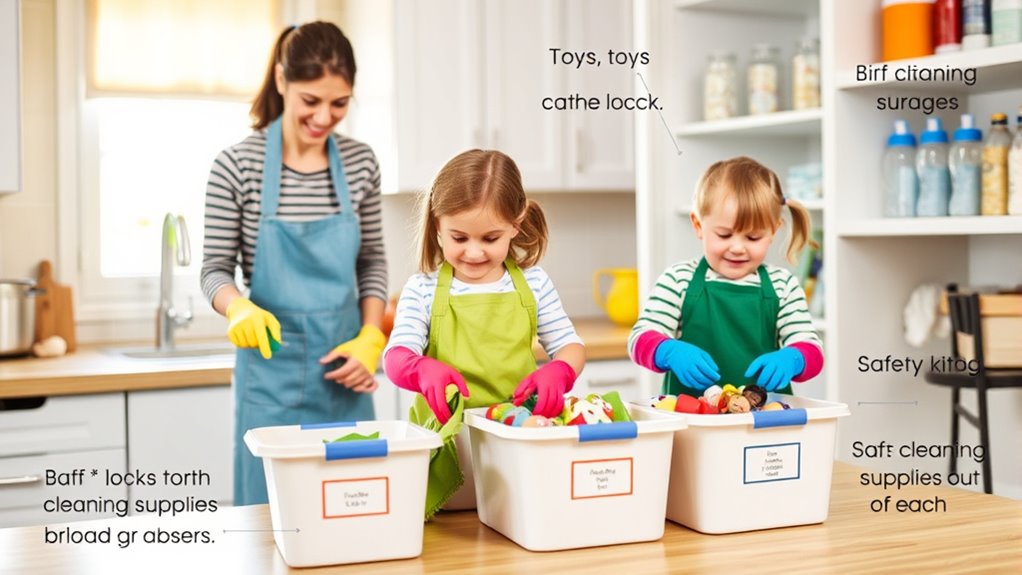
Creating a safe and organized storage system is essential to maintain an efficient routine. Use clear bins or labeled baskets so your kids know exactly where everything belongs. If they can see their toys and supplies, they’re more likely to put things back in the right place. Keep hazardous cleaning supplies out of reach, and store tools in a designated, secure cabinet. Establishing a routine helps your children understand what’s expected and when it’s time to clean. Consistency is key, so try to set specific times during the day, such as after playtime or before dinner, for cleaning activities. This regular schedule helps reduce resistance and builds good habits.
Involving your kids in planning the routine can also boost their commitment. Let them choose which tasks they prefer or suggest ways to make the process more fun. When they feel a sense of ownership, they’re more likely to stay engaged and take pride in their work. Keep in mind that patience is essential—some days will be smoother than others. If a task isn’t completed perfectly, focus on progress rather than perfection. Your attitude toward cleaning influences theirs, so remain positive and encouraging. Additionally, understanding feature Buddies and other organizational strategies can help streamline your routines and make chores more manageable. With thoughtful planning, age appropriate tasks, and a few playful cleaning games, you’ll not only keep your home tidy but also teach your children valuable life skills along the way.

LEVOIT Air Purifiers for Home Large Room Up to 1875 Ft² with Washable Pre-Filter, AHAM VERIFIDE, Air Quality Monitor, HEPA Sleep Mode for Allergies, Pet Hair in Bedroom, Vital 200S-P, White
𝐖𝐇𝐘 𝐂𝐇𝐎𝐎𝐒𝐄 𝐀𝐇𝐀𝐌 𝐕𝐄𝐑𝐈𝐅𝐈𝐃𝐄 𝐏𝐑𝐎𝐃𝐔𝐂𝐓𝐒: AHAM (Association of Home Appliance Manufacturers) is an ANSI-accredited organization that sets strict...
As an affiliate, we earn on qualifying purchases.
Frequently Asked Questions
How Can I Involve My Kids in Cleaning Safely?
You can involve your kids in cleaning safely by supervising them closely and turning chores into fun cleaning games. Assign age-appropriate tasks and demonstrate proper techniques to guarantee safety. Keep hazardous items out of reach and teach your kids about safety rules. Engaging them through games makes cleaning enjoyable, encouraging responsibility while maintaining a secure environment. Child supervision and creative activities help make cleaning a safe, productive family activity.
What Are Child-Friendly Cleaning Products I Should Use?
You should choose eco-friendly options and cleaning products made with natural ingredients. Look for labels that specify plant-based, non-toxic, and biodegradable ingredients to guarantee safety for your kids. Avoid harsh chemicals like ammonia, bleach, and synthetic fragrances. These safer alternatives help protect your children’s health while keeping your home clean. Always store cleaning products out of reach and involve your kids in safe, supervised cleaning routines to teach good habits.
How Do I Handle Resistance From Kids During Chores?
Remember, patience is a virtue. When kids resist chores, try motivational strategies like offering praise or small rewards. Make chores fun by turning them into games or challenges. If handling tantrums arises, stay calm and empathetic, acknowledging their feelings. Encourage teamwork and set clear expectations. By staying consistent and positive, you help your children develop good habits without power struggles, turning resistance into cooperation.
When Is the Best Age to Start Teaching Cleaning Routines?
You can start teaching cleaning routines around age 2 or 3, as it aligns with their developmental milestones like increased independence and motor skills. At this age, introduce simple tasks like wiping surfaces or picking up toys, ensuring activities are age-appropriate. Keep routines fun and consistent to help your kids develop good habits early. Adjust tasks as they grow to match their evolving abilities, fostering responsibility and confidence.
How Can I Keep Cleaning Supplies Out of Kids’ Reach Effectively?
Did you know over 70% of poisoning cases involve household cleaners? To keep cleaning supplies out of kids’ reach, use high, locked cabinets or safety storage solutions. Always follow safety tips like securing caps tightly and never leaving chemicals unattended. Regularly check storage areas to make sure they’re secure, and teach older kids about the dangers. This way, you protect your children while maintaining a tidy home.

LEVOIT Air Purifier for Home Large Room Up to 1073Ft² with Air Quality Monitor, AHAM VERIFIDE, Smart WiFi, Washable Pre-Filter, HEPA Sleep Mode for Pets, Allergies, Dust, Pollen, Vital 100S-P, White
𝐖𝐇𝐘 𝐂𝐇𝐎𝐎𝐒𝐄 𝐀𝐇𝐀𝐌 𝐕𝐄𝐑𝐈𝐅𝐈𝐃𝐄 𝐀𝐈𝐑 𝐏𝐔𝐑𝐈𝐅𝐈𝐄𝐑𝐒: AHAM (Association of Home Appliance Manufacturers) is an ANSI-accredited organization that sets...
As an affiliate, we earn on qualifying purchases.
Conclusion
By involving your kids in cleaning routines and storing supplies safely, you’re planting the seeds for lifelong responsibility. Remember, a tidy home isn’t just about cleanliness, but creating a safe haven where habits grow strong. With patience and teamwork, you’ll watch your little helpers blossom into confident, organized individuals. Think of your efforts as watering a garden — with care, your home will flourish into a bright, healthy space for everyone to enjoy.

KNKA Air Purifier for Home Bedroom Large Room Up to 1,695 Ft² in 1 Hr, HEPA Air Cleaner with Washable Pre-Filter, AQI Display, ECO Mode, Sleep Mode, Pet Mode for Pets, Dust, Pollen, APH4000
𝐇𝐢𝐠𝐡 𝐂𝐀𝐃𝐑 𝐕𝐚𝐥𝐮𝐞: This air purifier provides reliable performance with a Smoke/Dust/PM2.5 CADR of 226 CFM (384 m³/h)...
As an affiliate, we earn on qualifying purchases.

LEVOIT Air Purifier for Home Allergens Pet Hair in Bedroom, Covers Up to 1073 ft² by 56W High Torque Motor, AHAM VERIFIDE, 3-in-1 Filter with HEPA Sleep Mode, Remove Dust Smoke Odor, Core300-P, White
WHY CHOOSE AHAM VERIFIDE AIR PURIFIERS: AHAM (Association of Home Appliance Manufacturers) is an ANSI-accredited organization that sets...
As an affiliate, we earn on qualifying purchases.