About 24 hours before the storm’s impact, make certain your emergency kit is complete, including bottled water, non-perishable food, and necessary medications. charge your cell phones and backup power sources, and secure outdoor furniture and loose objects. Close and lock all windows and doors, and if possible, install storm shutters. double-check your evacuation plan and shelter locations, and keep a battery-powered radio nearby. Staying prepared now means you’ll be ready when the lights go out—learn more about what to do next.
Key Takeaways
- Complete the emergency kit with water, non-perishables, medications, and important documents, ensuring waterproof storage.
- Charge all cell phones, portable chargers, and backup power sources; test generators and stock sufficient fuel.
- Secure outdoor furniture and loose objects; close and lock windows and doors; install storm shutters if available.
- Confirm evacuation routes and shelter locations; share your plan with family and neighbors.
- Stay informed via battery-powered radio for weather updates and emergency alerts.
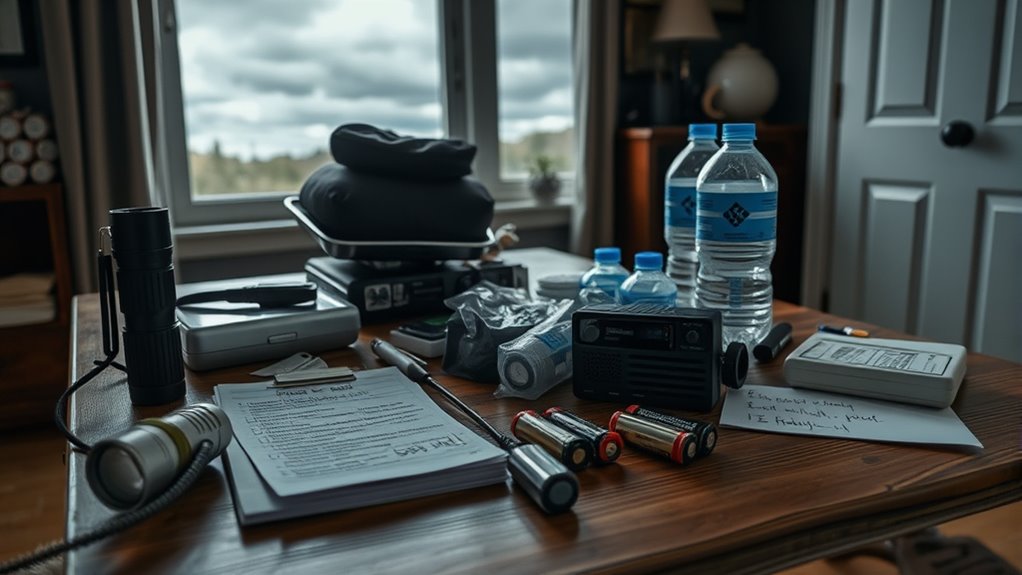
Are you prepared for an approaching storm? If not, it’s time to act. The next 24 hours are critical for ensuring your safety and minimizing damage. Start by assembling your emergency kit. This kit should include essentials like bottled water, non-perishable food, a flashlight with extra batteries, a first aid kit, necessary medications, and personal hygiene items. Make sure everything is easily accessible and stored in a waterproof container. Don’t forget to include important documents like identification, insurance papers, and any necessary prescriptions. A well-stocked emergency kit provides peace of mind and sustains you during power outages or if you need to evacuate quickly.
Prepare your emergency kit with essentials like water, food, medications, and important documents for storm safety.
Equally important is developing and reviewing your communication plan. Know how you’ll stay in touch with family members, friends, and neighbors. Confirm everyone’s contact information and decide on a designated meeting spot if you get separated. Keep a battery-powered or hand-crank radio nearby to receive weather updates and emergency alerts if your power goes out. Share your plans with loved ones outside your immediate household so they’re aware of your location and safety status. If you have neighbors who might need assistance, coordinate with them ahead of time. Clear communication helps prevent panic and ensures everyone knows what steps to take.
In the final hours before the storm hits, double-check your supplies. Make sure your emergency kit is complete, and your communication devices are charged. Charge your cell phones, portable chargers, and any necessary backup power sources. If you have a generator, ensure it’s in working order and that you have enough fuel. Secure outdoor furniture, loose objects, and anything that could become dangerous projectiles during strong winds. Close and lock all windows and doors, and if you have storm shutters, install them now. Turn your refrigerator and freezer to their coldest settings to preserve food if power is lost. Prepare an evacuation plan if your area is prone to flooding or severe damage, and familiarize yourself with local shelters and routes. Additionally, consider home security measures to protect your property from potential break-ins during a storm.
Taking these steps 24 hours before the storm arrives can make all the difference. Staying organized, informed, and prepared ensures you and your loved ones stay safe, no matter what nature throws your way. Remember, a little preparation now reduces chaos later. Stay alert, stay safe, and keep your emergency plan ready to deploy at a moment’s notice.
Frequently Asked Questions
How Can I Stay Informed About Approaching Storms?
To stay informed about approaching storms, you should sign up for weather alerts on your phone or through local news stations. Keep a weather radio nearby for real-time updates, especially during storm seasons. Follow trusted sources on social media for timely storm safety tips. Regularly check your weather apps and listen to official broadcasts to guarantee you’re aware of any changes, helping you prepare and stay safe before the storm arrives.
What Important Documents Should I Store Securely?
Did you know that only 40% of people back up their important documents? To stay prepared, store essential documents like IDs, insurance policies, and bank info securely in a waterproof, fireproof safe. Keep digital backups on secure cloud services or encrypted drives, and have physical copies accessible. This guarantees you’re protected against loss or damage, giving you peace of mind when storms threaten your home.
How Do I Protect My Electronics From Power Surges?
To protect your electronics from power surges, use surge protectors on all your devices. Make sure they’re properly rated for your equipment’s power needs. Additionally, unplug devices that aren’t in use, especially during storms, to prevent damage from sudden surges. This simple step can save your electronics from costly repairs and extend their lifespan, giving you peace of mind during and after the storm.
When Should I Evacuate Versus Shelter in Place?
You should evacuate when authorities issue an evacuation order or if your area faces imminent danger, like flooding or wildfire. Use your evacuation planning to decide your route and destination, ensuring you have essential supplies. If conditions are severe but not life-threatening, shelter in place with effective sheltering strategies—like sealing windows and staying indoors—to stay safe until it’s clear to leave. Always prioritize safety and follow official guidance.
How Can I Communicate With Loved Ones During a Blackout?
Think of communication devices as your lifelines in a blackout. You can’t always rely on cell service, so keep an emergency contact list handy, written and stored somewhere accessible. Use battery-powered radios or walkie-talkies to stay connected with loved ones, and establish check-in times. This way, even when the lights go out, your voice remains a beacon of safety and reassurance amid the storm.
Conclusion
As the storm clouds gather on the horizon, remember that your preparations are the sturdy anchor amidst the brewing chaos. With your checklist ticked off like a well-played symphony, you’re ready to face the tempest’s fury. Stay vigilant, keep your spirits steady, and trust in your foresight. When the winds howl and the lights flicker, you’ll stand resilient—an unyielding lighthouse guiding you safely through the storm’s dark embrace.