During an outage, focus on critical rooms like your kitchen, bathroom, and bedrooms to prioritize power. Turn on circuits supporting safety, such as lighting, refrigeration, and medical devices, while shutting off non-essential areas like entertainment or outdoor lighting. Label your circuits and plan ahead to quickly identify essential loads. Staying organized helps you manage power efficiently. Keep exploring for tips on how to keep your home safe and comfortable during power disruptions.
Key Takeaways
- Identify and prioritize circuits supporting essential rooms like kitchens, bathrooms, and medical areas for safety and health.
- Label circuit breakers clearly to quickly recognize critical loads during an outage.
- Turn off non-essential circuits, such as entertainment or outdoor lighting, to conserve power for vital rooms.
- Focus on maintaining power to critical functions like refrigeration, heating, and safety lighting in key areas.
- Practice a plan for quick decision-making, ensuring you can efficiently switch priorities during an outage.
During power outages, prioritizing circuits is indispensable to guarantee critical systems remain operational and safety is maintained. You need to focus on critical load management—understanding which circuits support essential functions and which can safely be turned off or deferred. Effective circuit prioritization strategies involve a clear assessment of your home’s layout and the importance of each circuit. Start by identifying circuits that power essential systems like refrigeration, heating or cooling units, medical devices, and lighting in key areas. These are your top priorities, and ensuring they stay active helps protect your health, safety, and property.
Prioritize circuits that support essential systems like refrigeration, heating, and lighting during outages to ensure safety and property protection.
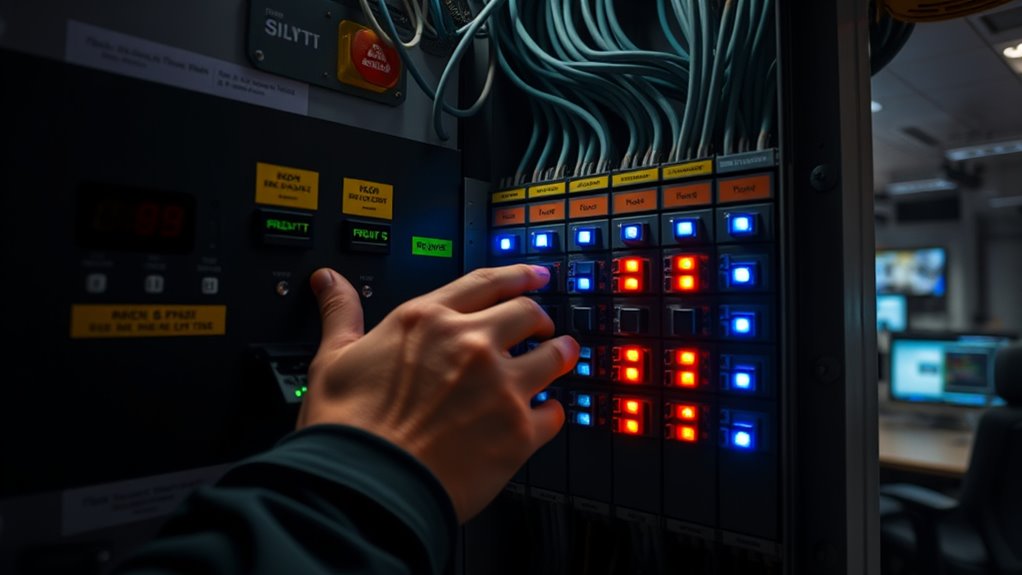
Once you’ve pinpointed these vital circuits, consider how to organize your breaker panel. Label circuits if they aren’t already; this makes quick decisions easier during an outage. In some cases, installing a transfer switch or a generator interlock kit can help you selectively power critical circuits without risking overloads. This setup allows you to prioritize which circuits receive power first when using a generator, providing a more reliable power supply for essential loads while conserving fuel and preventing damage. Proper circuit organization is key to quick decision-making during emergencies.
Your circuit prioritization strategies should also include planning for less critical areas. For example, you might decide to turn off circuits that power entertainment systems, outdoor lighting, or other non-essential appliances. Doing so reduces overall load, prevents circuit overloads, and extends the operational time of your backup power source. It’s a good idea to establish a routine—before an outage occurs—to review and update your priorities, especially if your household’s needs change.
During an outage, you’ll need to make rapid decisions about which circuits to keep active. Focus on critical load management by balancing safety and comfort. For instance, keeping the refrigerator and freezer running is vital to prevent food spoilage, but you might delay powering your hot tub or pool equipment. Use your knowledge of circuit labels and your preparedness plan to swiftly turn off non-essential circuits, conserving energy for what truly matters. Remember, the goal isn’t just to keep everything running but to ensure your safety and essential functions aren’t compromised.
Finally, having a clear plan and practicing it now means you’ll be more confident during an outage. Knowing your critical load management and implementing solid circuit prioritization strategies ensures you’re making smart choices under pressure. It helps you protect your home, keep your family safe, and get through outages more smoothly. Prioritizing circuits isn’t just about convenience—it’s about safeguarding what matters most when power isn’t reliable.
Frequently Asked Questions
How Do I Identify Critical Circuits in My Home?
You can identify critical circuits in your home by checking your circuit labeling, which helps you know what each breaker controls. Focus on circuits linked to essential rooms like your kitchen, bathroom, and home office. During emergency planning, mark these circuits clearly so you can quickly turn them on or off during outages. Regularly review and update your circuit map to make sure you always know which circuits power important areas.
What Tools Are Best for Circuit Prioritization?
You should use a circuit analyzer or load management tool to prioritize circuits effectively. These tools help you perform circuit analysis, identifying which circuits handle critical loads and which can be temporarily shut off. A clamp meter with load management features allows you to measure current flow quickly, making it easier to determine essential circuits during an outage. Investing in these tools guarantees you make informed decisions to keep crucial areas powered.
How Often Should I Review My Circuit Priority List?
You should review your circuit priority list quarterly to ascertain effective power management and backup generator readiness. Think of it as checking your emergency kit—regular updates prevent surprises. During outages, priorities shift, so staying current helps you protect critical rooms. Keep an eye on changing needs, technology, and backup generator capabilities, adjusting your list accordingly. Consistent reviews keep your power management strategy sharp and reliable when it matters most.
Can Smart Home Systems Assist With Circuit Prioritization?
Yes, smart home systems can help with circuit prioritization by integrating energy management and automation strategies. They allow you to set priorities for rooms or devices, automatically shutting off less critical circuits during outages to conserve power. With real-time monitoring, you can make informed decisions, ensuring essential areas stay powered. This proactive approach maximizes energy efficiency and keeps your home running smoothly during power disruptions.
What Safety Precautions Should I Take During Outages?
Imagine you’re in a storm like the one in “The Wizard of Oz.” During outages, you should unplug sensitive devices and use surge protectors to prevent damage. Confirm your backup generator is in good condition and operate it outdoors in well-ventilated areas. Never overload circuits, keep a fire extinguisher nearby, and avoid using candles to prevent fires. Always stay informed with a battery-powered radio and prioritize safety above all.
Conclusion
By prioritizing circuits during an outage, you’re effectively guiding your home’s energy flow like a skilled conductor leading an orchestra. Focus on essential rooms first, ensuring safety and comfort are maintained. Remember, a well-organized circuit plan is like a lighthouse in a storm—bringing clarity and direction amid chaos. With this approach, you’ll minimize disruptions and restore normalcy smoothly, turning a potentially overwhelming situation into a manageable one.