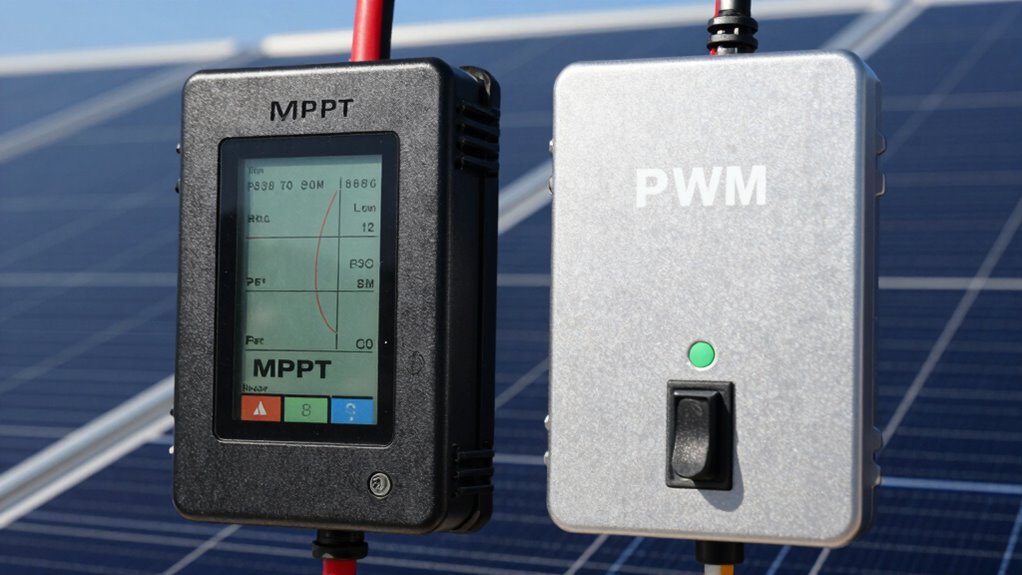

MPPT and PWM controllers differ mainly in how they optimize solar charging. PWM units connect panels directly to batteries, which can cause power losses if voltages aren’t matched perfectly. In contrast, MPPT controllers continuously find the maximum power point and convert excess voltage into additional current, speeding up charging and boosting efficiency. If you want to understand how these differences impact your solar system’s speed and performance, keep exploring the details below.
Key Takeaways
- MPPT controllers optimize energy by tracking the maximum power point, converting excess voltage into additional current, boosting charging speed.
- PWM controllers connect panels directly to batteries, matching voltages but often wasting energy, leading to slower charging.
- MPPT systems perform better under variable weather and higher voltage differences, significantly increasing solar charging efficiency.
- PWM controllers are simpler and cheaper but less effective in maximizing solar power, especially with fluctuating sunlight conditions.
- Overall, MPPT controllers enable faster, more efficient charging, especially in challenging or large-scale solar setups.
How MPPT and PWM Charge Controllers Work
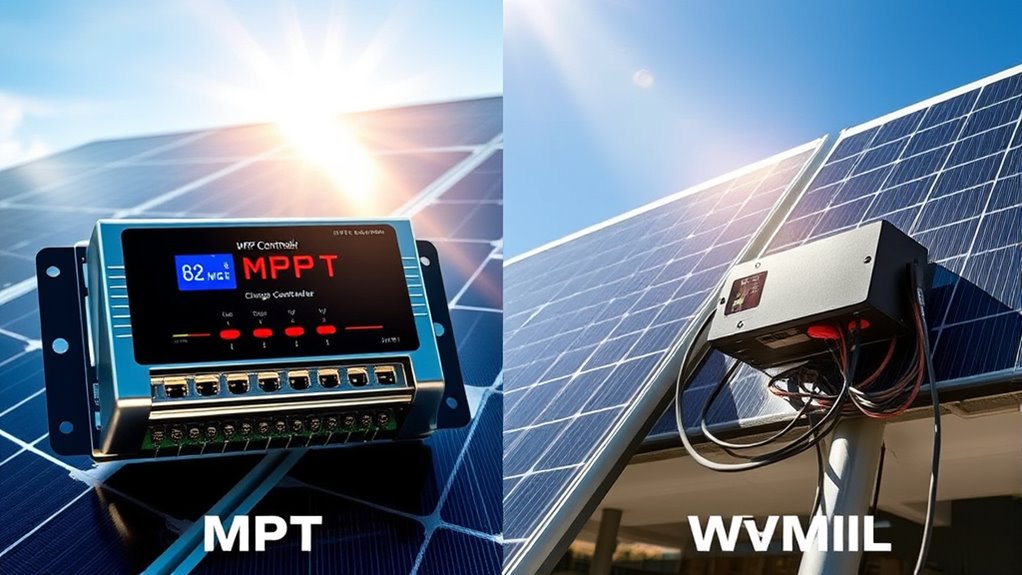
While both MPPT and PWM charge controllers regulate the power going from your solar panels to your batteries, they do so through different methods. PWM controllers work by connecting your panels directly to your batteries when charging, fundamentally acting like a switch that turns on and off rapidly. They match the voltage of the panels to the battery’s voltage, which can result in some power loss. In contrast, MPPT controllers continuously track the maximum power point of your panels, adjusting their input to extract the highest possible energy. They convert the excess voltage into additional current, optimizing power transfer. This process allows MPPT controllers to operate more efficiently, especially in conditions where panel voltage exceeds battery voltage. Additionally, charge controller efficiency plays a crucial role in maximizing your solar energy harvesting. Using advanced tracking technology, MPPT controllers can adapt more quickly to changing sunlight conditions, further improving overall system performance. Furthermore, incorporating solar system monitoring can help optimize the overall effectiveness of your setup. To enhance system reliability, many modern MPPT controllers feature temperature compensation, which adjusts performance based on environmental conditions.
Efficiency Differences Between MPPT and PWM

You’ll notice that MPPT controllers generally convert more solar power into usable energy than PWM ones, thanks to higher efficiency gains. Voltage matching losses are minimized with MPPT, which helps improve overall system performance. Understanding these differences can help you choose the right controller to maximize your system’s efficiency. Additionally, solar system optimization is enhanced with MPPT controllers, leading to better energy harvesting. Proper system configuration also plays a critical role in achieving optimal performance and ensuring long-term reliability. Implementing correct charge controller settings is essential for maintaining system health and maximizing energy output over time. Moreover, selecting the appropriate conversion technology can significantly impact your system’s overall efficiency and longevity. Recognizing the importance of system integration ensures seamless operation and maximizes the benefits of your solar setup.
Power Conversion Efficiency Gains
Maximum Power Point Tracking (MPPT) controllers typically deliver higher power conversion efficiency compared to Pulse Width Modulation (PWM) systems. They constantly adjust their input to match the solar panel’s most favorable power point, ensuring you extract the maximum energy possible. This dynamic adjustment reduces wasted energy during conversion. In contrast, PWM systems operate at a fixed voltage level, which can result in less efficient energy transfer, especially under varying sunlight conditions. The efficiency gains with MPPT become more noticeable when sunlight is not ideal or when the panel voltage is substantially higher than the battery voltage. By optimizing energy flow, MPPT technology helps you get more usable power from your solar setup, making your system more effective and cost-efficient over time. Additionally, system monitoring capabilities in MPPT controllers allow for better performance tracking and maintenance. Furthermore, understanding solar panel characteristics can help in selecting the most suitable charge controller for your specific needs. Incorporating solar energy efficiency principles can further enhance overall system performance and longevity, and considering the environmental impact of your setup is also important for sustainable energy use. A deeper understanding of energy conversion processes can also assist in maximizing your system’s potential.
Losses in Voltage Matching
Voltage matching losses substantially impact the overall efficiency difference between MPPT and PWM systems. In PWM chargers, the system connects directly to the solar panels, so if the panel voltage isn’t ideal, energy isn’t transferred efficiently. You might lose power when the voltage doesn’t match the battery’s charging voltage. MPPT chargers, however, adjust their input to match the panel’s maximum power point, minimizing this mismatch. They convert excess voltage into additional current, reducing energy losses caused by voltage disparities. This process ensures you get more usable energy from your panels, especially under varying sunlight conditions. Consequently, MPPT systems maintain higher efficiency because they actively optimize voltage matching, whereas PWM systems rely on a fixed voltage, leading to more significant losses when conditions fluctuate. Load calculations also play a key role in maximizing overall system efficiency by ensuring proper circuit sizing and safety. Additionally, understanding solar panel characteristics helps in selecting the appropriate charge controller type for optimal performance.
Impact on Overall System Performance
The efficiency differences between MPPT and PWM systems markedly affect overall system performance, especially in varying sunlight conditions. MPPT chargers optimize power extraction by continuously adjusting to the maximum power point, resulting in higher energy harvest throughout the day. This means your system performs better during cloudy days or when sunlight is indirect. PWM chargers, on the other hand, connect panels directly to the battery, which can lead to energy losses if the panel voltage isn’t perfectly matched. As a result, your system’s charging speed and overall efficiency decline with PWM, especially under fluctuating light. Over time, the superior efficiency of MPPT translates into faster charging, better battery health, and increased energy output, making it a more reliable choice for maximizing your solar system’s performance. Navigation and mapping explainers can also help optimize installation and maintenance for improved system efficiency.
Impact on Solar Charging Speed and Battery Life
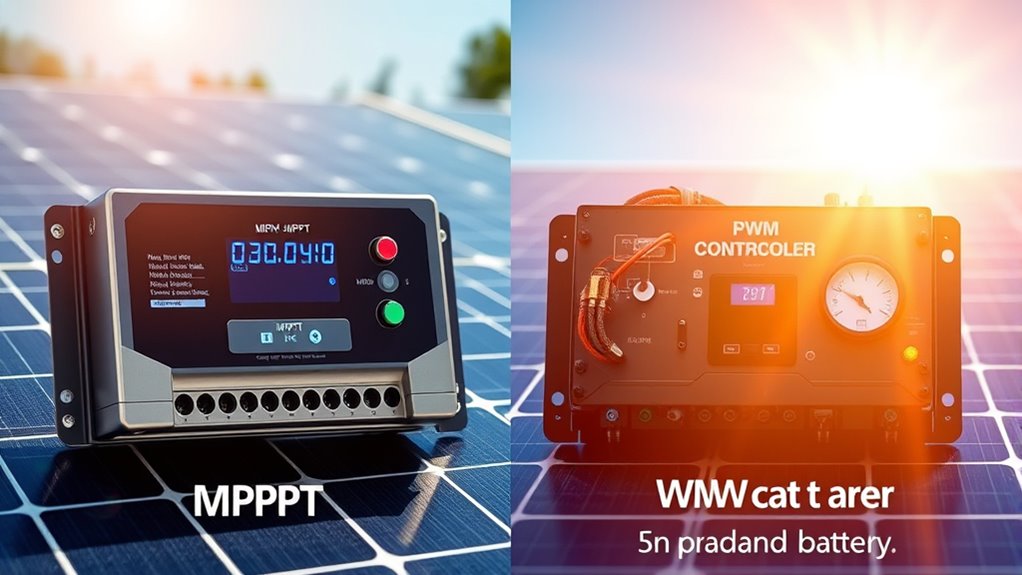
Your choice between MPPT and PWM impacts how quickly your batteries charge and how long they last. MPPT chargers typically boost charging efficiency, helping you reach full capacity faster and reduce strain on your batteries. By making the most of sunlight, they also promote better battery preservation over time. Understanding battery technologies is essential for optimizing your solar setup and ensuring long-term energy independence. Additionally, selecting the appropriate solar charge controller can significantly influence overall system performance and longevity. Incorporating Suprem fabric into your system’s design can further enhance the durability and eco-friendliness of your solar equipment.
Charging Efficiency Differences
When comparing MPPT and PWM charge controllers, their efficiency in converting solar power directly impacts how quickly your battery charges and how long it lasts. MPPT controllers are more efficient because they optimize the voltage and current from the solar panels, capturing more energy even in less-than-ideal conditions. This means you’ll see faster charging times and better utilization of available sunlight. PWM controllers, on the other hand, operate at a fixed voltage, often resulting in energy loss during conversion, which can slow down charging and reduce overall efficiency. Over time, these differences influence how effectively your system uses solar power and can affect your battery’s longevity by minimizing unnecessary stress and heat buildup. Additionally, essential oils for energy, such as peppermint and eucalyptus, can help improve mental alertness and focus during long solar setup sessions. Understanding solar power conversion efficiency can further help optimize your system’s performance and lifespan, especially when considering energy transfer principles that determine how well your system converts sunlight into usable power. Recognizing the role of system components in overall efficiency can also assist in making informed decisions for your solar setup.
Battery Preservation Benefits
Choosing the right charge controller can substantially influence your battery’s lifespan by minimizing stress and heat buildup. MPPT controllers are particularly good at maintaining ideal charging conditions, reducing the risk of overvoltage and overheating that can damage batteries. They ensure your batteries are charged efficiently without forcing excessive current, which extends their life. PWM controllers, while simpler, can cause more stress by not adjusting to changing sunlight conditions, potentially shortening battery lifespan over time. Here’s a quick comparison:
| Aspect | Impact on Battery Preservation |
|---|---|
| Overcharging risk | Lower with MPPT, reduces battery damage |
| Heat generation | Less with MPPT, prolongs battery health |
| Charging control | More precise with MPPT, extends life |
| Voltage regulation | Better with MPPT, prevents stress |
| Battery lifespan | Longer with MPPT, due to reduced stress |
Additionally, selecting the appropriate charge controller type based on your system needs can further enhance overall battery health and longevity.
Optimal Sunlight Utilization
Maximizing sunlight exposure directly boosts the efficiency of your solar charge controller, which in turn accelerates the charging process and helps extend your battery life. When your panels receive ideal sunlight, they produce more power, allowing your MPPT or PWM system to operate at peak performance. This means your batteries charge faster and more effectively, especially during peak sunlight hours. Proper positioning and avoiding shading ensure consistent energy flow. With better sunlight utilization, you reduce energy loss and improve overall system efficiency. Whether you’re using MPPT or PWM, maximizing sunlight makes a significant difference in how quickly your batteries reach full charge and how long they last. It’s a simple yet vital factor in optimizing your solar setup.
Cost Considerations for Choosing a Controller
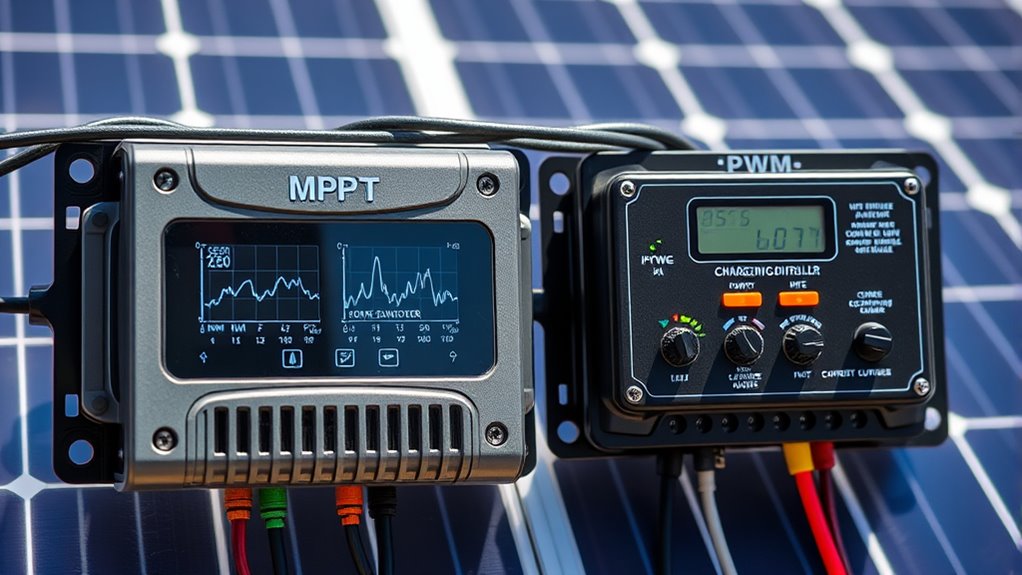
Cost is a key factor to contemplate when selecting a solar charge controller, especially if you’re working within a tight budget. MPPT controllers generally cost more upfront but can improve charging efficiency, potentially saving you money over time through better energy harvest. PWM controllers are more affordable initially and are suitable for small or simple solar setups. Consider your system size and energy needs—if you have a limited budget, a PWM may meet your requirements without overspending. However, if you plan to expand your system or want maximum efficiency, investing in an MPPT controller might be more cost-effective in the long run. Remember, the initial purchase price isn’t the only expense; installation, maintenance, and potential energy gains should influence your decision.
Compatibility With Different Solar Panel Types
Different solar panel types can influence how well your charge controller performs and how compatible it is with your system. Some panels produce higher voltages or currents that may suit one controller type better than another. For example, monocrystalline panels often work seamlessly with MPPT controllers, maximizing efficiency. Conversely, PWM controllers are compatible with simpler, lower-voltage panels but may not optimize power as effectively.
| Panel Type | Compatibility & Performance |
|---|---|
| Monocrystalline | Ideal for MPPT; high efficiency |
| Polycrystalline | Good with both, slightly less efficient |
| Thin-Film | Compatible, but lower voltage output |
| Bifacial | Best paired with MPPT for maximum gain |
Performance in Various Weather and Sunlight Conditions
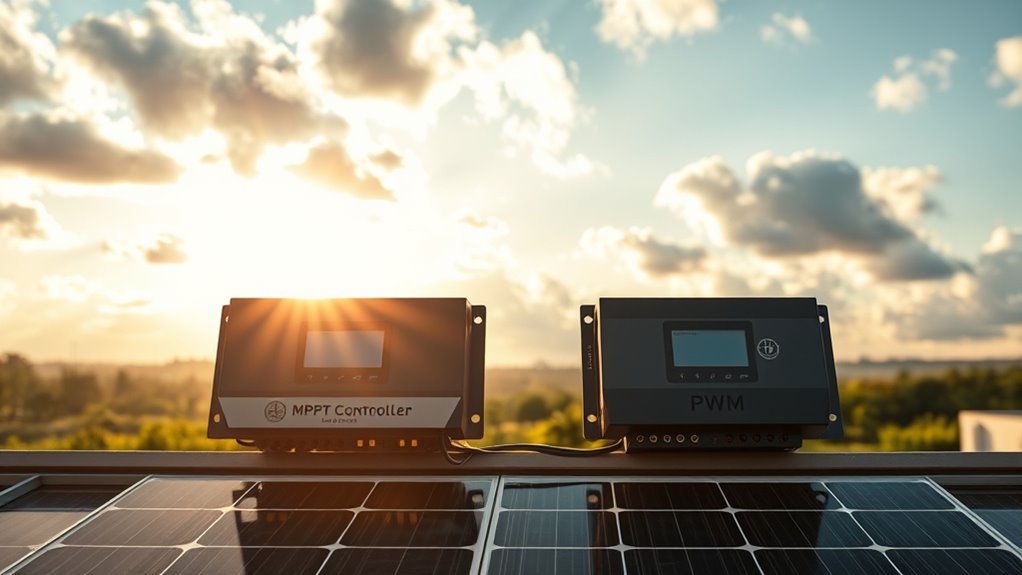
Ever wonder how your solar panel system performs under changing weather and sunlight conditions? MPPT charge controllers excel in these situations because they constantly adjust to maximize power output, even when sunlight is intermittent or cloudy. They track the ideal voltage and current, ensuring your panels operate at peak efficiency. On cloudy days or during sunrise and sunset, MPPT controllers adapt quickly, extracting more energy compared to PWM systems, which are less responsive to fluctuating conditions. PWM controllers work best in stable, sunny environments, where sunlight remains consistent. If you face variable weather, MPPT controllers provide better performance and faster charging, helping you get the most from your solar panels regardless of weather changes.
Installation and Maintenance Requirements
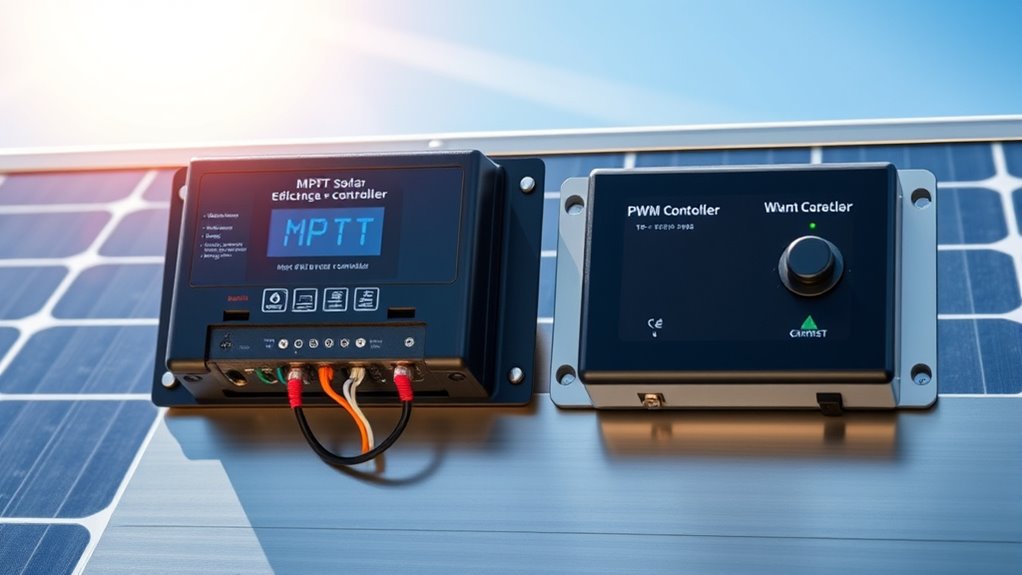
When installing your solar system, you’ll notice that MPPT chargers generally require more complex mounting compared to PWM units. Regular maintenance involves checking system connections and cleaning components to guarantee ideal performance. Additionally, you should verify that your system components remain compatible as upgrades or changes are made.
Mounting Complexity Levels
Mounting a solar power system involves varying levels of complexity depending on whether you choose MPPT or PWM technology. MPPT systems often require more precise mounting due to their sensitive electronic components and cooling needs, whereas PWM systems are generally simpler to install. MPPT units may need secure grounding and proper ventilation, making the process slightly more involved. In contrast, PWM systems typically have straightforward mounting brackets and less stringent requirements. Your choice impacts installation time and potential adjustments later. Here’s a quick comparison:
| Aspect | MPPT | PWM |
|---|---|---|
| Installation Complexity | Slightly more involved, precise setup | Easier, basic mounting needed |
| Ventilation Requirements | Higher, needs cooling considerations | Less demanding |
| Grounding Needs | More critical | Less critical |
| Adjustment Frequency | May require fine-tuning | Usually minimal |
| Mounting Hardware | More specialized | Standard mounts |
Regular Maintenance Tasks
Regular maintenance tasks are essential to guarantee your solar power system operates efficiently and reliably over time. You should regularly inspect your panels for dirt, debris, or shading that can reduce efficiency. Clean the panels gently with water and a soft brush or cloth, avoiding harsh chemicals. Check all wiring and connections for signs of corrosion, wear, or looseness, and tighten or replace as needed. Ensure your inverter and charge controllers are functioning correctly by monitoring system performance and reading error logs. Keep the area around your equipment clear of obstructions. Periodically review your system’s performance data to spot any drops in efficiency. Staying proactive with these tasks helps prevent minor issues from becoming costly repairs and keeps your solar system running at peak performance.
System Compatibility Checks
Ensuring your solar system components are compatible is crucial for peak performance and longevity. Before installing an MPPT or PWM charge controller, check your panel specifications and battery voltage requirements. Make certain your panels produce the correct voltage and current for the controller’s input range. Confirm that your batteries’ voltage matches the controller’s output specifications. Compatibility issues can cause inefficient charging, damage components, or reduce system lifespan. Review the manufacturer’s guidelines to verify compatibility between your panels, batteries, and controllers. Additionally, make sure your wiring and connectors meet the required standards to prevent faults. Performing these checks before installation minimizes troubleshooting later and guarantees your system operates smoothly, maximizing energy harvest and protecting your investment in solar technology.
How Each Controller Handles Voltage and Current Variations
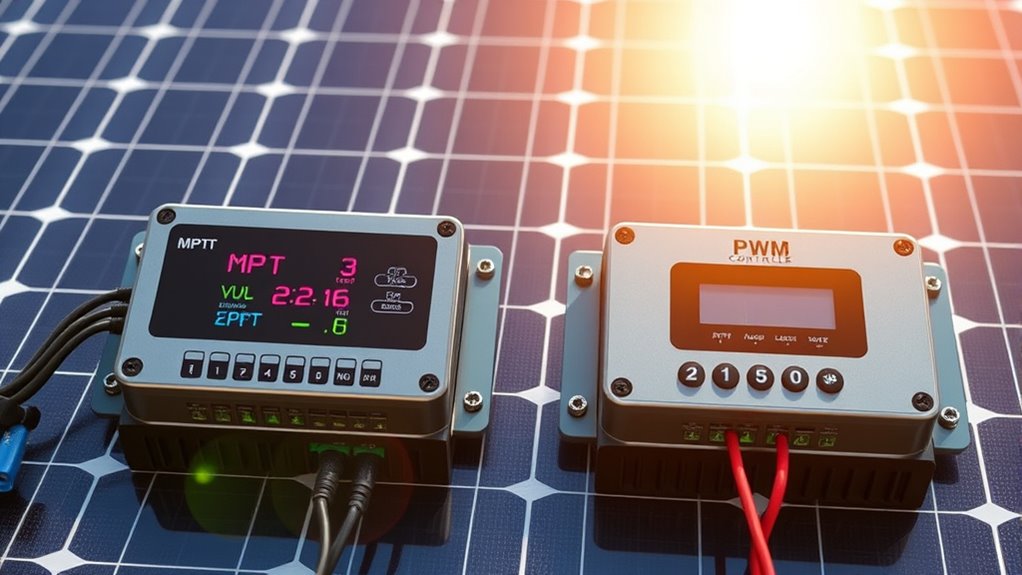
When it comes to handling voltage and current variations, MPPT (Maximum Power Point Tracking) controllers actively adjust their operating points to maximize power output, even as conditions change. They constantly monitor the voltage and current from your solar panels, seeking the most effective power point. When panel voltage fluctuates due to shading or temperature shifts, the MPPT controller recalibrates, increasing efficiency. It converts excess voltage into additional current, ensuring you get the most energy possible. In contrast, PWM (Pulse Width Modulation) controllers maintain a fixed voltage level, simply switching the connection on and off to regulate current flow. They don’t adapt to changes in panel voltage or current, which can lead to less efficient energy extraction when conditions vary.
Long-Term Benefits and Potential Savings
Choosing an MPPT controller can lead to significant long-term savings because it maximizes energy harvest, especially under variable conditions. By extracting the maximum power from your solar panels, it guarantees you generate more electricity over time, reducing your reliance on grid power or backup sources. Although MPPT controllers may cost more initially, their efficiency means you’ll see a quicker return on investment through lower energy bills. Over the lifespan of your system, the increased energy output translates into substantial savings. Additionally, MPPT controllers adapt better to changing weather and seasonal shifts, maintaining peak performance. This consistent efficiency helps you get the most out of your solar investment, making MPPT a cost-effective choice in the long run.
Making the Right Choice for Your Solar System
Selecting the right solar charge controller depends on your specific energy needs, budget, and long-term goals. If you have a small system with limited sunlight, PWM controllers are affordable and simple but less efficient. For larger systems or those aiming for maximum efficiency, MPPT controllers are worth the investment. Consider your energy consumption patterns and future expansion plans. If you need fast charging and higher power output, MPPT models can optimize your system’s performance. On a tight budget, PWM controllers may suffice, but they might limit your system’s growth and efficiency. Balance your current requirements with potential future upgrades. Ultimately, choosing between MPPT and PWM involves weighing cost against performance and long-term savings. Make a decision aligned with your energy goals and system size.
Frequently Asked Questions
Can MPPT Controllers Be Used With Oversized or Mismatched Solar Panels?
Yes, MPPT controllers can handle oversized or mismatched solar panels. They adjust their input to optimize power transfer, meaning they can efficiently charge your battery even if the panels produce more power than the controller’s rated capacity. Just make certain the total panel wattage doesn’t surpass the controller’s maximum input limit. This flexibility allows you to expand your solar setup without worrying about perfect matching, boosting overall system efficiency.
Do MPPT and PWM Controllers Require Different Wiring Configurations?
Think of wiring your solar setup like assembling a vintage radio; the connections matter. MPPT and PWM controllers do require different wiring configurations. MPPT controllers need proper grounding and often have additional wires for communication, while PWM controllers have simpler wiring with fewer connections. Follow the manufacturer’s instructions carefully for each type to guarantee safe, efficient operation and ideal energy transfer from your panels to your batteries.
How Do Temperature Fluctuations Affect MPPT and PWM Performance?
Temperature fluctuations can impact both MPPT and PWM controllers, but MPPTs are more sensitive. When temperatures rise, MPPT efficiency might decrease slightly, reducing power output. Conversely, cooler temperatures generally improve performance. PWM controllers are less affected by temperature changes, maintaining consistent operation. To optimize your system, verify proper ventilation and avoid extreme temperatures, helping both controllers operate efficiently and extend their lifespan.
Are There Specific Brands Known for Reliable MPPT or PWM Controllers?
You’ll find that brands like Victron Energy, Renogy, and Morningstar are highly reliable for MPPT controllers, offering durability and efficient performance. For PWM controllers, brands like Renogy and EPEVER are well-known for affordability and decent reliability. When choosing, consider your budget, system size, and specific needs, but these brands generally provide quality options. Always check reviews and warranties to guarantee long-term dependability.
What Safety Features Should I Look for in Solar Charge Controllers?
Did you know that over 80% of solar system failures are due to poor safety features? When choosing a solar charge controller, look for over-voltage, over-current, and temperature protection to prevent damage. Guarantee it has automatic shutdowns for faults and clear display indicators. These features safeguard your system, prolong equipment life, and keep you safe during operation. Prioritize controllers with robust safety mechanisms for peace of mind.
Conclusion
So, whether you go for the savvy MPPT or the humble PWM, just remember—your solar system’s future depends on it. Choose wisely, or risk missing out on those extra watts and long-term savings. After all, who wouldn’t want their solar panels to work smarter, not harder? In the end, it’s your wallet and battery life that’ll thank you—unless you enjoy watching your money evaporate like sunlight on a cloudy day.