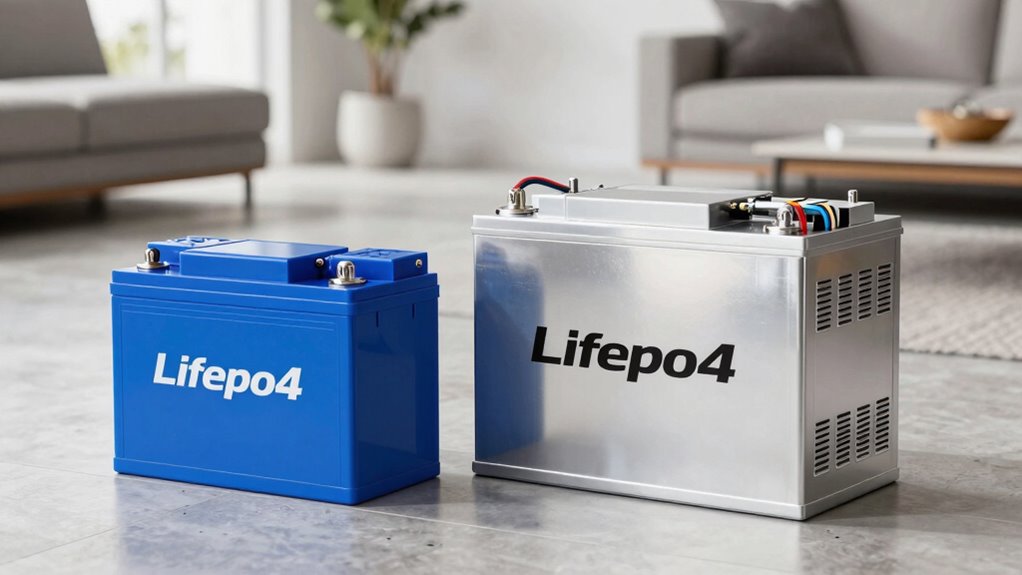

When choosing between Lifepo4 and lithium-ion batteries for home backup, you should consider safety, lifespan, and cost. Lifepo4 offers superior stability, faster charging, and lasts longer, making it safer and more durable despite a slightly larger size. Lithium-ion is more compact and initially cheaper but has a shorter lifespan and higher safety concerns. Understanding these tradeoffs helps you make a better choice—exploring more details can reveal which option suits your needs best.
Key Takeaways
- Lifepo4 offers superior safety due to lower risk of thermal runaway and inert chemistry, making it ideal for home backup.
- Lithium-ion batteries generally have higher energy density, making them more compact for space-constrained applications.
- Lifepo4’s longer cycle life (2,000-3,000 cycles) reduces replacement costs compared to lithium-ion’s 500-1,000 cycles.
- Lithium-ion batteries tend to have lower upfront costs but may require more frequent replacements, increasing long-term expenses.
- Lifepo4 performs better in high temperatures and supports faster charging, enhancing durability and reliability for home use.

Jackery Portable Power Station Explorer 300, 292Wh Backup LiFePO4 Battery, Solar Generator for Outdoors Camping Travel Hunting Blackout (Solar Panel Optional)
SPEED UP YOUR RECHARGEABILITY: It takes only 2 hours to recharge 80% battery of the power station through...
As an affiliate, we earn on qualifying purchases.
Chemical Composition and Safety Considerations
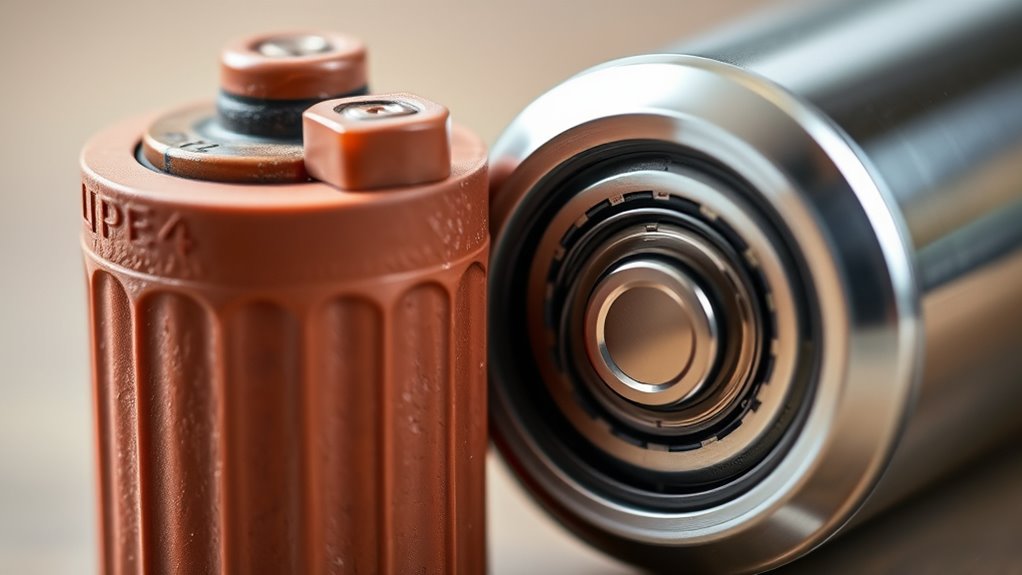
Lifepo4 and lithium-ion batteries differ markedly in their chemical composition, which directly impacts their safety profiles. Lifepo4 batteries use lithium iron phosphate as their cathode material, making them inherently more stable. This stability reduces the risk of thermal runaway, fires, or explosions, even if the battery is damaged or improperly handled. In contrast, lithium-ion batteries typically contain cobalt or nickel-based cathodes, which are more prone to overheating and short circuits. Lifepo4’s stable chemistry means they’re less likely to experience dangerous failures. This safety advantage makes Lifepo4 batteries a popular choice for home backup systems where safety is paramount. Additionally, Lifepo4’s energy efficiency further enhances their suitability for sustainable energy solutions. While both types require proper handling, Lifepo4’s chemistry offers a particularly safer profile under various conditions.

Anker SOLIX C1000 Gen 2 Portable Power Station, 2,000W (Peak 3,000W) Solar Generator, Full Charge in 49 Min, 1,024Wh LiFePO4 Battery for Home Backup, Power Outages, and Camping (Optional Solar Panel)
49 Min UltraFast Recharging: With upgraded HyperFlash tech, fully recharge at 1,600W—for outage prepping, camping trips, or tailgating...
As an affiliate, we earn on qualifying purchases.
Lifespan and Durability of Batteries
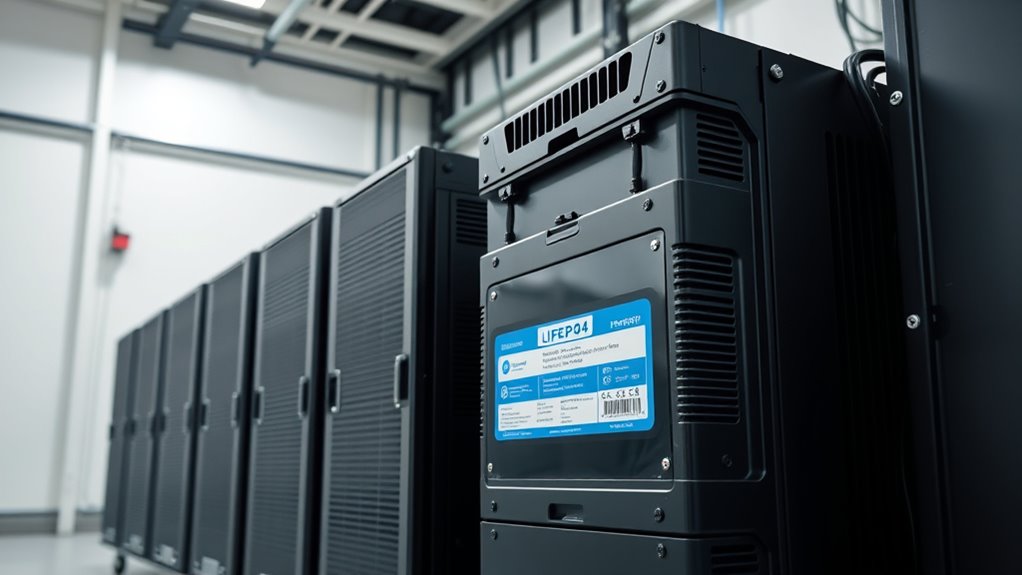
Because Lifepo4 batteries are more chemically stable, they tend to last longer and withstand more charge cycles than traditional lithium-ion batteries. You’ll find that Lifepo4 cells typically support 2,000 to 3,000 cycles before their capacity drops considerably, making them highly durable for home backup systems. In contrast, lithium-ion batteries usually endure about 500 to 1,000 cycles. This increased lifespan means fewer replacements and less maintenance over time. Lifepo4’s stability also helps prevent capacity fade caused by high temperatures or deep discharges, ensuring reliable performance in the long run. Chemical stability plays a crucial role in their durability and overall performance. If longevity and durability are your priorities, Lifepo4 batteries offer a solid advantage, giving you a peace of mind that your backup system will remain effective for many years. Additionally, their inherent safety features reduce the risk of thermal runaway, providing an extra layer of security in home applications. Maintaining battery health over time is easier with Lifepo4 due to their stable chemistry and design. Moreover, their resistance to temperature fluctuations helps maintain consistent performance regardless of environmental conditions. Furthermore, the advanced chemistry of Lifepo4 batteries contributes to their overall stability and long-term reliability.

Anker Portable Power Station SOLIX C300, 288Wh LiFePO4 Battery, 300W (600W Surge) Solar Generator, 140W Two-Way Fast Charging, for Outdoor Camping, Traveling, and Emergencies (Solar Panel Optional)
Compact with Massive Power: It's portable power that moves as freely as you. Give your devices 300W (600W...
As an affiliate, we earn on qualifying purchases.
Cost Implications and Budgeting Factors

When comparing Lifepo4 and lithium-ion batteries, you’ll notice initial costs vary markedly. While Lifepo4 batteries may require a higher upfront investment, they often offer better long-term savings through extended lifespan and lower maintenance. Understanding these cost implications helps you make smarter budgeting choices for your energy needs. Additionally, considering the environmental benefits of eco-friendly sustainable energy options can influence your overall investment strategy.
Initial Investment Differences
Initial investment costs for lithium-ion and LiFePO4 batteries vary considerably, influencing your overall budget and long-term financial planning. Typically, lithium-ion batteries have a lower upfront price, making them appealing for immediate savings. However, LiFePO4 batteries often come with a higher initial cost but offer better durability. To visualize this:
- You might spend less initially on a lithium-ion system, freeing up cash for other upgrades.
- Investing in LiFePO4 batteries could mean higher upfront expenses, but with fewer replacements needed.
- Over time, the durability of LiFePO4 might offset its higher initial cost through reduced replacement and maintenance expenses.
- Understanding the battery chemistry helps you weigh initial costs against long-term benefits, ensuring your choice aligns with your financial goals.
- Additionally, cost considerations such as warranty coverage and lifespan can significantly impact the overall value of your investment.
Long-term Savings Potential
While lithium-ion batteries often have a lower upfront cost, LiFePO4 batteries can offer significant long-term savings through reduced replacement and maintenance expenses. Their longer lifespan means fewer replacements over time, saving you money. Additionally, LiFePO4 batteries tend to require less maintenance, lowering ongoing costs. To compare, consider the following:
| Cost Factor | Lithium-Ion | LiFePO4 |
|---|---|---|
| Replacement Frequency | Higher (3-5 years) | Lower (8-10 years) |
| Maintenance Expenses | Moderate | Minimal |
| Total Cost Over 10 Years | Higher | Lower |
Investing in LiFePO4 batteries can be more economical long-term, helping you stay within budget while ensuring reliable backup power. Understanding battery lifespan can help you make a more informed choice for your home energy needs.

EnginStar Portable Power Station 300W 296Wh Battery Bank with 110V Pure Sine Wave AC Outlet for Outdoors Camping Hunting and Emergency, 80000mAh Backup Battery Power Supply for CPAP
PORTABLE BUT POWERFUL: EnginStar Portable Power Station with ETL Certification, and the portable size of 9 x 5.5...
As an affiliate, we earn on qualifying purchases.
Performance and Energy Density Differences
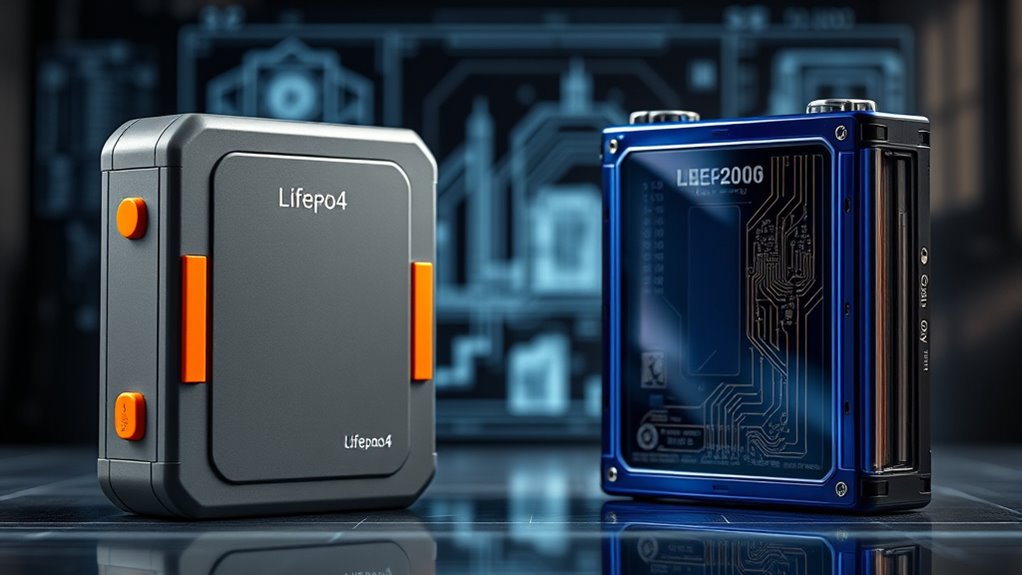
Lifepo4 batteries generally deliver lower energy density compared to lithium-ion batteries, meaning they store less energy in the same amount of space. This impacts how much backup power you can fit into a given size. Imagine:
Lifepo4 batteries store less energy in the same space, making them bulkier for backup power needs.
- Filling a small closet with only half the clothes compared to a larger wardrobe.
- Packing fewer snacks into the same-sized lunchbox.
- Fitting a shorter power bank into your bag without sacrificing capacity.
Because of this, Lifepo4 batteries are bulkier for the same energy output, which could limit your options for compact setups. In contrast, lithium-ion batteries pack more energy into smaller spaces, making them ideal if space is tight. However, the tradeoff often involves other performance factors like lifespan and safety.
Charging and Discharging Characteristics
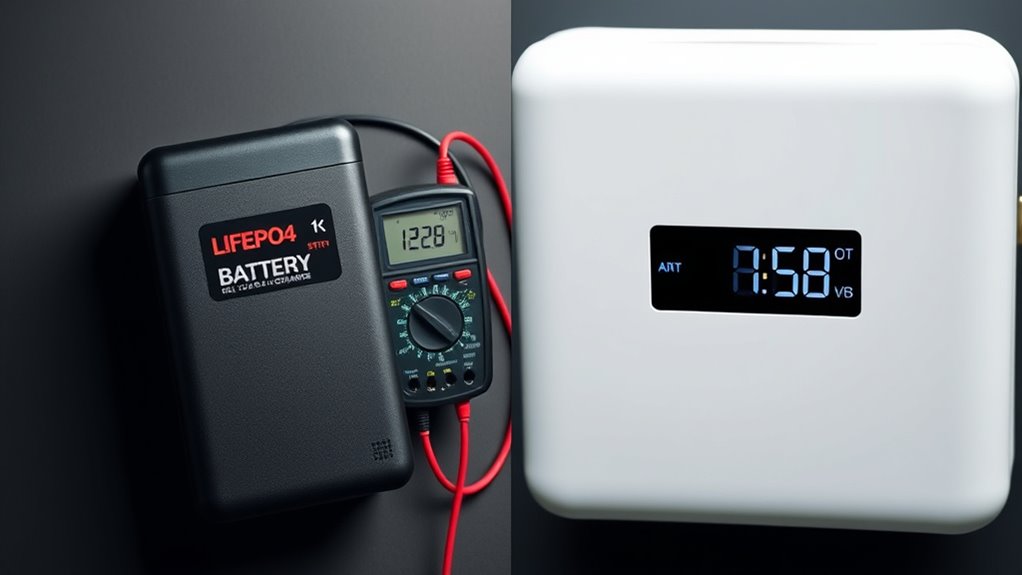
When charging and discharging your batteries, you’ll notice that Lifepo4 cells offer more flexibility with higher charge rates without risking damage. Lithium-ion batteries, on the other hand, have tighter limits on how deeply they can be discharged without hurting their lifespan. Understanding these differences helps you choose the right type for your specific energy needs. Additionally, Lifepo4 batteries tend to have a longer cycle life, making them a more durable option for modern energy storage systems. Their stable chemistry also reduces the risk of thermal runaway, enhancing safety in home backup applications. The inherent chemical stability of Lifepo4 chemistry contributes significantly to their safety profile. Moreover, Lifepo4’s thermal stability allows for safer operation under various environmental conditions. Moreover, Lifepo4 batteries typically have a lower self-discharge rate, which helps preserve charge during periods of inactivity.
Charge Rate Flexibility
Understanding the charge rate flexibility of a battery is crucial for optimizing its performance and longevity. Lifepo4 and lithium-ion batteries differ in how quickly they can be charged or discharged without damaging the system. Lifepo4 batteries typically handle higher charge rates better, giving you: 1. Faster charging sessions, so you spend less time plugged in. 2. More robust discharges, allowing for quick power delivery during peak demand. 3. Reduced stress on the battery, extending its lifespan over time. Additionally, battery chemistry plays a significant role in determining these charge rate capabilities, impacting overall system safety and efficiency. The ability to safely charge at higher rates also depends on thermal management, which helps maintain optimal operating temperatures during rapid charging. Proper system design is essential to support safe and efficient high-rate charging, especially in backup power applications. These design considerations include appropriate battery management systems that monitor and control charging parameters to prevent overheating or overcurrent conditions. Lithium-ion batteries generally require more conservative charge rates to maintain their health, which means slightly longer charging times. For example, resale value and performance longevity are influenced by how well the battery is managed during high-rate charging cycles. Knowing these differences helps you choose the right battery based on your backup needs and ensures you maximize safety and efficiency.
Depth of Discharge Limits
Depth of discharge limits define how much a battery can be used before it needs recharging, directly impacting its lifespan and reliability. Lithium Iron Phosphate (LFP) batteries typically allow you to discharge up to 80-100%, meaning you can use most of their capacity without markedly shortening their life. Lithium-ion batteries, on the other hand, often recommend limiting discharge to around 20-80%, especially to maximize longevity. Pushing a lithium-ion battery beyond its recommended discharge can lead to faster degradation, reducing overall cycle life. Understanding the impact of discharge depth helps you optimize your battery usage, ensuring you get the most reliable performance over time. Being aware of Haute Couture principles such as craftsmanship and detail can help you make more informed decisions about your energy investments, especially when considering long-term durability. This knowledge helps you balance daily energy needs with long-term durability for your home backup system, as battery chemistry influences how well a battery can sustain repeated cycles. Additionally, proper maintenance practices can further extend your battery’s effective lifespan and efficiency.
Environmental Impact and Recycling Potential
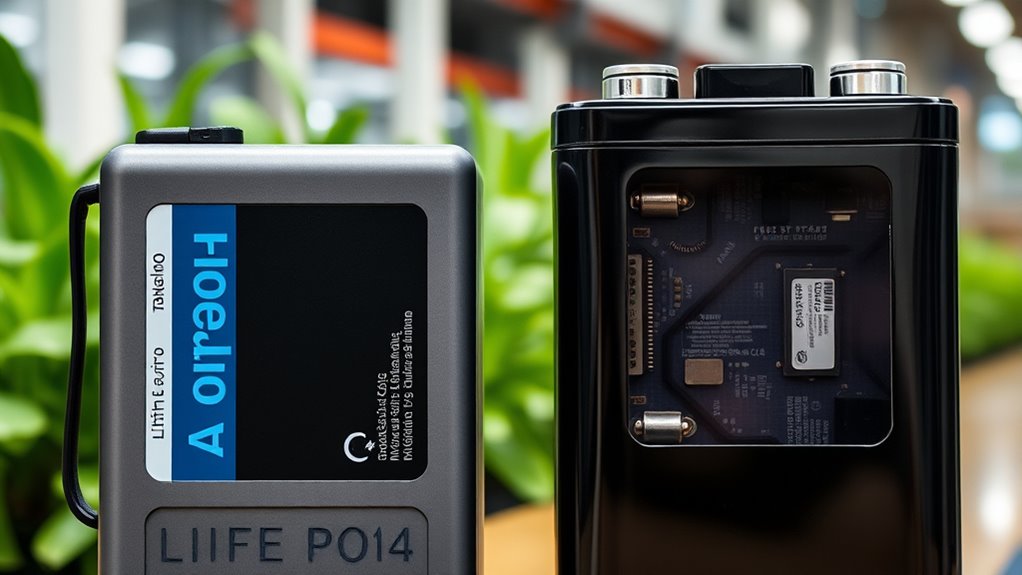
Lifepo4 batteries generally have a lower environmental impact compared to lithium-ion batteries because they contain fewer toxic metals and produce less hazardous waste during manufacturing and disposal. This means you’re contributing less to soil and water contamination. When recycling, Lifepo4 batteries offer a safer process, reducing risks associated with hazardous chemicals. Imagine:
- Fewer toxic residues released into landfills or waterways.
- Easier, safer recycling processes that protect workers and the environment.
- Longer lifespan, which reduces the frequency of disposal and waste generation.
Because of these factors, Lifepo4 batteries are more environmentally friendly throughout their lifecycle. Their design minimizes environmental footprint, making them a better choice if sustainability is a priority for your home backup system.
Suitability for Residential Backup Systems
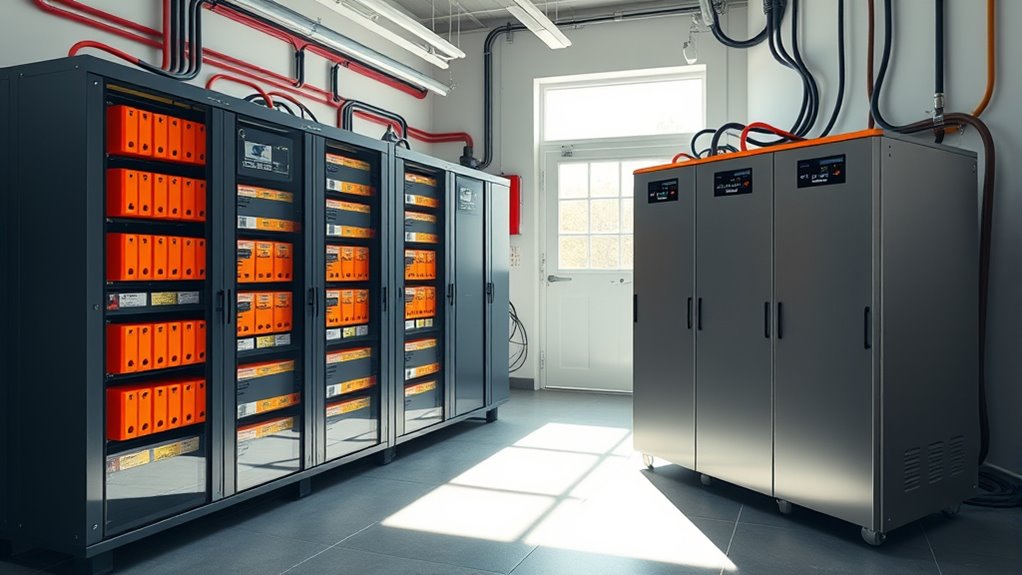
Lifepo4 batteries are highly suitable for residential backup systems because they offer reliable performance, safety, and long-term cost savings. They handle deep discharges well and have a longer lifespan, reducing replacement costs. Plus, their thermal stability makes them safer for home use, minimizing fire risks. You’ll find Lifepo4 batteries easier to maintain and more durable over time, making them a smart investment for your backup needs. To compare, consider the following:
| Feature | Lithium‑Ion | Lifepo4 |
|---|---|---|
| Safety | Moderate risk of thermal runaway | Very safe, stable chemistry |
| Lifespan (cycles) | 300–500 | 2000+ |
| Cost | Higher upfront | Lower long-term cost |
| Maintenance | Moderate | Minimal |
| Temperature tolerance | Less tolerant | Better performance in heat |
Frequently Asked Questions
How Do Temperature Variations Affect Lifepo4 and Lithium-Ion Batteries?
Temperature variations can considerably impact your Lifepo4 and lithium-ion batteries. If it’s too hot, your batteries may degrade faster, reducing their lifespan and capacity. Cold temperatures can lower performance, making them less efficient and causing slower charging or discharging. To get the best performance and longevity, you should keep your batteries within the recommended temperature range, avoiding extreme heat or cold and storing them in a controlled environment.
Are There Differences in Fire Risk Between the Two Chemistries?
You should know that Lifepo4 batteries are generally safer and have a lower fire risk compared to lithium-ion batteries. Lithium-ion batteries can overheat or catch fire if damaged or improperly handled, whereas Lifepo4 cells are more stable and less prone to thermal runaway. While no battery is completely risk-free, choosing Lifepo4 for home backup can give you added peace of mind regarding safety and fire hazards.
Can Lifepo4 Batteries Be Scaled for Large Home Backup Systems?
You can definitely scale lifepo4 batteries for large home backup systems. Their modular design allows you to add more units as your energy needs grow. Plus, lifepo4 batteries offer excellent safety, longevity, and stability, making them ideal for larger applications. While initial costs might be higher, their durability and performance over time make them a smart investment for powering your home reliably and safely at any scale.
What Are the Maintenance Requirements for Each Battery Type?
You’ll find that Lifepo4 batteries require minimal maintenance; you only need to monitor their voltage and make certain they stay within recommended limits. Lithium-ion batteries, however, may need occasional calibration and temperature management to optimize performance and lifespan. Both types benefit from keeping them clean and stored properly, but Lifepo4 batteries generally demand less attention over time, making them a convenient choice for long-term home backup systems.
How Do Supply Chain Issues Impact Availability and Pricing?
Supply chain issues can considerably affect the availability and pricing of both Lifepo4 and lithium-ion batteries. You might find shortages or delays due to disruptions in raw material supplies or manufacturing. As a result, prices can spike, making it harder for you to purchase the batteries you need. Staying informed about market trends and planning your purchases ahead of time can help you mitigate these impacts and secure better deals.
Conclusion
Choosing between LiFePO4 and lithium-ion batteries depends on your priorities. If you’re looking for safety, longevity, and eco-friendliness, LiFePO4 might be your best bet. But if you need higher energy density and quicker charging, lithium-ion could be the way to go. Remember, it’s a balancing act—you can’t have your cake and eat it too. Weigh the tradeoffs carefully to make a smart investment in your home backup system.