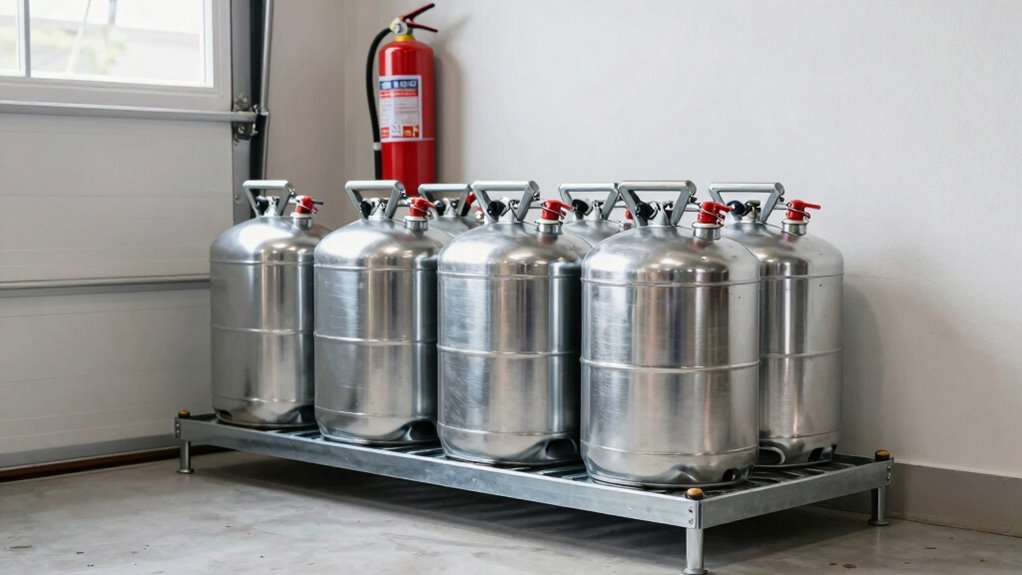

To store gasoline safely, choose approved, high-quality containers with secure caps and labels, and regularly inspect them for damage. Keep fuel in a cool, well-ventilated area away from heat sources, flames, and direct sunlight. Handle and pour carefully using fuel-specific funnels, and always keep containers upright. Guarantee proper ventilation and lock up the storage area from children and pets. Following these safe practices will help you avoid hazards—learn more to keep your garage safe.
Key Takeaways
- Use approved, high-quality containers with secure caps, labels, and handles for safe gasoline storage.
- Store fuel in well-ventilated, cool, dry areas away from heat sources and direct sunlight.
- Keep containers upright, away from electrical devices, flames, or ignition sources to prevent fires.
- Secure storage out of children’s and pets’ reach in locked cabinets or high shelves.
- Maintain safety equipment like fire extinguishers nearby and have an emergency plan ready.

WEN 2500-Watt Inverter Generator, Quiet, Portable, and Lightweight with Fuel Shut Off (56250i)
80cc engine generates up to 2500 surge watts and 1900 rated watts
As an affiliate, we earn on qualifying purchases.
Choosing the Right Containers for Gasoline Storage
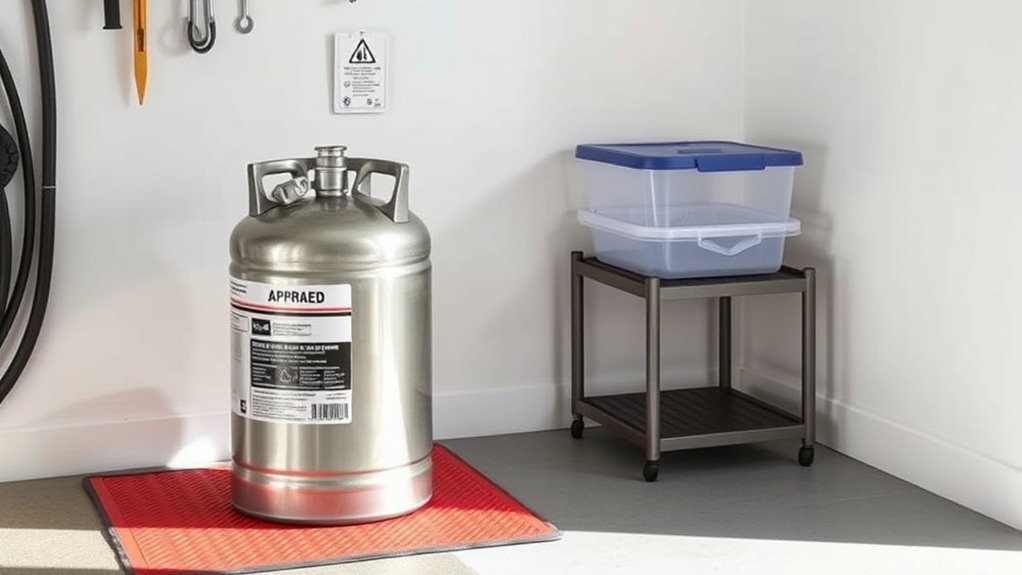
When selecting containers for gasoline storage, it’s essential to choose ones specifically designed for fuel. These containers are made from materials like high-density polyethylene or metal that resist corrosion and prevent leaks. Look for containers with a tight-sealing, spill-proof cap to avoid fumes escaping and minimize fire risk. Make sure they are labeled clearly as gasoline containers to prevent confusion. Portable, approved containers often have a handle for easy transportation and a spout or nozzle for safe pouring. Avoid using repurposed bottles or containers not intended for fuel, as they can degrade or leak. Using the right container assures safe storage, reduces the risk of spills, and helps keep your gasoline fresh and secure. Additionally, color accuracy in the design of these containers can help you easily identify contents and ensure proper handling. Proper fuel container selection also contributes to compliance with safety regulations and prevents accidental misuse. Incorporating proper ventilation practices around stored fuel can further reduce the risk of dangerous fumes accumulating. Ensuring adequate ventilation in your storage area is crucial for dispersing flammable vapors and maintaining a safe environment.

Westinghouse 4000 Peak Watt Super Quiet Dual Fuel Portable Inverter Generator, Remote Electric Start, Gas & Propane Powered, RV Ready, CO Sensor, Parallel Capable
4000 Peak Watts and 3300 Rated Watts at Less Than 3% THD – Telescoping Handle – Gas or...
As an affiliate, we earn on qualifying purchases.
Optimal Locations for Gasoline Storage in Your Home
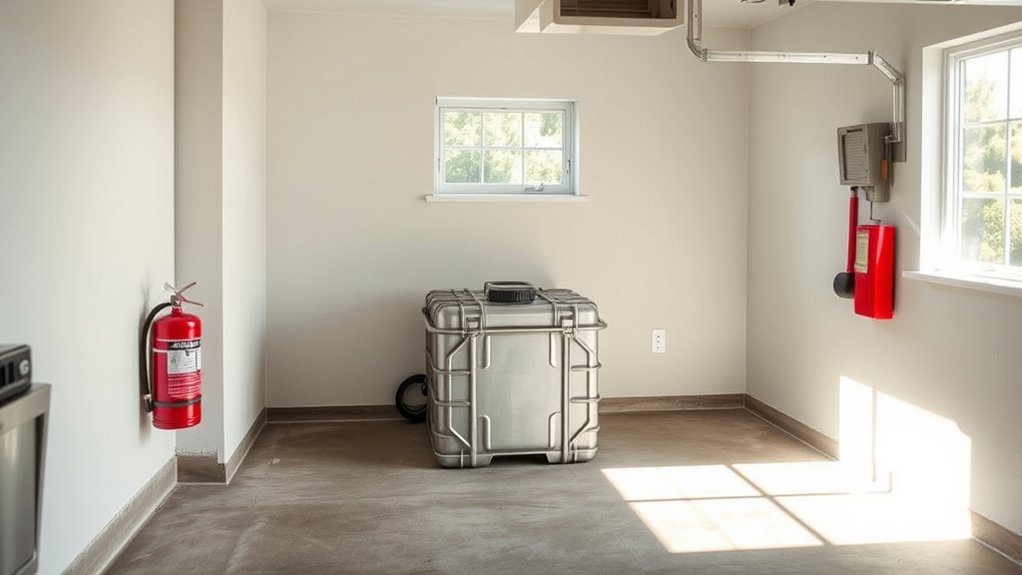
When choosing a spot to store gasoline, guarantee it has proper ventilation to prevent fumes from building up. Keep the container away from heat sources or open flames to avoid fire hazards. Also, select a location that’s easy to access but secure enough to prevent unauthorized or accidental contact. Implementing safety measures such as proper labeling and regular inspections can further reduce risks associated with gasoline storage. Ensuring proper ventilation can significantly lessen the buildup of flammable fumes and improve safety. Additionally, choosing a well-ventilated area helps disperse hazardous vapors more effectively, reducing the chance of dangerous accumulations. Proper storage practices further enhance safety by minimizing the risk of leaks or spills in your storage area. Being aware of for sale 100 guidelines can also assist in maintaining safe storage standards.
Proper Ventilation Needed
Proper ventilation is essential to guarantee safety when storing gasoline at home, as it helps prevent the buildup of dangerous fumes. Make certain your storage area has adequate airflow by installing vents or keeping windows slightly open. Good ventilation reduces the risk of fumes accumulating, which could lead to health hazards or fire. Avoid enclosed spaces like unvented closets or cabinets, as these trap fumes and increase danger. If you’re storing gasoline in a garage, make sure it’s well-ventilated and that fresh air circulates freely. Regularly check that vents are unobstructed and functioning properly. Proper ventilation not only minimizes the risk of fumes reaching dangerous concentrations but also helps disperse any accidental spills quickly, keeping your home safer. Ensuring your home safety & accessibility measures include proper ventilation systems is crucial for minimizing hazards related to gasoline storage.
Away From Heat Sources
To guarantee safety, it is crucial to store gasoline away from heat sources that could ignite fumes or cause a fire. Keep your fuel containers in a cool, well-ventilated area, far from appliances, heaters, or open flames. Avoid storing gasoline near boilers, water heaters, or any equipment that produces heat or sparks. Direct sunlight can increase temperature and pressure inside containers, so choose a shaded spot. Never keep gasoline in the house or in living spaces—garage storage is preferable, but only if it’s away from heat sources. Ensuring your fuel stays cool and isolated reduces the risk of accidental ignition. Always check that storage areas are free from electrical wiring or devices that could spark. Proper placement is key to preventing hazardous incidents. Refer to proper storage practices to ensure your fuel safety measures are comprehensive. Additionally, adhering to industry safety standards can further enhance your safety protocols when storing gasoline.
Accessible but Secure
Choosing a storage spot that is both accessible and secure is essential for safe gasoline handling. You want to be able to reach your fuel easily when needed, but it must also be protected from theft, tampering, or accidental spills. Look for a well-ventilated area that you can access quickly, like a dedicated storage cabinet or a corner in your garage away from daily traffic. Keep the container upright and away from doorways or high-traffic zones to prevent accidental bumps. Verify the storage location is out of reach of children and pets, ideally in a locked cabinet or on a high shelf. Ensuring proper electric dirt bike storage practices can help prevent potential hazards associated with flammable liquids. Proper storage container selection and placement not only helps contain spills but also minimizes the risk of vapor buildup. Using flammable liquid storage containers that meet safety standards can further reduce risks. Additionally, selecting a location with good ventilation helps disperse vapors and lowers the chance of dangerous vapor accumulation. Balancing free floating accessibility with security helps keep your gasoline safe while avoiding hazards caused by careless handling or unauthorized access.

Westinghouse 5000 Peak Watt Super Quiet Portable Inverter Generator, Remote Electric Start with Auto Choke, Wheel & Handle Kit, RV Ready, Gas Powered, Parallel Capable
5000 Peak Watts and 3900 Rated Watts at Less Than 3% THD; Telescoping Handle; Gas Powered; Remote Start...
As an affiliate, we earn on qualifying purchases.
Handling and Pouring Gasoline Safely
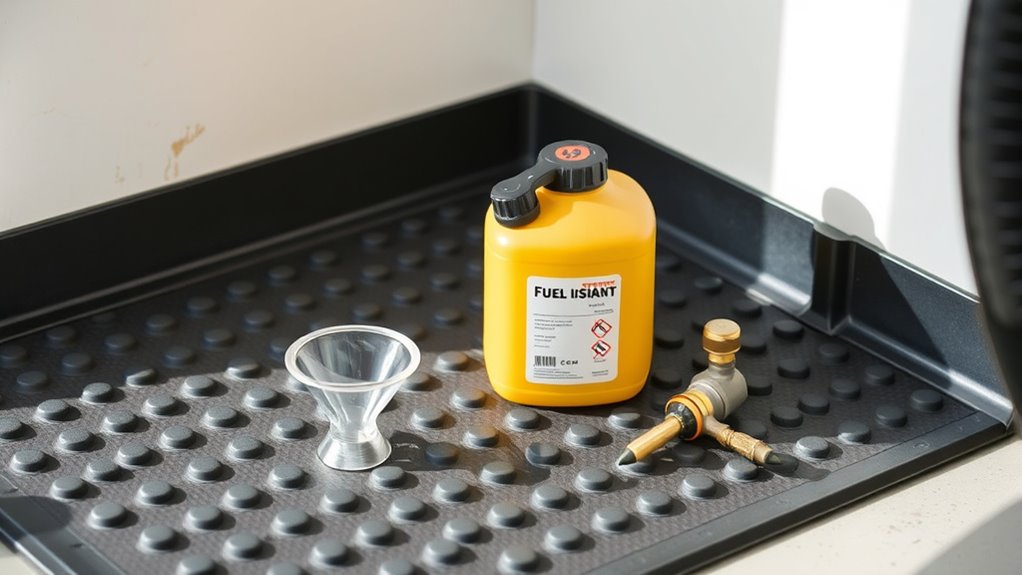
When handling and pouring gasoline, always use proper containers designed for fuel. Be careful to avoid spills and drips, which can cause fires or health hazards. Keep gasoline stored away from flames or heat sources to guarantee safety. Additionally, using safe handling practices can help ensure proper pouring techniques and prevent accidents. Proper storage methods, such as using fire-resistant containers, can further reduce the risk of dangerous incidents. Ensuring your storage methods align with holistic SEO principles can also enhance safety by promoting better understanding and adherence to safety guidelines.
Use Proper Containers
Using the right containers is essential for safe gasoline handling and pouring. Always choose approved, marked containers designed specifically for fuel storage. These containers are made from durable, non-reactive materials like metal or high-density polyethylene, which prevent leaks and minimize fumes. Verify the container has a secure, tight-fitting lid to avoid spills during transport or storage. Never use old or damaged containers, as cracks or corrosion can lead to leaks or fires. Keep the container upright during transport and pouring to avoid spills. When pouring, hold the container steady and at a slight angle to control the flow. Using proper containers reduces risks, keeps gasoline contained, and helps prevent accidents caused by leaks or improper storage. Proper container selection is a key safety step to prevent accidents and ensure safe handling. Additionally, container maintenance is important to check regularly for signs of deterioration that could compromise safety. Ensuring containers are properly vented allows for safe pressure release and reduces the risk of ruptures.
Avoid Spills and Drips
To prevent accidents and keep your gasoline handling safe, it’s important to avoid spills and drips during pouring. Always use a proper funnel designed for fuel transfer, and make sure it fits snugly in the container opening. When pouring, tilt the container slowly to control the flow, stopping periodically to check for drips or leaks. Keep the nozzle and spout clean, wiping away any residue before and after pouring. Avoid overfilling the container—leave a small space for expansion. If you notice a leak or drip, stop immediately and fix the issue before continuing. By handling gasoline carefully and paying attention during pouring, you reduce the risk of accidental spills that can lead to fires or health hazards.
Store Away From Flames
Storing gasoline away from flames is essential to prevent fires and explosions. When handling fuel, always keep it in approved containers and avoid smoking or creating sparks nearby. Pour gasoline slowly and carefully to prevent splashes that could ignite. Never refuel engines or equipment while they’re hot or running, as heat sources can ignite fumes. Make sure the area is well-ventilated to disperse any vapors and reduce the risk of ignition. Keep gasoline stored in a cool, dry place, away from open flames, heaters, or electrical sources. When you’re done pouring, replace the cap securely to contain vapors. By following these safety practices, you minimize the chance of accidental fires and protect yourself and your property.

50FT 30 Amp Generator Cord, Outdoor Heavy Duty 4 Prong Extension Cord with Twist Lock, NEMA L14-30P/L14-30R, 30A 125/250V, 10 Gauge, STW, for Home Emergencies, RVs, ETL Listed, Yellow
High-Conductivity Material:Adopts 10AWG thickened pure copper core wire with excellent conductivity, supporting 30A current, 125/250V voltage, and a...
As an affiliate, we earn on qualifying purchases.
Safe Filling and Dispensing Techniques
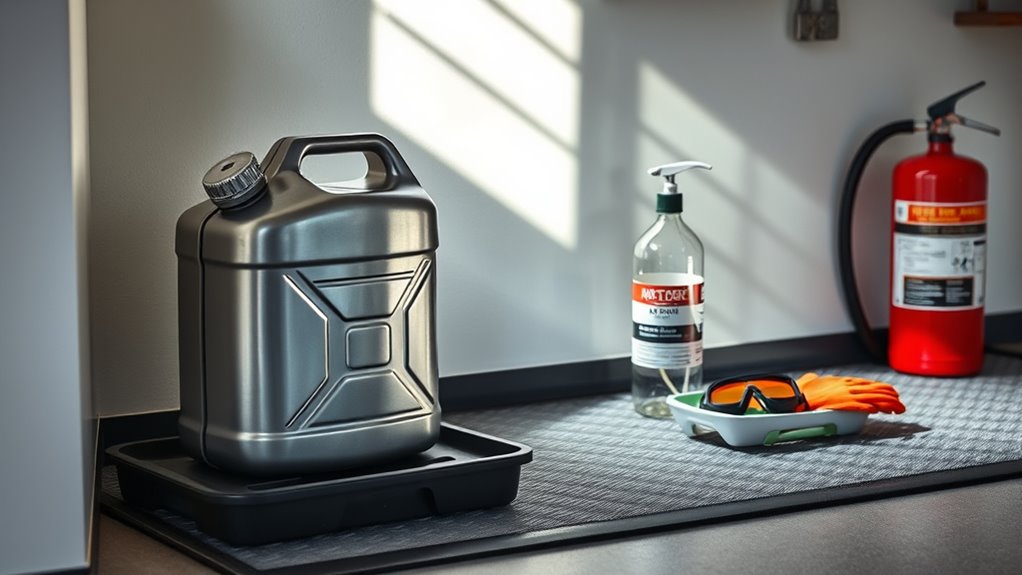
Ensuring safe filling and dispensing of fuel is essential to prevent spills, accidents, and health hazards. Always use the proper container designed for gasoline, and never fill it inside your vehicle or home. When pouring, keep the container on the ground to minimize static electricity buildup, which can ignite fumes. Avoid overfilling—leave some space for expansion—and don’t squeeze or force the container. Use a funnel if needed to prevent drips, and make sure the cap is securely tightened afterward. When dispensing fuel, keep the nozzle in contact with the container to reduce static risk. Stay attentive, and never smoke or have open flames nearby during the process. Following these techniques helps ensure your safety and keeps your fuel storage safe and compliant.
Maintaining and Inspecting Storage Containers
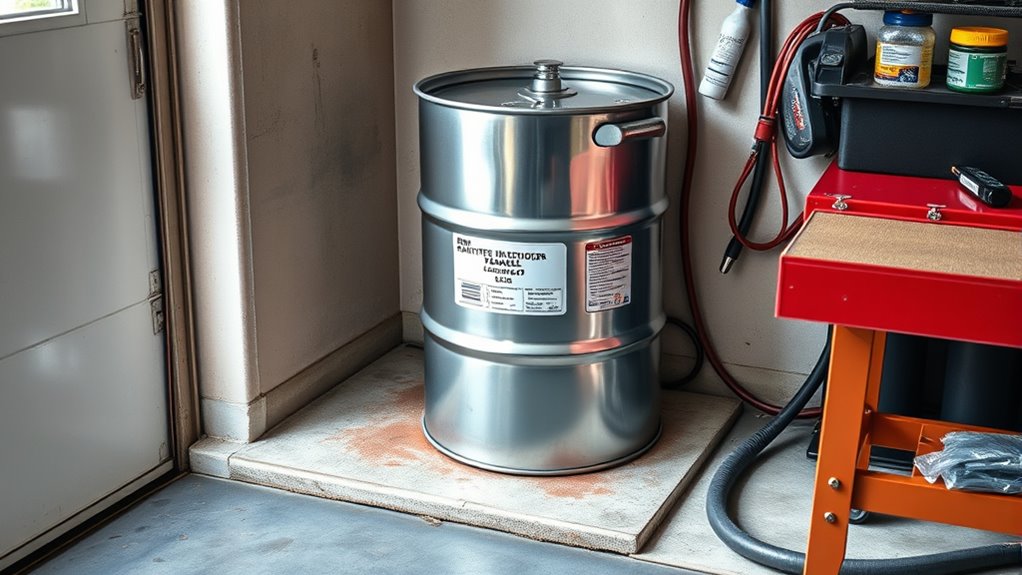
Regularly maintaining and inspecting your fuel storage containers is key to preventing leaks, corrosion, and other hazards. Check for any signs of rust, dents, or cracks that could compromise container integrity. Ensure caps and vents are secure and functioning properly. Clean containers to prevent residue buildup, which can cause corrosion. Use a flashlight to look for signs of leaks or stains around fittings and seams. Replace damaged or worn-out parts immediately. Proper labeling helps track inspection dates and contents. Keep a maintenance log for reference.
| Inspection Task | Frequency |
|---|---|
| Check for rust, dents, cracks | Monthly |
| Verify caps and vents | Monthly |
| Clean exterior surfaces | Quarterly |
| Inspect for leaks or stains | Weekly |
| Replace worn parts | As needed |
Fire Safety Measures and Emergency Preparedness
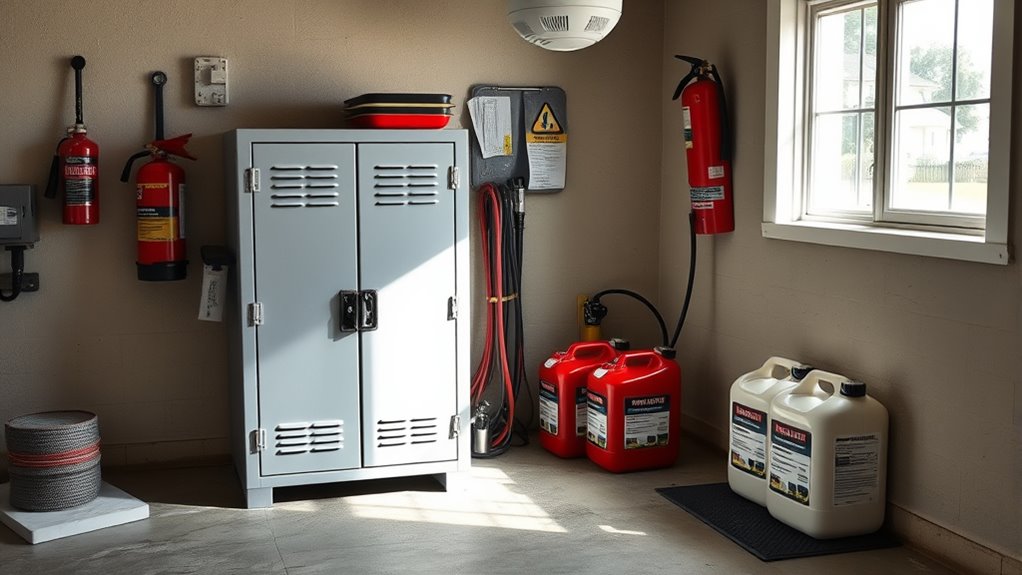
To minimize fire hazards when handling fuel, you must implement effective safety measures and be prepared for emergencies. First, always store gasoline in approved containers away from heat sources and flames. Second, keep a fire extinguisher rated for flammable liquids nearby, and ensure you know how to use it properly. Third, develop an emergency plan that includes evacuation routes and contacting emergency services quickly. These steps help reduce the risk of accidental fires and ensure you’re ready if one occurs. Remember, safety is about proactive measures and quick response. Maintaining vigilance and preparedness can prevent small incidents from turning into disasters, protecting your home, family, and property from the dangers of fuel storage.
Proper Disposal of Old or Unused Gasoline
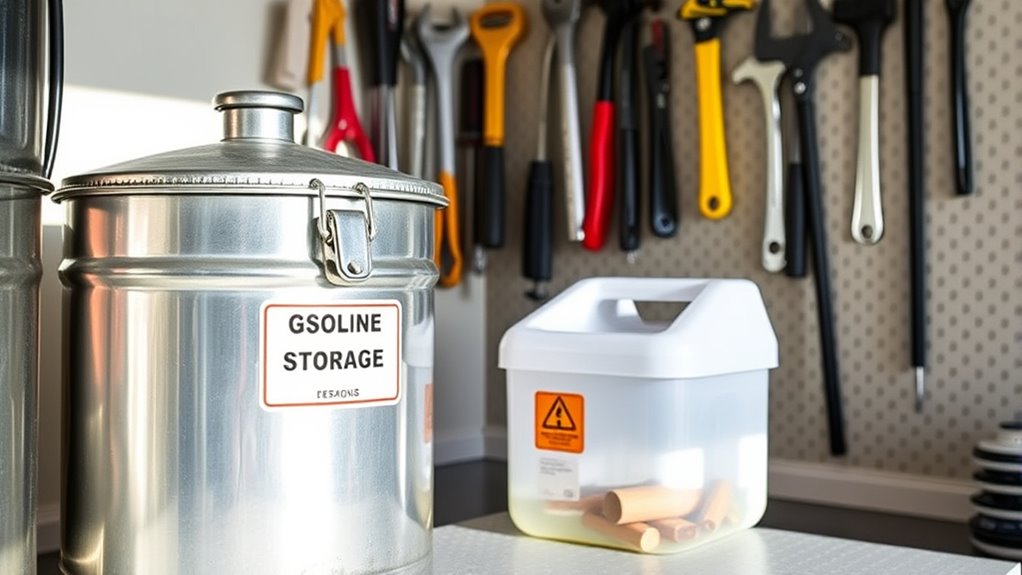
What’s the safest way to dispose of old or unused gasoline? Never pour it down a drain, onto the ground, or into storm drains. Instead, take it to a certified disposal facility or recycling center. These sites handle hazardous materials safely and prevent environmental harm.
Here’s a quick guide:
| Step | Action | Tip |
|---|---|---|
| 1 | Store in a sealed, labeled container | Use a proper gas can with a secure lid |
| 2 | Transport to disposal site | Keep container upright during transit |
| 3 | Follow local regulations | Check with local waste management for specifics |
Handling gasoline responsibly keeps your home and environment safe. Always prioritize proper disposal to prevent accidents.
Legal Regulations and Guidelines for Home Fuel Storage
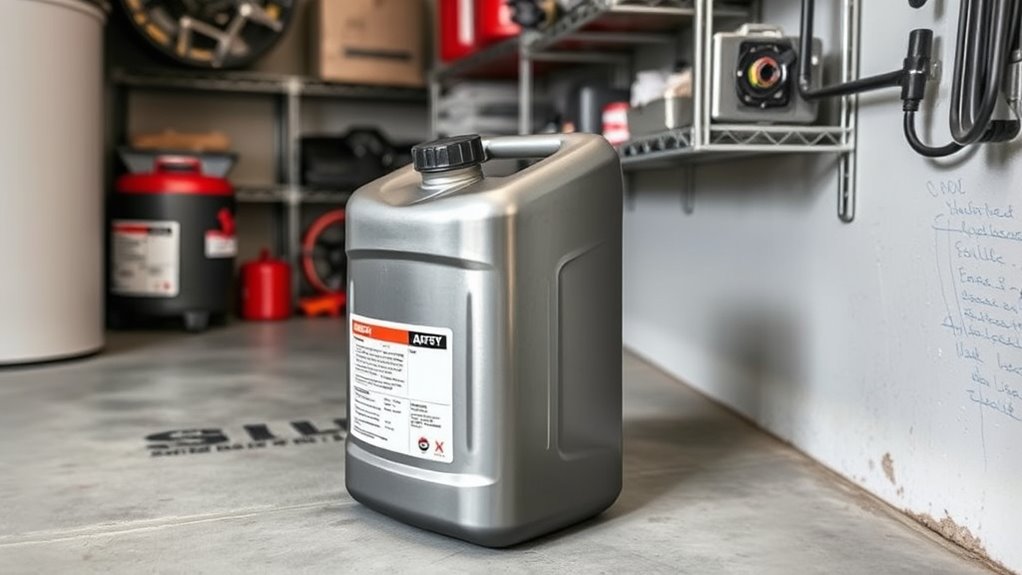
Understanding and following legal regulations is essential when storing fuel at home, as improper storage can lead to safety hazards and legal penalties. You need to know local laws and fire codes to avoid fines or dangerous situations. Here are three key points to keep in mind:
Proper fuel storage at home requires understanding local laws to ensure safety and compliance.
- Check your local regulations on the maximum amount of gasoline you can store.
- Store fuel in approved containers designed for flammable liquids.
- Keep fuel storage areas away from heat sources, open flames, and living spaces.
Frequently Asked Questions
How Long Can Gasoline Be Safely Stored Before It Degrades?
You can typically store gasoline safely for about 3 to 6 months if it’s kept in a proper container and stored in a cool, ventilated, and dry place. Over time, gasoline degrades, losing volatility and leading to engine problems. To extend its shelf life, consider adding fuel stabilizer, which can help gasoline last up to 12 months. Always check for signs of degradation before use, like bad smell or discoloration.
Are There Specific Safety Signs to Display Near Fuel Storage Areas?
Yes, you should display clear safety signs near your fuel storage area. Use signs that warn of flammable materials, indicate no smoking or open flames, and specify proper handling procedures. These signs catch attention, remind you of safety rules, and help prevent accidents. Make sure they’re visible from a distance, easy to read, and in compliance with local regulations. Staying alert with proper signage keeps everyone safe around fuel storage zones.
Can I Use Plastic Containers Instead of Metal for Gasoline Storage?
Yes, you can use plastic containers for gasoline storage, but only if they’re approved for fuel. Look for containers marked with a UL or other safety certification. Make sure the container is tightly sealed, stored in a cool, well-ventilated area away from heat or flames, and never use old or damaged plastic. Regularly examine your containers to prevent leaks and guarantee safety.
What Are the Signs of a Leaking or Compromised Fuel Container?
You notice a strong, pungent smell near your fuel container—that’s a warning sign. Look for any cracks, warping, or stains around the container’s edges, which indicate leaks. If the container feels unusually warm or you see fuel pooling underneath, it’s compromised. Don’t ignore these signs; leaking fuel poses serious hazards. Regularly inspect your container for any visible damage or deterioration to keep yourself and your space safe.
How Should I Handle Gasoline Spills Safely and Effectively?
When you spill gasoline, act quickly to prevent hazards. First, stop the spill by containing it with absorbent materials like kitty litter or sand. Avoid ignition sources and ventilate the area immediately. Use a broom and dustpan to scoop up the soaked material, then dispose of it in a sealed, approved container. Wash the area with soap and water once the spill is cleaned up. Always wear protective gloves and eye protection.
Conclusion
By following these safety tips, you’re like a vigilant guardian, guarding your home from the silent threat of fire and fumes. Think of your garage as a fortress, where proper storage and careful handling keep danger at bay, much like a lighthouse guiding ships safely ashore. With awareness and caution, you can prevent a small spark from becoming a disaster, ensuring your home remains a safe harbor for you and your loved ones.