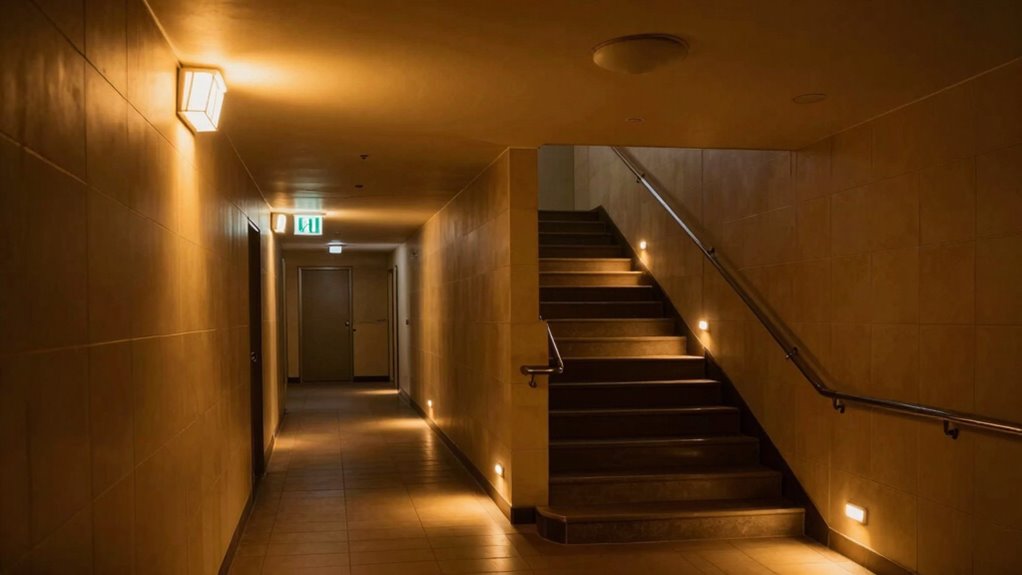

When designing your emergency lighting layout, prioritize hallways, bathrooms, and stairs to guarantee safe evacuation during outages. Clearly illuminate these critical areas so occupants can find exits and navigate safely, reducing the risk of disorientation or falls. Install lights and exit signs strategically at intersections, doorways, and key points. Make sure backup power keeps everything operational. Keeping these zones well-lit can make all the difference in emergencies—continue to explore ways to optimize your system now.
Key Takeaways
- Prioritize emergency lighting along entire lengths of hallways to prevent disorientation during power outages.
- Ensure bathrooms have emergency lights at exits and near sinks or switches for quick visibility.
- Install illuminated handrails in stairwells to guide occupants safely and prevent falls during emergencies.
- Strategically position exit signs at hallway intersections, stairwell entrances, and bathroom exits for clear navigation.
- Use dedicated backup power sources for all critical areas to maintain lighting and signage during outages.

Have you ever wondered how emergency lighting guarantees safety during power outages or emergencies? It all starts with a well-designed layout that assures critical areas are illuminated and easily navigable. When planning your emergency lighting, one of the first priorities is to install exit signs that clearly mark escape routes. These signs act as guiding beacons, helping occupants find their way out quickly, even when the main power is out. To guarantee they function reliably, exit signs are connected to a dedicated power supply that remains active during outages. This backup power source typically includes batteries or an emergency power system that kicks in instantly when the main supply fails, maintaining visibility of exit signs at all times.
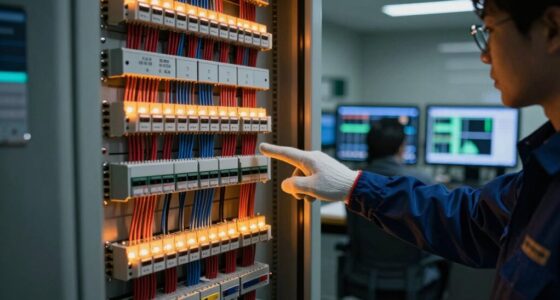
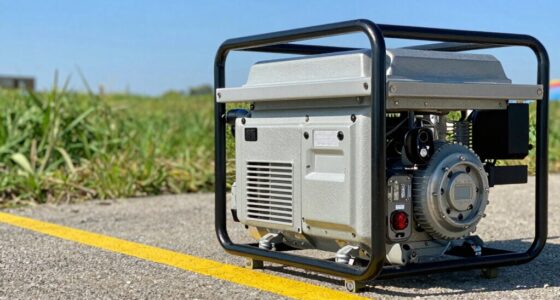
The power supply is the backbone of your emergency lighting system. Without a reliable source of power, even the most strategically placed lights and signs become useless during an emergency. Modern systems use a combination of primary electrical wiring and backup batteries, ensuring that lights and exit signs stay illuminated for the required duration—often at least 90 minutes. Regular testing and maintenance of this backup power are essential to confirm that it functions properly when needed. If the power supply falters or the batteries deplete, the entire safety system could fail, leaving occupants vulnerable in critical moments.
When designing your emergency lighting layout, you should focus on hallways, bathrooms, and stairwells first. These areas are high-traffic zones and potential bottlenecks during emergencies, making their illumination essential for safe evacuation. In hallways, place exit signs at strategic points—such as intersections or ends—to clearly indicate the nearest escape route. Emergency lights should be installed along the length of the corridor to prevent dark patches that could cause disorientation. Bathrooms, often overlooked, must have dedicated emergency lighting, especially near exits and at key points like sinks or switches, to ensure users can find their way out safely. Stairwells demand special attention; they should be equipped with illuminated handrails and emergency lighting to prevent falls and guide people downward or upward during evacuations.

TANLUX Red Exit Sign with Emergency Lights, LED Emergency Exit Light with Battery Backup, UL Listed, AC 120/277V, Commercial Emergency Lights Combo for Business – 1 Pack
【US STANDARD】This commercial exit sign made of Injection-molded thermoplastic material, UL-94V-0 flame retardant. Super bright with red letter…
As an affiliate, we earn on qualifying purchases.
As an affiliate, we earn on qualifying purchases.
Frequently Asked Questions
How Often Should Emergency Lighting Be Inspected and Maintained?
You should inspect your emergency lighting at least monthly to confirm it works properly and follows the inspection schedule. Regular maintenance procedures are essential; test all lights, check batteries, and replace faulty components promptly. Additionally, perform a thorough annual inspection and maintenance to meet safety standards. Staying consistent with these checks helps prevent failures during emergencies and keeps your building compliant with safety regulations.
What Are the Specific Regulations for Emergency Lighting in Historic Buildings?
You might worry historic buildings can’t meet modern emergency lighting standards, but they can with careful planning. Regulations for historic compliance emphasize preserving the building’s character while ensuring safety. You must use discreet, compatible emergency lighting fixtures that meet preservation standards and local codes. Regular inspections are essential, and upgrades should blend seamlessly into the architecture, balancing safety with historic integrity. Consult local authorities for specific guidelines to stay compliant.
How Does Emergency Lighting Design Differ for Residential Versus Commercial Buildings?
You’ll find that emergency lighting design differs between residential and commercial buildings mainly due to building code differences and occupant safety considerations. In commercial spaces, you need more extensive lighting coverage, emergency signage, and longer duration lights to ensure safe evacuation. Residential buildings typically have simpler systems focused on basic safety, with fewer code requirements. Prioritizing occupant safety, you must adapt your design to comply with these specific regulations for each type of building.
What Are the Latest Technological Advancements in Emergency Lighting Systems?
Think of emergency lighting systems as the brain, constantly evolving with smart sensors and LED technology. You benefit from intelligent sensors that detect movement and automatically adjust lighting levels, conserving energy. LED lights now offer brighter, more reliable illumination with longer lifespans. These advancements make emergency systems smarter, more efficient, and easier to maintain, ensuring safety is always a step ahead like a vigilant guardian watching over your space.
How Can Emergency Lighting Be Integrated With Building Automation Systems?
You can integrate emergency lighting with building automation systems through system integration, allowing seamless communication between lighting controls and automation software. By connecting emergency lighting to your building’s central system, you enable real-time monitoring, automated testing, and quick response during power outages. This integration enhances safety, ensures compliance, and simplifies maintenance, giving you more control over emergency lighting operations and guaranteeing it functions effectively when needed.

Lithonia Lighting Basics LED Emergency Light, Emergency Lighting with Dual Adjustable LED Lamp Heads, Wall Mount, Damp Location Rated, 90-Minute Backup, 120/277V, White (EU2C M6)
ESSENTIAL EMERGENCY LIGHTING: The Lithonia Lighting Basics emergency light is ideal for stairways, hallways, and egress paths; It…
As an affiliate, we earn on qualifying purchases.
As an affiliate, we earn on qualifying purchases.
Conclusion
Remember, placing emergency lighting in hallways, bathrooms, and stairs guarantees everyone can find safety quickly. Did you know that in a recent study, 70% of emergency accidents occur in these key areas? Proper lighting can dramatically reduce this risk, guiding people safely even when visibility is low. So, prioritize these spots in your layout and give everyone peace of mind during emergencies. Your careful planning could be the difference between chaos and calm.
Lithonia Lighting Basics LED Emergency Light, Emergency Lighting with Dual Adjustable LED Lamp Heads, Wall Mount, Damp Location Rated, 90-Minute Backup, 120/277V, White (EU2C M6)
ESSENTIAL EMERGENCY LIGHTING: The Lithonia Lighting Basics emergency light is ideal for stairways, hallways, and egress paths; It…
As an affiliate, we earn on qualifying purchases.
As an affiliate, we earn on qualifying purchases.
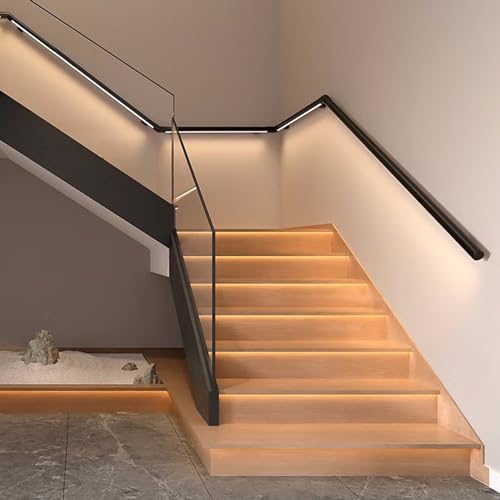
LED Indoor Stair Handrails – Illuminated Rustic Black Industrial Pipe Railing with 90° Corner Connector, Modern Handrail Lighting System for Safety and Style
Enhance Safety with LED Handrails that Illuminate Your Outdoor Deck and Indoor Stairs at Night. The Wall-Mounted Design…
As an affiliate, we earn on qualifying purchases.
As an affiliate, we earn on qualifying purchases.