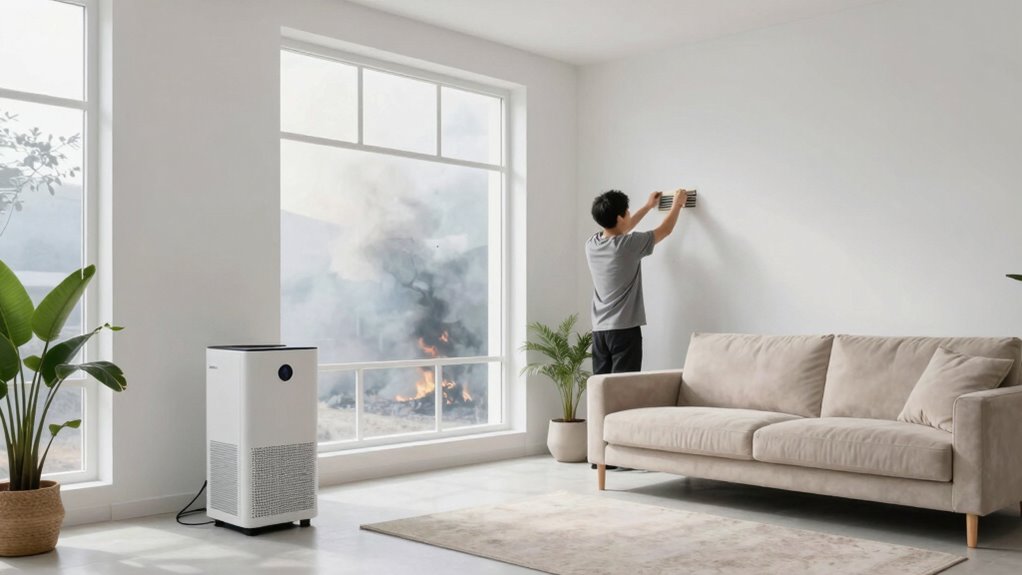

To create a ‘clean room’ quickly during wildfire smoke events, choose an interior space away from exterior walls with minimal entry points. Seal all windows and doors with weatherstripping, plastic, or tarps secured with tape. Use a HEPA air purifier to filter airborne particles and block leaks to prevent smoke infiltration. Strategically ventilate by timing openings and using exhaust fans. Keep this space sealed and monitored for ongoing safety—more tips can help you stay protected.
Key Takeaways
- Select an interior, windowless room away from exterior walls and smoke sources for quick sealing and protection.
- Seal all entry points, including windows, vents, and doors, with weatherstripping, plastic covers, or tape.
- Use portable HEPA air purifiers inside the room to filter out smoke particles continuously.
- Cover vents and doorways with heavy-duty plastic or tarps secured with tape to create an airtight barrier.
- Minimize opening doors or windows to maintain the sealed environment and ensure maximum filtration efficiency.
Assess Your Space Quickly and Effectively

When wildfire smoke starts to drift into your area, it’s essential to quickly evaluate your indoor space to determine your level of protection. Start by identifying areas with the fewest gaps or openings where smoke could enter. Check the condition of your doors, windows, and vents—seal any obvious leaks with weather stripping or damp towels. Assess the current filtration setup, like air purifiers or HVAC systems, to see if they’re functioning properly and capable of filtering out smoke particles. Consider the design of your ventilation system to ensure it doesn’t inadvertently draw in outdoor air when not needed. Review your smart‑home systems to see if they can help monitor and improve air quality during such events. Remove or cover any sources of additional contamination, such as open trash or dusty surfaces. Keep in mind that your goal is to minimize smoke infiltration and improve indoor air quality fast. Acting swiftly and efficiently can make a significant difference in protecting your health, especially by understanding indoor air quality measures and how to optimize them. Additionally, understanding the air exchange rate can help you determine how effectively your space is being ventilated and whether additional filtration is necessary. Being aware of filter maintenance is also crucial to ensure your air purification systems operate at peak efficiency during smoke events.
Choose the Best Location for Your ‘Clean Room
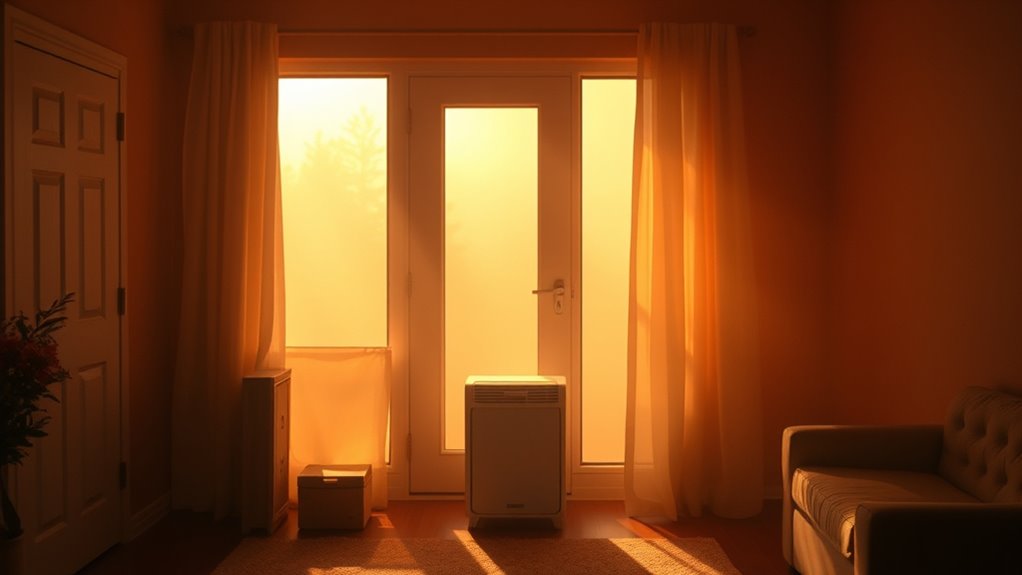
To effectively reduce your exposure to wildfire smoke, choosing the right location for your ‘clean room’ is essential. Look for a space that’s naturally isolated from outdoor air, ideally on the opposite side of your home from the wildfire source. It should be away from windows, vents, and exterior walls that could allow smoke entry. A small, interior room with minimal openings works best. Ensuring the room has proper sealing techniques can further prevent smoke infiltration and maintain air quality. Additionally, selecting a space with good air circulation can help disperse any residual contaminants and improve overall air cleanliness. Proper ventilation strategies are crucial to ensuring that the air remains as clean as possible. For added protection, using air filtration devices in this space can significantly enhance air quality during wildfire events. Incorporating air quality monitoring can also help you track the effectiveness of your efforts and make adjustments as needed. Consider this table:
| Ideal Room Features | Why It Matters |
|---|---|
| Interior, windowless space | Limits smoke infiltration |
| Close to HVAC or air purifier | Facilitates quick filtration |
| Away from doors and vents | Reduces air leaks |
| Easy to seal off quickly | Ensures faster creation of a clean environment |
Seal Off Doorways and Windows to Prevent Air Leaks
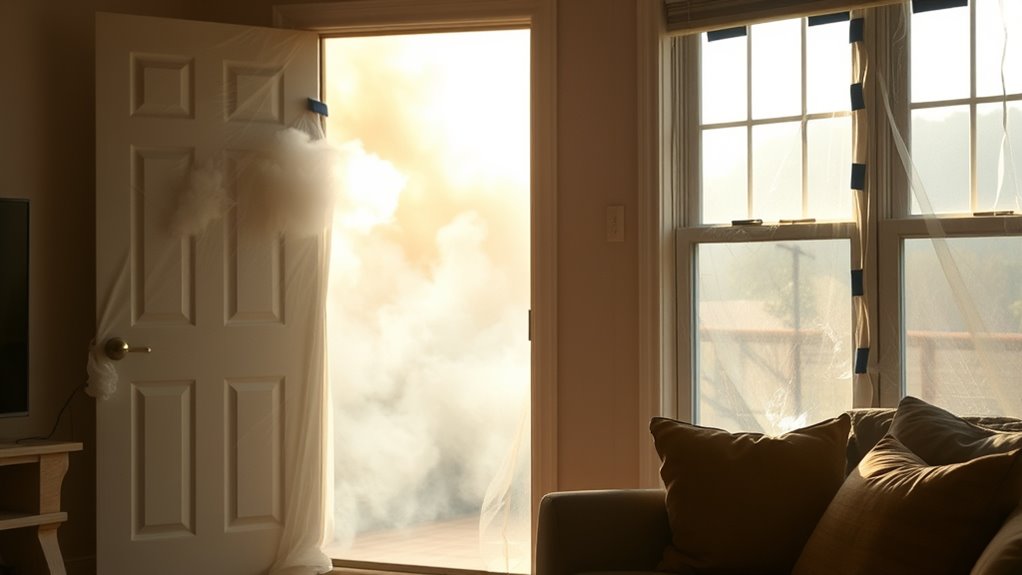
Sealing off doorways and windows helps keep wildfire smoke out of your home. Use weather stripping on doors, seal gaps around windows, and cover vent openings to block air leaks. These simple steps can markedly improve your indoor air quality during smoky conditions. Additionally, using high-efficiency particulate air (HEPA) filters can further enhance indoor air cleanliness by capturing tiny smoke particles. Regularly inspecting and maintaining these seals ensures optimal performance and prevents air leaks from compromising your home’s protection. Incorporating proper sealing techniques can also reduce energy loss and improve overall comfort during smoke events. To maximize effectiveness, consider testing your home’s seal with smoke or incense to identify hidden leaks that need sealing. Understanding home sealing strategies can significantly boost your efforts to create a safer, healthier environment during wildfire events.
Use Weather Stripping
Weather stripping is an effective way to prevent wildfire smoke from infiltrating your home through gaps around doors and windows. It seals leaks, creating a tighter barrier against smoky air. Choose the right type for your needs—foam, rubber, or metal strips—and install them carefully along the edges. Proper application guarantees no gaps are missed, maximizing protection. Regularly check and replace worn or damaged weather stripping to maintain a secure seal. This simple step can greatly reduce indoor smoke levels, making your home safer during wildfire events. Vetted It is also important to verify that your weather stripping is compatible with your home’s existing materials for optimal sealing. Additionally, understanding building envelope integrity can help you identify other vulnerabilities in your home’s defenses against smoke intrusion. Ensuring your home’s ventilation system is properly maintained can further improve indoor air quality during wildfire season. Maintaining a seal integrity around your home is especially crucial if your home has any existing structural vulnerabilities.
Seal Door Gaps
Since gaps around doors and windows allow smoky air to enter your home, sealing them effectively blocks these leaks and keeps the interior cleaner. Use weather stripping or door sweeps to close gaps beneath doors and around frames. For larger openings, consider foam sealants or draft stoppers. Check for cracks or holes in door frames and fill them with appropriate sealants. Make sure all door sweeps are securely attached and in good condition. Pay special attention to gaps at the bottom and sides of doors, as these are common entry points for smoke. Sealing these leaks minimizes outdoor air infiltration, reducing smoke buildup inside. Regularly inspect and maintain seals to guarantee they stay effective during the smoky season. This simple step substantially improves your indoor air quality during a wildfire event. Properly sealing your home is an essential part of air quality management to protect your health during wildfire smoke events. Additionally, using proper sealing techniques ensures the effectiveness and longevity of your efforts. Incorporating home sealing methods like sealing cracks and gaps can significantly enhance your home’s resistance to smoke infiltration. To maximize effectiveness, consider consulting air filtration systems that can further improve indoor air quality during smoky conditions. Regularly testing your home’s air tightness can help identify new leaks and ensure ongoing protection.
Cover Vent Openings
Covering vent openings, doorways, and windows is a key step in preventing smoky air from entering your home. You want to block all possible leaks where outside air can seep in, especially during a wildfire. Use heavy-duty plastic sheeting or towels to seal gaps tightly. Check for overlooked areas like pet doors or exhaust vents. Ensure that all windows are fully closed and sealed with weatherstripping or tape. Cover ventilation grates with plastic covers or damp cloths. Remember, even small openings can let in significant smoke. By sealing these entry points, you create a barrier that keeps harmful smoke out and maintains a cleaner indoor environment. Stay vigilant and double-check every opening before settling into your safe room.
Gather and Use Portable Air Purifiers With HEPA Filters

To effectively reduce wildfire smoke indoors, you should gather portable air purifiers equipped with HEPA filters. These devices are essential because they can capture tiny particles, including smoke and harmful pollutants. Place the purifiers in the room where you spend the most time or where you plan to create your clean zone. Confirm the filters are high-efficiency (HEPA) and replace or clean them regularly for peak performance. Avoid using older or low-quality units that may not effectively filter out smoke particles. Keep doors and windows closed when running the purifiers to maximize their efficiency. Running a portable air purifier continuously helps maintain cleaner air, reducing your exposure to wildfire smoke and improving indoor air quality quickly.
Create a Barrier With Heavy-Duty Plastic or Tarping
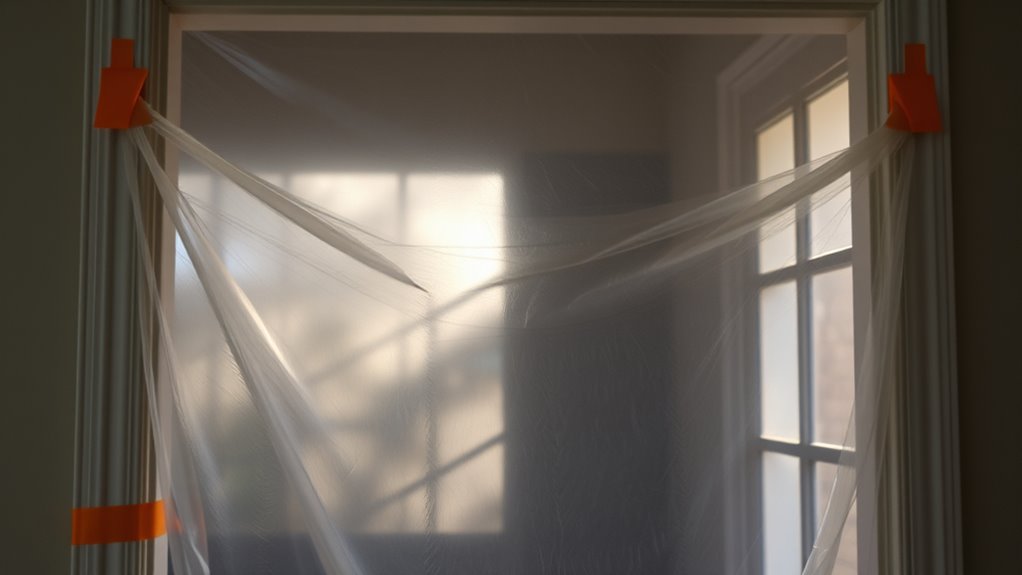
When wildfire smoke threatens indoor air quality, creating a barrier with heavy-duty plastic or tarps can substantially reduce smoke infiltration. Cover windows, vents, and doorways with plastic sheeting or tarps to block smoke from seeping inside. Secure edges with painter’s tape or duct tape to prevent gaps. Use multiple layers if needed for added protection, especially in high-traffic areas. Seal any cracks around windows and doors to reinforce the barrier. This simple step can buy you vital time before proper ventilation or filtration can take effect.
- Cover all entry points like vents and gaps
- Use painter’s tape for a secure seal
- Layer plastic for extra protection
- Seal cracks around windows and doors
- Ensure the tarp or plastic extends to the floor for full coverage
Minimize Sources of Indoor Pollution and Contaminants

Reducing indoor pollution begins with identifying and minimizing the sources that introduce contaminants into your home. Start by avoiding smoking indoors, as cigarette smoke releases harmful particles and chemicals. Keep household products like air fresheners, cleaning agents, and paints sealed tightly and use them sparingly, since fumes and volatile organic compounds (VOCs) can linger and degrade indoor air quality. Regularly clean to remove dust, pet dander, and mold, which can worsen air quality during wildfire events. Limit the use of candles and incense, as they release soot and chemicals. Ensure proper storage of chemicals and avoid bringing in outdoor debris or pollen. By controlling these sources, you reduce indoor pollutants and create a healthier environment during wildfire smoke events.
Ventilate Strategically Without Letting in Smoke
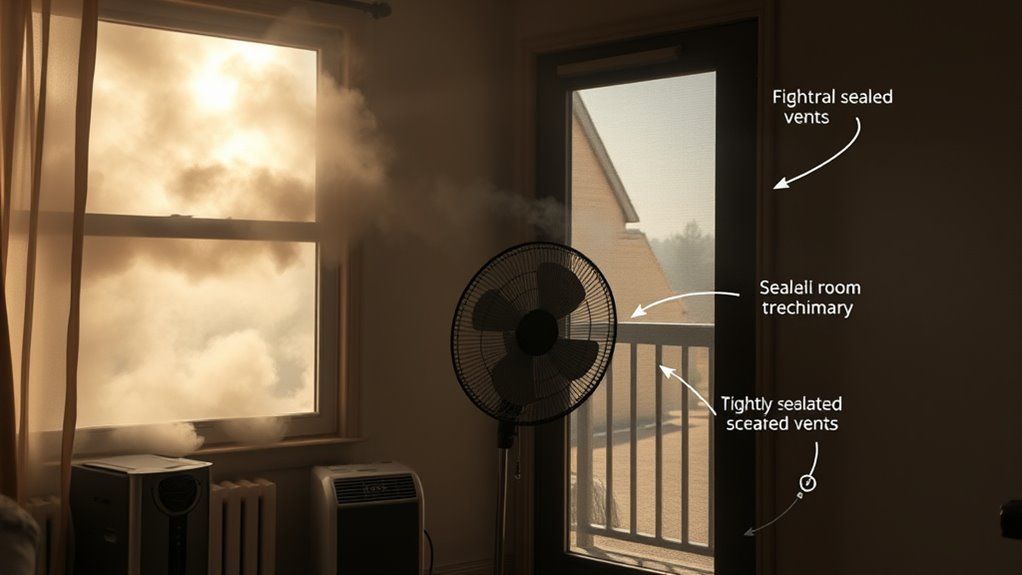
Strategic ventilation is essential during wildfire smoke events to improve indoor air quality without letting harmful particles inside. To do this effectively, time your ventilation during parts of the day when outdoor air is cleaner, such as early mornings or after rain. Use exhaust fans to pull stale air out of your home, but avoid opening windows or doors when smoke levels are high. Keep windows closed when outdoor air quality is poor, and rely on filtered air exchange systems instead. Consider creating a temporary barrier, like an airlock, to minimize smoke infiltration.
Strategic ventilation improves indoor air quality by timing airflow and sealing gaps during wildfire smoke events.
- Check real-time air quality reports before opening windows
- Ventilate during periods of low outdoor pollution
- Use exhaust fans in kitchens and bathrooms
- Seal gaps around doors and windows
- Avoid cross-ventilation when outdoor air quality drops
Use Household Items to Enhance Air Filtration

You can improve indoor air quality during wildfire smoke events by using household items to enhance filtration. Items like dampened towels, box fans with filters, or even DIY air purifiers can help trap particles. Place damp cloths over vents or windows to reduce smoke infiltration. Use a box fan fitted with a HEPA filter or a furnace filter to pull air through and trap harmful particles. These simple actions boost filtration without expensive equipment.
| Household Item | How It Helps | Tips for Use |
|---|---|---|
| Damp towels | Traps particles at entry points | Dampen and hang over vents or doors |
| Box fan + filter | Increases air cleaning capacity | Attach a high-efficiency filter |
| Air purifiers | Directly filters indoor air | Use in the main living area |
Monitor Indoor Air Quality and Adjust as Needed

You should use air quality monitors to keep an eye on particulate levels inside your home. Tracking this data helps you understand when air quality drops and needs improvement. Based on what you find, adjust your ventilation to keep the air safe and comfortable.
Use Air Quality Monitors
Monitoring indoor air quality with a reliable air quality monitor allows you to keep track of smoke particles and pollutants that may seep inside during a wildfire. By continuously checking readings, you can identify when air quality drops and take immediate action to improve it. This tool helps you determine if your filters or ventilation systems are effective and whether additional measures are needed. With real-time data, you can make informed decisions to keep your space safe and comfortable.
- Detects particulate levels instantly
- Alerts you to sudden changes in air quality
- Shows pollution sources inside your home
- Helps verify the effectiveness of air purifiers
- Guides you on when to ventilate or seal your space
Track Particulate Levels
Keeping a close eye on particulate levels inside your home makes sure you can respond promptly to smoke infiltration during a wildfire. Regularly check your air quality monitor to identify rising particle counts. If levels climb above safe thresholds, you’ll know it’s time to tighten your defenses or create a clean room. Use the table below to track your indoor air quality:
| Particulate Level | Action Needed | Notes |
|---|---|---|
| Low (Good) | Maintain current steps | No immediate action needed |
| Moderate | Increase filtration | Check filters & ventilation |
| High | Create a clean room | Seal gaps & use air purifiers |
| Very High | Evacuate if necessary | Seek safer location |
| Critical | Seek emergency help | Protect health immediately |
Monitoring keeps you aware and ready to act, ensuring your indoor air stays as safe as possible.
Adjust Ventilation Accordingly
When indoor particulate levels rise during a wildfire, adjusting your ventilation system becomes essential to maintaining air quality. You need to stay alert and respond quickly. Monitor your indoor air quality regularly with a reliable air quality monitor. If levels spike, turn off fans, vents, and HVAC systems that bring in outside air. Seal gaps around windows and doors to prevent contaminated air from entering. Use air purifiers with HEPA filters to quickly remove particles. Keep windows and vents closed until air quality improves.
- Check air quality readings frequently
- Limit use of exhaust fans that draw in outdoor air
- Switch your HVAC to recirculate mode if possible
- Use portable air purifiers in the most-used rooms
- Seal leaks to prevent outdoor smoke infiltration
Maintain Your ‘Clean Room’ for Ongoing Protection
To guarantee your home remains a safe haven during wildfire smoke events, maintaining a clean room is essential. Regularly check and replace the air filters in your ventilation system to ensure peak filtration. Keep windows and doors sealed when not in use, and avoid opening them unnecessarily. Clean surfaces and floors frequently to reduce dust and airborne particles. Use an air purifier with a HEPA filter inside the clean room to continually remove pollutants. Keep clutter to a minimum to prevent dust buildup. If you notice any signs of smoke or dust infiltration, reinforce seals or add temporary barriers. Staying vigilant and maintaining these precautions helps ensure your clean room continues to provide effective protection against wildfire smoke.
Frequently Asked Questions
How Long Should I Keep the ‘Clean Room’ Sealed During Smoke Events?
You should keep the ‘clean room’ sealed during smoke events as long as the air quality remains poor outside. Check local air quality reports frequently, and once the air quality improves and stays stable, you can gradually open the room. Keep the door closed whenever smoke levels spike again. This helps prevent smoky air from entering and guarantees you breathe cleaner, safer air inside.
Can I Use DIY Air Purifiers Instead of Store-Bought HEPA Units?
You can definitely try DIY air purifiers instead of store-bought HEPA units. Many people have successfully built effective purifiers using box fans and high-quality filters like MERV 13 or higher. Just make certain you securely attach the filter to the fan, run it at a safe speed, and keep the area sealed as much as possible. While DIY options may not be as perfect, they’re a practical, cost-effective way to improve air quality during smoke events.
What Household Items Can Effectively Filter Indoor Air During a Wildfire?
You can use household items like dampened towels over vents, bowls of vinegar, or activated charcoal to help filter indoor air during a wildfire. Damp towels trap some particles, vinegar absorbs odors, and charcoal adsorbs smoke pollutants. Keep windows and doors closed, and consider creating a makeshift air barrier with these items. While not as effective as HEPA filters, they can help improve air quality temporarily.
How Often Should I Replace or Clean the Air Filters in My Purifier?
Your air filters should be replaced or cleaned at least every 1 to 3 months, depending on usage and air quality. During wildfire events, filters can clog faster, so check them monthly and replace promptly if they’re dirty or discolored. Neglecting this can turn your home into a toxic nightmare. Stay vigilant—your lungs will thank you for keeping your purifier functioning at peak performance.
Are There Specific Plants That Help Improve Indoor Air Quality During Smoke Events?
Yes, certain indoor plants can help improve air quality during smoke events. You should consider plants like snake plants, spider plants, and peace lilies, which are known for filtering toxins and improving air purity. Place them strategically around your space to maximize benefits. Keep in mind, though, that plants alone won’t fully protect you from smoke, so combine them with air purifiers and proper ventilation for the best results.
Conclusion
Remember, a stitch in time saves nine. By quickly evaluating your space, sealing leaks, and using portable purifiers, you can create a safe haven from wildfire smoke. Stay vigilant, monitor your air quality, and keep your ‘clean room’ well-maintained. Though it takes effort, protecting your home and loved ones is worth every step. In tough times, your quick actions can make all the difference—don’t wait until it’s too late.