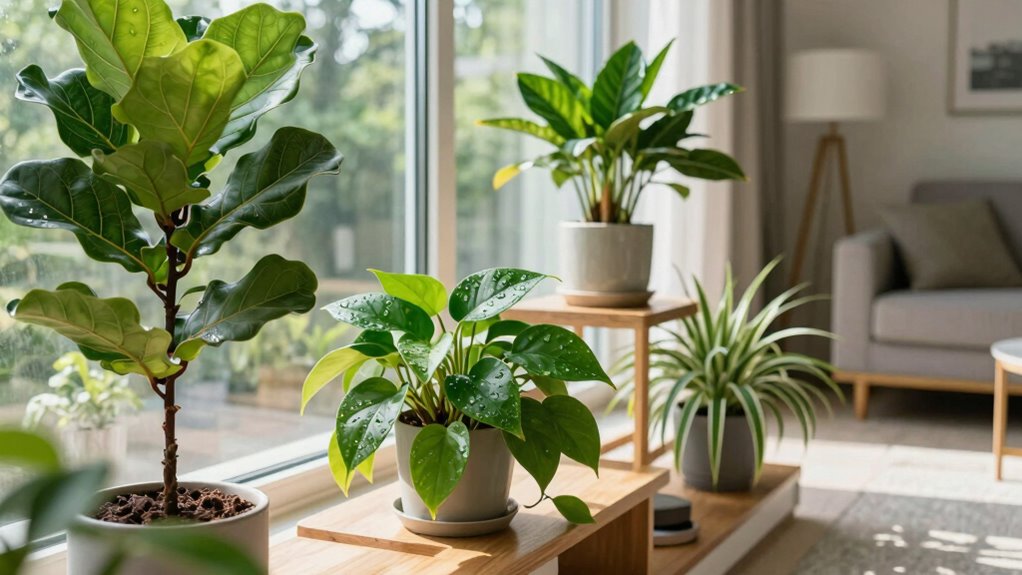

Houseplants can help improve indoor air quality by absorbing certain pollutants like VOCs and releasing oxygen, but their effects are often overstated and are best considered as a supplementary measure. They won’t replace proper ventilation or air purifiers, especially in small or pollutant-heavy spaces. To get the most out of your plants, placement and care matter. Want to discover which plants work best and how to maximize their benefits? Keep exploring for more insights.
Key Takeaways
- Houseplants can improve indoor air quality by absorbing certain pollutants, but their impact is limited in typical home environments.
- Scientific evidence shows some plants filter VOCs and toxins, but their overall effect is often overstated without proper context.
- Mechanical air purifiers are more effective and consistent for large or polluted spaces than relying solely on houseplants.
- Proper placement, plant health, and maintenance enhance their modest air-cleaning benefits when used as supplementary tools.
- Houseplants provide aesthetic and psychological benefits, making them helpful as part of a broader indoor air quality strategy, not a primary solution.
The Air-Purifying Claims of Popular Houseplants
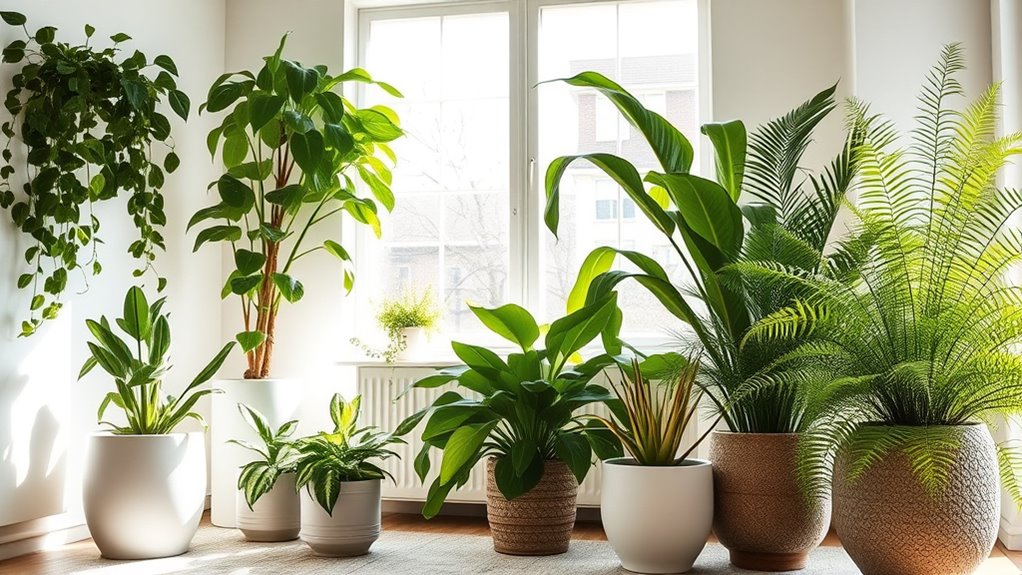
Many popular houseplants are praised for their ability to improve indoor air quality, but it’s important to understand what these claims really mean. While plants like snake plants, pothos, and peace lilies are often marketed as natural air cleaners, their actual impact can be limited. These plants do absorb some airborne toxins and release oxygen, but the extent of their filtering ability is often overstated. In small, typical indoor environments, their effect may be negligible compared to proper ventilation and air purification systems. It’s tempting to believe that having houseplants alone can clear the air, but they should be viewed as a complementary addition rather than a complete solution. Recognizing plant health and maintenance needs can also maximize their overall benefits and longevity. Additionally, lighting conditions and proper lighting can influence how vibrant and healthy these plants appear, enhancing their aesthetic benefits without significantly affecting air purification. Moreover, understanding indoor air circulation and how it interacts with plant efficacy can help set realistic expectations for improving indoor air quality. Proper soil quality and watering practices are also essential to keep plants healthy and effective. Understanding their true capabilities helps set realistic expectations for improving indoor air quality.
Scientific Studies on Indoor Plants and Air Quality
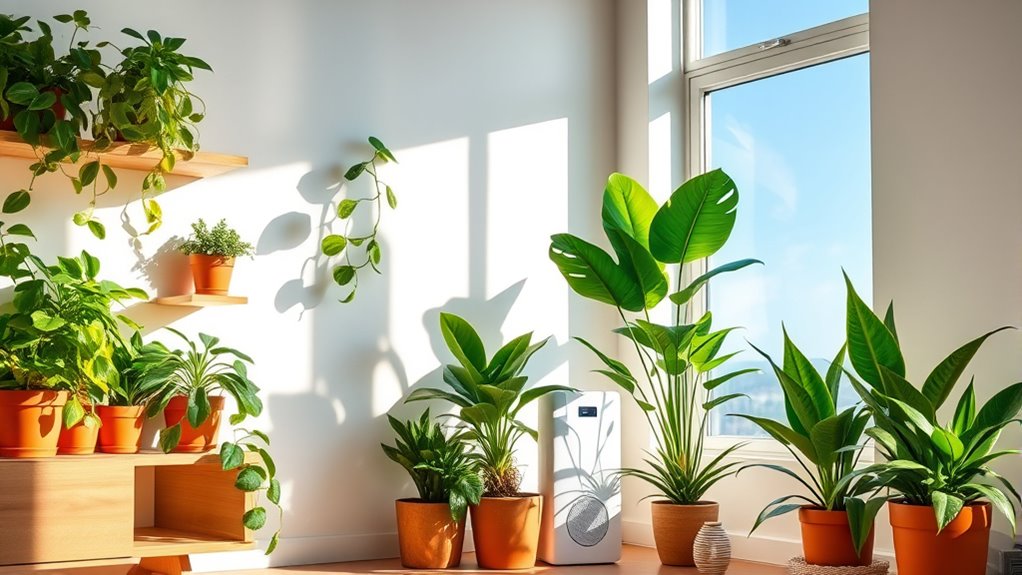
Scientific studies examining indoor plants and air quality reveal that while some plants can absorb certain airborne toxins, their overall impact on indoor pollution levels is limited. Research shows that plants like pothos and spider plants can remove specific volatile organic compounds (VOCs) in controlled environments. However, the actual effect in typical homes or offices is minimal because the amount of toxins absorbed by plants is small compared to the volume of indoor air. Many studies also highlight that factors like airflow, ventilation, and pollutant sources play a much larger role in indoor air quality. Additionally, it is important to consider odor sources such as household cleaning agents or spoiled food, which can significantly influence indoor air quality. While plants contribute some benefits, they shouldn’t be relied upon solely to improve air quality. Instead, combining plants with other ventilation strategies offers more noticeable results. Additionally, integrating connected home fitness technology can help monitor and optimize indoor air quality more effectively. Overall, understanding air exchange rates and proper ventilation remains crucial for maintaining healthy indoor environments.
How Houseplants Affect Different Types of Pollutants
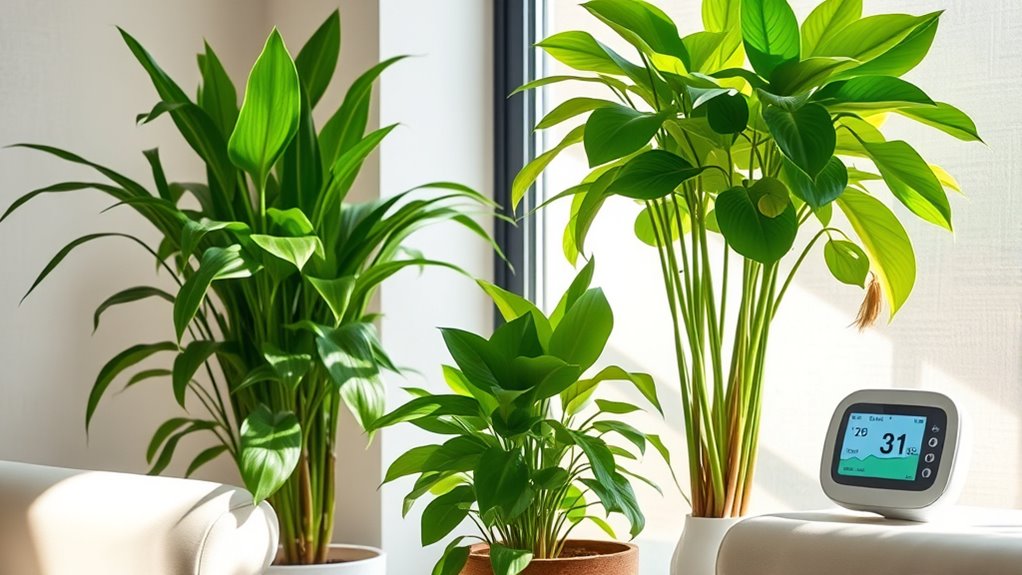
Houseplants can impact indoor air by absorbing volatile organic compounds (VOCs), filtering out particles, and breaking down chemicals. Their efficiency varies depending on the plant type and pollutant. Understanding these differences helps you choose the best plants to improve your air quality effectively. Additionally, selecting plants with effective filtration capabilities can enhance your efforts to maintain a healthier indoor environment. Recognizing how various plant properties influence pollutant removal can guide you in creating a more efficient air purification system using natural methods. Some plants are better suited for specific pollutants due to their biochemical properties, which can optimize your indoor air quality improvements. Furthermore, understanding the infrastructure of plant roots and leaves can provide insights into their pollutant absorption mechanisms. Incorporating knowledge about plant physiology can further refine your choices for maximum air cleaning benefits.
VOC Absorption Efficiency
While houseplants can help improve indoor air quality, their ability to absorb volatile organic compounds (VOCs) varies depending on the type of pollutant. Some VOCs, like formaldehyde and benzene, are more readily absorbed through plant leaves and roots, especially with plants like pothos or spider plants. However, the overall absorption efficiency is often limited and depends on factors such as plant species, leaf surface area, and environmental conditions like humidity and airflow. Many studies show that while plants can reduce VOC levels, their impact may be modest compared to mechanical ventilation or air purifiers. Additionally, the role of plant physiology influences their pollutant absorption capabilities, making their contribution supplementary rather than primary. The effectiveness of houseplants in VOC removal can also be affected by environmental factors, which can either enhance or hinder their absorption capacity. Hence, relying solely on houseplants for VOC removal isn’t sufficient, but they can complement other air quality improvement strategies.
Particulate Filtration Capacity
Although houseplants are often celebrated for their aesthetic appeal, they also play a role in filtering particulate matter from indoor air. Their leaves can trap dust, pollen, pet dander, and other tiny particles that float in the air. The surface area of leaves provides a physical barrier, causing particles to settle or stick. Some plants, like pothos or ferns, are particularly effective at capturing these particles due to their dense foliage. However, the overall capacity of houseplants to remove particulates is limited. They do not actively filter air like HEPA purifiers, but they can reduce surface dust and prevent buildup. To maximize benefits, regular cleaning of leaves and combined use with other air quality measures are recommended. Additionally, understanding the limitations of plant-based filtration can help set realistic expectations for indoor air quality improvement.
Chemical Breakdown Potential
Many houseplants can actively break down or transform certain indoor air pollutants through natural biochemical processes. They absorb harmful chemicals like formaldehyde, benzene, and trichloroethylene through their leaves and roots. Inside the plant, enzymes and microorganisms convert these toxins into less harmful substances, such as carbon dioxide and water. For example, some species release oxygen while metabolizing pollutants, improving air quality. Additionally, the effectiveness of these biochemical processes can be enhanced by understanding plant biochemical mechanisms, which vary among different species and environmental conditions. The specific pollutant absorption capacity of each plant influences how much they can reduce indoor contaminants. Research into plant biochemical pathways provides insight into optimizing the pollutant removal potential of houseplants. However, the extent of this chemical breakdown varies depending on the plant type, pollutant concentration, and environmental conditions. While houseplants do contribute to reducing specific chemicals, their overall impact is often modest compared to ventilation or air purification systems. Understanding these processes helps you appreciate the role plants play, not as sole air cleaners, but as part of a broader strategy for healthier indoor air.
The Role of Plant Size and Placement in Air Filtration
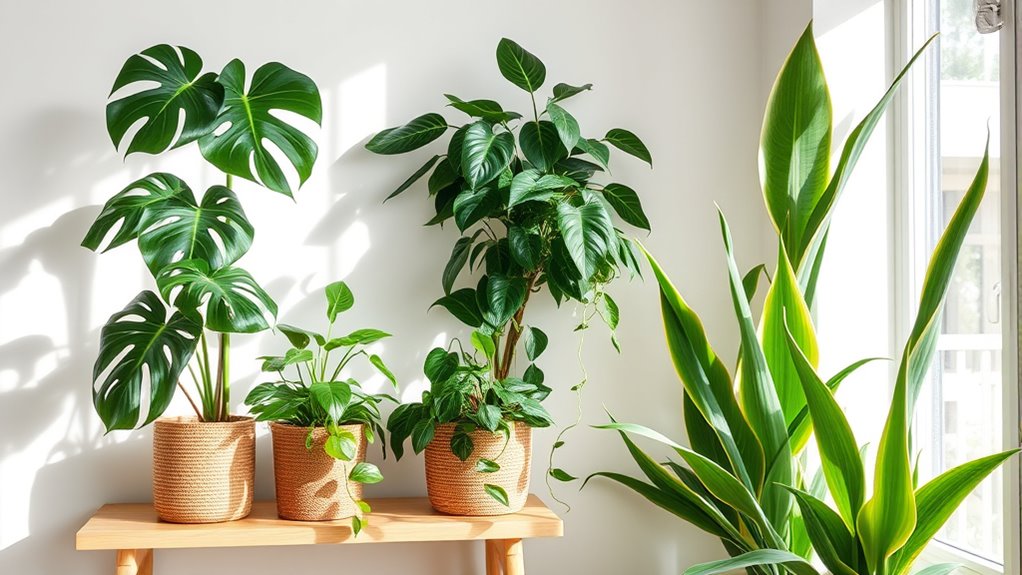
The size and placement of your houseplants considerably influence their ability to filter indoor air effectively. Larger plants generally have more leaves and surface area, increasing their capacity to absorb pollutants. Positioning plants in high-traffic or confined areas maximizes air contact and filtration. Placing plants near sources of indoor pollutants, like printers or smoking zones, enhances their effectiveness. Optimal plant placement can further improve air purification by ensuring maximum exposure to indoor air. Additionally, air filtration capacity varies among plant species, so choosing the right types can boost overall effectiveness. Conversely, overcrowding can reduce airflow and limit filtration efficiency. Use the table below to guide your plant placement choices:
| Plant Size | Ideal Placement |
|---|---|
| Large (e.g., Fiddle Leaf Fig) | Living rooms, corners, or spacious areas |
| Medium (e.g., Pothos) | Near desks, bedrooms, or offices |
| Small (e.g., succulents) | Windowsills, shelves, or compact spaces |
Mental and Emotional Benefits Beyond Air Quality

Houseplants do more than improve air quality; they also boost your mental and emotional well-being. Caring for plants provides a sense of purpose and accomplishment, especially when you see your greenery thrive. Their presence can reduce stress and promote relaxation, helping you unwind after a busy day. The act of tending to plants encourages mindfulness, grounding you in the present moment. Bright, healthy plants can elevate your mood and add a calming atmosphere to any space. Additionally, simply gazing at greenery can reduce feelings of anxiety and boost overall happiness. These emotional benefits aren’t just a bonus—they can create a more positive and balanced environment, supporting your mental health in everyday life. Incorporating quality assurance in reconditioned products into your environment can further enhance your overall well-being and sleep quality.
Limitations and Challenges of Relying on Plants for Clean Air
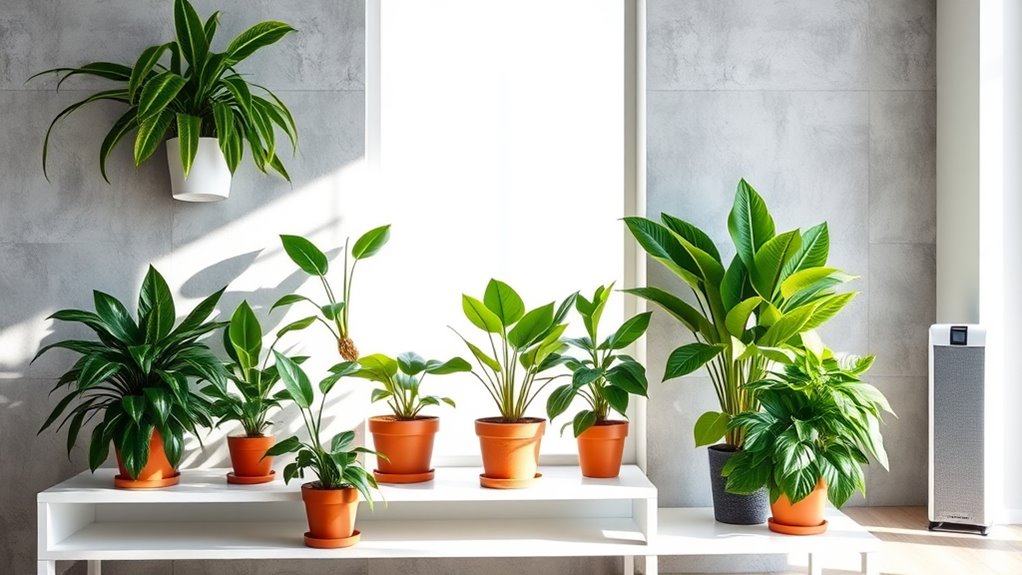
While houseplants can improve indoor air quality, they aren’t a complete solution. Their ability to remove pollutants is limited, and factors like room size and ventilation affect their effectiveness. Additionally, plants require regular care and maintenance, which can be a challenge for busy or forgetful owners.
Limited Pollutant Removal
Although houseplants can improve indoor air quality, they have notable limitations when it comes to removing pollutants. Most plants can only absorb a small fraction of airborne chemicals, which means they can’t eliminate high concentrations of pollutants quickly or effectively. Their phytoremediation process is slow, often requiring large numbers of plants to make a significant difference. Additionally, many common indoor plants are less effective at filtering certain chemicals, such as formaldehyde or benzene, compared to commercial air purifiers. Environmental factors like humidity, airflow, and light also impact their ability to remove toxins. Relying solely on houseplants gives a false sense of security, making it clear that they serve better as supplemental air quality tools rather than primary solutions.
Indoor Environment Variability
Indoor environments vary widely, which challenges the effectiveness of houseplants in maintaining air quality. Factors like room size, ventilation, humidity, and existing pollutants influence how well plants can improve air. A small plant in a large, poorly ventilated space may have little impact, while the same plant in a well-ventilated room might do more. Additionally, seasonal changes and daily activities can alter indoor conditions, making it hard to rely solely on plants for consistent air purification. The number and placement of plants also matter; a few plants in one corner won’t drastically change overall air quality. These variables mean that plants should be viewed as supplementary, not primary, air-cleaning tools. Relying solely on houseplants ignores the complex, fluctuating nature of indoor environments.
Maintenance and Care
Maintaining houseplants for air purification presents several practical challenges. You need to ensure they receive enough light, water, and nutrients, which varies between plant types. Overwatering can lead to root rot, while underwatering can cause leaves to wilt and reduce effectiveness. Pests and diseases are common issues, requiring constant vigilance and treatment. Additionally, plants need regular pruning to stay healthy and maximize their air-cleaning ability. Proper placement is vital; if you place plants in low-light areas, they won’t thrive or perform well. Some plants can also produce allergens or irritants, which might worsen indoor air quality for sensitive individuals. Overall, relying solely on houseplants for air purification demands ongoing effort, knowledge, and attention to detail, making it less straightforward than many assume.
Comparing Houseplants to Mechanical Air Purifiers
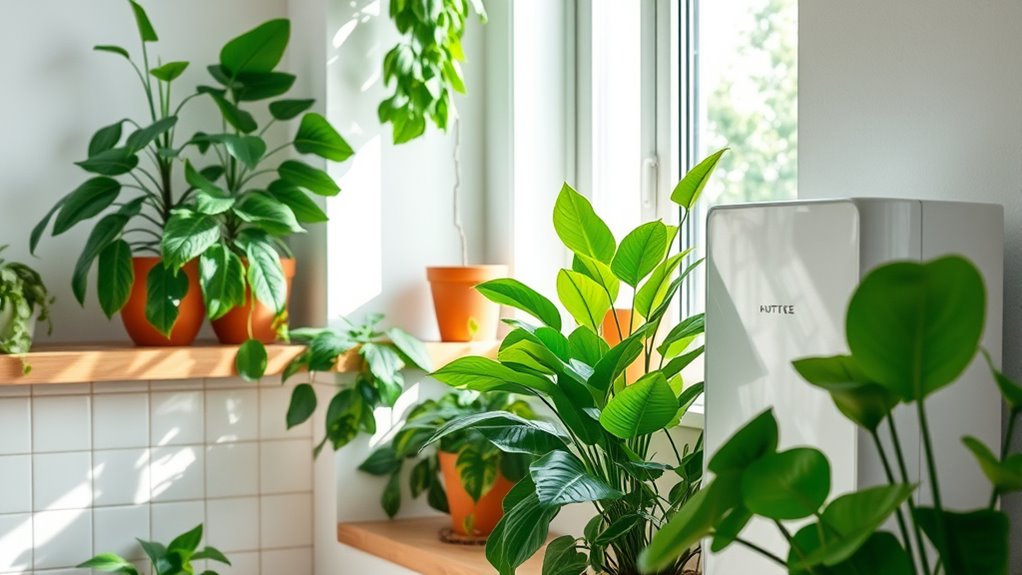
While houseplants can improve air quality, they often fall short when it comes to removing pollutants quickly and efficiently. Mechanical air purifiers are designed specifically to target airborne toxins like formaldehyde, benzene, and VOCs, filtering them out rapidly. They operate continuously, providing a consistent level of clean air, unlike plants that take time to absorb pollutants through their leaves and roots. Mechanical purifiers can cover larger spaces more effectively and are less dependent on factors like light and humidity. If your goal is immediate relief from airborne contaminants, a high-quality air purifier generally outperforms houseplants. However, plants offer aesthetic benefits and some low-level air cleaning, making them a complementary addition rather than a replacement for mechanical devices.
Choosing the Right Plants for Your Indoor Environment

Choosing the right houseplants for your space depends on your environment and your goals. If you want plants that thrive in low light, opt for snake plants or pothos. For better air purification, consider spider plants or peace lilies, which are known for filtering toxins. If you’re concerned about humidity, ferns or philodendrons can help add moisture while thriving indoors. Consider your space’s size; larger plants like ficus or rubber trees suit spacious rooms, while smaller ones work well in compact areas. Also, think about maintenance; some plants require frequent watering and care, while others are more forgiving. By matching plants to your environment and needs, you’ll create a healthier, more vibrant indoor space that suits your lifestyle.
Practical Tips for Maximizing the Benefits of Houseplants
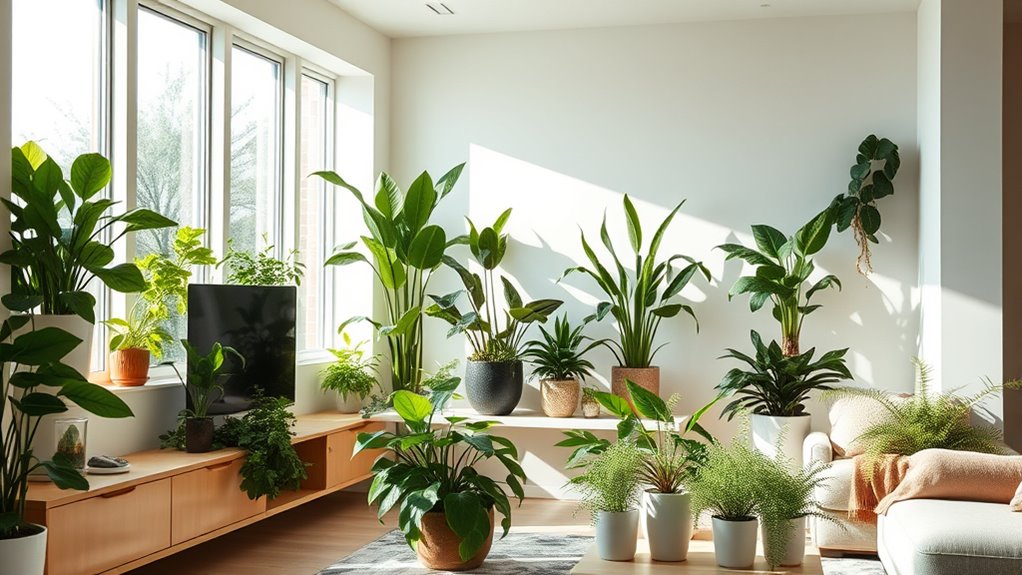
To maximize the air-purifying benefits of your houseplants, place them in strategic locations where they can naturally filter indoor pollutants and improve airflow. Position plants near sources of indoor toxins, like smoking areas, kitchens, or around new furniture. Grouping plants together can boost their overall effectiveness, creating a mini indoor jungle that filters more air. Ensure each plant receives enough light—natural or artificial—so they stay healthy and active. Regularly clean the leaves to remove dust, allowing for better air exchange. Don’t overwater; healthy plants are better at filtering air. Rotate your plants periodically to ensure even growth and benefits. By following these tips, you’ll enhance your indoor environment and maximize your houseplants’ air-purifying potential.
Frequently Asked Questions
Do Houseplants Improve Air Quality Equally Across Different Climates?
No, houseplants don’t improve air quality equally across different climates. In humid environments, plants may struggle with mold or pests, reducing their benefits. In dry or cold climates, low humidity can hinder plant health, limiting their air-purifying abilities. You should choose plants suited to your climate and guarantee proper care. While they can help, their effectiveness depends on your home’s environment and maintenance.
Can Houseplants Help Reduce Indoor Allergens Like Mold Spores?
Yes, houseplants can help reduce indoor allergens like mold spores, but their effectiveness varies. You should choose plants that naturally filter mold and improve humidity, such as English ivy or peace lilies. Keep your plants healthy and avoid overwatering to prevent mold growth on soil. Regularly cleaning leaves and ensuring good airflow also boosts their ability to improve air quality and reduce allergens indoors.
Are Some Houseplants Harmful to Pets or Children?
Some houseplants can be harmful to pets or children. For example, a friend’s cat got sick after chewing on dieffenbachia leaves. You should research plants like lilies, philodendrons, and aloe vera, which are toxic if ingested. Always keep potentially harmful plants out of reach, and consider pet-safe options like spider plants or Boston ferns. Your vigilance can prevent accidents and keep your loved ones safe.
How Often Should I Water and Care for Plants to Maintain Their Air-Purifying Effects?
You should water your houseplants when the top inch of soil feels dry, usually once a week, but it depends on your plant type and environment. Regularly check for signs of overwatering or underwatering, and dust their leaves monthly to maximize air purification. Make certain they get adequate indirect sunlight and avoid drafts. Proper care keeps your plants healthy and effective at improving indoor air quality over time.
Do Air-Purifying Benefits Vary With Seasonal Changes or Indoor Heating?
You’ll notice that air-purifying benefits can vary seasonally, especially during winter when indoor heating reduces humidity and airflow. Studies show indoor plants are more effective in cooler months when air quality tends to worsen. So, you might see better results in winter because the dry, stagnant air makes plants’ filtering abilities more noticeable. Keep caring for your plants year-round, and enjoy cleaner air no matter the season.
Conclusion
While houseplants can improve your indoor air quality, they shouldn’t replace traditional air purifiers. Studies show that certain plants can remove up to 30% of specific pollutants, offering mental and emotional benefits too. However, their effectiveness depends on size, placement, and the types of pollutants. So, consider them as a complementary boost to your space’s health — a green touch that makes your home both cleaner and more calming.