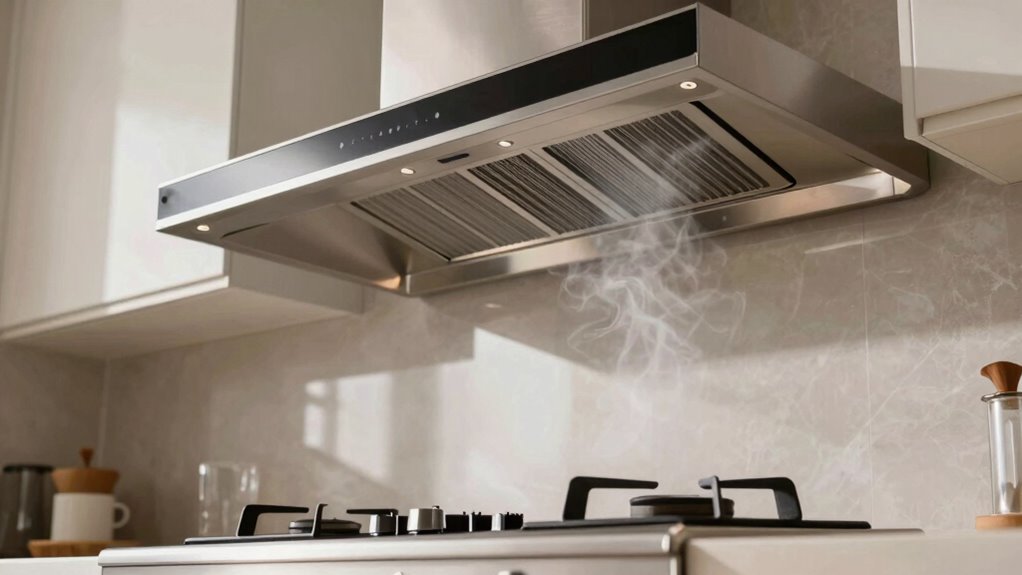

A good exhaust for your gas stove effectively removes fumes, smoke, and pollutants, keeping your kitchen safe and comfortable. It should include a properly sized range hood or vent installed directly above your stove, with ductwork that’s short and straight for maximum airflow. Regular cleaning and maintenance are vital to prevent buildup and guarantee efficiency. To learn how to optimize your ventilation system and keep your home safe, explore more expert tips and guidelines.
Key Takeaways
- A good exhaust system effectively removes smoke, odors, and pollutants directly from above the stove.
- Properly sized range hoods or vents should be directly above the stove for optimal airflow.
- Ductwork must be short, straight, and sealed to ensure maximum efficiency and prevent leaks.
- Continuous operation during cooking and regular cleaning of filters maintain effective ventilation.
- Installing and maintaining carbon monoxide detectors enhances safety with good ventilation.
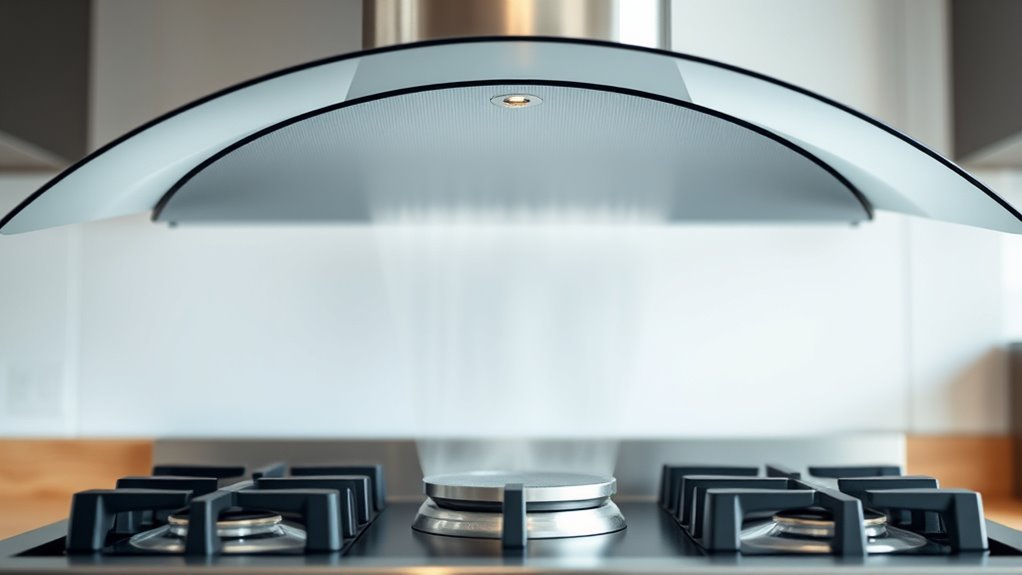
Proper ventilation is essential when using a gas stove to guarantee your home stays safe and healthy. Without it, you risk accumulating harmful gases like carbon monoxide and nitrogen dioxide, which can cause health issues over time. To guarantee your kitchen remains safe, it’s important to follow proper installation guidelines for your ventilation system. These guidelines help you set up an effective exhaust setup that removes fumes efficiently. When installing a range hood or vent, make sure it’s appropriately sized for your stove and positioned directly above it. The ductwork should be as short and straight as possible, minimizing bends that can reduce airflow. Sealing all connections tightly prevents leaks and guarantees that exhaust gases are properly directed outside.
Safety considerations during installation are equally critical. Always turn off the gas supply before starting any work, and verify that there are no leaks after installation. Use approved materials and follow manufacturer instructions carefully. If you’re unsure about any step, consulting a professional guarantees the system is set up correctly and safely. Keep in mind that an improperly installed vent can lead to poor airflow, which means fumes and gases linger instead of being expelled. This not only compromises indoor air quality but also increases the risk of gas buildup, which can be dangerous. Regularly inspecting your vent system for blockages, grease buildup, or damage is essential for ongoing safety. Clean filters and ducts periodically to maintain ideal airflow and prevent fire hazards.
Beyond installation, safety considerations extend to the operation and maintenance of your ventilation system. Always run the exhaust fan whenever your gas stove is in use, especially during long cooking sessions. Never disable or bypass the vent system, as this defeats its purpose and puts you at risk. It’s also wise to install carbon monoxide detectors in your kitchen and nearby rooms to alert you if dangerous gases accumulate. Remember, good ventilation isn’t just about installing the right equipment; it’s about maintaining it properly and using it correctly every time you cook. Guarantee your system is functioning smoothly, and if you notice any signs of poor ventilation—such as lingering fumes, excessive heat, or strange odors—address the issue promptly. Proper ventilation isn’t just a safety feature; it’s a fundamental part of creating a healthy, comfortable cooking environment where you can confidently prepare meals without worry. Regularly checking your filtration system ensures contaminants are effectively removed and indoor air quality remains high.
Frequently Asked Questions
How Often Should I Clean My Range Hood Filters?
You should clean your range hood filters at least once every one to three months, depending on your cooking habits. Regular filter maintenance guarantees effective ventilation and prevents grease buildup. If you cook frequently or notice grease and grime, increase cleaning frequency. Use warm, soapy water or a degreasing cleaner for best results. Staying on top of filter maintenance keeps your kitchen safe, smell-free, and your exhaust functioning efficiently.
Can I Use a Regular Fan for Stove Ventilation?
Think of a regular fan as a bicycle tire—designed for different terrains. It’s not built for stove ventilation, so it won’t effectively remove smoke or odors. Proper fan placement, like a dedicated range hood, ensures better airflow. Remember, regular filter maintenance is key for efficiency. Using a fan instead of a proper vent can cause poor air quality, so invest in an exhaust system designed for your stove’s needs.
What’s the Ideal Height for Installing a Range Hood?
You should install your range hood at an ideal height of about 24 to 30 inches above your stove, following the installation guidelines. This height guarantees effective ventilation without obstructing your view or reaching too high. Check your specific range hood’s instructions, as some models may have recommended heights. Proper placement improves airflow and keeps your kitchen safe from smoke, odors, and airborne grease.
Are External Venting Systems More Effective Than Recirculating Ones?
Did you know that external venting systems remove up to 90% of indoor pollutants, making your kitchen safer? External venting is generally more effective than recirculating systems because it actively expels cooking fumes outside. Recirculating systems, while easier to install, only filter air internally, which isn’t as efficient at eliminating odors and pollutants. If you prioritize indoor air quality, opting for external venting is the smarter choice.
How Do I Reduce the Noise Level of My Exhaust Fan?
To reduce your exhaust fan’s noise, start with soundproofing tips like adding insulation around the ductwork and installing rubber mounts to dampen vibrations. Use noise reduction techniques such as installing a muffler or sound enclosure. Regular maintenance, like cleaning the fan blades, also helps reduce noise. Consider upgrading to a quieter model if noise persists, and guarantee proper installation for ideal sound dampening.
Conclusion
Remember, good ventilation isn’t just about meeting standards—it’s about your health and safety. When you guarantee proper exhaust, you’re not only protecting your home but also creating a safer cooking environment. Don’t wait for problems to arise; take action now. As the saying goes, “A stitch in time saves nine.” Investing a little effort in proper gas stove ventilation today can save you from bigger issues tomorrow.