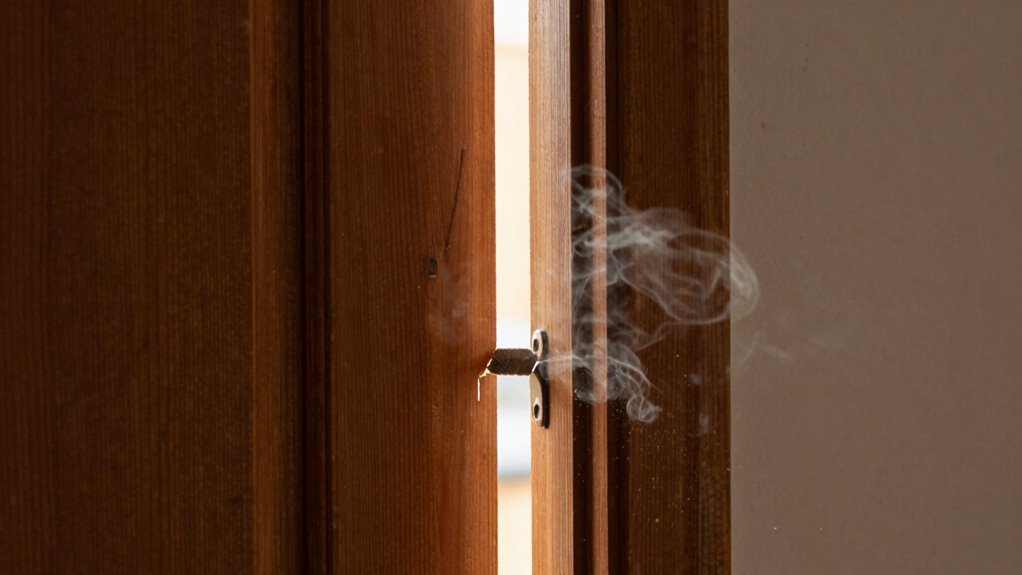

Door drafts and leaks let dust, smoke, and outdoor pollutants slip inside your home easily. These gaps allow pollutants to circulate, worsening indoor air quality and making it harder to stay healthy. When you don’t seal these leaks, allergens and smoke can enter freely, affecting your respiratory health. By sealing drafts, you can reduce pollution levels and improve your home’s air. Keep going to discover simple ways to keep your indoor air cleaner and healthier.
Key Takeaways
- Gaps allow outdoor dust, smoke, and allergens to enter, worsening indoor air quality.
- Leaks enable pollutants like pollen and smoke to circulate freely inside the home.
- Drafts stir up settled dust and debris, increasing airborne particles indoors.
- Unsealed leaks compromise air filtration, leading to higher levels of indoor pollutants.
- Sealing gaps reduces pollutant entry, improving air quality and overall indoor health.
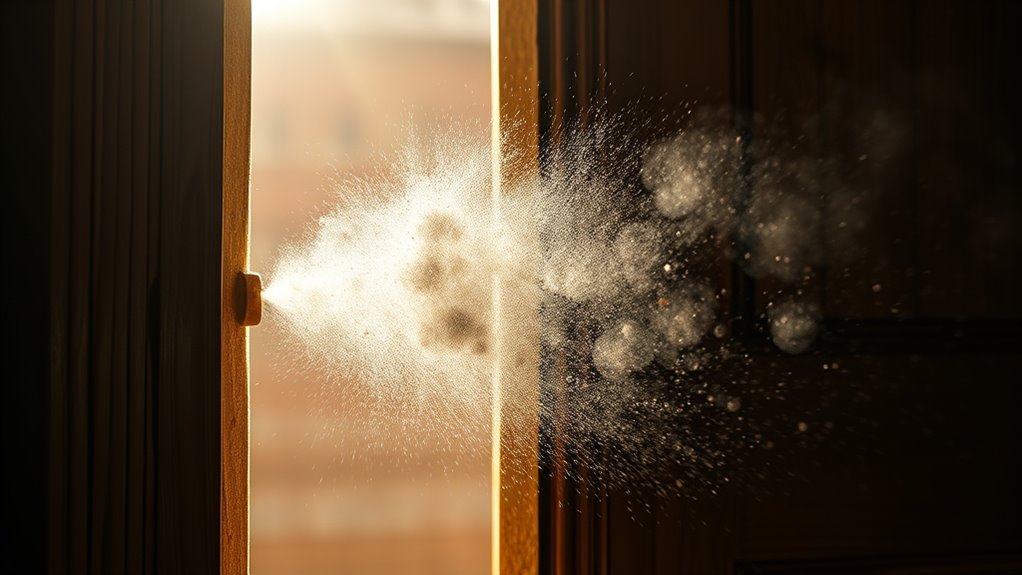
Doors with gaps or drafts can considerably impact your home’s air quality by allowing pollutants, dust, and allergens to enter freely. When these leaks exist, they create a pathway for outdoor air to mix with the indoor environment, often bringing in unwanted elements that degrade the air you breathe. To combat this, using effective sealing techniques becomes essential. Proper sealing not only helps keep drafts out but also reduces the infiltration of indoor pollutants, which can worsen allergies, asthma, or other respiratory issues.
Sealing techniques involve a variety of simple, cost-effective methods to close those tiny gaps around your doors. You can start with weatherstripping, which is designed to create a tight seal between the door and its frame. There are different types—foam, rubber, or vinyl—that you can choose based on your needs and budget. Applying a door sweep at the bottom of the door can block drafts and prevent outdoor dust, insects, or smoke from sneaking inside. Additionally, sealing any visible cracks or holes with caulk creates an airtight barrier that markedly improves indoor air quality. Addressing these leaks also reduces the entry of outdoor pollutants that can circulate indoors, especially in homes located near busy roads or industrial areas.
Sealing gaps with weatherstripping, door sweeps, and caulk improves air quality and energy efficiency.
When drafts are left unaddressed, indoor pollutants like dust, pollen, and smoke can circulate more freely. This exposure can lead to increased allergic reactions and respiratory discomfort, especially for sensitive individuals. Dust particles, for instance, settle easily in gaps and are stirred up every time a door opens or closes. Smoke, whether from cooking, candles, or outdoor pollution, can also enter through these gaps, making indoor air unhealthy even if you’re trying to keep pollutants out. By sealing your doors properly, you reduce the amount of outdoor contaminants that enter your space, helping to maintain a healthier indoor environment.
Beyond improving air quality, sealing your doors also boosts energy efficiency. Drafts lead to heat loss in winter and cool air loss in summer, causing your HVAC system to work harder and increasing energy bills. When you implement sealing techniques, you not only make your home more comfortable but also save money in the long run. It’s a simple step that yields multiple benefits—better air quality, lower energy costs, and increased comfort. Properly sealed doors contribute to overall indoor air quality and home efficiency, making them a worthwhile investment for your health and wallet.
Frequently Asked Questions
Can Sealing Door Drafts Improve Allergy Symptoms?
Sealing door drafts can help improve allergy symptoms by reducing the entry of dust, pollen, and smoke. When you seal leaks, you create a better environment for air purifier placement and ventilation strategies, making them more effective. This minimizes airborne allergens and irritants, helping you breathe easier. Additionally, controlling drafts prevents outside pollutants from entering, further improving indoor air quality and easing allergy symptoms.
How Do Drafts Affect Indoor Humidity Levels?
Drafts can disrupt your indoor humidity balance by causing air to constantly flow in and out. This fluctuation makes it harder to maintain consistent humidity levels, leading to dry or overly damp air. Additionally, drafts hinder proper air circulation, which can trap dust and smoke particles indoors. Sealing drafts helps stabilize humidity, improves air circulation, and creates a healthier, more comfortable environment for you.
Are There Specific Door Materials That Reduce Leaks Better?
If you want to reduce leaks, consider using steel or fiberglass doors, as they typically provide better insulation than wood. In a case study, homeowners improved their home’s energy efficiency by sealing gaps with door sealants and upgrading to insulated doors. Proper door insulation minimizes drafts, keeping dust and smoke out and improving air quality. Remember, combining quality materials with effective sealants can make a noticeable difference in your home’s comfort.
Do Door Drafts Influence Heating and Cooling Costs?
Yes, door drafts can markedly impact your heating and cooling costs. When drafts let in cold or hot air, your HVAC system has to work harder to maintain a comfortable temperature. This reduces energy efficiency and increases utility bills. Sealing drafts improves insulation, leading to better energy efficiency and noticeable cost savings. Take the time to check and seal gaps around doors to keep your home more comfortable and save money.
Can Draft Stoppers Completely Eliminate Air Leaks?
Like knights guarding a castle, draft stoppers and door sealants can markedly reduce air leaks, but they won’t completely eliminate them. You might picture them as the first line of defense—blocking many gaps—but small cracks may still let in some drafts. For the best results, combine draft blockers with proper door sealants, ensuring your home is as airtight as a fortress, reducing dust, smoke, and energy loss effectively.
Conclusion
Now, imagine tiny gusts sneaking under your door, pulling in dust and smoke like unwelcome guests. Each leak lets in more particles, turning your home into a hazy, cluttered space. Sealing those gaps is like closing a door on chaos, creating a cleaner, fresher haven. When you block those drafts, you’re not just stopping air leaks—you’re inviting clarity and comfort back into your life, making every breath a little easier and your home a lot healthier.