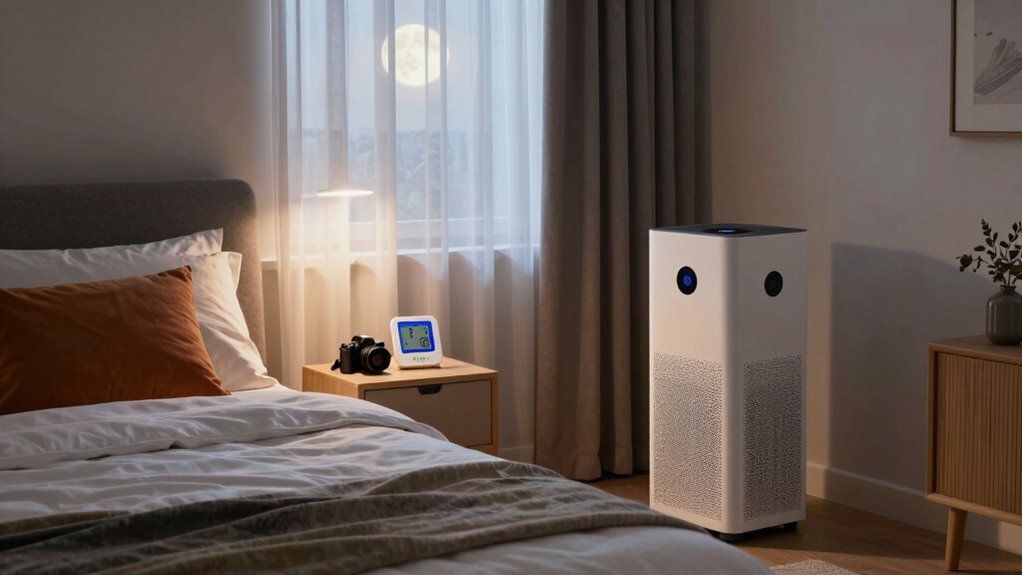

Poor ventilation in your bedroom causes CO2 levels to build up overnight, leading to stuffiness, drowsiness, and lower sleep quality. To improve airflow, open your windows on opposite sides for natural cross-ventilation, use fans or exhaust vents, and keep your door slightly ajar. Regular airing out and air purifiers with CO2 sensors can help maintain fresh air. If you keep these tips in mind, you’ll find simple ways to create a healthier sleep environment.
Key Takeaways
- CO2 levels increase overnight due to limited ventilation and occupant respiration in enclosed bedrooms.
- Opening windows or creating cross-ventilation helps reduce indoor CO2 accumulation during sleep.
- Using fans or air purifiers with CO2 sensors can monitor and lower nighttime CO2 buildup.
- Keeping doors slightly open and regularly airing out the room maintains fresh airflow overnight.
- Proper ventilation strategies ensure better sleep quality by preventing stuffiness and headaches caused by high CO2.
Creating a comfortable bedroom environment starts with proper air setup. Your air quality plays a vital role in ensuring restful sleep and overall well-being. When you’re lying in bed, your body continues to produce carbon dioxide (CO2), which can accumulate in poorly ventilated spaces. That buildup can lead to stuffiness, drowsiness, and even headaches. To combat this, you need to adopt effective ventilation strategies that keep fresh air circulating and CO2 levels low throughout the night.
Start by understanding how your room’s air quality impacts your sleep. Without sufficient airflow, CO2 concentration can rise markedly by morning, making your environment less healthy. Ventilation strategies involve more than just opening a window; they require a deliberate approach to air exchange. For instance, if your bedroom lacks an HVAC system with fresh air intake, you should consider using an air purifier equipped with a carbon dioxide sensor. These devices can help monitor air quality and automatically activate when CO2 levels climb too high. Additionally, introducing cross-ventilation by opening windows on opposite sides of the room can create a natural airflow that refreshes the space. Even a small fan directed toward an open window can help promote air exchange and prevent CO2 from accumulating.
Another effective ventilation strategy is to establish a routine of airing out your room before bedtime and shortly after waking. This simple habit ensures that stale air is replaced with fresh outdoor air, reducing the buildup of CO2 overnight. If you live in an area with high outdoor pollution, consider using air purifiers or filters that can trap pollutants while improving overall air quality. Also, keep your bedroom door slightly ajar if privacy allows; this allows for more consistent airflow between rooms and minimizes stagnant air pockets.
It’s important to recognize that the size of your room and the number of people sleeping in it influence how quickly CO2 levels rise. The more people sharing the space, the faster the air becomes saturated with CO2. In such cases, investing in a small exhaust fan or increasing window openings can help maintain a healthier environment. Moreover, choosing air quality monitors can help you track and manage indoor pollution and CO2 levels more effectively. Remember, good ventilation isn’t a one-time fix but an ongoing process. Regularly check your air quality and adapt your ventilation strategies accordingly to ensure your bedroom stays fresh, safe, and conducive to restorative sleep. Prioritizing proper air setup ultimately creates a healthier space where you wake up feeling refreshed and alert.
Frequently Asked Questions
How Does Humidity Affect Nighttime CO2 Levels?
Humidity impact can influence nighttime CO2 levels because higher moisture influences how CO2 disperses in your bedroom. When humidity rises, it can trap CO2 closer to breathing zones, making levels seem higher. Moisture influence also affects air circulation, potentially reducing ventilation efficiency. To manage this, keep humidity levels balanced with a dehumidifier or ventilation, helping CO2 disperse better and improving overall air quality during the night.
Can Plants Reduce CO2 Buildup in Bedrooms?
Think of plants as natural air purifiers, quietly absorbing CO2 through plant absorption and releasing oxygen. Yes, they can help reduce CO2 buildup in your bedroom, especially if combined with natural ventilation. By placing a few houseplants near windows or vents, you boost airflow and create a healthier environment. Regular watering and choosing the right plants make this even more effective, turning your space into a refreshing gust.
What Are the Symptoms of High Indoor CO2?
You might notice symptoms like headaches, dizziness, shortness of breath, or fatigue, which indicate poor indoor air quality caused by carbon dioxide buildup. When CO2 levels rise, your body signals discomfort, alerting you to ventilate the space. High indoor CO2 can also cause difficulty concentrating and increased sleepiness. Keeping your bedroom well-ventilated helps reduce CO2, improving overall air quality and your well-being.
Is It Safe to Sleep With an Air Purifier On?
Yes, it’s safe to sleep with an air purifier on, and it can improve your sleep quality by reducing indoor pollutants and CO2 levels. Just make sure to choose an air purifier with proper air purifier safety features, like auto shut-off and HEPA filters, to avoid any risks. Keeping it on all night helps maintain cleaner air, which supports better breathing and restful sleep.
How Often Should I Ventilate My Bedroom Overnight?
You should ventilate your bedroom at least once every 2-3 hours overnight, because, gasp, nobody wants to breathe recycled air all night. Maintaining proper ventilation frequency keeps bedroom airflow fresh and reduces CO2 buildup, making your sleep more delightful. Open a window, turn on a fan, or use an air exchange system—whatever it takes to keep the air flowing and your lungs happy. Sleep better, breathe better.
Conclusion
So, next time you notice CO₂ rising at night, remember it’s just your body doing its thing. While some say plants can help clean the air, their impact overnight is minimal. Instead, focus on good ventilation and sleeping with your head slightly elevated. Trust me, a simple tweak like opening a window or using a fan makes a big difference. Sleep better knowing you’re actively managing your bedroom’s air for a fresher, healthier night.