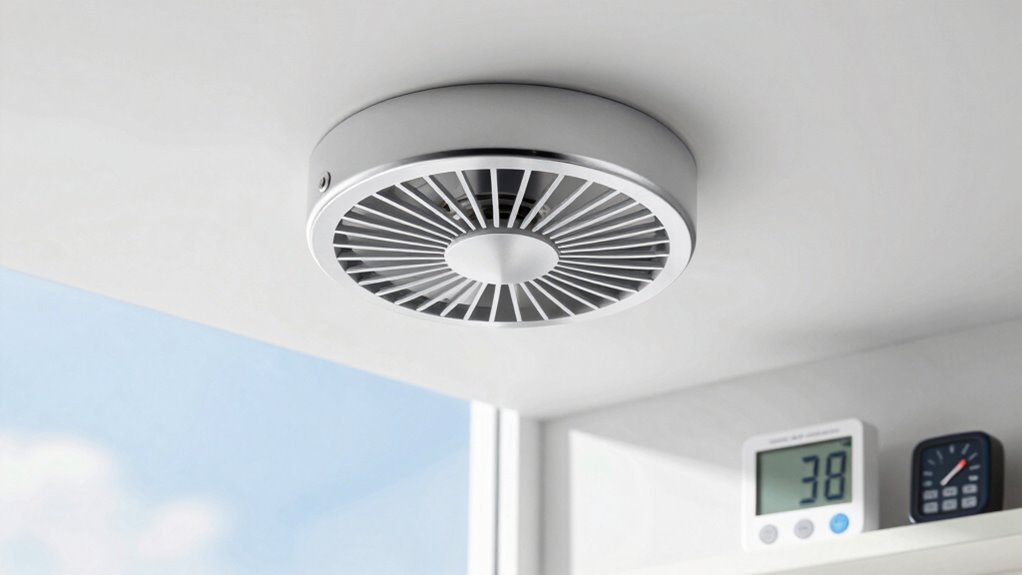

To choose the right bathroom fan size, focus on the CFM rating, which measures airflow needed—generally, 1 CFM per square foot of space. Lower noise levels (measured in sones) improve comfort, especially near bedrooms. Proper sizing guarantees effective moisture removal without wasting energy or creating excess noise. Good performance depends on correct installation and matching the fan’s specs to your bathroom size. To learn how to select the best match for your space, keep exploring these key factors.
Key Takeaways
- Proper bathroom fan size is determined by room square footage, with a minimum of 1 CFM per square foot for effective ventilation.
- Noise levels are measured in sones; lower ratings mean quieter operation, enhancing comfort during use.
- Selecting the right CFM ensures moisture is effectively removed, preventing mold and damage, especially in larger bathrooms with showers.
- Correct installation, including sealing ducts and venting outside, maximizes performance and prolongs fan lifespan.
- Balancing airflow capacity with noise levels ensures efficient, quiet operation suited to the space and user needs.

Choosing the right bathroom fan size is vital to guarantee proper ventilation and prevent moisture buildup. When it comes to selecting a fan, understanding airflow efficiency plays a key role. Airflow efficiency determines how effectively a fan moves air relative to its power consumption, so a higher efficiency means you get better ventilation without unnecessary noise or energy waste. To find the right size, you need to consider the room’s size and the amount of moisture produced during typical use. Oversized fans can waste energy and create excessive noise, while undersized fans won’t clear humidity properly, leading to mold and damage over time.
Choosing the right fan size ensures effective ventilation without energy waste or noise.
To guarantee your fan performs well, it’s important to follow installation guidelines carefully. Proper installation not only guarantees safety but also optimizes airflow efficiency. For instance, mounting the fan correctly and sealing ducts tightly prevents air leaks that could diminish performance. Venting the fan directly outside is essential; venting into the attic or crawl space defeats the purpose of ventilation and can cause moisture issues elsewhere. When installing, make sure the fan’s CFM (cubic feet per minute) rating matches the room size. The general rule is to provide at least 1 CFM per square foot of bathroom space, but larger bathrooms with showers or baths might require more to handle increased moisture levels.
Beyond size, noise levels matter. A quieter fan can make your daily routines more comfortable, especially if your bathroom is near bedrooms or shared spaces. Look for models with a good balance of airflow and noise ratings—measured in sones—that suit your preferences. Remember, a fan that moves enough air efficiently will also tend to be quieter because it doesn’t need to work as hard to do its job.
When evaluating different models, pay attention to the installation guidelines provided by the manufacturer. Following these instructions ensures the fan operates at peak airflow efficiency and reduces the risk of future problems. Proper placement, secure duct connections, and correct wiring all contribute to optimal performance. If you’re unsure about installation, consulting a professional can save you time and prevent costly mistakes. Additionally, understanding deep-sky imaging principles can help you plan for optimal airflow and ventilation in technical setups that require precise environmental controls. Ultimately, selecting a fan with the right size and installation in mind guarantees effective ventilation, minimizes noise, and prolongs the life of your bathroom fan. This way, you protect your space from moisture damage and enjoy a fresh, comfortable bathroom environment every day.
Frequently Asked Questions
How Does Humidity Level Affect Fan Size Selection?
Higher humidity levels require you to select a fan with greater capacity to guarantee proper humidity control and ventilation efficiency. When moisture is high, a larger fan helps remove excess dampness quickly, preventing mold and damage. If you ignore humidity levels, your fan may underperform, leading to poor air quality. So, always match your fan size to the humidity level for ideal bathroom ventilation and moisture management.
Can Smart Fans Adjust CFM Automatically?
Yes, smart fans can automatically adjust CFM based on humidity or occupancy levels. Thanks to smart technology, these fans monitor environmental conditions in real-time and respond accordingly. You don’t need to manually change settings; they sense when extra ventilation is needed and increase airflow, then reduce it when conditions normalize. This automatic adjustment helps maintain ideal humidity and air quality, making your bathroom more comfortable and energy-efficient.
Are Higher CFM Fans More Energy-Efficient?
Higher CFM fans are not necessarily more energy-efficient; in fact, they often consume more energy due to increased power use. While they can move more air quickly, this can lead to higher energy consumption and potentially reduce fan lifespan if overused or improperly sized. To save energy, choose a fan that matches your bathroom’s ventilation needs, balancing airflow with efficiency, and guarantee proper maintenance for longevity.
How Often Should Bathroom Fans Be Replaced?
You should replace your bathroom fan every 8 to 10 years to meet ventilation standards and guarantee efficient operation. If you notice excessive noise, reduced airflow, or persistent odors, it’s a sign it’s time for a new one. While some fans last longer, regular replacement keeps your bathroom properly ventilated, preventing mold and moisture issues. Don’t ignore signs—timely updates keep your space healthier and compliant.
Do Different Fan Types Impact Noise Levels Differently?
Yes, different fan types impact noise levels differently. For example, axial fans tend to produce more sound, while centrifugal fans often operate more quietly due to better sound insulation. When choosing a fan, consider sound insulation features to minimize fan noise. You can also look for models with sound-dampening components, which help keep noise levels low, making your bathroom more comfortable and peaceful.
Conclusion
Choosing the right bathroom fan isn’t just about size—it’s about comfort and safety. Did you know that a properly sized fan can remove moisture 60% faster, reducing mold and mildew growth? When you select the correct CFM, you protect your home and improve your air quality. Don’t underestimate the impact of good ventilation; it makes a real difference in your daily life. Invest wisely, and enjoy a fresher, healthier bathroom experience every day.