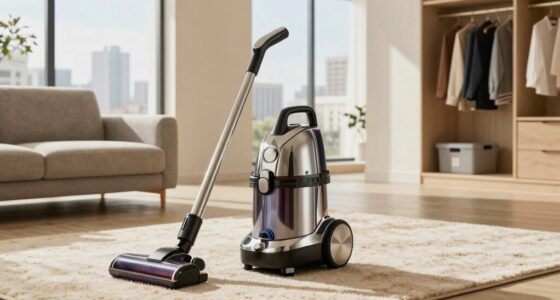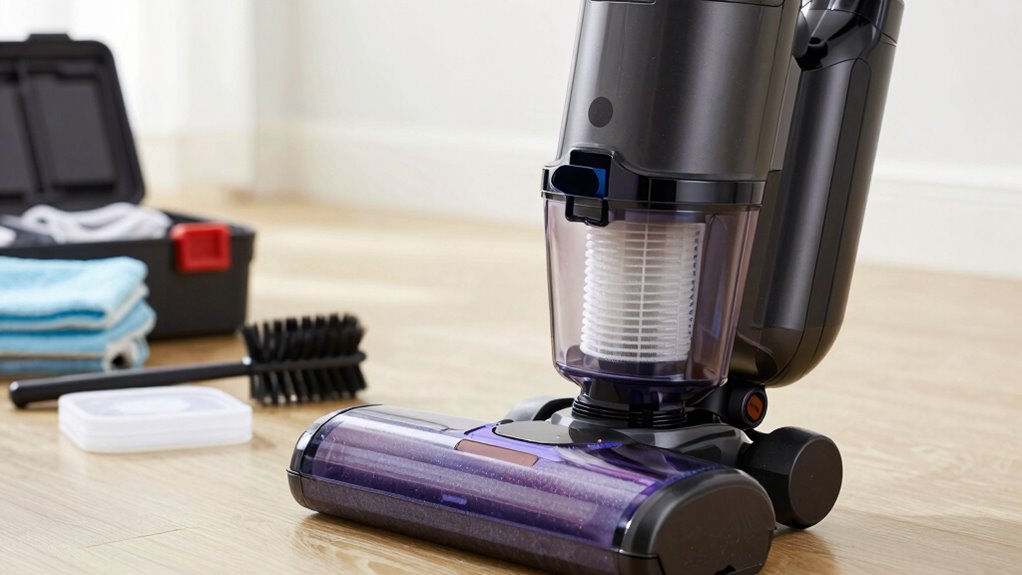

Start by replacing or cleaning your filters first, as they directly impact your vacuum’s suction and air quality. Dirty filters strain the motor, reduce efficiency, and can lead to damage over time. Keeping filters fresh ensures peak performance and prolongs the device’s lifespan. Once filters are maintained, focus on the battery if runtime declines. To learn more about maintaining your cordless vacuum effectively, keep exploring your options.

Give the gift of listening to someone you love
- Choose a 1-, 3-, 6- or 12-month membership
- They pick the audiobooks they love
- Easy to send by email
Key Takeaways
- Replace or clean filters first to immediately improve suction and air quality.
- Check the vacuum’s runtime to determine if a new battery is needed.
- Prioritize filter replacement if filters are visibly dirty or overdue.
- Address battery issues if runtime has significantly decreased.
- Regular maintenance of filters and batteries extends the device’s lifespan and performance.

Maintaining your cordless vacuum is vital to keep it performing at its best, and knowing what to buy first can make the process much easier. When it comes to upkeep, the most significant item to invest in initially is replacement filters. Over time, filters trap dust, dirt, and allergens, but they also become clogged and less effective. Regular filter replacement guarantees your vacuum maintains peak suction and keeps the air in your home cleaner. If you neglect this, your vacuum’s motor has to work harder, which can lead to premature wear and reduced battery efficiency. Buying high-quality filters suited for your model is a small but essential step toward extending the life of your device.
Replacing filters regularly keeps your cordless vacuum performing optimally and prolongs its lifespan.
Additionally, understanding the importance of filter efficiency helps you choose the best replacement options for optimal performance. Next, consider the battery lifespan. The battery is the heart of your cordless vacuum, providing the power needed for effective cleaning. Over time, batteries naturally degrade, losing capacity and runtime. If your vacuum isn’t holding a charge like it used to, it’s probably time to replace or upgrade the battery. Investing in a good replacement battery early on can dramatically improve your cleaning experience, letting you cover more ground without needing to recharge constantly. Some models even allow you to swap batteries easily, so you can buy an extra one and keep cleaning without interruptions. This not only boosts convenience but also helps preserve the longevity of your original battery, as running it down completely can accelerate wear. Proper maintenance practices can further prolong your vacuum’s overall lifespan.
Being aware of battery degradation can help you recognize when it’s time for a replacement before performance drops significantly. While both filter replacement and battery lifespan are vital, prioritizing filter upgrades initially often makes more immediate sense. Fresh filters directly impact performance and air quality right away, whereas battery replacement might be more about long-term efficiency. However, if your vacuum is struggling to hold a charge or if you notice a significant drop in runtime, then addressing the battery should take precedence. Keep in mind, these two components are interconnected—clogged filters cause the motor and battery to work harder, reducing overall device lifespan. By replacing filters regularly, you’re effectively supporting the health of your battery and motor. Understanding the role of filter efficiency helps you make informed choices about maintenance and replacements, ensuring your vacuum runs smoothly.
In the end, the first purchase should be based on your current needs. If your filters are visibly dirty or haven’t been replaced in a while, start there. If you notice your vacuum isn’t lasting as long as it used to, then look into a new battery. Both steps are essential, but focusing on filter replacement first ensures your vacuum performs well immediately, while a new battery guarantees longer-term efficiency. Staying proactive with these updates keeps your cordless vacuum running smoothly and extends its lifespan, making your cleaning routine easier and more effective.
Products Worth Considering

Samsung 55-Inch S90H OLED 4K UHD Smart TV Bundle with Full-Motion Mount and Surge Protector

Philips Hue Play Gradient Light Tube, Large, Black

Roborock Q7 M5+ Robot Vacuum and Mop
As an affiliate, we earn on qualifying purchases.
Frequently Asked Questions
How Often Should I Replace My Cordless Vacuum’s Battery?
You should replace your cordless vacuum’s battery every 2 to 3 years, depending on its battery lifespan and usage. Typically, the replacement frequency hinges on how often you use the vacuum and how well you care for the battery. If you notice reduced runtime or decreased power, it’s a clear sign it’s time for a new battery. Regular maintenance can extend its lifespan, but eventual replacement is unavoidable for peak performance.
Can I Use Generic Parts Instead of Brand-Specific Accessories?
You can often use generic parts instead of brand-specific accessories, but beware of the trade-offs. Generic compatibility might save money upfront, yet it could compromise quality or fit, affecting performance. Brand replacements guarantee perfect compatibility and ideal function, but cost more. If you’re comfortable with potential differences in durability or efficiency, generic parts are a viable option. Otherwise, sticking to brand replacements guarantees seamless operation and longevity.
What Signs Indicate My Vacuum Needs a New Filter?
You’ll know your vacuum needs a new filter when you notice reduced suction, increased dust buildup, or the filter appears visibly dirty or discolored. Filters have a limited lifespan, typically around 3-6 months, depending on usage. If you see a thick layer of dust or debris on the filter or if suction drops considerably, it’s time to replace it to maintain peak performance and prevent dust from circulating back into your space.
Are There DIY Tips for Maintaining the Motor?
If you want to maintain your vacuum’s motor, start with DIY tips like motor lubrication and brush cleaning. For example, Sarah noticed her vacuum was losing power, so she gently lubricated the motor bearings and cleaned the brushroll thoroughly. These simple steps help prevent motor burnout and improve performance. Regularly check and clean the motor area, ensuring smooth operation and extending your vacuum’s lifespan.
How Do I Troubleshoot Poor Suction Performance?
To troubleshoot poor suction, start by cleaning the brush to remove hair and debris that may block airflow. Next, inspect seals around the vacuum for cracks or gaps—damaged seals can reduce suction power. Also, check for clogs in the hose or filters. Regularly cleaning the brush and ensuring seals are intact helps maintain peak suction, making your cordless vacuum work like new.
Conclusion
If you’re serious about keeping your cordless vacuum in top shape, start with a good filter and brush roller cleaner. Did you know that neglecting these parts can reduce suction power by up to 50%? Investing in these essentials now means fewer clogs, better performance, and longer lifespan for your vacuum. Keep up with maintenance, and you’ll enjoy effortless cleaning sessions—saving you time and energy in the long run. Your vacuum will thank you!