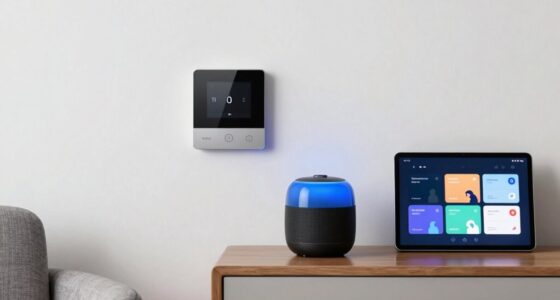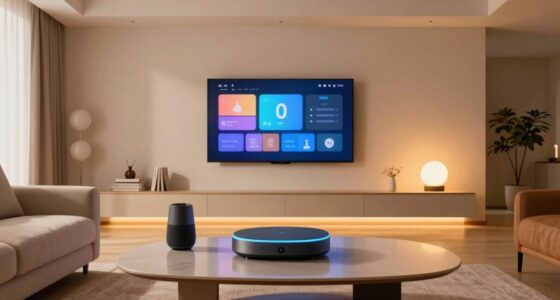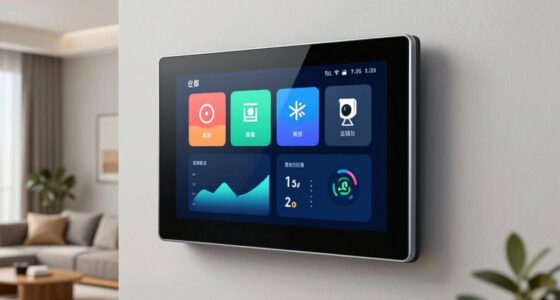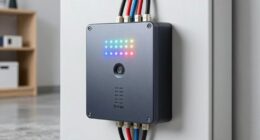
Device interoperability in smart homes is vital for smooth, efficient operation, allowing your devices to communicate seamlessly and work together effortlessly. Technologies like Zigbee, Z-Wave, Wi-Fi, and Bluetooth Low Energy help guarantee compatibility, but challenges like proprietary standards and security issues can hinder integration. Emerging trends like universal platforms, open standards, and AI are making it easier to connect all your devices. Keep exploring to discover how you can optimize your smart home setup further.
Key Takeaways
- Adopting universal standards like Zigbee, Z-Wave, or Matter ensures cross-device compatibility in smart homes.
- Centralized control platforms streamline device management and improve interoperability across different brands.
- Regular firmware updates enhance device compatibility, security, and performance within the smart ecosystem.
- Using devices with open APIs allows customization and easier integration into existing systems.
- Planning for scalability and clear communication protocols prevents conflicts and supports future growth.
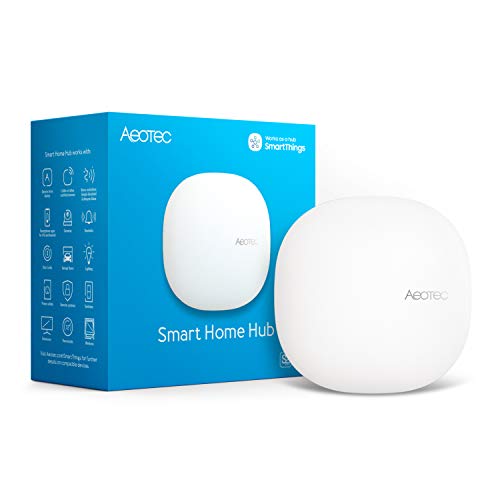
Aeotec Smart Home Hub, Works as a SmartThings Hub, Z-Wave, Zigbee, Matter Gateway, Compatible with Alexa, Google Assistant, WiFi
Connect & control your smart home — Easily link thousands of compatible devices from leading brands to create…
As an affiliate, we earn on qualifying purchases.
As an affiliate, we earn on qualifying purchases.
The Significance of Seamless Device Communication

Seamless device communication is essential for creating a truly smart and efficient home. When your devices work together smoothly, you save time and avoid frustration. Imagine adjusting your thermostat while your lights dim automatically, all without lifting a finger. This fluid interaction lets you control everything effortlessly, making daily routines simpler. Without reliable communication, devices may misfire or fail to respond, disrupting your experience. Seamless connectivity also increases safety—your security system alerts you instantly if something’s wrong. Plus, it enhances energy efficiency, reducing waste and saving money. When devices communicate effectively, your smart home becomes more intuitive and responsive, providing the convenience and control you expect. This foundation is vital for building a truly interconnected, modern living space. Device interoperability plays a crucial role in achieving these seamless interactions, ensuring all your smart devices function cohesively. Moreover, adopting energy-efficient technologies supports sustainable living and aligns with European initiatives for greener solutions. Additionally, understanding field‑of‑view and imaging‑scale examples from related technologies can inspire innovative ways to improve device compatibility and performance. A thorough understanding of interoperability standards can further enhance device integration across different brands and systems. Furthermore, integrating high refresh rate and low latency technologies can improve real-time responsiveness between devices, creating a more synchronized smart environment.
Aeotec Smart Home Hub, Works as a SmartThings Hub, Z-Wave, Zigbee, Matter Gateway, Compatible with Alexa, Google Assistant, WiFi
Connect & control your smart home — Easily link thousands of compatible devices from leading brands to create…
As an affiliate, we earn on qualifying purchases.
As an affiliate, we earn on qualifying purchases.
Current Protocols and Standards Enabling Compatibility
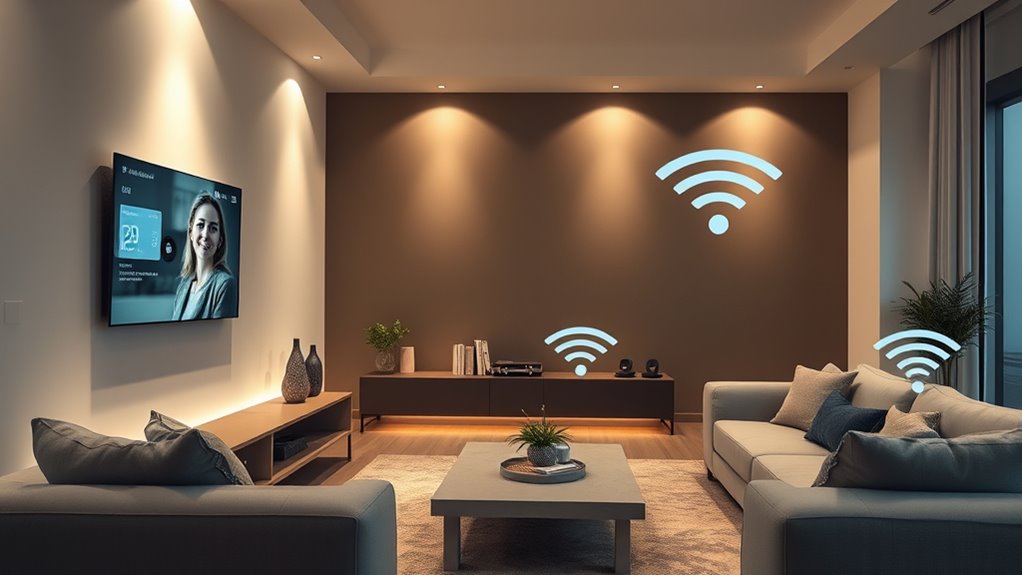
To achieve smooth device communication, smart home devices rely on a range of protocols and standards designed to guarantee compatibility across different manufacturers and systems. Protocols like Zigbee and Z-Wave are popular for their low power consumption and reliable mesh networking, allowing devices to communicate seamlessly. Wi-Fi is widely used for high-bandwidth applications, such as security cameras and streaming devices. Bluetooth, especially Bluetooth Low Energy, enables short-range interactions like connecting sensors and wearables. Standards like MQTT and CoAP facilitate device-to-cloud communication, ensuring interoperability in IoT ecosystems. Additionally, efforts like the Open Connectivity Foundation (OCF) and the Zigbee Alliance develop universal standards to promote cross-platform compatibility. Understanding Free Floating concepts can help in designing more adaptable and scalable smart home systems. By adhering to these protocols and standards, you make sure your smart home devices work harmoniously, providing a cohesive user experience.

Linkind Matter Smart Plug, Work with Apple Home, Siri, Alexa, Google, SmartThings, Smart Home Smart Outlet Timer 15A/1800W, APP Remote Control & Schedule, 2.4G Wi-Fi Only, 4 Pack
【Easy Setup, One Control】With Matter, Skip the step of downloading and registering multiple manufacturers' apps every time you…
As an affiliate, we earn on qualifying purchases.
As an affiliate, we earn on qualifying purchases.
Challenges to Achieving Full Interoperability
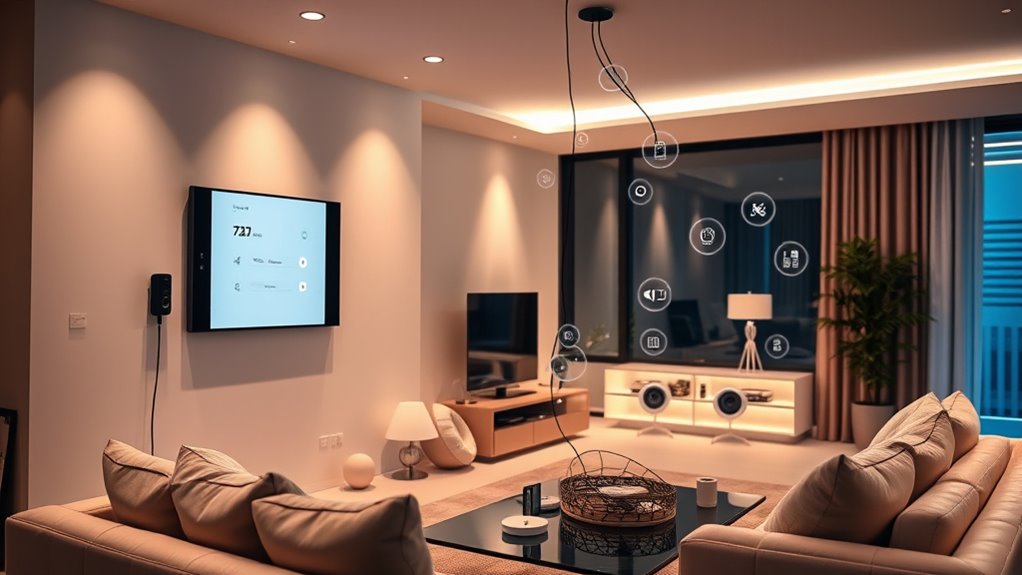
Achieving full interoperability among smart home devices remains a significant challenge due to a variety of technical and organizational barriers. You face issues like incompatible communication protocols, which make it hard for devices from different manufacturers to work together seamlessly. Additionally, proprietary standards often limit interoperability, locking you into specific ecosystems. Organizationally, manufacturers may prioritize their interests over standardization, slowing progress. Security concerns also complicate matters, as integrating diverse devices increases vulnerability risks. You may encounter inconsistent software updates or lack of unified support, leading to fragmented user experiences. Furthermore, the rapid pace of technological change makes maintaining compatibility difficult over time. These challenges require coordinated efforts, open standards, and industry collaboration to overcome, but progress remains slow, hindering your ability to fully realize the potential of a truly interconnected smart home. Device interoperability is a fundamental aspect that influences the overall user experience and system reliability. Additionally, establishing common communication protocols is essential to facilitate seamless device integration across different brands and platforms. To address these issues effectively, ongoing industry standards development and widespread adoption are crucial. Developing universal standards can help bridge existing gaps and foster a more cohesive ecosystem. Enhancing interoperability frameworks can also support long-term compatibility and innovation in smart home technology.

SofaBaton X1S Universal Remote with Hub, Universal Remote Control with One Touch Activities, Customize SofaBaton APP, Compatible with 60 Devices, Compatible with Alexa Google Assistant, Raise to Wake
X1S Universal Remotes Updates and Smart Connectivity: Compared to the previous generation X1 remote, the upgraded X1S remote…
As an affiliate, we earn on qualifying purchases.
As an affiliate, we earn on qualifying purchases.
Emerging Technologies and Future Trends

Emerging technologies are poised to transform the landscape of smart home interoperability, offering innovative solutions that address longstanding challenges. You’ll see the rise of unified platforms that streamline device management, reducing the need for multiple apps or protocols. Artificial intelligence and machine learning will enhance device communication, enabling smarter automation and more intuitive responses. Edge computing will improve data processing speeds, increasing responsiveness and security. Additionally, blockchain technology may provide secure, decentralized methods for device authentication and data sharing. Future trends also point toward increased adoption of open standards, fostering greater compatibility across brands and ecosystems. These advancements will make your smart home more reliable, easier to expand, and capable of delivering seamless integration, ultimately creating a more connected and intelligent living environment. Cut through tech clutter Furthermore, the development of interoperability standards plays a critical role in ensuring devices from different manufacturers can work together smoothly. As the ecosystem grows, standardized protocols will be essential for maintaining compatibility and simplifying user experiences.
Strategies for Enhancing Integration in Smart Homes
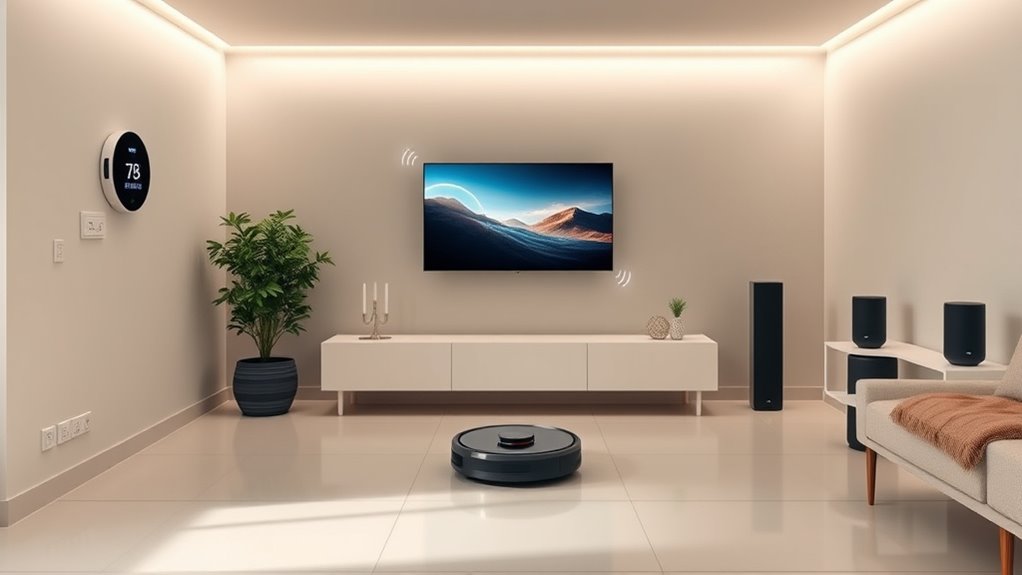
Enhancing integration in smart homes requires implementing practical strategies that streamline device compatibility and communication. One effective approach is adopting universal standards like Zigbee, Z-Wave, or Matter, which enable devices from different brands to work seamlessly together. You should also prioritize centralized control platforms, such as smart hubs or apps, to manage multiple devices from a single interface. Regular firmware updates are vital, as they fix bugs and improve interoperability. Additionally, investing in devices with open APIs allows customization and easier integration. Planning your smart home setup with compatibility in mind ensures future scalability. Ultimately, establishing clear communication protocols between devices prevents conflicts and enhances overall system reliability. A solid understanding of interoperability standards can help you select compatible devices more effectively. By applying these strategies, you create a more cohesive, efficient, and user-friendly smart home environment.
Frequently Asked Questions
How Does Device Interoperability Impact User Privacy and Security?
Device interoperability can both enhance and threaten your privacy and security. When devices connect seamlessly, your data might flow more freely, increasing risks of unauthorized access or breaches. However, interoperability also allows you to implement unified security measures. To stay protected, keep your devices updated, use strong passwords, and choose interoperable systems with robust security protocols. This way, you can enjoy convenience without compromising your privacy.
What Role Do AI and Machine Learning Play in Smart Home Device Integration?
AI and machine learning gently enhance your smart home device integration by learning your routines and preferences, making your environment more responsive and personalized. They seamlessly coordinate devices, ensuring smooth operation without you needing to intervene. By analyzing data securely, these technologies optimize energy use and improve safety. You benefit from a more intuitive, efficient, and comfortable home experience, all while the systems adapt quietly behind the scenes to serve you better.
Are There Industry-Wide Certifications for Device Compatibility Standards?
Yes, there are industry-wide certifications for device compatibility standards. You’ll find certifications like Zigbee, Z-Wave, and Wi-Fi Alliance that guarantee devices work seamlessly together. These standards help you avoid compatibility issues, making your smart home setup more reliable. When shopping, look for these certifications on product packaging or descriptions, so you can confidently choose devices that will integrate smoothly, saving you time and frustration.
How Does Interoperability Affect Energy Efficiency in Smart Homes?
Interoperability boosts your smart home’s energy efficiency by enabling devices to communicate seamlessly, optimizing their operation. When your thermostat, lights, and appliances work together, they adjust settings based on your habits and occupancy, reducing energy waste. This coordination helps you save on electricity bills and minimizes environmental impact. By ensuring compatibility, you create a smarter, more responsive home that uses energy more effectively and sustainably.
What Are the Costs Associated With Upgrading Existing Smart Home Systems for Better Compatibility?
Upgrading your smart home system costs like planting a seed—initial investment, ongoing expenses, and potential tech support. You’ll need new hubs, compatible devices, or software updates, which can range from a few hundred to over a thousand dollars. Plus, consider installation costs if you hire professionals. While it’s a financial outlay, better compatibility can save you money long-term through improved energy efficiency and convenience.
Conclusion
Achieving seamless device interoperability transforms your smart home into a truly integrated space. With over 80% of smart device owners experiencing compatibility issues, it’s clear that better standards are needed. By embracing emerging technologies and strategic integration, you can enjoy effortless control and enhanced security. Don’t let fragmentation hold you back—advancing interoperability means a smarter, safer, and more comfortable home for you and your loved ones.