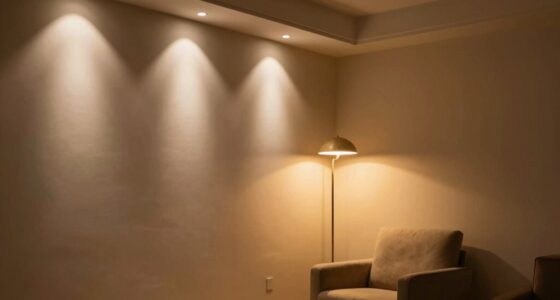
Smart lighting design principles focus on creating user-friendly, energy-efficient, and adaptable environments. You should integrate easy controls like sensors, apps, or voice commands to boost convenience. Prioritize sustainability with long-lasting, eco-friendly fixtures, and automate lighting through scheduling and occupancy detection. Consider aesthetics and comfort by selecting suitable colors and diffusion. Planning for future upgrades and ensuring accessibility make your system inclusive. Keep exploring to discover how these ideas can transform your space seamlessly.
Listen free for 30 days with Audible
Thousands of audiobooks and originals — cancel anytime.
As an affiliate, we earn on qualifying purchases.
Key Takeaways
- Prioritize user-friendly interfaces with intuitive controls, accessibility features, and customizable options for diverse user needs.
- Incorporate energy-efficient fixtures, sensors, and automation to optimize sustainability and reduce operational costs.
- Ensure system scalability with modular components and flexible wiring for future upgrades and technology integration.
- Design lighting that enhances both aesthetic appeal and functional illumination tailored to space and activity.
- Utilize smart controls and data analytics for automated adjustments, environmental responsiveness, and system performance optimization.

Sensi Touch 2 Smart Thermostat Wi-Fi, Alexa, Energy Star Certified, ST76
- Compatibility with Room Sensors: Works with Sensi Room Sensors
- Privacy Commitment: Does not sell personal data
- Energy Savings: Saves approximately 23% on HVAC
As an affiliate, we earn on qualifying purchases.
Understanding the Basics of Smart Lighting Systems
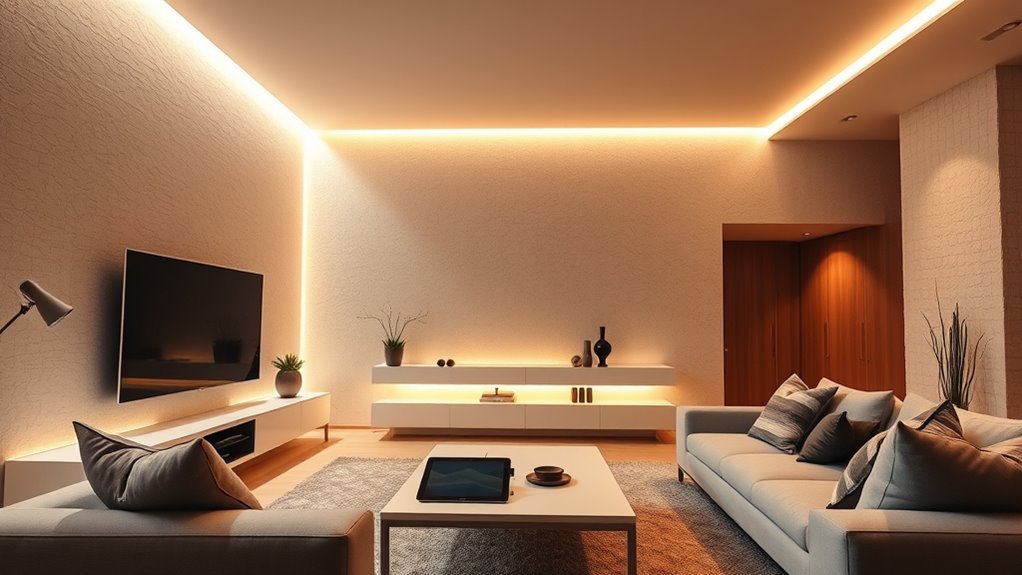
Have you ever wondered what makes a lighting system truly “smart”? It’s all about how the system integrates technology to automate and optimize lighting. Smart lighting systems use sensors, timers, and controllers that communicate via wireless networks. These components allow you to adjust brightness, color, and schedules effortlessly. You can set lights to turn on when you enter a room or dim them during movie nights. They often connect to your smartphone or voice assistants, providing remote control and customization. Additionally, smart lighting systems often incorporate learning algorithms that adapt to your habits over time, making your environment more comfortable and energy-efficient. They also enable you to monitor energy consumption, helping you identify ways to save. Additionally, understanding how compatibility with home automation impacts your lighting setup can help you create a seamlessly integrated smart home. Moreover, considering lighting zones can help you customize different areas of your home for specific needs and moods. Furthermore, understanding how contrast ratio impacts image quality can help you optimize your home cinema setup, ensuring the best viewing experience. For example, some smart systems can also incorporate user preferences, allowing for even more personalized lighting experiences that suit your daily routines. Understanding these basics helps you appreciate how smart lighting enhances comfort, convenience, and control in your environment.

Honeywell Home T9 WiFi Smart Thermostat with 1 Smart Room Sensor, Touchscreen Display, White
- Energy Saving Control: Adjust from anywhere with mobile app
- Auto Home/Away Scheduling: Automatically optimize energy use
- Rebate and Utility Programs: Save with energy rebates and demand response
As an affiliate, we earn on qualifying purchases.
Prioritizing Energy Efficiency and Sustainability
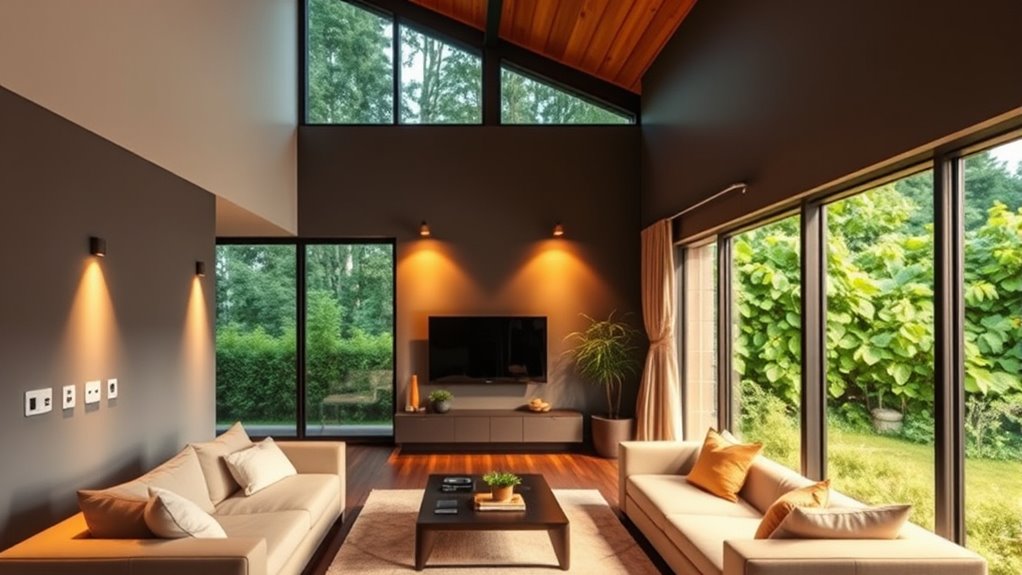
Focusing on energy efficiency and sustainability is essential when designing smart lighting systems, as these principles help reduce environmental impact and lower utility costs. You should select energy-efficient LED fixtures that consume less power and have longer lifespans. Incorporate daylight harvesting techniques to maximize natural light, reducing the need for artificial lighting. Use dimming controls and occupancy sensors to ensure lights operate only when needed, avoiding waste. Consider sustainable materials and environmentally friendly manufacturing processes for components. Opt for systems that are easily upgradable and recyclable to extend their lifespan and minimize waste. Additionally, environmentally responsible design practices can enhance the overall sustainability of your lighting system, ensuring it aligns with broader ecological goals. Implementing innovative technology such as smart controls can further optimize energy savings and system performance. Considering energy-efficient components throughout the design process can significantly amplify the environmental benefits of your smart lighting setup. Integrating European cloud solutions into the management system can facilitate remote monitoring and data-driven optimization, contributing to sustainability. Employing advanced data analytics can help identify patterns and opportunities for further energy reduction. By prioritizing these aspects, you create a smart lighting setup that’s not only cost-effective but also environmentally responsible, aligning with broader sustainability goals.

ecobee Smart Thermostat Essential - WiFi Thermostat, Energy Star Certified
- Energy Savings: Save up to 23% annually on energy costs
- System Compatibility: Compatible with 85% of HVAC systems
- Easy Temperature Control: Adjust temperature via touchscreen or app
As an affiliate, we earn on qualifying purchases.
Incorporating Automation and Scheduling Features
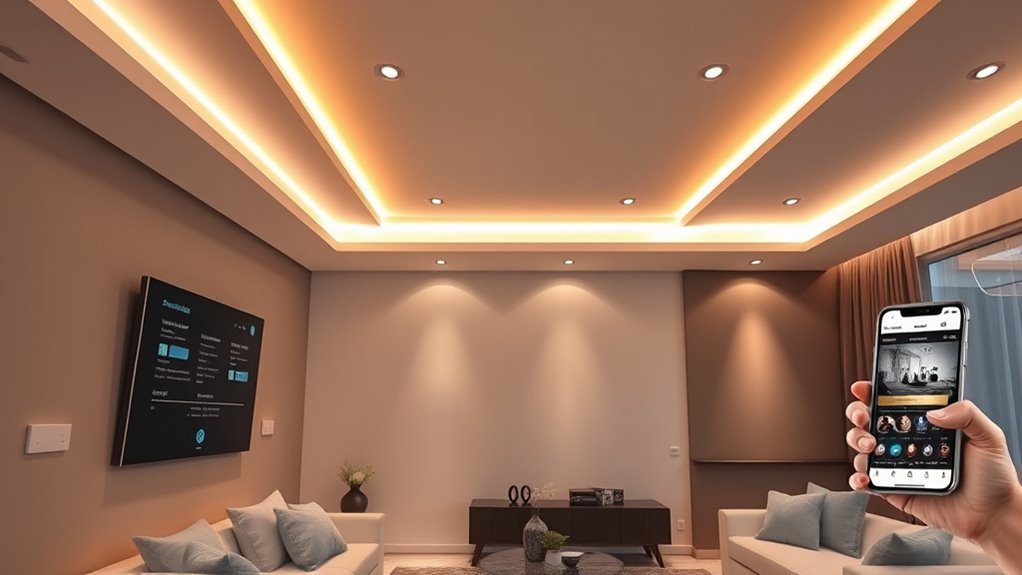
Incorporating automation and scheduling features transforms smart lighting systems from simple fixtures into intelligent solutions that adapt to your needs. You can set lights to turn on or off automatically based on time, occupancy, or activity patterns, saving energy and increasing convenience. With scheduling, you decide when lights should activate, dim, or turn off, ensuring your space is always well-lit without manual intervention. Automation also enables your lighting to respond to environmental changes, like adjusting brightness when natural light increases. This responsive lighting capability further optimizes energy use and enhances comfort. Additionally, integrating these features with your home’s overall smart system allows for more coordinated control across devices, resulting in a more efficient and cohesive environment. This proactive control reduces energy waste and improves overall efficiency. When combined with smart home integration, these features can be customized to create tailored lighting scenes for different occasions or times of day. Moreover, advanced automation can incorporate occupancy detection to further refine lighting control based on real-time presence. Modern lighting controls can also be programmed to adjust based on user preferences, making the system even more personalized. By customizing these features, you create a seamless lighting experience that aligns with your daily routines. Ultimately, automation and scheduling make your smart lighting system more efficient, intuitive, and tailored to your lifestyle.
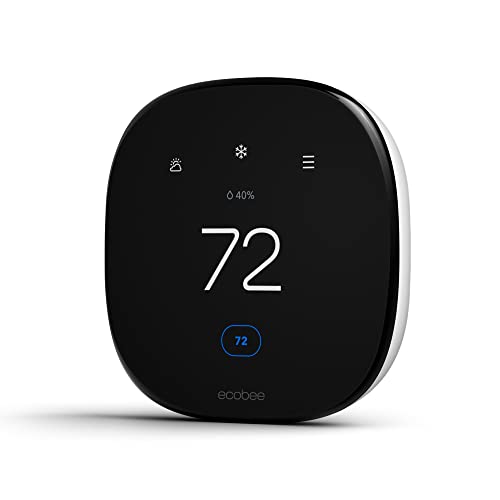
ecobee Smart Thermostat Enhanced, Programmable Wifi Thermostat
- Energy Savings: Save up to 26% on energy costs
- Auto Away Adjustment: Adjusts temperature when you're away
- Wide Compatibility: Compatible with 90% of systems
As an affiliate, we earn on qualifying purchases.
Utilizing IoT Integration for Enhanced Control
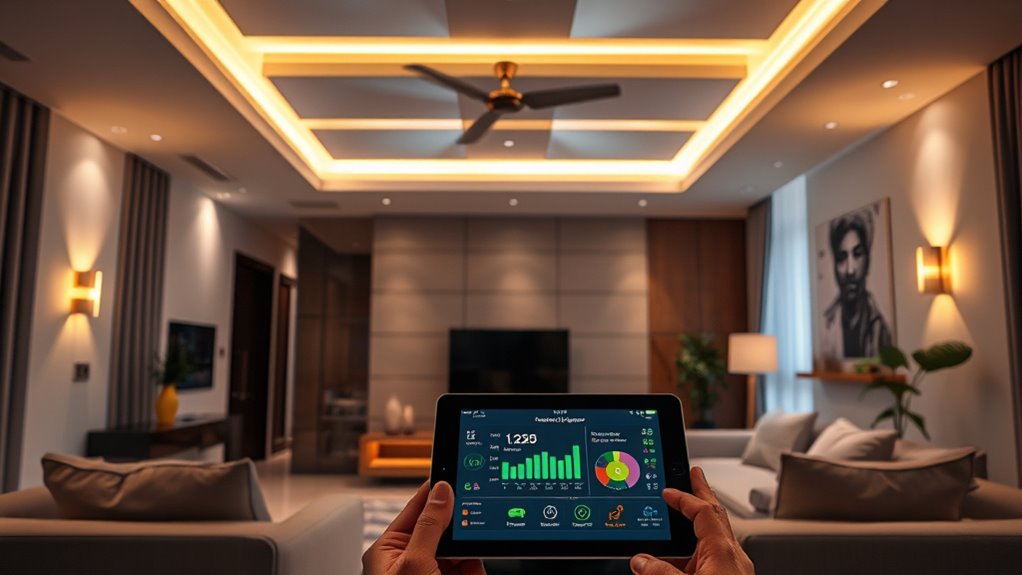
By integrating Internet of Things (IoT) technology, smart lighting systems gain unprecedented control and flexibility. You can connect your lights to a centralized network, allowing remote adjustments and real-time responses. This integration enables seamless automation, from adjusting brightness based on occupancy to syncing lights with other smart devices. IoT also facilitates data collection, helping you optimize energy use and improve system performance. You’ll benefit from easier troubleshooting and updates through cloud connectivity. Additionally, leveraging science-backed home automation techniques can further enhance lighting efficiency and user experience. Incorporating secure network protocols ensures your smart lighting system remains protected against unauthorized access. Implementing standardized communication protocols enhances compatibility across different smart devices and systems. Understanding network security measures is crucial to safeguarding your smart lighting setup from potential cyber threats. Employing interoperability standards can help future-proof your system and simplify integration with evolving technologies.
Designing for User Experience and Accessibility
When designing smart lighting, you focus on creating controls that are easy and intuitive for everyone to use. You should also consider inclusive illumination practices that accommodate diverse needs and preferences. By integrating accessible technology, you guarantee your lighting system works seamlessly for all users, regardless of ability. Incorporating vintage-inspired design elements can enhance the aesthetic appeal and timeless feel of your home lighting. Additionally, paying attention to piercing care and hygiene ensures that your lighting controls remain safe and comfortable to use over time. Ensuring that your lighting controls are user-friendly and adaptable can significantly improve overall user satisfaction and safety. Furthermore, considering ownership essentials like durability and maintainability can help extend the lifespan of your lighting system and reduce long-term costs.
Ergonomic Controls Design
Designing ergonomic controls for smart lighting begins with prioritizing user comfort and ease of use. You want controls that are intuitive, accessible, and reduce user effort. Consider button size, placement, and feedback to ensure effortless operation. Use tactile, well-defined controls for those with limited dexterity, and incorporate voice or app-based options for added flexibility. Think about the environment: controls should be visible and reachable from different positions. Here’s a quick guide:
| Aspect | Best Practice |
|---|---|
| Button Size | Large enough for easy pressing |
| Placement | Within comfortable reach, at eye or waist level |
| Feedback | Clear visual or tactile confirmation |
| Accessibility | Compatible with assistive technologies |
| Multi-functionality | Combine controls to minimize clutter and simplify use |
Inclusive Illumination Practices
Inclusive illumination practices focus on creating lighting environments that cater to diverse user needs and abilities. You should consider how different users perceive light, ensuring that brightness levels are adjustable and visual contrasts are sufficient to support those with impaired vision. Incorporate intuitive controls that are easy to operate, regardless of physical ability, and avoid designs that cause glare or discomfort. You can also use layered lighting to give users flexibility, enabling them to customize their space for comfort and task requirements. Remember, the goal is to foster a welcoming environment where everyone can navigate safely and comfortably. By prioritizing inclusive design, you enhance usability for all, ensuring your lighting system supports a broad range of needs without overwhelming or excluding any user group.
Accessible Technology Integration
Integrating accessible technology into lighting systems enhances user experience by making controls more intuitive and adaptable. You can incorporate voice commands, allowing users to adjust lighting without needing physical switches. Touchscreens and large-button controls benefit those with mobility or visual impairments, providing easier access. Smart sensors automatically adapt lighting based on occupancy or ambient light levels, reducing effort and increasing convenience. Compatibility with assistive devices, like screen readers or remote controls, ensures everyone can operate the system comfortably. By prioritizing accessibility, you create a more inclusive environment that accommodates diverse needs. This approach not only improves usability but also demonstrates a commitment to universal design principles, making your lighting system functional and welcoming for all users.
Selecting Appropriate Lighting Technologies and Fixtures
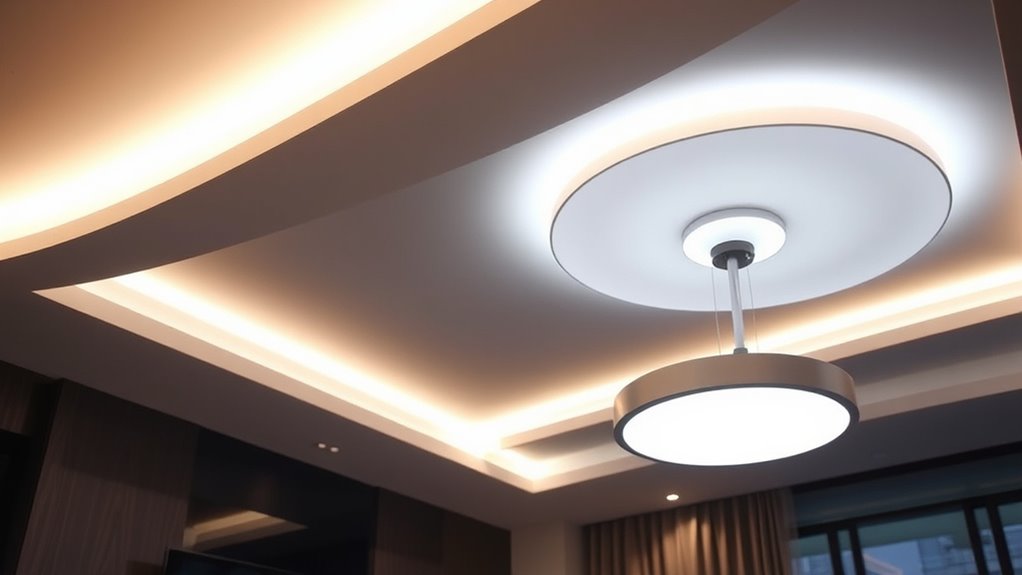
When choosing lighting technologies and fixtures, you need to consider how well they fit the specific space you’re designing for. Energy efficiency should be a top priority to reduce long-term costs and environmental impact. Ensuring compatibility with your space helps create a seamless, functional, and sustainable lighting solution.
Compatibility With Space
Choosing the right lighting technologies and fixtures depends on understanding the specific space you’re working with. Consider the room’s size, shape, and purpose. For example, a small office benefits from focused task lighting, while a large open area needs multiple light sources to ensure even coverage. Ceiling height influences fixture selection; high ceilings often require more powerful or hanging fixtures, while low ceilings suit flush-mounted designs. You also need to account for existing architecture and decor, selecting fixtures that complement or blend seamlessly. Think about natural light availability and how your lighting can enhance or supplement it. By aligning your choices with the space’s characteristics, you create a functional, harmonious environment that meets your lighting needs effectively.
Energy Efficiency Considerations
Selecting the right lighting technologies and fixtures is essential for maximizing energy efficiency in your space. Start by choosing LED lights, which use considerably less energy and last longer than traditional bulbs. Consider fixtures with high efficiency ratings and adjustable features to optimize light output while reducing waste. Incorporate smart controls like dimmers, motion sensors, and timers to minimize unnecessary usage. Evaluate the lumen output needed for each area to avoid overlighting. Opt for fixtures designed for your specific environment, such as task lighting for workspaces or ambient lighting for relaxation areas. By selecting energy-efficient technologies and integrating smart controls, you can reduce power consumption, lower utility bills, and contribute to sustainability efforts without compromising on lighting quality.
Planning for Flexibility and Future Expansion
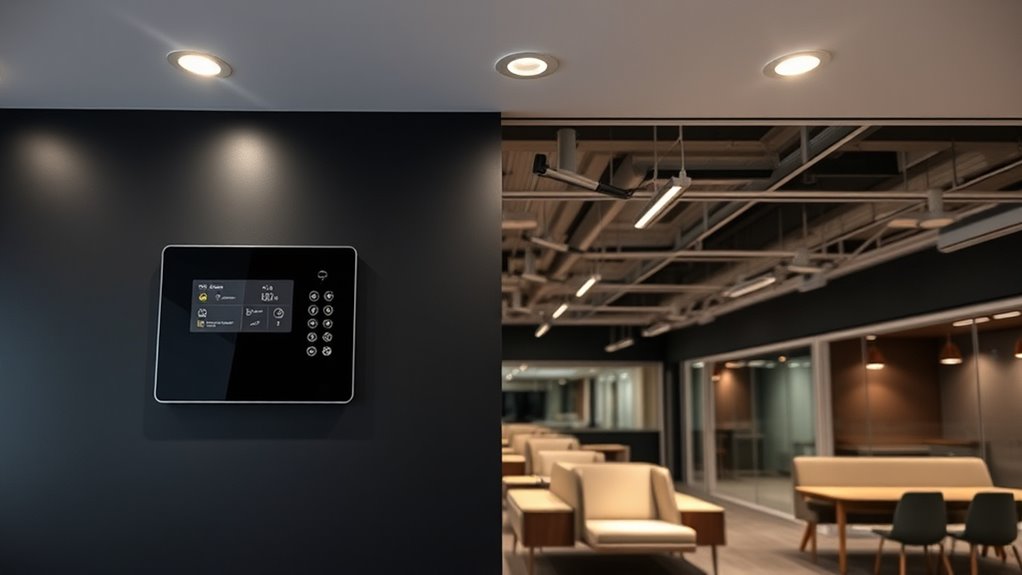
Planning for flexibility and future expansion guarantees your lighting system can adapt as your needs change. It’s essential to design with scalability in mind, ensuring you can add or modify lighting components without costly overhauls. Consider installing modular components that can be easily upgraded or expanded. Use wireless controls and centralized management systems that accommodate future devices effortlessly. Additionally, leave room in your wiring infrastructure for new circuits or additional fixtures. This approach minimizes disruption and keeps your system adaptable as technology evolves. By planning ahead, you save time and money, making your lighting setup more resilient and responsive. Remember, a flexible design ensures your lighting remains efficient, functional, and aligned with long-term goals.
Considering Environmental and Circadian Impacts
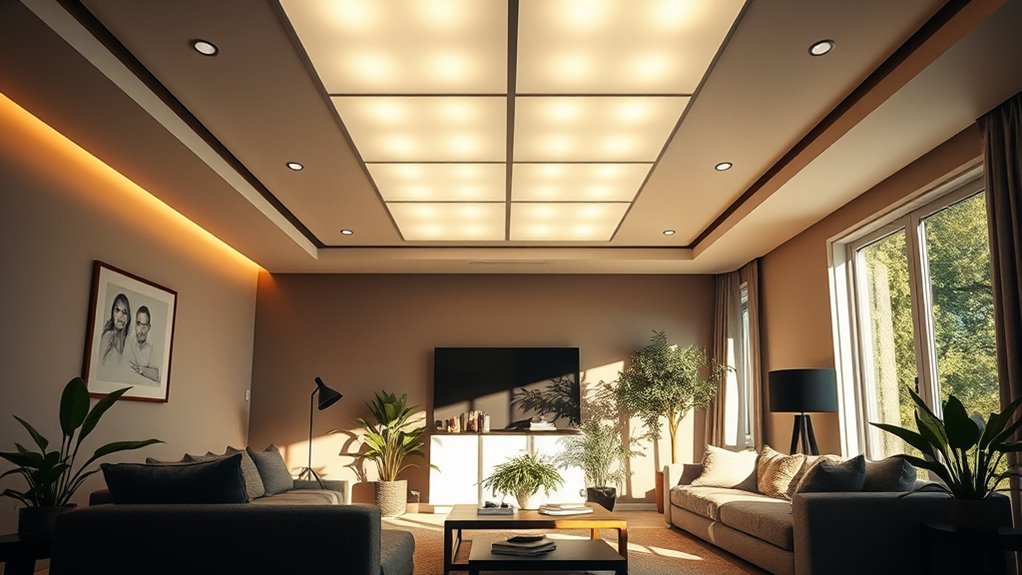
Considering environmental and circadian impacts is essential for creating lighting that supports both well-being and energy efficiency. You should design lighting that aligns with natural light patterns, helping your body regulate sleep and alertness. Use adjustable color temperatures to mimic the sun’s cycle—warmer tones in the evening promote relaxation, while cooler tones during the day boost focus. Incorporate sensors that adapt lighting based on time and occupancy, reducing unnecessary energy use. By prioritizing circadian-friendly lighting, you enhance comfort and health while conserving energy. Remember, thoughtful placement and control systems are key to minimizing light pollution and light trespass, ensuring your space feels natural and inviting. Ultimately, considering these impacts results in a smarter, healthier environment for everyone.
Ensuring Security and Data Privacy
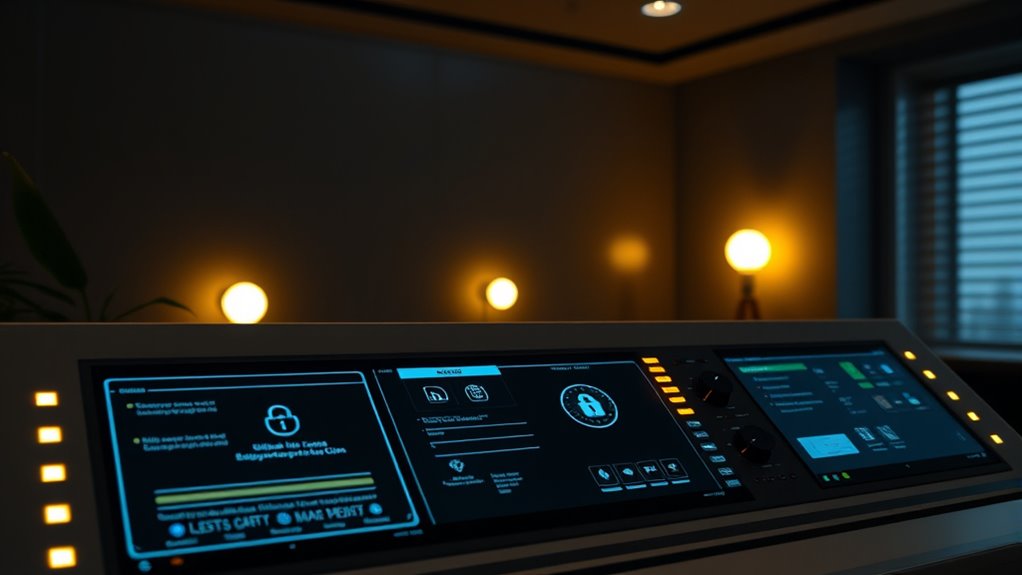
As smart lighting systems become more integrated into our daily environments, safeguarding security and protecting data privacy must be a top priority. You need to guarantee that your network is secure against unauthorized access. Use strong, unique passwords for device accounts and update firmware regularly to patch vulnerabilities. Encrypt data transmission to prevent interception and unauthorized viewing. Additionally, limit data collection to only what’s necessary, and be transparent about how your data is used.
- Implement two-factor authentication for remote access
- Regularly audit device logs for suspicious activity
- Choose products with robust privacy policies and security certifications
Balancing Aesthetic Appeal With Functional Performance
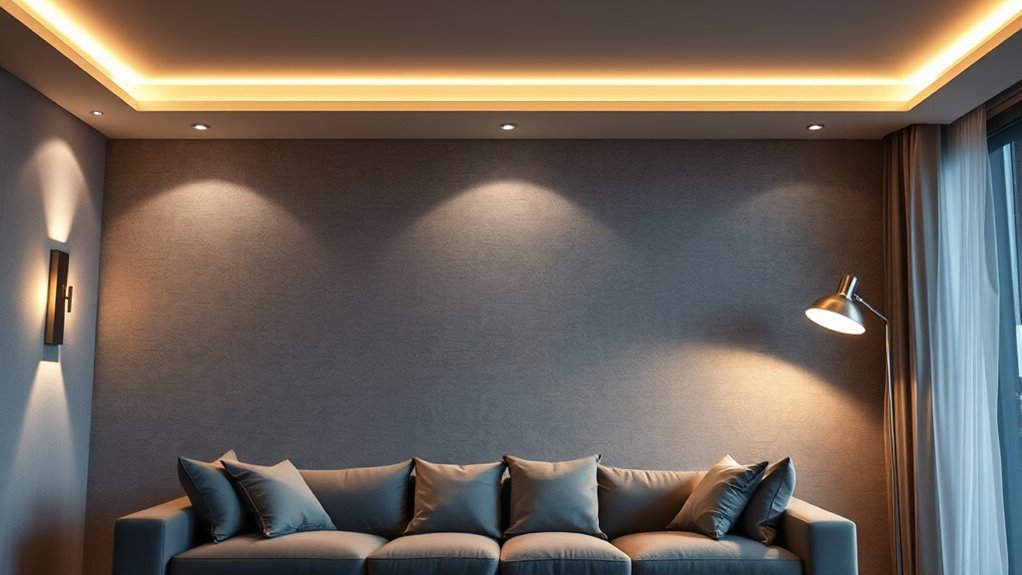
You need to find the right balance between appealing design and practical use, so your lighting enhances both style and function. Consider how light quality and decor work together, creating a space that feels inviting and looks great. By focusing on practical illumination, you make sure your lighting not only looks good but also serves your everyday needs effectively.
Harmonizing Light Quality and Style
Achieving a harmonious balance between light quality and style requires thoughtful design choices that enhance both aesthetic appeal and functional performance. You need to select lighting fixtures that complement your space’s design while providing the right brightness, color temperature, and diffusion. Focus on options like adjustable color temperatures to match different moods and tasks, sleek fixtures that serve as design elements, and layered lighting to create depth. Incorporate fixtures that blend seamlessly with your decor, avoiding overly ornate designs that clash with your style. Prioritize quality light sources that deliver consistent illumination without flickering or harsh shadows. By carefully balancing these elements, you ensure your lighting enhances your space’s visual appeal while remaining practical for everyday use.
Enhancing Mood and Atmosphere
Balancing aesthetic appeal with functional performance plays a vital role in creating an inviting atmosphere through smart lighting. When used effectively, lighting can influence mood and set the tone of a space. Adjusting brightness, color temperature, and color schemes helps evoke feelings like comfort, energy, or calmness. For example, warmer tones foster relaxation, while cooler tones boost focus. To deepen your understanding, consider this table:
| Mood/Atmosphere | Lighting Features | Suggested Settings |
|---|---|---|
| Relaxation | Warm, dim lighting | 2700K, 20% brightness |
| Focus | Bright, cool light | 5000K, 100% brightness |
| Celebration | Colorful, dynamic | RGB modes |
| Serenity | Soft, diffuse light | 3000K, gentle dimming |
Using these principles, you craft environments that resonate emotionally.
Ensuring Practical Illumination
While creating an inviting atmosphere is important, ensuring practical illumination requires careful attention to how lighting performs in daily use. You need to make sure your spaces are well-lit for tasks without sacrificing comfort or energy efficiency. Focus on appropriate light levels for each area, avoiding glare or shadows that hinder visibility. Use dimmers or adjustable fixtures to adapt lighting to different activities and times of day. Proper placement is key—aim for even distribution to prevent dark spots. Remember to consider the color temperature to support alertness or relaxation as needed.
- Choose task lighting for work areas to boost productivity.
- Use layered lighting to combine ambient, task, and accent lights.
- Regularly evaluate and adjust to maintain ideal illumination.
Frequently Asked Questions
How Does Smart Lighting Impact Overall Home Value?
Smart lighting can boost your home’s value by enhancing its appeal and functionality. When you install smart lighting systems, you make your property more attractive to buyers who value energy efficiency, convenience, and modern tech. These systems can also save you money on energy bills, which adds to your home’s desirability. Overall, a smart lighting setup signals that your home is up-to-date and well-equipped, potentially increasing its market worth.
What Are Common Troubleshooting Issues With Smart Lighting Systems?
Your smart lighting system might act like a stubborn mule, refusing to turn on or respond to commands. You could face connectivity hiccups, where the system gets lost in the digital jungle, or app glitches that make control feel like trying to tame wild horses. Sometimes, firmware needs an update, or the Wi-Fi signal isn’t strong enough to carry your commands smoothly. Troubleshooting involves checking connections, updating software, and ensuring your network is reliable.
Can Smart Lighting Systems Be Integrated With Existing Home Automation?
Yes, you can integrate smart lighting systems with your existing home automation. Most systems are compatible with popular platforms like Alexa, Google Assistant, or Apple HomeKit. You’ll want to verify your smart lights support these protocols or hubs. Once connected, you can control your lights through voice commands, apps, or automation routines. Just follow the setup instructions and check compatibility to make integration seamless.
What Maintenance Is Required for Smart Lighting Fixtures?
Ever wondered what it takes to keep your smart lighting fixtures running smoothly? You’ll need to regularly clean the fixtures to remove dust and dirt, check for software updates to guarantee peak performance, and replace any faulty bulbs or components when needed. Do you want your smart lights to stay reliable and efficient? Routine maintenance, like inspecting connections and updating firmware, helps keep everything functioning seamlessly and prolongs their lifespan.
How Do Smart Lighting Systems Perform During Power Outages?
Smart lighting systems often include backup power options like batteries or generators, so they can continue functioning during power outages. You should check if your system has an emergency power supply installed and make sure it’s properly maintained. If it doesn’t, the lights may turn off during an outage. Regularly test backup batteries and update firmware to keep your smart lighting system reliable, even when the grid goes down.
Conclusion
By applying these smart lighting principles, you’ll transform your space into a sanctuary of efficiency and comfort. Prioritize sustainability, embrace automation, and consider user needs to craft a lighting system that’s as intuitive as it is innovative. Remember, your choices today can light the way for a smarter, greener future—your impact is nothing short of revolutionary. So, take charge and design lighting that truly elevates your environment beyond imagination.
Back to school Picks
back to school
As an affiliate, we earn on qualifying purchases.